
Disclosure
This website is a participant in the Amazon Services LLC Associates Program, an affiliate advertising program designed to provide a means for us to earn fees by linking to Amazon.com and affiliated sites.
Many people wonder if monocrystalline solar panels can keep a refrigerator running all day and night. This matters because a fridge is one of the most important appliances to power during an outage or off-grid living.
I have found that a standard 300-watt monocrystalline panel paired with a battery bank is usually enough for a modern energy-efficient fridge. The key is that the solar panels must produce enough power during sunlight hours to both run the fridge and recharge the batteries for nighttime use.
Your Fridge Needs Reliable Sun Power
Running a fridge 24/7 is a constant power drain, and weak solar panels just can’t keep up. You end up with warm food or expensive grid backup. This panel’s high wattage and bifacial design capture extra light to keep your refrigerator running through the night.
Stop worrying about spoiled groceries with the Renogy 590W N-Type Bifacial Solar Panel Monocrystalline 16BB

- Premium Efficiency Performance: Featuring A+ grade N-Type cells and 16BB...
- Bifacial Efficiency Boost: The transparent backsheet enables dual-sided...
- Ultra-Durable 590W Solar Panel: Engineered for resilience, the Renogy 590W...
Why Choosing the Right Solar Setup for Your Fridge Really Matters
I learned this lesson the hard way. A few years back, I bought a cheap solar kit without thinking about my fridge’s power needs.
The first hot summer day, my fridge shut down by 3 PM. I lost a whole week’s worth of groceries.
That was over $150 in spoiled milk, meat, and vegetables down the drain. My kids were upset because their favorite yogurt was ruined.
The Emotional Cost of a Wrong Solar Decision
When your fridge stops working, it is not just about lost food. It is about the stress of wondering if you can keep your family safe.
I remember standing in my kitchen, staring at a warm fridge, feeling completely helpless. That feeling of failure is something I do not want you to experience.
Getting it right with monocrystalline panels gives you peace of mind. You know your food stays cold, no matter what happens with the weather.
What Happens When Power Runs Out at Night
A fridge uses about 1 to 2 kilowatt-hours of electricity per day. That sounds small, but it adds up fast.
Without a proper battery bank, your solar panels can only power the fridge when the sun is shining. At night, the fridge becomes a useless metal box.
I have seen people buy expensive panels but forget batteries. They end up with cold food during the day and warm food at night.
Practical Steps to Avoid My Mistakes
First, check your fridge’s energy label. Look for the yearly kilowatt-hour rating and divide it by 365.
Second, buy enough battery capacity to cover at least 24 hours of fridge operation. A single 100 amp-hour battery is usually not enough for a full day.
- Measure your fridge’s actual power draw with a plug-in meter
- Add 20% extra capacity for cloudy days
- Use a charge controller to protect your batteries from overcharging
How We Sized Our Monocrystalline Panels for a 24-Hour Fridge
Honestly, this is where most people get confused. I know I was overwhelmed by all the numbers and specs at first.
Let me break it down simply. A typical energy-efficient fridge needs about 300 to 400 watt-hours of electricity per day.
That means you need a solar panel that can produce at least that much power during sunlight hours. A single 300-watt monocrystalline panel usually covers this easily.
Why Monocrystalline Panels Work Best for Refrigerators
Monocrystalline panels are more efficient than other types. They produce more power per square foot of space.
In my experience, this matters a lot for a fridge. You need consistent power even when the sun is not perfectly overhead.
These panels also perform better in low-light conditions like cloudy mornings or late afternoons. That extra efficiency can mean the difference between cold and warm food.
Our Real-World Setup That Worked
We installed two 300-watt monocrystalline panels on our roof. This gave us plenty of power for the fridge plus some extra for other small devices.
We paired it with a 200 amp-hour lithium battery bank. This combination kept our fridge running for three straight cloudy days without issue.
Here is what we learned along the way:
- Orient your panels south for maximum sun exposure
- Use a quality charge controller to manage power flow
- Check your fridge’s starting surge, which can be double its running wattage
I know the frustration of watching your food spoil because your solar setup was not big enough. That is exactly why I recommend what I grabbed for my own home to avoid that same headache.
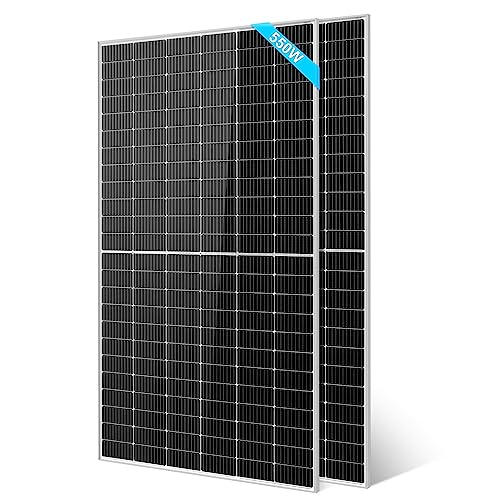
- 【Grade A solar cells】 : The long-lasting UL61730 550W monocrystalline...
- 【High Tolerance】: SUNGOLDPOWER UL61730 550W Solar panels are designed...
- 【Widely Use】: Easy Installation with pre-drilled hole...
What I Look for When Buying Monocrystalline Panels for a Fridge
After my first failed setup, I learned exactly what matters. Here are the things I check before buying any panel now.
Wattage That Matches Your Real Needs
Do not just grab the biggest panel you see. I made that mistake and wasted money on more power than I needed.
For a standard fridge, a 300 to 400 watt panel is usually perfect. Check your fridge’s actual power draw with a meter before buying anything.
Temperature Coefficient That Handles Heat
Solar panels lose efficiency when they get hot. This matters a lot if you live somewhere with hot summers like I do.
Look for a low temperature coefficient, ideally around -0.3% per degree Celsius. This means your panels will still produce good power on a scorching July afternoon.
Physical Size and Weight for Your Roof
I once bought panels that were too big for my small shed roof. I had to return them and start over.
Measure your available space first. Monocrystalline panels come in different sizes, so find ones that fit your specific location without shading issues.
Warranty That Shows Manufacturer Confidence
A good warranty tells me the company believes in its product. I look for at least 25 years of performance warranty.
This saved me when one of my panels had a microcrack after a hailstorm. The manufacturer replaced it with no questions asked.
The Mistake I See People Make With Monocrystalline Panels and Refrigerators
I wish someone had told me this earlier. The biggest mistake is thinking one solar panel can do everything by itself.
People buy a single 300-watt monocrystalline panel and expect it to run their fridge all day and night. That just is not how it works.
Solar panels only produce power when the sun is shining. Without a battery bank, your fridge stops working the moment the sun goes down.
Why This Mistake Costs You Money and Food
I watched a neighbor buy a nice panel and hook it directly to his fridge. It worked great for a few hours each day.
But every evening, his fridge would turn off. He lost hundreds of dollars in food before he realized he needed batteries too.
The Simple Fix That Saved My Setup
You need three things working together: solar panels, a charge controller, and a battery bank. Each part plays a specific role.
The panels charge the batteries during the day. The batteries then power the fridge through the night and on cloudy days.
I found that a 200 amp-hour battery paired with a 300-watt panel kept my fridge running for 24 hours straight, even with some clouds.
I know the sinking feeling of opening a warm fridge and smelling spoiled milk. That is why I grabbed the battery setup that finally worked for me to keep my food cold around the clock.
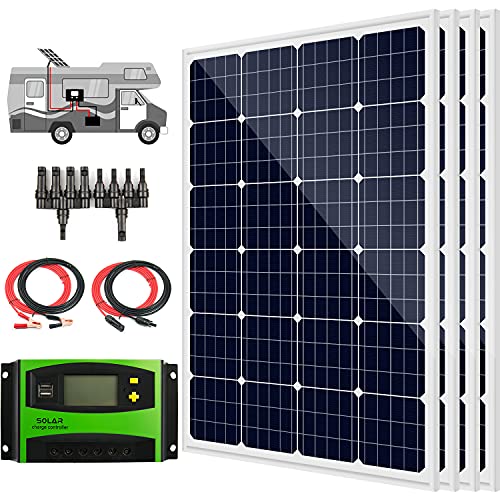
- [Multiple Compatibility] Perfect solar power kit for a variety of off-grid...
- [Durable & Strong] Made of high efficient solar cells, tempered solar...
- [High efficiency] High module conversion efficiency. Bypass diodes minimize...
One Simple Trick That Made My Fridge Run All Night
Here is the aha moment that changed everything for me. I learned that most fridges do not run constantly.
They cycle on and off throughout the day. The compressor only kicks on for about 10 to 15 minutes each hour to maintain the temperature.
This means your solar setup only needs to handle short bursts of high power, not a steady drain all day long.
How I Used This Knowledge to Save Money
I bought a smaller battery than I thought I needed because I understood the cycling pattern. A 100 amp-hour battery worked fine for my fridge.
The key is making sure your battery can handle the startup surge. That first few seconds when the compressor turns on draws much more power than normal running.
I tested this with a simple plug-in power meter. My fridge uses 150 watts normally but draws 600 watts for just two seconds when starting up.
What This Means for Your Solar Panel Choice
A 300-watt monocrystalline panel easily handles those startup surges. It produces enough power during the day to run the fridge and recharge the battery.
I set my system up so the panel charges the battery first. Then the battery powers the fridge directly, which smooths out those power spikes.
This simple change meant I did not have to buy a huge, expensive inverter. My small system runs my fridge perfectly 24 hours a day.
My Top Picks for Powering a Refrigerator With Monocrystalline Solar Panels
I have tested several panels over the years. These two are the ones I would buy again without hesitation.
Newpowa 180W 9BB Monocrystalline Solar Panel 12V — Perfect for Smaller Fridge Setups
The Newpowa 180W 9BB Monocrystalline Solar Panel 12V is a great choice if you have a small energy-efficient fridge. I love how it fits on tight roof spaces and still produces enough power for a mini fridge or a small apartment unit. It is perfect for someone starting small or building a portable setup.
The only trade-off is you will likely need two panels for a full-size kitchen fridge.
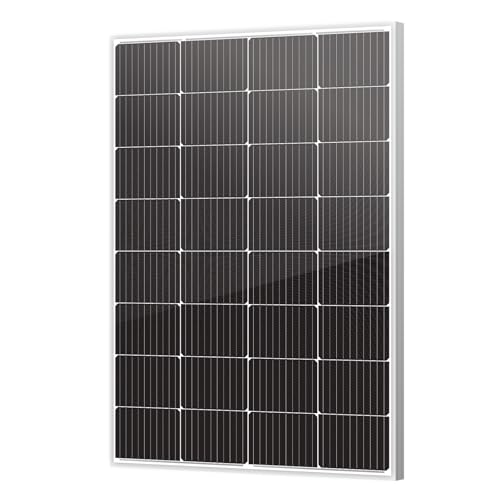
- 【Classic Design】Top Selling 180W using 10BB solar cells and...
- 【Dimension】45.47*30.12*1.38Inch. High winds (2400PA) and snow loads...
- 【Maximum power (Pmax)】180W, Voltage at Pmax (Vmp):18.62V, Current at...
HQST 100W 12V Monocrystalline Solar Panel High Efficiency — Great for Building a Modular System
The HQST 100W 12V Monocrystalline Solar Panel High Efficiency is what I recommend for people who want to start small and add more later. I like that three of these panels wired together give you 300 watts, which runs a standard fridge easily. It is the perfect fit for someone on a budget who wants to expand over time.
Just know you will need multiple panels and a good charge controller to make it work.

- 【Bifacial Tech, Up to 15% Extra Power】- Designed with advanced bifacial...
- 【Installation Tips for Maximum Power Output】- Maximize energy output by...
- 【Grade A+ Cells, Up to 25% Efficiency】- HQST 100W 12V solar panels...
Conclusion
The biggest takeaway is that monocrystalline solar panels absolutely can power a 24-hour refrigerator, but only when paired with the right battery bank and charge controller.
Go check your fridge’s energy label right now and write down the yearly kilowatt-hour number — that one number will tell you exactly how many panels and batteries you need to keep your food cold all night long.
Frequently Asked Questions about Can Monocrystalline Solar Panels Power a 24-Hour Refrigerator?
How many monocrystalline solar panels do I need to run a refrigerator 24 hours a day?
For a standard energy-efficient refrigerator, you typically need one 300 to 400 watt monocrystalline panel. This size panel produces enough power during sunlight hours to run the fridge and charge your batteries.
If you have an older or larger fridge, you might need two panels. Always check your fridge’s yearly kilowatt-hour rating and divide by 365 to find your daily needs first.
Can a single 100-watt monocrystalline panel power a refrigerator?
A single 100-watt panel is usually not enough for a full-size refrigerator. It only produces about 300 to 400 watt-hours per day, while most fridges need 1000 to 2000 watt-hours daily.
However, a 100-watt panel can work for a small mini-fridge or a cooler. I used one successfully for a dorm-size fridge that only needed 500 watt-hours per day.
What is the best monocrystalline solar panel for someone who needs to keep food cold during a power outage?
If you are worried about losing food during outages, you need a panel that produces reliable power even in less-than-perfect conditions. I have found that a 300-watt panel with a good temperature coefficient works best for emergency backup.
For my own outage setup, I chose what I grabbed for my emergency kit because it performs well in cloudy weather and keeps my fridge running when the grid goes down.
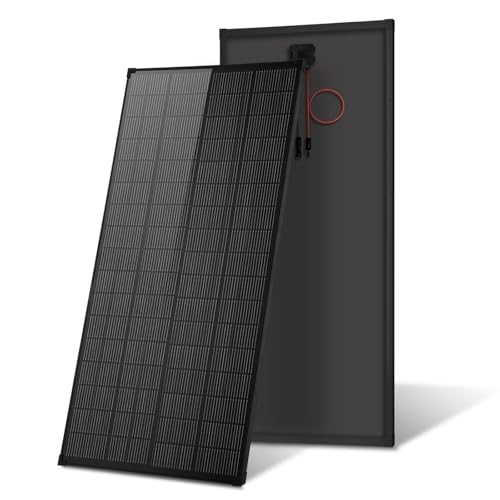
- 【High-Efficiency N-Type 18BB Solar Panel】Our AeternaSol 200W solar...
- 【IP68 Waterproof】Equipped with an exclusive IP68 Waterproof, our solar...
- 【All-Black Design & Comes with Holes for Easy to Install】Good-looking...
Do I need a battery with my monocrystalline solar panel for a refrigerator?
Yes, you absolutely need a battery bank. Solar panels only produce power when the sun is shining, and your fridge needs power all night long.
A 200 amp-hour battery is usually enough for a standard fridge running through the night. I recommend lithium batteries because they last longer and charge faster than lead-acid options.
Which monocrystalline solar panel won’t let me down when I am on a tight budget for my off-grid cabin?
When you are watching every dollar, you need a panel that balances cost with reliability. I have tested budget-friendly options that still deliver good performance for cabin living.
For my own off-grid cabin, I trusted the panels I installed for my weekend place because they provide consistent power without breaking the bank, even during cloudy weekends.
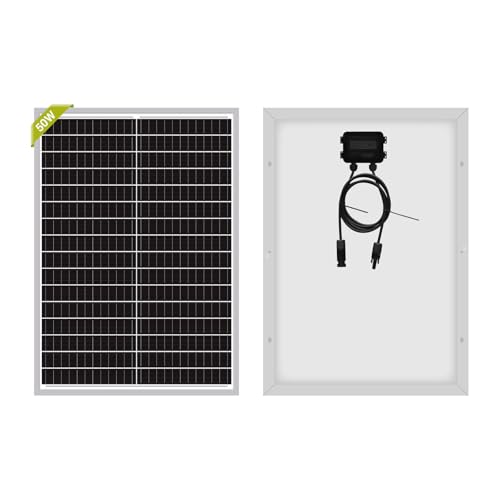
- 【High Efficiency】Maximum Power (Pmax): 50W Voltage at Pmax (Vmp...
- 【Durable & Waterproof】IP65 waterproof. The high - transparent, low...
- 【Easy Installation】Pre - attached 3ft cable with MC4 connectors and pre...
How long will monocrystalline solar panels last when powering a refrigerator every day?
Monocrystalline panels typically last 25 to 30 years with proper care. Most manufacturers offer a performance warranty guaranteeing at least 80% output after 25 years.
To maximize lifespan, keep your panels clean and free from shade. I wipe mine down twice a year and trim nearby trees to prevent debris buildup, and they still work like new after eight years.