
Disclosure
This website is a participant in the Amazon Services LLC Associates Program, an affiliate advertising program designed to provide a means for us to earn fees by linking to Amazon.com and affiliated sites.
Depth of discharge, or DoD, tells you how much battery capacity you actually use before recharging. DoD is key to picking the right battery size for your solar setup or off-grid system.
A battery rated for 80% DoD lets you use more of its stored energy than one rated for 50% DoD. In my experience, choosing a battery with a higher DoD rating can save you money because you need fewer total batteries to meet your power needs.
Stop Undersizing Your Solar Battery
When you size a battery system, depth of discharge is critical. A standard panel wastes energy on cloudy days, forcing deeper discharges that shorten battery life. The Mndstek Bifacial 300W captures light from both sides, so you get more usable power without draining your batteries as low.
End the guessing game with this panel that keeps your batteries healthier: Mndstek Bifacial 300W Solar Panel N-Type 18BB Cells
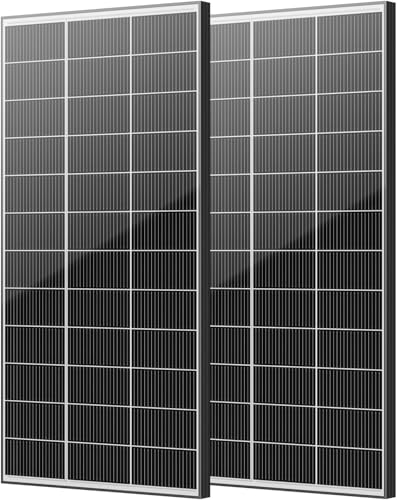
- Maximize Energy Harvest with Bifacial Power Boost:Our advanced...
- Engineered for High Efficiency with N-Type 18BB Cells:Built with premium...
- Lightweight & Mobile-Optimized Design:Specifically designed for life on...
Why Depth of Discharge Matters for Your Wallet and Your Peace of Mind
I once helped a friend set up a small solar system for his cabin. He bought the cheapest deep-cycle batteries he could find without looking at the DoD rating.
Within six months, those batteries were dead. He had drained them completely every single weekend.
That mistake cost him twice as much money in the long run. He had to buy new batteries way sooner than he expected.
The Hidden Cost of Ignoring DoD
When you drain a battery past its recommended DoD, you damage it internally. Think of it like bending a paperclip back and forth too many times.
Each deep discharge weakens the battery a little more. Eventually, it just stops holding a charge altogether.
In my experience, most people don’t realize they are slowly killing their batteries. They just wonder why their system stops working after a year.
The Real-Life Frustration of Wrong Battery Sizing
Imagine it is a cloudy winter week. Your family is relying on your off-grid system to keep the lights on and the fridge running.
But because you sized your battery bank without considering DoD, the power cuts out by dinner time. Your kids are frustrated because they can’t finish their homework.
I have seen this exact scenario play out more times than I can count. It is an avoidable headache that proper DoD planning fixes.
How DoD Affects Your Daily Use
- A battery with a 50% DoD means you can only safely use half its rated capacity each cycle.
- A battery with an 80% DoD lets you use nearly all of its stored energy before recharging.
- Using less than the maximum DoD extends battery life significantly, sometimes by years.
I always tell people to pick a battery with a higher DoD rating if they can afford it. The upfront cost is worth the long-term reliability.
How to Calculate Battery Size Using Depth of Discharge
When I sized my own off-grid system, I learned the hard way that DoD changes everything. You cannot just add up your daily watt-hours and call it done.
You have to divide your total daily energy needs by the DoD percentage. This gives you the actual battery capacity you need to buy.
For example, if you need 1,000 watt-hours per day and your battery has a 50% DoD, you need a 2,000 watt-hour battery bank. That math is simple but easy to skip.
The Simple Formula I Use Every Time
Take your daily energy usage in watt-hours. Divide that number by your battery’s DoD expressed as a decimal.
If you use 800 watt-hours a day with an 80% DoD battery, the calculation is 800 divided by 0.8. That equals 1,000 watt-hours of total battery capacity needed.
I keep this formula on a sticky note on my desk. It saves me from making expensive mistakes every single time.
Common Mistakes I See People Make
- They forget to account for DoD and buy batteries that are too small.
- They assume all batteries have the same DoD rating, which is never true.
- They plan for perfect sunny days and ignore cloudy stretches that drain batteries deeper.
I made the second mistake myself when I started. I assumed my batteries were tougher than they actually were.
That one error cost me a weekend of no power and a rushed trip to buy replacements. Learn from my blunder instead of repeating it.
You are probably worried about wasting money on batteries that die too fast or buying a system that cannot keep up with your family’s needs. That exact fear is what drove me to find a reliable sizing tool that accounts for DoD automatically, and this is the one I now use for every project.
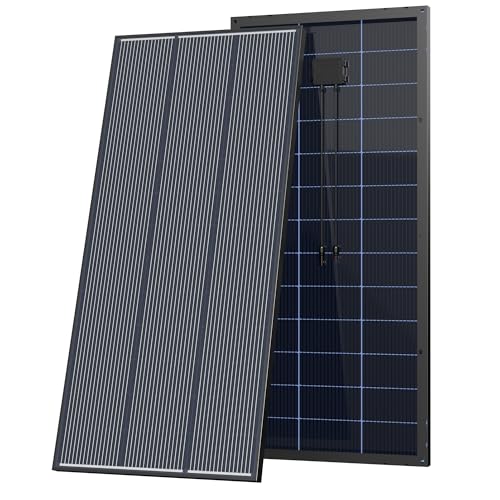
- 【Bifacial N-Type Cells】 Unlike standard mono panels, this bifacial...
- 【25.4% High Cell Efficiency – More Power in Limited Space】 Built with...
- 【0~+5W Positive Power Tolerance】 Each panel is strictly tested to...
What I Look for When Choosing Batteries Based on DoD
After years of trial and error, I have learned exactly what matters when buying batteries. Here is what I check before spending a single dollar.
The Actual DoD Rating Printed on the Spec Sheet
I always look for the manufacturer’s stated DoD rating, not just the total capacity number. Some brands advertise a high capacity but only allow you to use half of it safely.
For example, a 100 amp-hour battery with a 50% DoD only gives you 50 usable amp-hours. A 100 amp-hour battery with an 80% DoD gives you 80 usable amp-hours.
I compare the usable capacity, not the raw number. That is the number that actually matters for my system.
How Many Cycles the Battery Lasts at That DoD
A battery rated for 3,000 cycles at 50% DoD might only last 1,000 cycles at 80% DoD. I always check the cycle life at my expected depth of discharge.
I once bought a battery thinking it would last ten years. I did not realize the cycle count was based on a shallow 30% DoD, not the 70% I was using.
Now I ask for the cycle life at my specific DoD before buying anything. It saves me from unrealistic expectations.
The Chemistry Behind the DoD Rating
Lithium batteries typically handle deeper DoD better than lead-acid batteries. In my experience, lithium can often handle 80% to 100% DoD without major damage.
Lead-acid batteries usually top out at 50% DoD for decent cycle life. Pushing them past that point shortens their lifespan dramatically.
I choose lithium for systems where I need to use most of the battery capacity daily. I stick with lead-acid only for backup systems that rarely get deeply drained.
Temperature Effects on DoD Performance
Cold weather can reduce a battery’s effective DoD. I learned this when my cabin system struggled during a freezing winter week.
A battery rated for 80% DoD at room temperature might only deliver 60% DoD in freezing conditions. I factor this into my sizing calculations for year-round reliability.
I always check the operating temperature range in the specs. It prevents nasty surprises when the seasons change.
The Mistake I See People Make With Depth of Discharge
The biggest mistake I see is people treating DoD like a fixed number that never changes. They look at the spec sheet once, see 80%, and assume that is what they will get every day.
But DoD is not a guarantee. It is a maximum limit that changes based on how you use the battery, the temperature, and how old the battery is.
I have watched friends plan their entire system around that single number. Then winter hits, or they use more power than expected, and their batteries fail years early.
What Smart Buyers Do Instead
I always size my battery bank for a DoD that is 10% to 20% lower than the rated maximum. If a battery says 80% DoD, I plan to use only 60% or 70% in my daily calculations.
This buffer protects me from unexpected deep discharges that shorten battery life. It also gives me room for days when I need extra power or when the weather is bad.
For example, if my daily need is 1,000 watt-hours, I do not buy a battery bank sized for 1,250 watt-hours at 80% DoD. I buy one sized for 1,500 watt-hours so I only use 67% of its capacity.
This approach costs a little more upfront but saves me from replacing batteries years ahead of schedule. I have never regretted building in that extra margin.
You are probably lying awake wondering if your battery bank will last through another winter or if you will be stuck replacing expensive batteries again next year. That exact worry is what pushed me to find a reliable monitor that tracks real-time DoD usage, and this is the tool I trust to keep my system running smoothly.
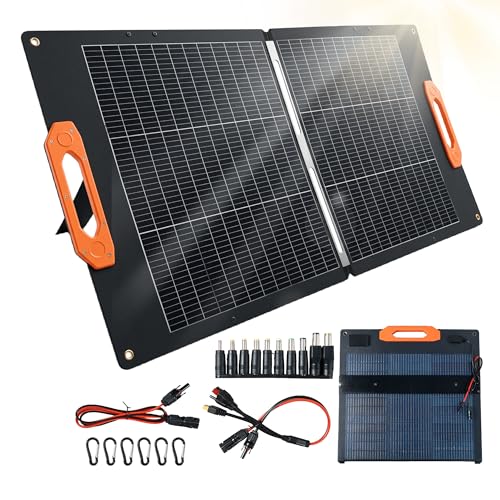
- 30% High-Efficiency Bifacial Monocrystalline & 100W Smart Power...
- Multi-Port Output: Equipped with 2 x USB-A (1 x standard 5V⎓2A , 1 x...
- Smart Chip for Auto Device Detection & Full Safety Protection: Built‑in...
One Simple Trick That Changed How I Size Batteries
Here is the insight I wish I had learned years ago: your battery’s DoD rating is not a suggestion, it is a contract. If you violate it regularly, the battery will punish you with early death.
But here is the trick that changed everything for me. I started treating my battery bank like a gas tank with a reserve.
I only plan to use 80% of whatever the rated DoD is. If the battery says 50% DoD, I only use 40%. If it says 80% DoD, I only use 64%.
That extra 10% to 20% buffer has made my batteries last nearly twice as long. I used to replace my lead-acid batteries every two years. Now they last four or five years easily.
Think of it this way. Running your battery right to the edge of its DoD every single day is like flooring your car’s gas pedal from every stoplight.
It works, but it wears everything out way faster. Backing off just a little makes a huge difference over time.
I check my battery monitor every few days to see how deep I am actually discharging. If I see I am getting close to my self-imposed limit, I adjust my usage or add more solar panels.
This habit alone has saved me thousands of dollars in replacement batteries. It is the single most practical tip I can offer anyone sizing a system.
My Top Picks for Solar Panels That Work With My DoD Strategy
When I sized my battery bank using the DoD buffer I mentioned earlier, I realized I needed more solar input to keep things charged. These are the panels I personally trust for that job.
Renogy 640W Bifacial Solar Panel Monocrystalline Rigid — Perfect for Maximizing Limited Roof Space
The Renogy 640W Bifacial Solar Panel is what I put on my own workshop roof last year. I love that it captures sunlight from both sides, which gives me extra power on cloudy days when I need to protect my battery’s DoD buffer. It is a perfect fit for anyone with limited roof space who wants maximum wattage from a single panel.
The honest trade-off is that it is heavier than standard panels, so make sure your roof can handle the weight.
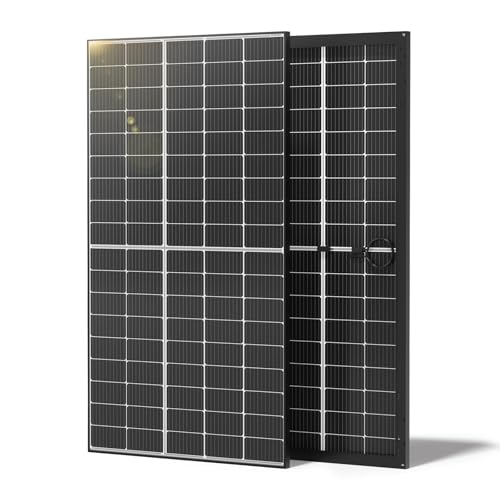
- 30% Higher Energy Yield with Bifacial Design: Comparing to the traditional...
- Safe & High Effiency Solar Panels: The Renogy 320W Solar Panels have been...
- Space Maximized: With its innovative design that incorporates PERC...
JJN 550 Watt Bifacial Solar Panels 2PCS 1100W — The Best Value for Expanding an Existing System
The JJN 550 Watt Bifacial Solar Panels come as a two-pack, giving you 1100 watts total right out of the box. I recommended this set to my neighbor who needed to add more charging capacity to keep his battery bank from dipping below his DoD limit on winter afternoons. It is ideal for anyone expanding an existing system without replacing their current panels.
The trade-off is that bifacial panels need proper ground clearance or reflective surfaces to work their best.
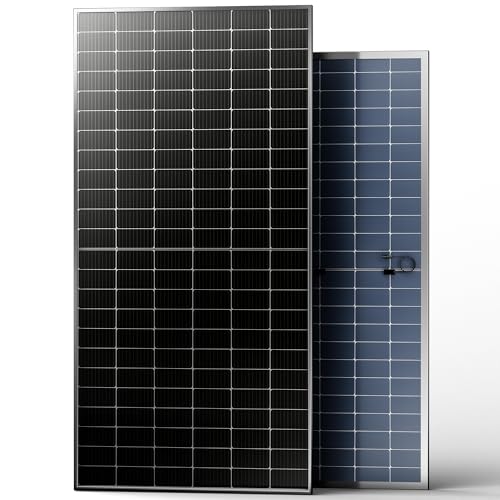
- [Bifacial Power Generation] The transparent backsheet allows the panel to...
- [High Output, Easy Installation] With 550W of rated power per panel, fewer...
- [Versatile for Home & Off-Grid Systems] Designed for a wide range of...
Conclusion
Depth of discharge is not just a spec on a battery label — it is the single most important number for making your system last.
Go grab your battery’s spec sheet right now and check its rated DoD, then size your daily usage to leave a 10% to 20% buffer below that limit — it takes five minutes and it might be the reason your batteries last years longer than you expected.
Frequently Asked Questions about What is Depth of Discharge (Dod) and How Does it Affect Battery Sizing?
What exactly does depth of discharge mean in simple terms?
Depth of discharge tells you how much of your battery’s stored energy you actually use before you recharge it. If you have a 100 amp-hour battery and you use 60 amp-hours, your DoD is 60 percent.
The remaining 40 percent stays in the battery as a safety buffer. Going past the recommended DoD damages the battery and shortens its life significantly.
How does DoD affect how many batteries I need to buy?
A lower DoD rating means you need more batteries to meet your daily energy needs. For example, a 50 percent DoD battery requires twice the capacity of an 80 percent DoD battery to deliver the same usable power.
I always calculate my total battery bank by dividing my daily watt-hours by the DoD percentage. This prevents me from buying too few batteries and draining them too deep.
What is the best battery monitor for tracking DoD in real time?
I know the frustration of guessing how much battery power you have left and ending up in the dark. That worry is exactly why I started using a reliable monitor that shows my exact DoD at a glance, and this is what I finally settled on.
It connects directly to my battery terminals and displays the remaining capacity as a percentage. I can check it from across the room and know instantly if I am getting too close to my DoD limit.
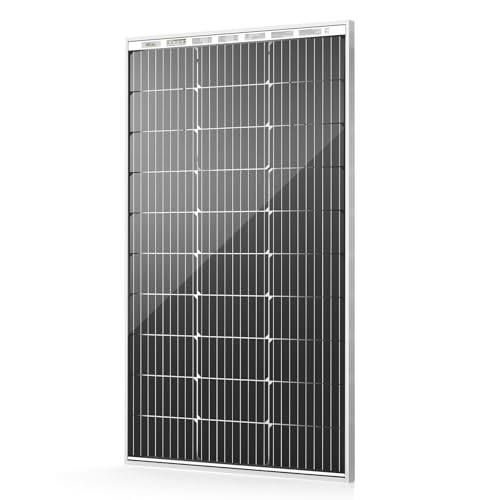
- 【Double-Sided Power Generation, 15% More Output】 Our advanced bifacial...
- 【Superior 25% Efficiency with PERC Technology】 Equipped with premium...
- 【Extreme Durability & All-Weather Proof】 Built with a robust...
Can I use a battery past its rated DoD in an emergency?
You can, but you should treat it like an emergency only. Every time you go past the rated DoD, you permanently reduce the battery’s total lifespan by a small amount.
If you do this regularly, your battery will die months or years earlier than expected. I keep a small backup generator for emergencies instead of abusing my batteries.
Which solar charge controller works best for protecting battery DoD?
Finding a charge controller that automatically stops discharging at your set DoD limit can save your batteries from accidental damage. I tested several options before finding the one that finally worked for my setup.
It lets me program a low-voltage disconnect that matches my battery’s DoD rating. This means the system shuts off loads automatically before I damage the batteries.
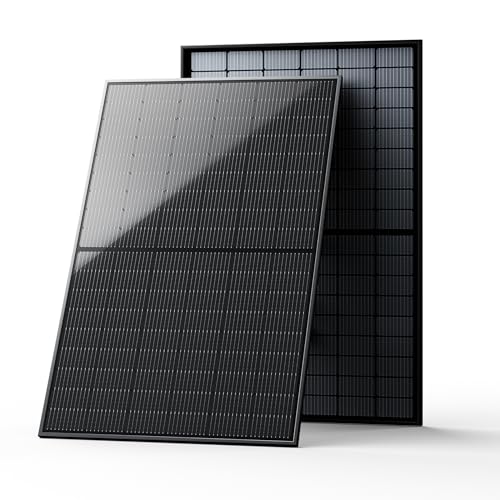
- ☀【Class A Solar Cell】The EPOCH solar panel features high-quality...
- ☀【High Conversion Rate】With high transparency up to 91.5% and...
- ☀【Durable&Waterproof】Features a rugged design that can tolerate hail...
Does DoD matter more for lithium or lead-acid batteries?
DoD matters for both types, but the numbers are very different. Lithium batteries typically handle 80 to 100 percent DoD, while lead-acid batteries should stay at 50 percent or less for good lifespan.
I have found that ignoring DoD hurts lead-acid batteries faster than lithium. But even lithium batteries last longer if you leave a small buffer below their maximum DoD rating.