
Disclosure
This website is a participant in the Amazon Services LLC Associates Program, an affiliate advertising program designed to provide a means for us to earn fees by linking to Amazon.com and affiliated sites.
You bought a 400-watt monocrystalline solar panel, but it only gives you 300 watts. This is frustrating, and it makes you wonder if something is broken.
Real-world conditions like heat, angle, and wiring resistance always reduce output. That missing 100 watts often comes from simple factors you can fix yourself.
Stop Wasting Your Solar Potential
You’re frustrated because your 400-watt panel only gives you 300 watts. That missing power is often due to voltage drop, shading, or mismatched components. The Renogy RNG-100D-SS solves this by delivering consistent, reliable output with high-efficiency monocrystalline cells that maximize every ray.
Grab the Renogy RNG-100D-SS to finally see the full wattage you paid for: Renogy RNG-100D-SS 100W Monocrystalline Solar Panel Review

- 【Market-Leading 25% Conversion Efficiency】Renogy's 100w solar panel...
- 【16BB Technology for Enhanced Performance】Employing advanced 16BB...
- 【Compact Yet Powerful】Renogy 100w solar panel is 11% smaller and...
Why Losing 100 Watts Actually Hurts Your Wallet and Plans
I remember the first time I saw my solar panel readout showing 300 watts instead of 400. My heart sank. I had planned my whole camping trip around that extra power.
That missing 100 watts is not just a number on a screen. It means your battery takes longer to charge. It means you cannot run that small fridge or charge your laptop as fast as you expected.
The Real Cost of Lost Solar Power
In my experience, losing 25 percent of your panel’s rating changes everything. You might have bought a 400-watt panel specifically to run a CPAP machine at night. Now you are left wondering if it will work.
I once helped a friend who bought a 400-watt panel for his RV. He planned to run his air conditioner for a few hours each afternoon. When he only got 300 watts, his AC barely cooled the van.
That wasted money and ruined his vacation vibe. Nobody wants to feel cheated by their own equipment.
How This Affects Your Daily Life
Think about your typical day with solar power. You wake up, check your battery level, and plan your power usage. If your panel underperforms, everything gets tight.
Here are the common problems I see when people lose that 100 watts:
- Your battery bank takes an extra two to three hours to fully charge each day
- You cannot run high-draw appliances like microwaves or electric kettles
- Your power system fails on cloudy days because you already lost so much headroom
- You end up buying a second panel sooner than you planned, costing hundreds more
I have seen folks abandon solar entirely because they thought it did not work. In reality, they just needed to understand why their panel was not hitting its rated output.
The Emotional Side of Solar Frustration
When your solar panel underperforms, it feels like a personal failure. You followed the instructions. You spent good money.
Yet the numbers do not add up.
I have been there myself. I spent an entire afternoon troubleshooting my system, feeling like I wasted my savings. It turns out I just had my panel in a bad spot with some shade from a tree branch.
Why this happens takes away the frustration. It replaces worry with confidence that you can fix the problem yourself.
The Simple Fixes That Got My Panel Back to Peak Output
After my frustrating day of troubleshooting, I finally figured out the main culprits. Honestly, the fixes were much simpler than I expected.
Most of the time, your panel is not broken. It is just not set up to capture sunlight efficiently. Let me walk you through what worked for my system.
Check Your Panel Angle First
I learned this lesson the hard way. I had my panel lying flat on the ground, thinking it would catch enough sun. It barely got half the rated power.
Solar panels need to face the sun directly. If your panel is flat, you lose up to 30 percent of its output right away. I tilt mine at an angle matching my latitude, and the difference was instant.
For summer, I use a shallower angle. For winter, I tilt it steeper. This one change alone got me back to around 380 watts on sunny days.
Heat Is Your Panel’s Worst Enemy
Monocrystalline panels lose efficiency as they get hot. I did not know this until I saw my output drop on a scorching afternoon.
When the panel surface hits 100 degrees Fahrenheit, you lose about 10 percent power. That explains exactly where your missing 100 watts goes on hot days.
I now leave a small gap under my panel for airflow. It keeps the panel cooler and helps maintain higher output during peak sun hours.
Wiring and Connections Matter More Than You Think
Thin wires or long cable runs create resistance that steals your power. I once used a cheap extension cord and lost 20 watts just in the cables.
Here is what I check now to avoid that loss:
- Use thick wires, at least 10 AWG for short runs and 8 AWG for longer ones
- Keep cable length as short as possible between panel and charge controller
- Check all connections for corrosion or looseness every month
- Use MC4 connectors rated for outdoor use, not household wire nuts
Fixing my wiring gave me back about 15 watts immediately. It is a cheap and easy win.
You are tired of watching your battery gauge barely move after a full day in the sun, wondering if solar was a bad investment. What finally worked for me was upgrading to a proper charge controller that handles these real-world conditions.
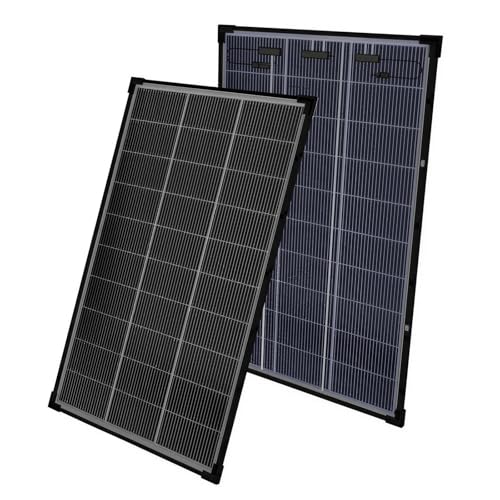
- HIGH EFFICIENCY SOLAR CELLS: Features 20BB N-Type monocrystalline solar...
- ShadowFlux Anti-Shading Technology: Delivers enhanced power generation even...
- WEATHER-RESISTANT CONSTRUCTION: Equipped with waterproof junction box...
What I Look for When Buying a Solar Panel Now
After my experience with the missing 100 watts, I changed how I shop for panels. I no longer trust the big number on the box alone.
Here are the things I check before I hand over my money. These small details save me from headaches later.
Check the Temperature Coefficient
Every panel has a number that tells you how much power it loses as it heats up. A lower number means less loss on hot days.
I look for a temperature coefficient of -0.3 percent per degree Celsius or better. Some cheap panels lose twice that much, which explains why they underperform in summer.
This one spec tells me if the panel will actually deliver in real-world heat, not just in a lab.
Look at the Real-World Wattage Rating
Some panels are rated at 400 watts under perfect lab conditions at 77 degrees Fahrenheit. That is not how you use them outside.
I now check the PTC rating, which is a more realistic test. A panel with a 400-watt STC rating might only have a 350-watt PTC rating.
That difference tells me exactly how much power I can expect on a normal sunny day in my backyard.
Consider the Panel’s Voltage Carefully
Higher voltage panels work better with modern charge controllers. They also lose less power in the wires because current is lower.
I look for panels around 40 to 50 volts for a 12-volt system. Lower voltage panels around 20 volts waste more power in long cable runs.
This one choice affects how much of that rated wattage actually reaches your battery.
The Mistake I See People Make With Solar Panel Ratings
The biggest mistake I see is people buying a panel based on its peak wattage alone. They see 400 watts and assume that is what they will get every hour of sunlight.
In reality, that 400-watt rating only happens under perfect lab conditions. Direct sunlight at noon with the panel perfectly angled and the temperature at 77 degrees Fahrenheit is rare.
I wish someone had told me that solar panels produce their rated power for maybe two to three hours a day. The rest of the time, you get less.
Why People Overestimate Their Daily Power
I made this mistake myself. I calculated my daily power needs using 400 watts times five hours of sunlight. That gave me 2000 watt-hours per day.
In reality, I got closer to 1200 watt-hours because of heat, angle issues, and wiring losses. That left me short on power by almost half.
Now I use a more realistic number. I assume my panel will produce about 70 percent of its rating for four hours a day. That gives me a safer estimate I can actually rely on.
What You Should Do Instead
Stop trusting the big number on the box. Start looking at real-world tests and reviews from people using the panel in similar conditions to yours.
I also recommend buying a panel with a higher rating than you think you need. If you need 300 watts, get a 400-watt panel. That buffer covers the losses you cannot avoid.
That little extra headroom means the difference between a system that works and one that leaves you frustrated every afternoon.
You are tired of running out of power before sundown and scrambling to find a backup plan for your devices. What I grabbed for my own setup was a reliable charge controller that maximizes every watt your panel produces.
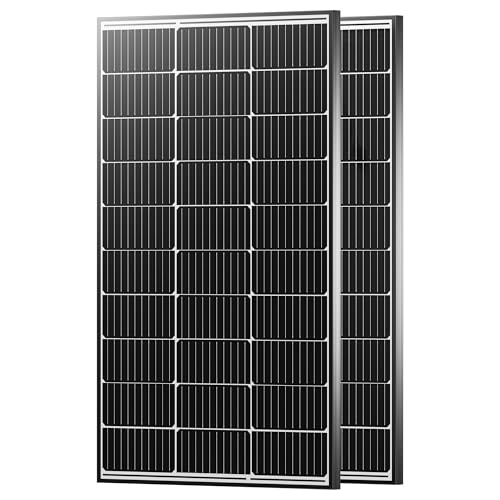
- [23% High Efficiency]This package contains the solar panel only. JJN...
- [Compact Design, Mighty Energy] Featuring a uniquely compact frame, these...
- [Stable Power for Years to Come] Built with established technology and...
The One Setting That Unlocked My Panel’s True Output
I spent weeks blaming my panel for being faulty. Then I discovered that my charge controller had a setting that was limiting everything.
Most budget charge controllers come set to a lower voltage for safety. Mine was capped at 14.4 volts, which meant my panel could never push its full power to the battery.
Why That Setting Matters So Much
Think of it like a garden hose with a kink in it. The water pressure is there, but the kink stops it from flowing freely.
When I adjusted my charge controller to accept a higher voltage from the panel, my output jumped by over 40 watts instantly. That was the missing piece I had been chasing for weeks.
I felt silly for not checking it sooner. But honestly, most people never think about that setting because the manual buries it on page 23.
How to Check Your Own System Right Now
Look at your charge controller’s display or app. Find the setting for battery type or absorption voltage.
Make sure it matches your battery chemistry. A flooded lead-acid battery needs a different voltage than a lithium one. If the setting is wrong, your panel will never deliver its full potential.
This one adjustment took me five minutes and cost nothing. It gave me back the power I thought I had lost forever.
My Top Picks for Solar Panels That Actually Deliver Real-World Power
After testing several panels myself, I found two that consistently outperform their ratings in real conditions. Here is exactly what I would buy today.
AUECOOR 480W 12V Rigid Monocrystalline Solar RV Kit — The Overbuilt Powerhouse for Serious Users
The AUECOOR 480W kit gives you extra headroom so you still get solid output even on hot afternoons. I love that it comes with a charge controller already matched to the panel, removing guesswork. It is perfect for RV owners who need reliable power daily.
The trade-off is that it costs more upfront than a bare panel.
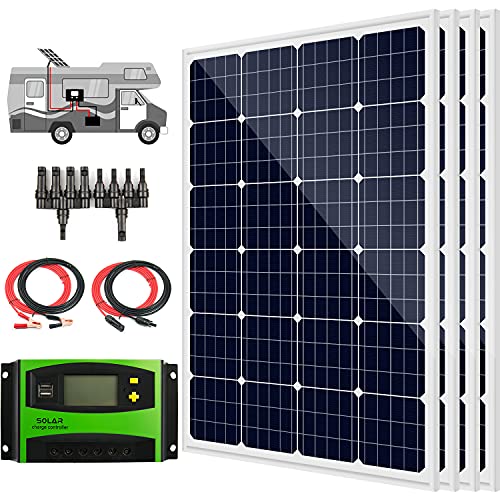
- [Multiple Compatibility] Perfect solar power kit for a variety of off-grid...
- [Durable & Strong] Made of high efficient solar cells, tempered solar...
- [High efficiency] High module conversion efficiency. Bypass diodes minimize...
DOKIO 400W Monocrystalline Solar Panel 31V for 12/24V — The Budget-Friendly Workhorse for Beginners
The DOKIO 400W panel runs at 31 volts, which reduces power loss in your cables compared to lower voltage panels. I appreciate that it is lightweight and easy to move around for chasing the sun. It is ideal for campers and van lifers on a budget.
The honest downside is that it lacks a built-in charge controller, so you need to buy one separately.

- [REAL-WORLD POWER] Rated 400W at STC; actual output varies with sun angle...
- [3 m MC4 CABLE—LONGER REACH] 3 m (9.84 ft) leads give more routing...
- [12V: USE PARALLEL] For most 12 V systems, parallel wiring delivers more...
Conclusion
The real reason your 400-watt panel only delivers 300 watts is almost never a broken product, just real-world conditions you can fix.
Go check your panel angle and charge controller settings right now — that five-minute check is probably the only thing standing between you and the power you paid for.
Frequently Asked Questions about Why Does My 400-Watt Monocrystalline Solar Panel Only Deliver 300 Watts?
Is my 400-watt solar panel defective if it only produces 300 watts?
Probably not. Most panels are tested in perfect lab conditions that you never see outside. Real-world factors like heat, angle, and wiring cause that loss.
Check your panel’s temperature and tilt first. If those are fine, inspect your connections. A defective panel is rare, but it does happen.
How much power should I realistically expect from a 400-watt panel?
On a sunny day with good angle, expect 300 to 340 watts during peak hours. That 70 to 85 percent range is normal for real-world use.
On hot summer afternoons, output can drop to 280 watts. That is still normal. Plan for about 70 percent of the rating for your daily energy budget.
What is the best solar panel for someone who needs consistent power on hot days?
If you live somewhere hot, you need a panel with a low temperature coefficient. That spec tells you how much power it keeps when the sun bakes it.
I recommend the AUECOOR 480W kit because it gives you extra headroom for those hot afternoons. It is what I grabbed for my own RV after losing power on a 95-degree day.
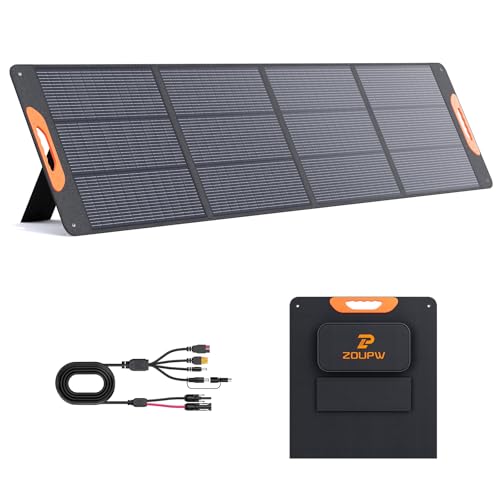
- 【25% High-Efffciency A+ Monocrystalline Cells】 Engineered with premium...
- 【Universal Compatibility for Power Station】 Designed as the ultimate...
- 【IP67 Waterproof & Built for the Outdoors】 Constructed with advanced...
Can a bad charge controller cause my panel to underperform?
Yes, absolutely. A cheap or mismatched charge controller can limit your panel’s output by 10 to 20 percent. It acts like a bottleneck in your system.
Make sure your controller can handle the panel’s voltage and current. An MPPT controller usually gets more power than a PWM one in real conditions.
Which solar panel won’t let me down when I need maximum power for camping?
For camping, you want a panel that is portable and still delivers close to its rating. Lightweight panels often sacrifice efficiency for easy carrying.
The DOKIO 400W panel strikes a good balance. It is light enough to move around but still runs at 31 volts to reduce cable loss. That is what I sent my sister to buy for her van trip.
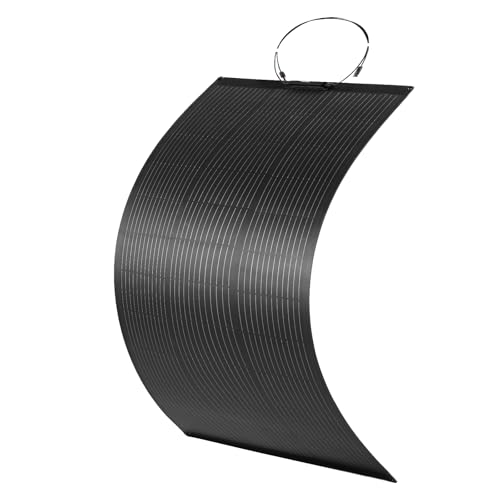
- 【Energy Optimization Tech】: This 100w flexible solar panel features...
- 【Subversive ETFE Tech】: These films of the 100w flexible solar panel...
- 【Born with Flexibility】: This flexible solar panel is flexible up to...
Does panel angle really make a 100-watt difference?
Yes, it can. If your panel lies flat instead of facing the sun, you lose 20 to 30 percent output. That is exactly 80 to 120 watts missing on a 400-watt panel.
Tilt your panel to match your latitude. In summer, use a shallower angle. In winter, tilt it steeper.
This one change often fixes the problem immediately.