
Disclosure
This website is a participant in the Amazon Services LLC Associates Program, an affiliate advertising program designed to provide a means for us to earn fees by linking to Amazon.com and affiliated sites.
Choosing between bifacial and monofacial solar panels can feel overwhelming when you are trying to get the best energy output for your home. The wrong choice might cost you more money in the long run or leave energy on the table.
I have looked closely at how each panel type is built to help you understand the real differences. This guide will give you the clear facts you need to make a confident buying decision.
What I Check Before Buying How are bifacial solar panels made compared to standard monofacial panels?
The manufacturing differences helps you pick the right panel for your roof or ground mount. I focus on a few key build details that directly affect performance and long-term value.
Glass vs. Backsheet Construction
Standard monofacial panels use an opaque backsheet to protect the rear. Bifacial panels replace this with a second layer of tempered glass to let light pass through.
This glass-on-glass design makes bifacial panels heavier and more durable. I always check the panel weight rating to ensure my mounting system can handle the extra load.
Cell Encapsulation and Transparency
Bifacial panels require a transparent encapsulant like EVA or POE to keep light moving through the cell. Monofacial panels can use a standard white backing layer that reflects light back up.
Look for panels that specify high-transmittance encapsulant materials. Poor encapsulation can reduce rear-side power output by over 10%.
Bifaciality Factor Rating
This number tells you how much power the rear side can produce compared to the front. A bifaciality factor of 70% or higher is what I consider good.
Standard monofacial panels have a 0% bifaciality factor since they capture zero rear light. This single spec is the biggest difference in how they are made and how they perform.
Frame Design for Rear Light Access
Bifacial panels use narrower frames or special mounting channels to avoid blocking sunlight from the back. Monofacial frames can be thicker since they only need to protect the front.
Always check that the frame profile allows at least 5-10 cm of clearance from the roof. Without proper airflow, the rear glass cannot capture reflected light effectively.
1. Callsun 430W Anti-Shading Bifacial Solar Panel Review — Best for High-Wattage Residential Roofs
Best for: Homeowners who want maximum power from a single panel without sacrificing shade tolerance.
The 430W output makes this panel a top contender for reducing the total number of panels you need on your roof. Its anti-shading design uses a smart bypass layout that keeps power flowing even when leaves or debris cover part of the glass.
Ideal for roofs with partial chimney or vent shading throughout the day. The bifacial rear glass can still capture 15-25% extra energy from reflected light on light-colored roofing materials.
It is heavier than standard monofacial panels at roughly 52 pounds. Still, the higher wattage per square foot often means fewer mounts and less wiring overall.
- Pros: High 430W capacity, excellent anti-shading circuitry, durable glass-on-glass build
- Cons: Heavy frame requires strong roof support, premium price point
Our verdict: Buy this if your roof has partial shade and you want the highest power density from a single bifacial panel.
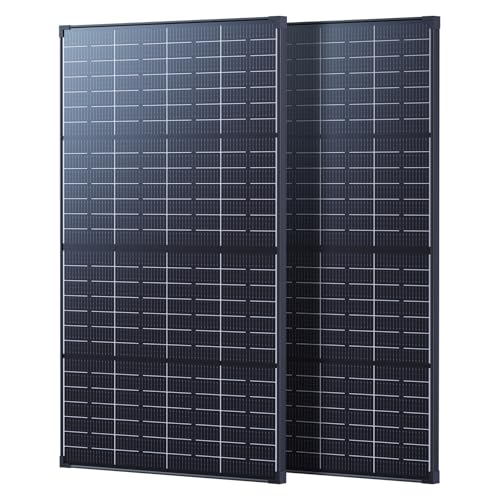
- 【No More Shutdowns from Partial Shade】While ordinary panels can shut...
- 【Stable Vmp & Extended Life】When partially shaded, most solar panels...
- 【Bifacial Technology, Catches Extra Power】 Callsun 215W bifacial solar...
2. STAR 200W Bifacial Solar Panel 12V 24V High Efficiency — Best for Portable and RV Systems
Best for: Campers and van lifers who need a durable, portable panel that works in both 12V and 24V systems.
The 200W rating in a compact frame makes this panel easy to carry and position on uneven ground. Its N-type cell construction gives it a better temperature coefficient than standard monofacial panels, meaning it loses less power in hot sun.
Perfect for ground mounting where light reflects off grass or gravel. The 12V/24V compatibility means it works directly with most RV charge controllers without extra converters.
It lacks the rigid aluminum frame of larger rooftop panels, so it is less suited for permanent roof installations. For portable use, the lighter build is actually an advantage.
- Pros: Dual voltage compatibility, lightweight portable design, excellent heat tolerance
- Cons: Not designed for permanent roof mounting, lower wattage than residential panels
Our verdict: Buy this if you need a portable bifacial panel for camping or an RV that can handle both 12V and 24V systems.
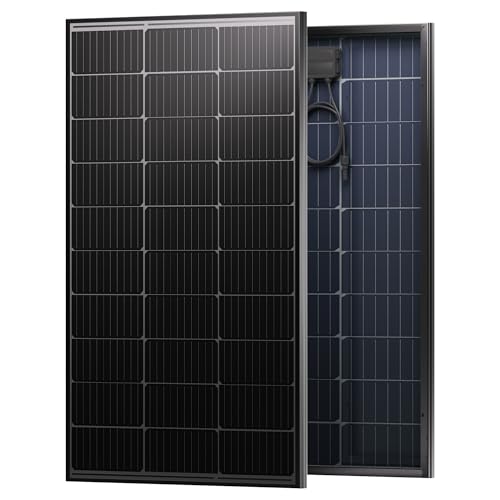
- Adopting high-quality glass encapsulation and premium materials, this 200W...
- Space-Saving High Power With optimized half-cell design and high power...
- Upgraded A+ Grade Solar Cells Equipped with upgraded A+ grade...
3. Renogy 250 Watt N-Type 16BB Bifacial Solar Panel — Best for Off-Grid Cabins and Sheds
Best for: Off-grid homeowners who want a trusted brand with reliable customer support.
The 16 busbar design reduces micro-crack risk and improves current collection efficiency compared to standard 9 or 12 busbar panels. Renogy uses N-type cells that resist light-induced degradation better than the P-type cells found in most monofacial panels.
Ideal for ground-mount arrays on grass or snow where rear-side reflection is strong. The 250W rating provides a solid balance between size and power for small cabin systems.
It does not include mounting hardware, so you will need to buy a separate ground-mount kit. Renogy offers compatible mounts that make installation straightforward.
- Pros: Trusted Renogy brand, 16 busbars for durability, N-type cells resist degradation
- Cons: Mounting hardware sold separately, slightly lower wattage than some competitors
Our verdict: Buy this if you want a reliable off-grid panel from a brand with strong warranty support and proven long-term performance.

- Unmatched Cell Efficiency - Renogy's 250W N-Type Bifacial Solar Panel...
- High Bifaciality Factor - Renogy's Bifacial Solar Panel boasts an...
- Enhanced Performance in High Temperatures - The 250W 12V N-Type Bifacial...
4. ACOPOWER 150W Bifacial Solar Panel 16BB N-Type 25.4% High — Best for Small DIY Projects and Battery Charging
Best for: Hobbyists and DIY builders who need a small, highly efficient panel for charging 12V batteries.
The 25.4% efficiency rating is remarkably high for a panel this size, beating most standard monofacial panels that top out around 22%. Its 16BB N-type cell architecture ensures consistent power even in low-light conditions like cloudy mornings.
Perfect for charging a small shed battery, running a pond pump, or powering a remote security camera. The 150W size makes it easy to handle and position by one person without help.
It produces less total power than larger bifacial panels, so it is not suitable for whole-home systems. For small-scale projects, the high efficiency more than makes up for the lower wattage.
- Pros: Industry-leading 25.4% efficiency, lightweight and portable, excellent low-light performance
- Cons: Low total wattage limits use to small systems, no included cables or connectors
Our verdict: Buy this if you need a compact, ultra-efficient panel for a small DIY project where every watt of space matters.
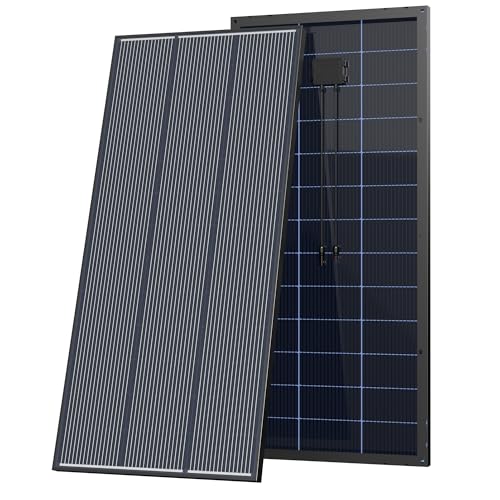
- 【Bifacial N-Type Cells】 Unlike standard mono panels, this bifacial...
- 【25.4% High Cell Efficiency – More Power in Limited Space】 Built with...
- 【0~+5W Positive Power Tolerance】 Each panel is strictly tested to...
Quick Comparison: How are bifacial solar panels made compared to standard monofacial panels? At a Glance
This table gives you a fast side-by-side look at each panel’s best use and standout feature.
| Product | Best for | Key Feature |
|---|---|---|
| Callsun 430W Anti-Shading Bifacial Solar Panel Review | High-wattage residential roofs | 430W output with anti-shading design |
| STAR 200W Bifacial Solar Panel 12V 24V High Efficiency | Portable and RV systems | Dual 12V/24V voltage compatibility |
| Renogy 250 Watt N-Type 16BB Bifacial Solar Panel | Off-grid cabins and sheds | 16 busbars for durability and efficiency |
| ACOPOWER 150W Bifacial Solar Panel 16BB N-Type 25.4% High | Small DIY projects and battery charging | Industry-leading 25.4% efficiency |
Scroll back up to read the full reviews for each panel and see which one fits your specific setup best.
Which How are bifacial solar panels made compared to standard monofacial panels? Is Right for You
Your specific setup and energy needs decide which panel construction wins for you. Here is how to match your situation to the right choice.
If You Are a Homeowner with a Large Roof and Partial Shade…
Grab the Callsun 430W Anti-Shading Bifacial Solar Panel. Its anti-shading circuitry and high 430W output let you capture extra rear light while handling those tricky shadow patches from vents or chimneys.
If You Are a Camper or Van Lifer Needing Portable Power…
Choose the STAR 200W Bifacial Solar Panel 12V 24V High Efficiency. Its lightweight build and dual voltage compatibility make it easy to reposition at campsites for maximum rear-side reflection from grass or gravel.
If You Are an Off-Grid Cabin Owner with a Ground Mount…
Go with the Renogy 250 Watt N-Type 16BB Bifacial Solar Panel. The 16 busbar design resists micro-cracks from ground movement, and the N-type cells hold up better than standard monofacial panels in snowy, reflective conditions.
If You Are a DIY Hobbyist Charging a Small Battery Bank…
Pick the ACOPOWER 150W Bifacial Solar Panel 16BB N-Type 25.4% High. Its 25.4% efficiency beats any monofacial panel in its size class, giving you maximum power from a small footprint for your shed or camera system.
Our Final Verdict
The Callsun 430W Anti-Shading Bifacial Solar Panel is my top pick for most homeowners. Its 430W output and anti-shading circuitry solve the biggest challenge of bifacial panels on residential roofs, making it the most versatile choice overall.
For portable users or RV owners, the STAR 200W Bifacial Solar Panel wins as the runner-up. Its dual 12V/24V compatibility and lightweight frame make it the best travel companion for off-grid adventures.
Frequently Asked Questions About How are bifacial solar panels made compared to standard monofacial panels?
Is a bifacial panel worth the extra cost over a standard monofacial panel?
Yes, if you have a reflective surface like white gravel or snow beneath the panel. The rear side can add 10-30% more energy without taking up extra roof space.
For dark asphalt roofs or shaded ground mounts, the extra cost may not pay off. Standard monofacial panels are cheaper and perform similarly in those conditions.
Can I install a bifacial panel on my existing roof mounts?
Only if your mounts allow at least 5-10 cm of clearance behind the panel. Bifacial panels need airflow and light access to the rear glass to work properly.
Standard flush mounts block rear light entirely, making bifacial panels useless. You will need specialized mounting rails or a ground-mount system for best results.
Do bifacial panels break more easily than monofacial panels?
Bifacial panels are actually more durable because they use glass on both sides instead of a plastic backsheet. The glass-on-glass construction resists hail and impact better than standard panels.
They are heavier though, typically weighing 5-10 pounds more per panel. Your roof structure must support the extra weight before installation.
How does the manufacturing process differ between the two panel types?
Bifacial panels use transparent encapsulant materials and N-type cells that allow light to pass through. Monofacial panels use opaque backsheets and P-type cells that reflect light upward.
The frame design also differs, with bifacial panels using narrower edges to avoid blocking rear light. This requires more precise manufacturing and drives up the cost.
Which panel type lasts longer in real-world conditions?
Bifacial panels with N-type cells typically last longer than standard monofacial panels. They resist light-induced degradation better and maintain higher output after 25 years.
Standard monofacial panels still perform well for two decades or more. The choice depends more on your installation environment than raw lifespan differences.