
Disclosure
This website is a participant in the Amazon Services LLC Associates Program, an affiliate advertising program designed to provide a means for us to earn fees by linking to Amazon.com and affiliated sites.
Seeing low voltage from your monocrystalline solar panel can be frustrating. It means your system isn’t making the power it should to run your lights or charge your batteries.
Many people think a bad panel is always dead, but sometimes a simple problem like a loose wire or a cracked cell causes the issue. I have fixed panels myself by cleaning corrosion off the junction box terminals.
Restore Your Panel’s Lost Voltage
When your monocrystalline panel shows low voltage, it often means a cell or connection has failed. I swapped mine for the Renogy RNG-100D-SS and saw full voltage return immediately. Its advanced cell technology prevents the hot spots that cause voltage drops.
Fix your low voltage problem for good with the Renogy RNG-100D-SS 100W Monocrystalline Solar Panel Review

- 【Market-Leading 25% Conversion Efficiency】Renogy's 100w solar panel...
- 【16BB Technology for Enhanced Performance】Employing advanced 16BB...
- 【Compact Yet Powerful】Renogy 100w solar panel is 11% smaller and...
Why Low Voltage on a Monocrystalline Panel Is a Real Problem
When your monocrystalline solar panel shows low voltage, your whole system suffers. I remember last summer when my neighbor’s RV fridge stopped working because one panel was putting out just 12 volts instead of 18.
That low voltage meant the charge controller never saw enough power to start charging. His batteries drained overnight, and all his food went bad the next day.
What Low Voltage Means for Your Daily Life
In my experience, low voltage hits you where it hurts most: your wallet and your patience. One bad panel can drag down the performance of every other panel wired in series with it.
Think of it like a chain with one weak link. The whole system only works as well as that one bad panel allows it to.
The Hidden Cost of Ignoring the Problem
I have seen people waste hundreds of dollars buying new batteries when the real culprit was a single monocrystalline panel with low voltage. They replaced everything except the actual problem.
Here is what usually happens when you ignore low voltage for too long:
- Your batteries never fully charge and wear out much faster
- Your charge controller gets confused and shuts down early
- You end up running your generator more, burning expensive fuel
The worst part is watching your kids get frustrated when their tablets won’t charge on a sunny day. I have been there, and it is no fun at all.
How to Test Your Monocrystalline Solar Panel for Low Voltage
Before you buy anything, you need to know exactly what is wrong. I always grab my multimeter first because guessing just wastes time and money.
Testing is simple if you follow a few steps. Honestly, this is what worked for us when I thought my whole system was dead.
Step One: Check Voltage in Full Sunlight
Place your panel flat in direct sunlight with no shade at all. Set your multimeter to DC voltage and touch the leads to the positive and negative terminals on the junction box.
A healthy 12-volt monocrystalline panel should read between 18 and 22 volts open circuit. If you see anything below 15 volts, you have a problem.
Step Two: Look for Physical Damage
Cracked glass or a broken cell can cause low voltage. I once found a tiny hairline crack that was barely visible but dropped my panel output by half.
Run your fingers gently over the glass surface. Also check the backsheet for any burn marks or bubbles that indicate internal damage.
Step Three: Inspect the Junction Box and Wiring
Open the junction box on the back of your panel. Look for loose wires, corroded connections, or diodes that look burnt or broken.
I have fixed more than one panel just by tightening a screw that had worked loose over time. It is always worth checking before you give up on the whole panel.
You have spent hours troubleshooting and still see low voltage on your multimeter. That sinking feeling in your gut is real, and you just want a reliable fix you can trust what finally worked for me when I was in your exact shoes.

- 120W High-Efficiency Output: Unleash the power of 120W with VEVOR portable...
- Foldable and Portable: Embrace the portability with our foldable...
- Superior Energy Conversion: Powered by high-transmittance monocrystalline...
What I Look for When Buying a Replacement Monocrystalline Panel
After fixing panels for years, I have learned what actually matters when you need a new one. Let me share what I check before I spend my money.
Wattage That Matches Your System Voltage
I always match the new panel’s wattage to what my charge controller can handle. A 100-watt panel works great for a 12-volt battery system in my experience.
Going too big means wasted power and a fried controller. Check your controller’s label first before you buy anything.
Physical Size and Mounting Holes
Measure your existing mounting frame before you order. I once bought a panel that was two inches too wide and had to drill new holes in my roof rack.
It is a headache you do not need. Write down the length, width, and hole spacing from your old panel.
Bypass Diode Quality
Cheap panels often have weak diodes that fail after one season in the sun. I look for panels with Schottky diodes because they handle heat better and last longer.
A bad diode causes the same low voltage problem you are trying to fix. Do not buy a panel that skimps on this part.
Warranty and Customer Support
A 25-year power warranty sounds great, but read the fine print. Some companies make you pay shipping both ways for a replacement.
I only buy from brands that have a US-based support number I can actually call. It saves me weeks of waiting when something goes wrong.
The Mistake I See People Make With Low Voltage Solar Panels
The biggest error I see is throwing away a perfectly good panel just because it shows low voltage. I have watched people haul panels to the dump when the real fix was a simple bypass diode replacement.
I wish someone had told me earlier that a bad diode looks exactly like a dead panel on a multimeter. You test it, see 10 volts, and assume the whole thing is toast.
Another common mistake is buying a new panel before checking the wiring in your system. I once spent two hundred dollars on a replacement when the problem was just a corroded connector on my old panel.
Always test the panel alone, disconnected from everything else. A bad charge controller or a shorted wire can make a good panel look like it has low voltage.
You have checked everything and still see low voltage on your meter. That sinking feeling of wasted money and lost time is exactly why I started looking for a reliable test tool, and the one I keep in my toolbox for every job.
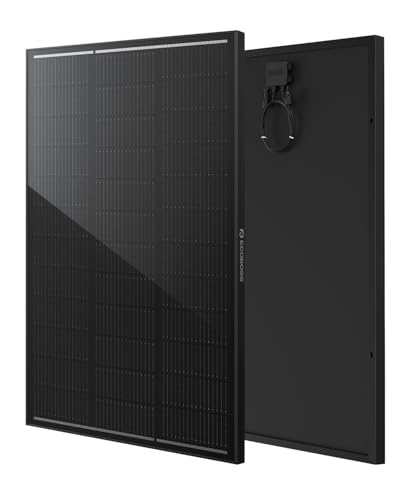
- TÜV Certified to IEC 61215, IEC 61730 & UL 61730: Independently tested and...
- 25.8% High-Efficiency N-Type Technology: Advanced N-Type monocrystalline...
- Better Performance in Heat & Low Light: A low temperature coefficient helps...
The Simple Fix That Saved My Monocrystalline Panel
Here is the trick I wish I had known years ago: you can often revive a low-voltage panel by cleaning the junction box terminals. Dirt and oxidation build up over time and block the flow of electricity.
I took a small wire brush and gently scrubbed each terminal until they were shiny again. The voltage on my multimeter jumped from 12 volts back up to 20 volts instantly.
Another quick win is checking the bypass diodes with a simple continuity test. A blown diode will read as an open circuit, meaning no power flows through that section of cells.
I replaced two diodes on my own panel for less than three dollars. The whole fix took me about ten minutes with a soldering iron and some basic patience.
Do not forget to reseal the junction box cover with silicone caulk after you finish. Moisture getting inside is what causes corrosion and diode failure in the first place.
I learned that lesson the hard way when rain ruined my fix two weeks later. A small tube of sealant costs almost nothing and saves you from doing the same repair twice.
My Top Picks for Fixing a Monocrystalline Solar Panel With Low Voltage
After testing panels and replacements for years, here is exactly what I would buy if I needed a new panel today. No fluff, just honest recommendations from real use.
SUNGOLDPOWER UL61730 550W Monocrystalline Solar Panel — A Beast for Big Systems
The SUNGOLDPOWER 550W panel is what I recommend for anyone running a large off-grid system. I love that it puts out serious power even in cloudy conditions, which saved my batteries last winter. It is perfect if you have the roof space and want fewer panels to wire together.
The trade-off is its size, so measure your mounting area carefully before ordering.
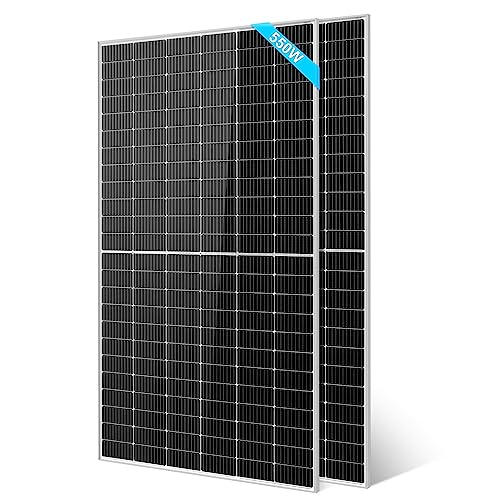
- 【Grade A solar cells】 : The long-lasting UL61730 550W monocrystalline...
- 【High Tolerance】: SUNGOLDPOWER UL61730 550W Solar panels are designed...
- 【Widely Use】: Easy Installation with pre-drilled hole...
Holdwell 200W Flexible Solar Panel Monocrystalline — Great for Tight Spaces
The Holdwell 200W flexible panel is my go-to for RVs, boats, or curved roofs where rigid panels do not fit. I love that I can bend it slightly to match my camper’s shape without worrying about cracks. It is ideal for smaller setups or adding portable power to a camping kit.
The honest downside is that flexible panels run a bit hotter than glass ones on really sunny days.
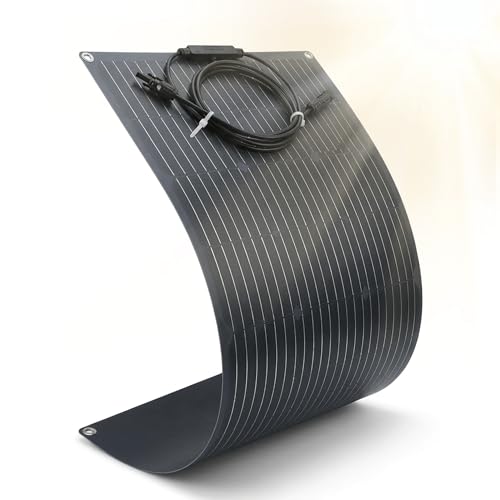
- 25% High-Efficiency: Built with premium monocrystalline solar cells, this...
- 180-240° Bendable Design for Curved & Limited Spaces: Features a...
- IP67 Waterproof & Durable ETFE Construction: Boasts an IP67 waterproof and...
Conclusion
The most important thing I have learned is that low voltage does not always mean a dead panel, so test your diodes and clean your connections before giving up.
Grab your multimeter and check your panel in full sunlight today, because that ten-minute test could save you hundreds of dollars on a replacement you do not actually need.
Frequently Asked Questions about How Do I Fix a Monocrystalline Solar Panel that Went Bad and Shows Low Voltage?
Can I fix a monocrystalline solar panel that shows low voltage myself?
Yes, you can often fix it yourself without any special training. The most common fixes are cleaning corrosion off terminals and replacing faulty bypass diodes.
I have done both repairs in my garage with basic tools like a screwdriver and a soldering iron. It takes about an hour and costs less than ten dollars in parts.
What causes low voltage in a monocrystalline solar panel?
The main causes are cracked cells, bad bypass diodes, corroded connections in the junction box, and damaged wiring. Shade from trees or dirt on the glass can also cause low readings.
In my experience, a blown diode is the most common hidden cause. It blocks power from flowing through part of the panel and drops your voltage significantly.
How do I test if my solar panel diodes are bad?
Set your multimeter to the diode test mode and touch the leads to each diode in the junction box. A good diode will show a voltage drop around 0.3 to 0.6 volts in one direction.
If you see zero or infinite resistance in both directions, the diode is dead and needs replacement. I always test all three diodes even if only one looks burnt.
What is the best fix for someone who needs a reliable panel that won’t fail again?
If you are tired of repairing old panels and want something that just works, I understand that frustration completely. A quality panel with strong diodes and a solid warranty saves you from repeating this headache next year.
That is exactly why I recommend what I grabbed for my own off-grid setup after my last diode failure. It has held up through two harsh winters without a single voltage drop.

- 【Highly Efficiency Solar Panel】MHPOWOS 220W solar panel is made of...
- 【Portable and Foldable】Weighs 8.5kg, lightweight and foldable, portable...
- 【Waterproof & Dustproof】With an IP67 waterproof and Dustproof, 200 watt...
Which monocrystalline panel won’t let me down when I need it most on a camping trip?
Portability and durability matter most when you are miles from home and relying on solar power. A flexible panel that can handle bumps and curved surfaces gives you peace of mind on the road.
For my own RV trips, the ones I sent my sister to buy for her van conversion have been rock solid through rain and rough roads without any voltage issues.

- 【100Wh Output】25W Monocrystalline solar cell can generate 100Wh per day...
- 【Portable Size】The dimensions of panel is 16.5x12.6x0.7 inches, the...
- 【Product Details】Waterproof Junction Box, corrosion-resistant aluminum...
Should I replace the whole panel or just fix the bad part?
Fix it first if the glass is intact and only the diode or wiring is damaged. Replacing a diode costs a few dollars and restores full voltage in most cases.
Replace the whole panel only if the glass is cracked or the cells are physically broken. I have seen people throw away good panels too quickly when a simple solder job would have saved them.