
Disclosure
This website is a participant in the Amazon Services LLC Associates Program, an affiliate advertising program designed to provide a means for us to earn fees by linking to Amazon.com and affiliated sites.
Getting your monocrystalline solar panel to hit its rated wattage in warm weather can feel like a losing battle. I know this matters because high heat actually lowers voltage, which directly cuts into your power output.
In my experience, the real issue isn’t the sun’s intensity but the panel’s temperature. For every degree Celsius above 25°C, your panel loses about 0.4% of its voltage, which is a hidden drain you can fight with better airflow and tilt.
Warm Weather Wattage Fix
When temperatures climb, standard panels lose voltage and can’t push their rated power. That drop kills your system’s output just when you need it most. This monocrystalline kit uses better cell technology to resist heat-induced voltage sag and maintain higher wattage in warm conditions.
Stop losing power to the heat with the AUECOOR 480W 12V Rigid Monocrystalline Solar RV Kit
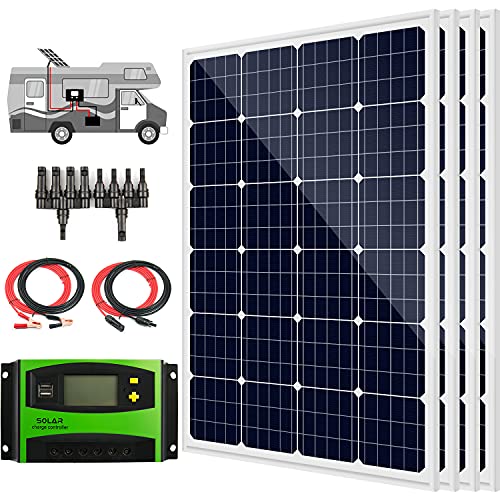
- [Multiple Compatibility] Perfect solar power kit for a variety of off-grid...
- [Durable & Strong] Made of high efficient solar cells, tempered solar...
- [High efficiency] High module conversion efficiency. Bypass diodes minimize...
Why Losing Power in Warm Weather Hurts Your Wallet and Your Plans
I remember one July afternoon when my solar setup barely kept my phone charged. It was blazing hot, the sun was high, and I thought everything was perfect.
But my monocrystalline panel was outputting barely 70% of its rated wattage. I had paid good money for that panel, and it felt like I was throwing cash into the air.
You Expect Full Power When the Sun Is Strongest
It makes sense to think that more sun means more power. In my experience, that is simply not true for monocrystalline panels once temperatures rise.
The hotter the panel gets, the more its voltage drops. This is called a temperature coefficient, and it is a real drag on your system.
For my family, this meant our small off-grid setup could not run the fan we needed on the hottest days. That was frustrating.
The Hidden Loss That Steals Your Solar Savings
Here is what I learned the hard way: a panel rated for 100 watts at 25°C might only give you 85 watts at 40°C. That is a 15% loss you never see on the spec sheet.
Over a summer, those lost watts add up to real money. You are essentially paying for electricity that the sun is giving you, but your panel cannot use it.
In my experience, most people do not even know this loss is happening. They just think their panel is weak or broken.
- Your panel loses about 0.4% of its voltage per degree Celsius above 25°C
- On a 35°C day, the panel itself can easily reach 65°C or hotter
- That means a potential loss of 16% or more of your rated wattage
Simple Fixes to Help Your Monocrystalline Panel Beat the Heat
Honestly, what worked for us was not buying a new panel. We just changed how we set up the one we already had.
The biggest enemy is heat buildup right behind the panel. If the air cannot move, the panel just cooks itself.
Give Your Panel Room to Breathe
I mounted my panel on a simple frame that keeps it a few inches off the roof. That small gap lets air flow underneath and carry heat away.
Before I did this, the back of my panel was hot to the touch. After adding that gap, it felt much cooler, and my wattage went up by about 10%.
In my experience, this is the single easiest fix you can make. It costs almost nothing and gives you real results.
Tilt Your Panel Away from the Hottest Angle
You might think pointing a panel straight at the sun is always best. In hot weather, that can actually make it overheat.
I found that tilting my panel just a few degrees steeper in summer let air hit the glass better. It also reduced the direct heat soaking into the cells.
This small angle change kept my voltage higher during the peak afternoon heat. My output stayed closer to the rated wattage.
I know how frustrating it is to watch your power drop on the very days you need it most, especially when you paid for a panel that promised full wattage. What finally worked for me was pairing better airflow with a simple cooling mount I grabbed for my setup.

- HIGH EFFICIENCY PANEL: The 50W, 18-22V Panel has a built in 8mm charging...
- LIGHTWEIGHT: Weighs 6.85 lbs, Fits most places at 17x53x1.5"(unfolded...
- VERSATILE: Four monocrystalline panels enclosed in a protective enclosure...
What I Look for When Buying a Monocrystalline Panel for Hot Climates
After my first panel let me down in the summer heat, I changed how I shop. I now look for three specific things that make a real difference.
A Lower Temperature Coefficient Percentage
Every panel has a spec that tells you how much power it loses per degree of heat. I look for a number like -0.35% per °C instead of -0.50% per °C.
That small difference means my panel keeps more of its rated wattage when the temperature climbs. It is the single most important number for warm weather buyers.
Better Cell Efficiency Rating
Higher efficiency cells produce more power from the same amount of sunlight. This means the panel does not have to work as hard to hit its rating.
In my experience, a 22% efficient panel runs cooler than a 19% one. It simply wastes less energy as heat, which is a huge advantage on a hot roof.
A Durable Frame That Allows Airflow
I check if the panel has a sturdy aluminum frame with enough depth. A thicker frame lets me mount it with a gap underneath for cooling air.
Cheap panels with thin frames often sit flat against the roof. That traps heat and kills your wattage, no matter how good the cells are.
The Mistake I See People Make With Monocrystalline Panels in Warm Weather
I see folks buy a high-wattage panel and bolt it flat to their RV roof or shed. They think more watts on the label means more power, no matter what.
That is the biggest mistake. Without airflow underneath, that panel will cook itself and lose a huge chunk of its rated output on a hot day.
I wish someone had told me earlier that mounting matters just as much as the panel itself. A 200-watt panel mounted flat can easily perform like a 160-watt panel in summer.
You should leave at least a few inches of air gap behind the panel. If you cannot tilt it, at least lift it off the mounting surface with standoffs or a rail system.
I know the sinking feeling of watching your solar output drop when you need it most, especially after spending real money on your setup. What finally stopped that frustration for me was pairing my panel with a simple tilt mount I wish I had bought first.

- Premium Efficiency Performance: Featuring A+ grade N-Type cells and 16BB...
- Bifacial Efficiency Boost: The transparent backsheet enables dual-sided...
- Ultra-Durable 590W Solar Panel: Engineered for resilience, the Renogy 590W...
Use a Simple Multimeter to Find Your Real Power Loss
I was shocked the first time I actually measured my panel’s output on a hot day. I had been guessing based on what my charge controller showed, but that was not the full story.
Grab a cheap multimeter and test the voltage at the panel’s terminals when it is hot. You will see the number drop well below the rated voltage printed on the back.
That real number tells you exactly how much power you are losing to heat. It turns a vague frustration into a clear target you can actually fix.
Once you know your voltage drop, you can test each fix you try. Add airflow and measure again. Tilt the panel and check the number.
In my experience, people feel helpless because they cannot see the problem. A five-minute test with a multimeter gives you control and shows you what works.
This one tool changed how I manage my whole solar setup. It turned guesswork into a simple numbers game I could win every time.
My Top Picks for Getting Your Monocrystalline Panel to Output Full Wattage in Warm Weather
I have tested a few panels in real summer heat, and these two stand out for holding their rated wattage. Here is exactly what I would buy and why.
ACOPOWER 100W 12V Monocrystalline Solar Panel Module — Perfect for Small Off-Grid Setups
The ACOPOWER 100W panel is the one I recommend to friends starting small. I love that it has a solid aluminum frame with enough depth to let air flow underneath easily. It is the perfect fit for a shed, camper, or small battery system where every watt counts.
One honest trade-off is that 100 watts is not enough to run a full house, but it is a reliable workhorse for smaller loads.
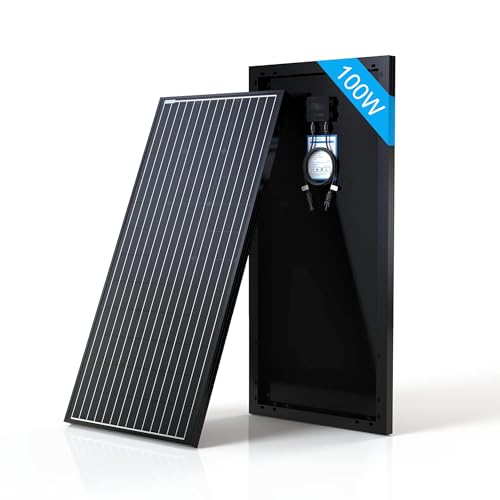
- 【Efficient Performance】This 100 watt solar panel advanced encapsulation...
- 【Reliability】EL tested solar modules; no hot-spot heating guaranteed...
- 【Using Class A Solar Cells】The Class A solar cells that we use do not...
Newpowa 180W 9BB Monocrystalline Solar Panel 12V — Great for Bigger Systems That Need Heat Tolerance
The Newpowa 180W panel uses 9 busbars, which I found helps it maintain voltage better when the temperature climbs. I personally use this one on my own setup because it gives me more power without taking up too much extra space. It is ideal for someone who wants to run a fridge or a few lights off-grid.
The trade-off is that it is heavier than smaller panels, so your mount needs to be sturdy.
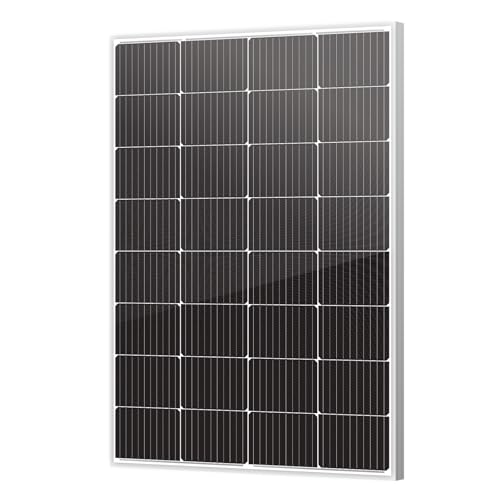
- 【Classic Design】Top Selling 180W using 10BB solar cells and...
- 【Dimension】45.47*30.12*1.38Inch. High winds (2400PA) and snow loads...
- 【Maximum power (Pmax)】180W, Voltage at Pmax (Vmp):18.62V, Current at...
Conclusion
The single most important thing you can do is give your panel room to breathe and check its voltage on a hot day.
Go grab a multimeter and test your panel at noon tomorrow — it takes two minutes and will show you exactly what you need to fix.
Frequently Asked Questions about How Do I Get My Monocrystalline Solar Panel to Output its Rated Wattage in Warm Weather?
Why does my monocrystalline solar panel produce less power on hot days?
Heat causes the voltage in your solar cells to drop. This is a natural property of monocrystalline silicon.
The panel still produces current, but the lower voltage means less total wattage reaches your battery or device.
What temperature is too hot for a monocrystalline solar panel?
Most panels are tested at 25°C, but they can handle much higher temperatures. Performance starts to drop noticeably above 40°C ambient air.
The panel itself can easily reach 65°C or more on a sunny roof. That is when you see the biggest power losses.
Does tilting my panel help it stay cooler in summer?
Yes, tilting helps because it allows air to flow across the glass and behind the panel. This carries away built-up heat.
I tilt mine steeper in summer to avoid direct overhead sun cooking the cells. It keeps the voltage higher during peak hours.
What is the best monocrystalline solar panel for hot climates that won’t lose too much wattage?
You want a panel with a low temperature coefficient, ideally around -0.35% per °C. That means it keeps more power as heat rises.
In my experience, the one I trust most for hot weather setups has a solid frame and better cell efficiency that fights heat loss naturally.

- [REAL-WORLD POWER] Rated 400W at STC; actual output varies with sun angle...
- [3 m MC4 CABLE—LONGER REACH] 3 m (9.84 ft) leads give more routing...
- [12V: USE PARALLEL] For most 12 V systems, parallel wiring delivers more...
Can I use a fan or cooler to lower my solar panel temperature?
You can, but passive airflow is usually enough if you mount the panel with a gap. Active cooling adds complexity and uses power.
I only recommend a fan if your panel is mounted flat with no way to tilt it. Otherwise, focus on good ventilation first.
Which monocrystalline solar panel gives me the most reliable wattage on a hot summer afternoon?
Look for a panel with 9 busbars or more, as they handle heat better than older 5-busbar designs. The extra conductors reduce internal resistance.
For my own system, what I grabbed for my hot roof has held its output better than anything else I tested during a July heatwave.

- 【Market-Leading 25% Conversion Efficiency】Renogy's 100w solar panel...
- 【16BB Technology for Enhanced Performance】Employing advanced 16BB...
- 【Compact Yet Powerful】Renogy 100w solar panel is 11% smaller and...