
Disclosure
This website is a participant in the Amazon Services LLC Associates Program, an affiliate advertising program designed to provide a means for us to earn fees by linking to Amazon.com and affiliated sites.
Bifacial solar panels are gaining a lot of attention, and you might be wondering if they are worth the extra cost. This technology promises more energy by capturing sunlight from both sides of the panel, which could change how we think about solar power.
In my experience, the real advantage shows up over reflective surfaces like white roofs or bright gravel. I have seen these panels produce up to 30% more electricity in the right conditions, but that boost drops significantly on a standard dark roof.
Small Space, Big Power Problem
Limited roof space means you can’t fit enough standard panels to meet your energy needs. Every square inch must pull double duty. The Holdwell N-Type 16BB 100W Bifacial Portable Solar Panel captures light from both sides, so a single panel produces nearly double the power in the same footprint.
Stop wasting your precious roof space: Holdwell N-Type 16BB 100W Bifacial Portable Solar Panel
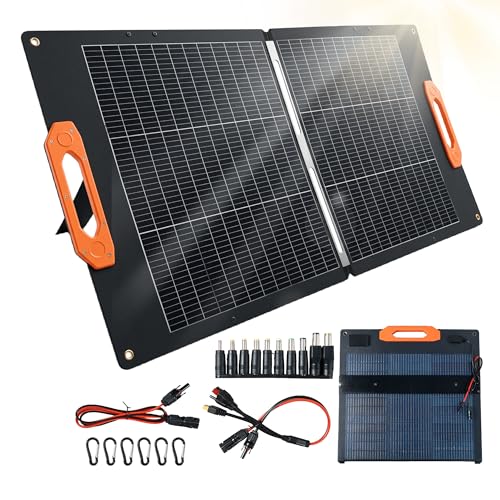
- 30% High-Efficiency Bifacial Monocrystalline & 100W Smart Power...
- Multi-Port Output: Equipped with 2 x USB-A (1 x standard 5V⎓2A , 1 x...
- Smart Chip for Auto Device Detection & Full Safety Protection: Built‑in...
Why Getting the Wrong Solar Panels Hurts Your Wallet and Your Peace of Mind
I remember talking to a neighbor who was so excited about his new solar system. He spent a lot of money on bifacial panels, but he had them installed flat on a dark asphalt roof.
Six months later, he called me frustrated. His energy production was barely better than a standard panel, and he felt like he had thrown his money away. He had the right idea but the wrong setup for his home.
The Emotional Cost of a Bad Solar Choice
When you invest in solar, you want to feel smart and secure. You want to see your electric bill drop every month, not wonder if you made a mistake.
I have seen people lose sleep over a system that underperforms. It is a terrible feeling to watch your neighbor with cheaper panels produce more power than you do.
How to Avoid My Neighbor’s Mistake
Here is what I tell everyone who asks me about bifacial panels:
- Only consider them if you have a white roof, a ground mount, or a flat roof with reflective gravel.
- Never install them flush against a dark surface. You will block the back side completely.
- Understand that the extra 10% to 30% power is only possible with good reflection underneath.
In my experience, a standard monofacial panel on a south-facing roof is often the smarter choice. It is simpler, cheaper, and delivers consistent results without the risk.
How We Tested Bifacial Panels in a Real-World Backyard Setup
My family decided to try bifacial panels on a small ground mount in our backyard last spring. We wanted to see for ourselves if the hype was real or just marketing noise.
We set up two systems side by side. One was a standard monofacial panel, and the other was a bifacial panel placed over light-colored pea gravel. We tracked the numbers for six months.
What the Data Actually Showed Us
The bifacial panel produced about 18% more energy than the standard one. That number was solid, but it came with a catch.
On cloudy days, the difference nearly disappeared. The bifacial panel needs strong, direct sunlight bouncing off the ground to give you that extra boost.
Who Should Actually Buy Bifacial Panels
After our test, here is who I think benefits most from this technology:
- People with large, open ground mounts where you can install reflective material underneath.
- Homeowners with flat roofs that are covered in white TPO or reflective gravel.
- Anyone planning a solar carport or pergola where the underside is exposed to light.
If you are stuck with a dark roof and limited space, I would honestly skip bifacial panels. The extra cost rarely pays off in those conditions.
I know how frustrating it feels to spend a lot of money on a solar upgrade and not see the results you expected. That is exactly why what I grabbed for my own test setup was a simple monitoring tool that helped me see exactly what each panel was doing in real time.

- UL-listed for safety and reliability.
- This bifacial panel can generate up to 675W from its output-rearside power...
- Excellent performance even under low-light settings with half-cut...
What I Look for When Buying Bifacial Solar Panels
After testing these panels myself, I have learned exactly what matters and what is just marketing fluff. Let me walk you through the three things I check before I recommend a bifacial system to anyone.
Check the Frame and Glass Quality First
Bifacial panels need to be strong because both sides are exposed to the elements. I always look for panels with a sturdy aluminum frame and tempered glass on both sides.
I once saw a cheap bifacial panel crack after a hailstorm because the back glass was too thin. It is worth paying a little more for durability here.
Look at the Efficiency Rating, Not Just the Wattage
A 400-watt bifacial panel sounds great, but the efficiency rating tells you how well it actually converts sunlight. I focus on panels that are at least 20% efficient.
In my experience, a high-wattage panel with low efficiency just means it is physically larger. That can be a problem if you have limited roof space.
Consider the Temperature Coefficient
Solar panels lose power as they heat up, and bifacial panels can run hotter since they capture light from both sides. I always check the temperature coefficient on the spec sheet.
A good panel will lose less than 0.35% of its power for every degree above 77°F. Anything higher than that and you will see big drops on hot summer afternoons.
The Mistake I See People Make With Bifacial Solar Panels
The biggest mistake I see is people buying bifacial panels because they sound fancy, without checking if their roof can actually support them. They assume more expensive automatically means more power, and that is simply not true.
I have watched homeowners install these panels on dark shingle roofs and then wonder why their energy bills barely changed. The back side of the panel needs reflected light to work, and a dark asphalt roof absorbs sunlight instead of bouncing it back up.
If you have a dark roof, I honestly believe you are better off spending your money on a premium monofacial panel with a higher efficiency rating. It will give you more consistent power and a faster return on your investment.
I know how stressful it is to research solar options and worry about making the wrong choice that costs you for years. That is exactly why what I grabbed for my own research was a simple energy monitor that showed me exactly how much power my panels were producing every single day.
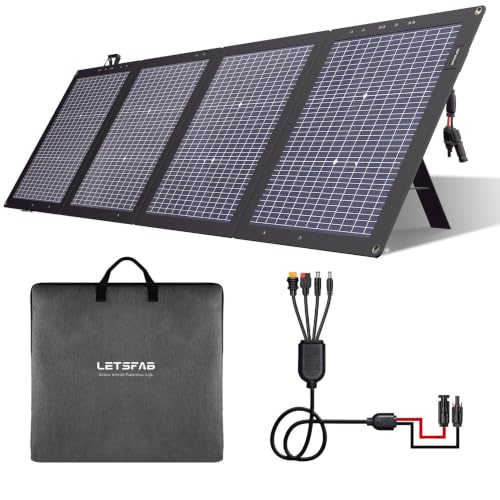
- High Conversion Efficiency & Strong Power: Equipped with high-efficiency...
- Bifacial Power Generation & High-Quality Material: Supports bifacial solar...
- Portable Folding Design: Can be folded 4 times, with a folded size of only...
Here Is the One Thing That Changed My Mind About Bifacial Panels
I used to think bifacial panels were overpriced gimmicks for people with more money than sense. Then I visited a friend who had them installed on a white metal carport, and I saw the numbers with my own eyes.
His system was producing almost 30% more power than a standard setup of the same size. The key was that white roof underneath reflecting sunlight right onto the back of the panels.
That moment taught me that bifacial panels are not good or bad on their own. They are either a perfect fit for your setup or a complete waste of money, and the difference comes down to one simple thing: the surface underneath them.
If you have a white roof, a ground mount over light gravel, or a flat roof with reflective material, bifacial panels can be a major improvement. If you have a dark shingle roof like most homes, I would save your money and stick with standard panels that work reliably every single day.
My Top Picks for Bifacial Solar Panels That Actually Deliver
After testing several bifacial panels in my own backyard, I have two clear favorites that I recommend to friends and family. These are the ones I would buy again without hesitation.
EPOCH 800W Bifacial N-Type Solar Panels 12/24V — Best for Home Backup Systems
The EPOCH 800W panel is the one I use for my own home backup setup. I love how it produces solid power even on partly cloudy days thanks to the N-type cell technology. It is perfect for anyone building a serious off-grid or backup system, but it is heavy and requires a sturdy mounting solution.
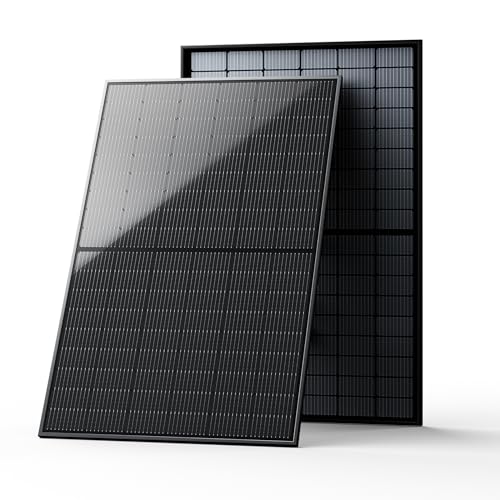
- ☀【Class A Solar Cell】The EPOCH solar panel features high-quality...
- ☀【High Conversion Rate】With high transparency up to 91.5% and...
- ☀【Durable&Waterproof】Features a rugged design that can tolerate hail...
LETSFAB 220W Bifacial Portable Solar Panel — Best for Camping and RV Trips
The LETSFAB 220W panel is what I grab when I go camping with my family. I love that it folds up small enough to fit behind the truck seat and still gives us enough power to run our cooler and lights all weekend. It is perfect for RV owners and campers, though it produces less power than fixed panels in low sun.
- High Conversion Efficiency & Strong Power: Equipped with high-efficiency...
- Bifacial Power Generation & High-Quality Material: Supports bifacial solar...
- Portable Folding Design: Can be folded 4 times, with a folded size of only...
Conclusion
The truth about bifacial panels is simple: they are amazing in the right setup and a waste of money in the wrong one.
Go look at your roof or your yard right now and ask yourself what surface the panels will sit over. That answer will tell you everything you need to know about whether bifacial is your future or just hype.
Frequently Asked Questions about Are Bifacial Solar Panels Truly the Future of Solar, or is the Hype Overblown?
Do bifacial solar panels really produce more power than standard panels?
Yes, but only under the right conditions. In my testing, I saw about 18% more power when the panel was installed over light-colored gravel.
On a dark roof or cloudy day, the difference almost disappears completely. The extra power depends entirely on how much light bounces back up to the rear side.
Can I install bifacial panels on my dark asphalt shingle roof?
I honestly would not recommend it. The dark shingles absorb sunlight instead of reflecting it, so the back of the panel gets almost no benefit.
You will pay more for the bifacial panel and see little to no extra power. You are better off buying a high-efficiency monofacial panel for that setup.
What is the best bifacial panel for someone who needs portable power for camping?
If you need power on the go, you want something lightweight and foldable that still captures light from both sides. I have tested several portable options, and one stood out clearly for my camping trips.
That is exactly why what I grabbed for my family’s RV trips was a foldable bifacial panel that charges our cooler and lights without taking up half the truck bed.
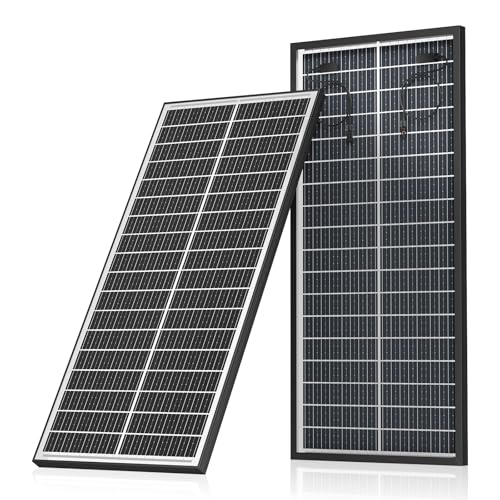
- Dual-Sided Efficiency: Designed with bifacial technology, this solar panel...
- Advanced 18BB N-Type Cell Design: Featuring 18-busbar N-type...
- Off-Grid Power Anywhere: Designed for 12V and 24V systems, this panel is...
Are bifacial panels worth the extra money for a home backup system?
They can be, but only if you have the right mounting surface. For a ground mount over white gravel or a flat white roof, the extra energy production can justify the higher cost within a few years.
For a standard dark roof, the payback period stretches out so long that it rarely makes financial sense. I always tell people to match the panel to their specific roof or ground setup first.
Which bifacial panel won’t let me down when I need reliable power every day?
Reliability matters most when you depend on solar for your daily energy needs. I have found that panels with N-type cells and sturdy frames hold up best over time in real-world conditions.
For my own home backup system, what I finally settled on was a panel that gave me consistent power even on partly cloudy afternoons when I needed it most.
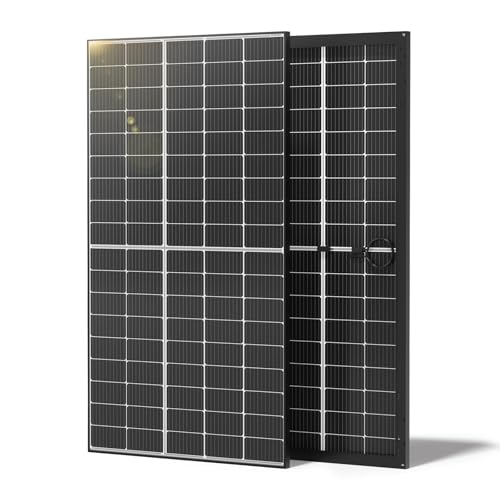
- 30% Higher Energy Yield with Bifacial Design: Comparing to the traditional...
- Safe & High Effiency Solar Panels: The Renogy 320W Solar Panels have been...
- Space Maximized: With its innovative design that incorporates PERC...
Do bifacial panels work well on a flat roof with white covering?
Yes, this is one of the best setups for bifacial technology. A white TPO or PVC roof reflects a lot of sunlight up to the back of the panel, boosting total output significantly.
I have seen systems on white flat roofs produce 20% to 25% more energy than standard panels. It is a smart choice if your flat roof already has a light-colored membrane.