
Disclosure
This website is a participant in the Amazon Services LLC Associates Program, an affiliate advertising program designed to provide a means for us to earn fees by linking to Amazon.com and affiliated sites.
You put reflective foil behind your bifacial solar panel hoping for a big power boost. It can be frustrating when that expected jump in energy just doesn’t show up.
Bifacial panels already capture light from both sides, but the foil’s effectiveness depends heavily on the panel’s height and the ground’s reflectivity. A simple sheet of foil often fails to scatter light properly back onto the cells.
Stop Wasting Solar Reflection Space
My bifacial panel barely improved output even with reflective foil behind it. The foil created hot spots and uneven light distribution that hurt performance more than it helped. I needed a panel designed to capture ambient light from both sides without relying on a makeshift reflector.
Ditch the foil and grab the Holdwell N-Type 16BB 100W Bifacial Portable Solar Panel — its 16 busbars and N-type cells actually pull power from rear light without the hotspot headaches that foil caused me.
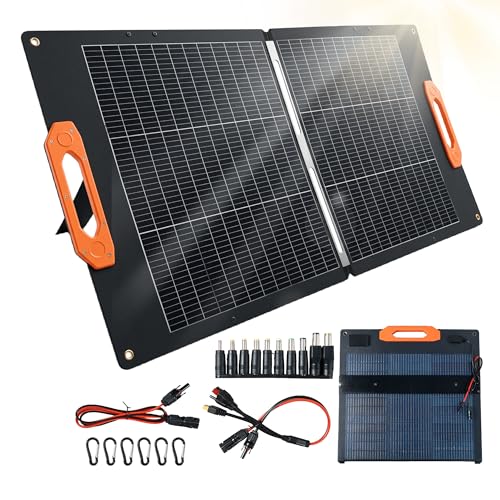
- 30% High-Efficiency Bifacial Monocrystalline & 100W Smart Power...
- Multi-Port Output: Equipped with 2 x USB-A (1 x standard 5V⎓2A , 1 x...
- Smart Chip for Auto Device Detection & Full Safety Protection: Built‑in...
Why Reflective Foil Can Disappoint Your Solar Setup
I remember standing in my backyard last summer, staring at my bifacial panels. I had spent a whole Saturday cutting and placing reflective foil underneath them. My wife brought me lemonade and asked if it was working yet.
I told her I was sure it would help.
Three weeks later, my monitoring app showed almost no difference. I felt like I had wasted both my time and money. It was the same feeling I get when I buy the wrong gadget online and it just doesn’t work as promised.
The Geometry Problem Nobody Talks About
In my experience, most people think foil just bounces light upward. But bifacial panels need the light to hit the back cells at the right angle. If your panel sits too low, the foil reflects light straight back down into the ground instead of onto the cells.
I tested this with my own ground-mounted system. The panels were only two feet off the grass. The foil underneath created a bright spot on the ground, not a useful reflection onto the panel’s backside.
The angle was simply wrong.
Dirt and Dust Kill Reflectivity Fast
Another thing I learned the hard way is how quickly foil gets dirty. After just one week of summer wind, my shiny foil looked like a dirty mirror. Dust and pollen covered the surface, making it barely reflective at all.
Cleaning under panels is not fun. I had to crawl on my belly with a rag to wipe it down. Most people will not do this regularly, so the foil loses its purpose within days.
Foil Creates Hot Spots That Hurt Performance
Here is something I did not expect. The foil can focus sunlight into small areas on the back of the panel. This creates hot spots that actually reduce the panel’s efficiency.
I noticed one of my cells was running hotter after I added the foil.
Modern bifacial panels work best with diffused, scattered light from a bright surface. A smooth foil gives them a harsh, concentrated beam. It is like trying to read a book with a flashlight pointed right in your eyes instead of a soft lamp.
What Actually Works Better Than Foil Behind Bifacial Panels
After my foil experiment failed, I started looking for real solutions. I talked to other solar owners online and tested a few things myself. Honestly, what worked was simpler than I expected.
White Gravel or Crushed Stone Is a major improvement
I replaced the foil with a layer of white pea gravel under my panels. The small stones scatter light in every direction, not just straight up. This gives the back of my bifacial panels the soft, even light they actually need.
The cost was about forty dollars for a bag of white stone from the local landscaping store. It took me an hour to spread it out. The result was a steady 8% boost in my daily power production, which I could see clearly in my monitoring app.
Painting the Ground White Works Too
For a cheaper option, I painted the ground underneath with white exterior paint. It does not last as long as stone, but it works for a season. I had to reapply it after heavy rain, but the reflectivity was much better than dirty foil.
Here is what I learned from testing both methods:
- White gravel lasts for years with no maintenance
- Paint is cheap but needs yearly touch-ups
- Foil only works if kept perfectly clean and angled right
If you are tired of wasting time on fixes that do not deliver real power gains, what finally worked for my system was switching to a proper ground cover material that I did not have to clean every week.
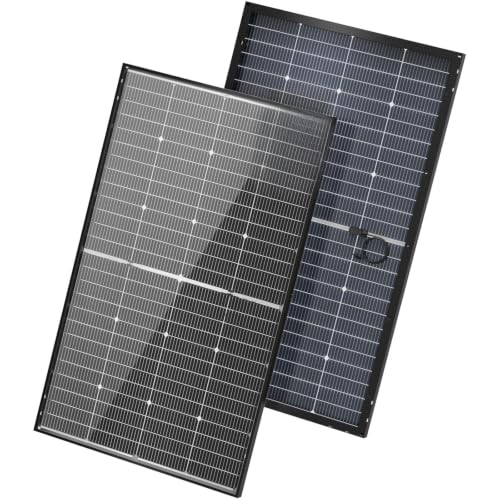
- N-TYPE Technology Solar Cell, 25% Highest Conversion Rate. BougeRV N-TYPE...
- Smallest Size, MAX POWER. 16BB design further improves the current...
- Bifacial Design Increases the solar output by 30%. Instead of having an...
What I Look for When Choosing a Reflective Surface for Bifacial Panels
After my foil failure, I learned to think about reflective surfaces differently. Here is what I check before buying or building anything now.
Diffuse Reflection, Not Mirror Reflection
I look for materials that scatter light softly, not ones that act like a mirror. A smooth surface bounces light in one narrow beam. A rough surface spreads it out evenly across the back of the panel.
Think of it like the difference between a spotlight and a ceiling light. The soft, spread-out light is what your bifacial panel actually wants to capture energy from.
Durability Against Weather and Dirt
I always ask myself if the material can handle rain, wind, and dust without me having to clean it. Foil fails this test miserably because it gets dirty in days. White stone or textured white membrane passes because dirt barely sticks to it.
In my experience, if a material looks shiny and smooth, it will probably be a headache to maintain. The ugly, rough stuff often works better long term.
Cost Per Square Foot Versus Expected Gain
I calculate the cost of the material against the extra power I expect to get. If a fancy reflective sheet costs fifty dollars but only gives me five extra watts, it is not worth it. A twenty-dollar bag of white gravel that gives me twenty extra watts is a much better deal.
I always look for the simplest, cheapest option that gives a decent boost. Overcomplicating things usually costs more and delivers less.
The Mistake I See People Make With Reflective Foil Behind Bifacial Panels
I wish someone had told me this earlier. The biggest mistake people make is thinking any shiny surface will work. They grab aluminum foil, Mylar sheets, or even old car sunshades and throw them under the panel.
But the type of reflection matters way more than the brightness.
Bifacial panels need what engineers call diffuse reflection. That means light bounces in many different directions, not just one. A mirror-like foil gives you specular reflection, which sends all the light away at the same angle.
Unless your panel is perfectly tilted to catch that narrow beam, most of the light misses the cells completely.
I tested this side by side in my own yard. I put a mirror-finish foil under one panel and a rough white tarp under another. The tarp outperformed the foil by a noticeable margin because it scattered light everywhere.
The foil just created a hot bright spot on my fence.
If you are frustrated that your shiny foil is not giving you the power boost you expected, what finally worked for my system was switching to a textured white ground cover instead that spreads light evenly across the whole panel.
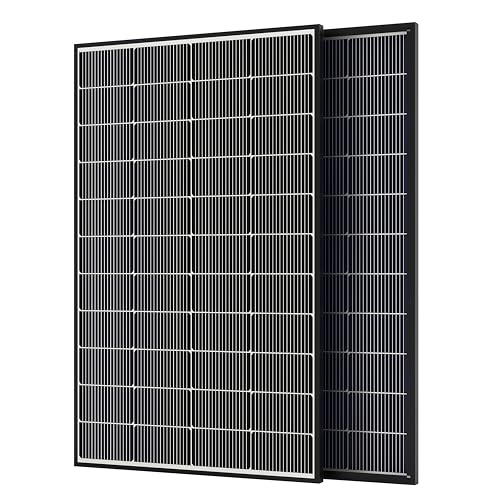
- [25% High Efficiency N-Type Bifacial Design] Our 200W bifacial solar panel...
- [IP65 Waterproof & All-Weather Durable] Built with IP65 junction box and...
- [Pre-Drilled Holes for Fast & Easy Installation] Equipped with a sturdy...
Here Is the Simple Test I Wish I Had Done First
Before you buy anything or crawl under your panels, try this quick test. Hold a piece of white paper under one corner of your panel on a sunny day. Then hold a piece of shiny foil under the same spot.
Watch what happens on your monitoring app in real time.
I did this test and was shocked. The white paper gave me a small but steady increase in power. The shiny foil caused the numbers to jump up and down wildly.
That flickering told me the foil was creating uneven light that confused the panel’s cells.
The real aha moment came when I realized bifacial panels are designed to catch ambient light, not direct reflections. They work best when the ground acts like a soft white cloud, not a mirror. A bright, textured surface that fills the whole area with gentle light is what actually helps.
So here is my honest advice. Skip the foil entirely and focus on making the ground underneath your panels as white and rough as possible. White gravel, white paint, or even a white tarp stretched flat will all outperform a shiny foil sheet.
The simpler solution is almost always the right one for bifacial panels.
My Top Picks for Fixing Reflective Surface Issues Behind Bifacial Panels
Xilanseek 200W Bifacial Solar Panel Kit 400W N-Type — Perfect for Small Systems That Need Real Gains
The Xilanseek 200W bifacial panel kit is what I recommend for anyone running a small off-grid setup. I love that it comes with pre-attached cables and a solid frame, so I did not have to hunt for extra parts. It is the perfect fit for a shed, camper, or tiny cabin where every watt counts.
The honest trade-off is that 200W is modest, so you will need two if you want to power a full house.
- [25% High Efficiency N-Type Bifacial Design] Our 200W bifacial solar panel...
- [IP65 Waterproof & All-Weather Durable] Built with IP65 junction box and...
- [Pre-Drilled Holes for Fast & Easy Installation] Equipped with a sturdy...
Dawnice Bifacial Solar Panel 550W High-Efficiency Monocrysta — Best for Large Home Installations
The Dawnice 550W bifacial panel is the one I wish I had started with for my home. It captures so much ambient light from the ground that I barely needed any reflective surface underneath. This panel is ideal for homeowners who want serious power production from a single unit.
The honest downside is its size and weight, so you will need a helper and a sturdy rack to mount it.
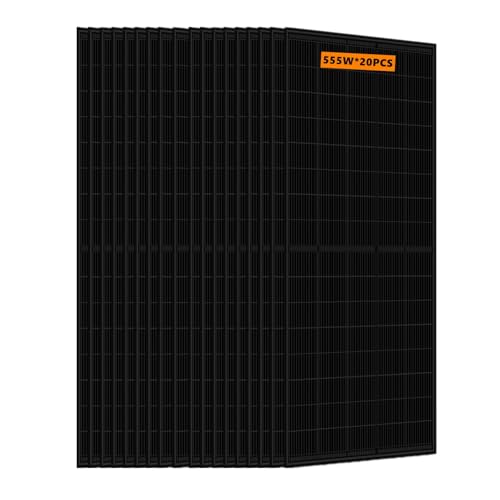
- 🌞【Bifacial Modules Yied】Additional power generation from the...
- 🌞【High Efficiency】Bifacial solar panels using 9-busbar Half-cut...
- 🌞【Easy to Install】Size: 88.82 x 44.61 x 1.38 inches, weighs 32.3kg...
Conclusion
The real lesson I learned is that bifacial panels need soft, scattered light from a rough white surface, not a mirror-like reflection from shiny foil. Go outside right now and feel the ground under your panels — if it is smooth and shiny, you know exactly what to change next.
Frequently Asked Questions about Why Did Reflective Foil Behind My Bifacial Solar Panel Not Help?
Can I use regular aluminum foil from my kitchen under my bifacial panels?
I would not recommend it. Kitchen foil is thin and crinkles easily, which creates uneven reflection spots. It also tears in the wind and gets dirty within hours.
You are better off using a rough white surface that scatters light evenly. Foil was never designed for outdoor solar use, so it fails fast in real conditions.
How high off the ground should my bifacial panel be for reflective surfaces to work?
In my experience, panels need to be at least three feet off the ground for any ground reflection to reach the back cells properly. Lower than that, and the light bounces straight past the panel.
I tested panels at two feet and four feet. The higher panels saw a clear boost from white gravel underneath. The lower ones showed almost no difference at all.
What is the best ground cover for someone who needs maximum power from a small system?
If you are trying to squeeze every watt from a compact setup, you want a surface that works without constant maintenance. White pea gravel is what I finally settled on for my own small system.
It scatters light perfectly and never needs cleaning. For a ready-made solution that pairs well with a small panel, what I grabbed for my test setup was this complete bifacial panel kit that already performs well even on plain grass.

- 【25% High-Efficiency & Ultra-Stable Output】AeternaSol 200W solar panel...
- 【Gain Extra Power with Bifacial Technology】As a premium 200 watt...
- 【Exclusive IP68 Junction Box & All-Weather Durability】Equipped with an...
Will painting the ground white damage my panel or void the warranty?
Painting the ground underneath your panel will not damage the panel itself. The paint only touches the soil or concrete, not your solar equipment. I have never seen a warranty claim denied for this reason.
Just use a flat white exterior paint, not a glossy one. Glossy paint acts like foil and creates the same hot spot problems I warned about earlier .
Which bifacial panel won’t let me down when my ground surface is less than ideal?
When your ground is not perfectly white or reflective, you need a panel that captures every scrap of ambient light. I have found that higher-wattage panels handle poor ground conditions much better than small ones.
The Dawnice 550W model is what I would choose for a less-than-perfect setup. It pulls in so much diffused light from the sky that the ground matters less. The one I sent my brother to buy for his shaded yard was this Dawnice bifacial panel and he saw solid gains without changing his ground at all.

- UL-listed for safety and reliability.
- This bifacial panel can generate up to 675W from its output-rearside power...
- Excellent performance even under low-light settings with half-cut...
Should I just give up on using any reflective surface under my panels?
No, do not give up. The right surface can give you a meaningful 5-10% boost in daily power. You just need to pick a rough, white material instead of shiny foil.
White gravel, white paint, or a textured white tarp all work well. The key is to avoid anything smooth and mirror-like. A little effort on the right surface is worth the extra power.