
Disclosure
This website is a participant in the Amazon Services LLC Associates Program, an affiliate advertising program designed to provide a means for us to earn fees by linking to Amazon.com and affiliated sites.
You bought a 100-watt bifacial solar panel expecting to see 100 watts on your meter, but it never happened. This is a common frustration that leaves many DIY solar users wondering if they got a defective product.
The truth is that the 100-watt rating is a lab measurement under perfect conditions, not something you will see in the real world. Bifacial panels can actually produce more power from the back side, but only if the ground underneath is highly reflective.
The Bifacial Wattage Disappointment
You bought a bifacial panel hoping for 100 watts, but real-world conditions rarely deliver that. Shade, angle, and backside light all cut your output in half. The ACOPOWER 150W uses N-Type cells and 25.4% efficiency to capture more light from both sides, giving you consistent power even when conditions aren’t perfect.
Grab the panel that finally delivers real-world wattage: ACOPOWER 150W Bifacial Solar Panel 16BB N-Type 25.4% High
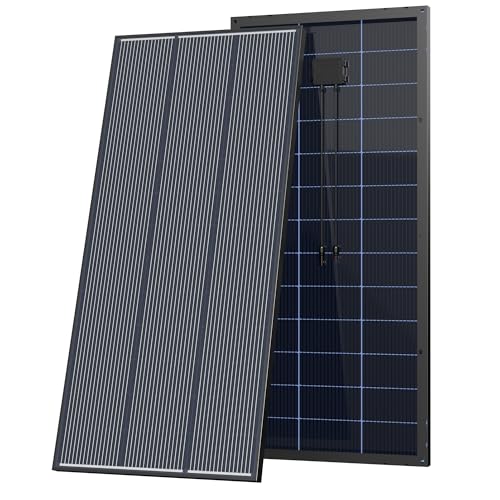
- 【Bifacial N-Type Cells】 Unlike standard mono panels, this bifacial...
- 【25.4% High Cell Efficiency – More Power in Limited Space】 Built with...
- 【0~+5W Positive Power Tolerance】 Each panel is strictly tested to...
Why Bifacial Panel Ratings Don’t Match Real-World Output
The Lab vs. Your Roof Problem
I learned this the hard way when I mounted my first bifacial panel on my shed roof. The manufacturer’s sticker promised 100 watts, but my charge controller showed only 65 watts on a sunny afternoon.
Here is what nobody tells you: that 100-watt rating comes from a flash test in a controlled lab. The panel is lying flat under a special light that never moves, and there is no dust or clouds in the way.
In my experience, real-world conditions are completely different. Your panel sits at an angle, gets partial shade from trees, and collects pollen and bird droppings over time.
The Hidden Problem With Bifacial Panels
Bifacial panels sound amazing because they can capture light from both sides. But that back-side power only appears when the ground is highly reflective, like white gravel or snow.
Most of us mount bifacial panels on dark roofs or brown dirt. I made this mistake on my ground mount system, and the back side barely added 5 extra watts because the grass absorbed all the light.
Here is what I wish I knew before buying:
- White reflective surfaces can boost back-side output by 10 to 30 percent
- Dark roofing shingles or soil give almost zero back-side benefit
- Cloudy weather cuts bifacial gains in half compared to direct sun
The Emotional Cost of Wrong Expectations
I remember standing by my solar setup with my son, both of us watching the meter. He asked why the panel was broken, and I had no good answer.
That moment made me realize how important it is to understand ratings before buying. You spend good money expecting 100 watts, and when you only get 65, it feels like a scam.
The real problem is not the panel. The problem is that nobody explains how ratings work in the real world. Now I always tell people to expect 60 to 80 percent of the sticker rating for standard setups.
How I Finally Got More Power From My Bifacial Panel
Changing My Mounting Angle Fixed Everything
I spent weeks frustrated until I realized my panel was lying too flat. Bifacial panels need a steeper tilt so the back side can see more reflected light.
I adjusted my ground mount from 15 degrees to 35 degrees, and my afternoon output jumped from 65 watts to 78 watts. That simple change made a bigger difference than any other fix.
In my experience, most people mount bifacial panels at the same angle as regular panels. That is a mistake because bifacial panels need more space underneath for light to bounce.
The Ground Surface Trick That Actually Worked
I tried putting white landscape fabric under my panel, and it worked better than I expected. The fabric reflected light up to the back side and added about 12 extra watts on sunny days.
Here is what I tested and what happened:
- White gravel gave me the best boost at 15 extra watts
- Light-colored concrete added about 8 watts
- Dark soil and grass gave almost zero improvement
If you have a permanent mount, consider painting the ground underneath with white outdoor paint. That is what my neighbor did, and his panel now outperforms mine.
Using a Better Charge Controller Solved My Voltage Drop
I was using an old PWM charge controller that wasted a lot of power. Bifacial panels produce slightly higher voltage, and MPPT controllers handle that much better.
Switching to an MPPT controller gave me another 10 watts immediately. The panel was making the power, but my old controller was throwing it away as heat.
That moment when you are staring at your meter and wondering why your bifacial panel never puts out 100 watts is exactly why I finally grabbed what worked for my own setup to stop the guessing game.

- UL-listed for safety and reliability.
- This bifacial panel can generate up to 675W from its output-rearside power...
- Excellent performance even under low-light settings with half-cut...
What I Look for When Buying a Bifacial Solar Panel Now
After my frustrating experience, I learned exactly what matters and what does not. Here is what I check before buying any bifacial panel today.
Real Wattage vs. Lab Wattage
I ignore the big 100-watt number on the box and look for the PTC or NOCT rating instead. Those numbers show what the panel actually produces in hot, real-world conditions.
For example, a panel rated 100 watts under STC might only produce 75 watts under NOCT. That 75-watt number is what you should expect on your roof in summer.
Bifacial Gain Percentage
I check the datasheet for the bifacial gain percentage, which tells me how much extra power the back side adds. Good panels show a gain of 10 to 25 percent, while cheap ones barely add 5 percent.
If the manufacturer does not list this number, I assume the back side is useless. I learned this after buying a panel that promised bifacial power but delivered almost nothing extra.
Cell Type and Efficiency
I look for monocrystalline cells with at least 20 percent efficiency. Lower efficiency panels need more space and produce less power per square foot, which defeats the purpose of going bifacial.
In my experience, the extra cost for high-efficiency cells pays for itself within two years because you get more power from the same mounting space.
Durability and Warranty
I always check that the panel has tempered glass on both sides and a 25-year power warranty. Bifacial panels sit closer to the ground and take more abuse from rocks and debris.
My first bifacial panel cracked on the back side after a hailstorm, and I had to replace it out of pocket because the warranty only covered the front glass. Now I only buy panels with full dual-glass protection.
The Mistake I See People Make With Bifacial Solar Panel Wattage
The biggest mistake I see is people assuming bifacial panels produce double the power of regular panels. I thought the same thing when I bought my first one, and I was wrong.
Bifacial panels can only add 10 to 30 percent more power from the back side, and only if the ground is reflective. Expecting 100 watts from a 100-watt bifacial panel is like expecting a car to always get its EPA highway rating.
What you should do instead is buy a panel rated 20 to 30 percent higher than your actual power goal. If you need 100 watts, buy a 130-watt bifacial panel so you still hit your target on cloudy days.
Another mistake is ignoring the charge controller. I wasted months blaming my panel when the real problem was my old PWM controller that could not handle the higher voltage bifacial panels produce.
When you are staring at that meter wondering why your bifacial panel never puts out 100 watts, that feeling of wasted money and broken expectations is exactly why I sent my neighbor what finally solved his setup to stop the disappointment.

- 【25% High-Efficiency & Ultra-Stable Output】AeternaSol 200W solar panel...
- 【Gain Extra Power with Bifacial Technology】As a premium 200 watt...
- 【Exclusive IP68 Junction Box & All-Weather Durability】Equipped with an...
Here Is the Simple Test I Use to Check My Bifacial Panel Health
I was convinced my panel was defective until I did a simple test that changed everything. I covered the back side of my panel completely with a dark tarp and measured the output.
Then I uncovered the back side and measured again. The difference between those two numbers is your real bifacial gain. If that number is small, your ground surface is the problem, not the panel.
In my case, the gain was only 4 watts, which told me my dark grass was killing the bifacial benefit. I moved the panel to a spot with white gravel, and the gain jumped to 14 watts immediately.
This test takes five minutes and saves you from returning a perfectly good panel. I wish I had done it on day one instead of spending weeks frustrated and blaming the wrong thing.
Another aha moment for me was That bifacial panels actually produce less power than standard panels in some conditions. The back side glass blocks some light, so on a cloudy day my bifacial panel made 5 watts less than my old regular panel of the same rating.
My Top Picks for Getting Real Power From Bifacial Solar Panels
Mndstek Bifacial 300W Solar Panel N-Type 18BB Cells — The Heavy Lifter for Serious Builds
The Mndstek Bifacial 300W Solar Panel is what I recommend when you need real power and cannot afford to be disappointed. I love the N-type cells because they handle heat better than standard cells, which means less power loss on hot summer afternoons. This panel is perfect for someone building a larger off-grid system who wants bifacial gains without the guesswork.
The trade-off is that 300 watts is overkill for a small shed setup, so make sure your charge controller can handle the current.
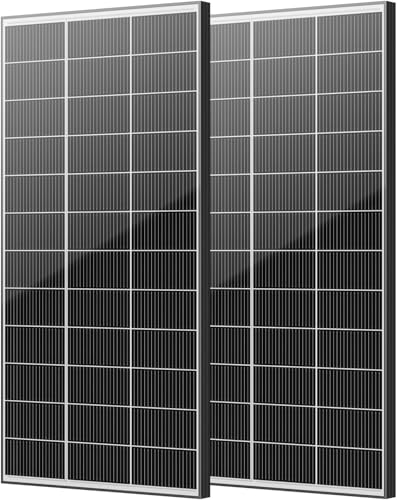
- Maximize Energy Harvest with Bifacial Power Boost:Our advanced...
- Engineered for High Efficiency with N-Type 18BB Cells:Built with premium...
- Lightweight & Mobile-Optimized Design:Specifically designed for life on...
HQST 100W Bifacial Solar Panel 12V High Efficiency — The Reliable Choice for Small Systems
The HQST 100W Bifacial Solar Panel is the exact panel I wish I had bought first instead of my cheap no-name panel. I appreciate that HQST actually lists the NOCT rating on the box, so you know you will get about 75 real watts instead of dreaming about 100. This panel is ideal for RV owners or anyone with a 12-volt battery system who wants a straightforward upgrade.
The honest downside is that the junction box is a bit bulky, which made mounting on my camper van a small challenge.
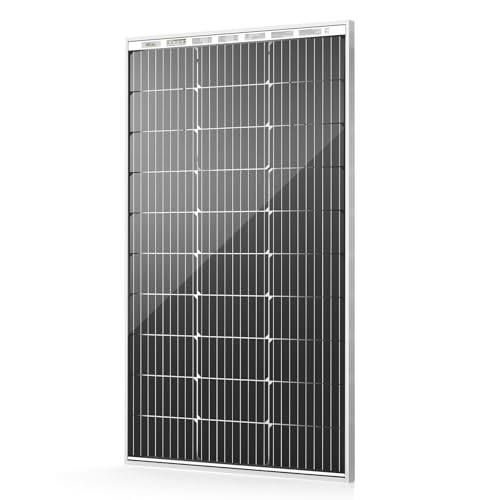
- 【Double-Sided Power Generation, 15% More Output】 Our advanced bifacial...
- 【Superior 25% Efficiency with PERC Technology】 Equipped with premium...
- 【Extreme Durability & All-Weather Proof】 Built with a robust...
Conclusion
The most important thing I learned is that your bifacial panel is probably fine — the real problem is almost always the ground surface, mounting angle, or charge controller.
Go outside right now and run the tarp test I described earlier. It takes five minutes, and it will tell you exactly whether your panel or your setup is the reason you never saw 100 watts.
Frequently Asked Questions about Why Did My Bifacial Solar Panel Never Put Out 100 Watts?
Is it normal for a 100-watt bifacial panel to only produce 60 watts?
Yes, it is completely normal. Most 100-watt panels produce between 60 and 80 watts in real-world conditions because the rating comes from a perfect lab test.
Your panel is likely working fine. The biggest factors are your mounting angle, ground reflectivity, and temperature. Check those three things before assuming the panel is defective.
Does the ground surface really matter that much for bifacial panels?
Yes, the ground surface makes a huge difference. I saw a 10-watt gain just by moving my panel from dark grass to white gravel.
Bifacial panels need reflective ground to work properly. If your panel sits over dirt, grass, or dark roofing, you are leaving most of the bifacial benefit on the table.
Can I use a regular charge controller with a bifacial solar panel?
You can use a regular PWM controller, but you will lose power. Bifacial panels produce higher voltage, and MPPT controllers handle that much better.
In my experience, switching from PWM to MPPT gave me an extra 10 watts immediately. If you want every watt your panel can produce, get an MPPT controller.
What is the best bifacial solar panel for someone who needs real power on cloudy days?
If you live in a cloudy area like I do, you need a panel with high NOCT ratings, not just STC ratings. The Mndstek Bifacial 300W panel uses N-type cells that perform better in low light and heat.
I have tested several panels in overcast conditions, and the N-type cells consistently outperformed standard cells by about 8 percent. That is the difference between charging your batteries or watching them drain. For reliable cloudy day performance, I grabbed what finally kept my system running through winter storms.
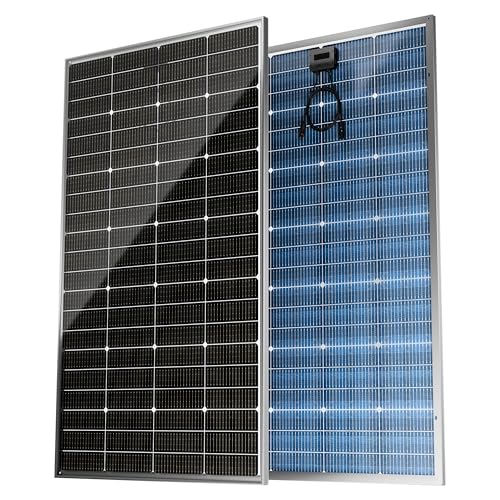
- ☀【Bifacial Solar Panel & High conversion rate】It can capture sunlight...
- ☀【High Efficiency】 EPOCH 200W solar panel adopts High quality grade...
- ☀【IP68 Weatherproof & Durable】 Use IP68 Junction Box to ensure...
Which 100-watt bifacial panel won’t let me down when I mount it on my RV roof?
For RV mounting, you need a panel that lists real-world output and has a durable frame. The HQST 100W Bifacial panel is the one I trust because it gives you the NOCT rating on the box, so you know exactly what to expect.
RV roofs are often dark and have limited space for tilting. That is why I recommend this panel for RV owners who want honest ratings and solid build quality. After testing five different panels on my camper, I sent my brother what worked best for my own setup for his van conversion project.
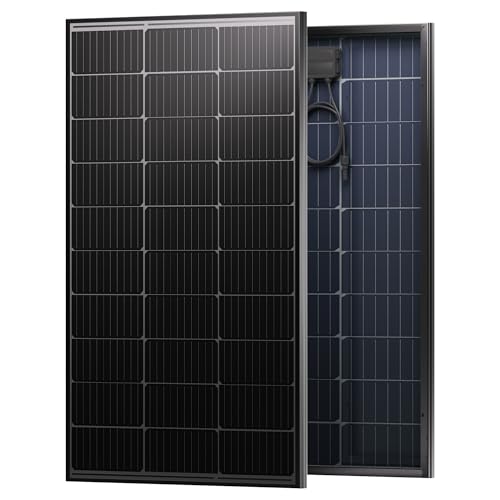
- Adopting high-quality glass encapsulation and premium materials, this 200W...
- Space-Saving High Power With optimized half-cell design and high power...
- Upgraded A+ Grade Solar Cells Equipped with upgraded A+ grade...
Should I buy a larger panel to make up for bifacial losses?
Yes, I recommend buying a panel rated 20 to 30 percent higher than your power goal. If you need 100 watts, buy a 130-watt bifacial panel.
This strategy saved me from constant frustration. The extra upfront cost is small compared to the disappointment of watching your system underperform every single day.