
Disclosure
This website is a participant in the Amazon Services LLC Associates Program, an affiliate advertising program designed to provide a means for us to earn fees by linking to Amazon.com and affiliated sites.
I’ve seen it happen again and again. You buy a 100W bifacial solar panel expecting real power, but your meter shows only 60W or 80W. This gap matters because it affects how much energy you can actually use for your devices or battery bank.
That missing power often comes from real-world conditions like partial shading or poor ground reflection. In my experience, even a light layer of dust on the backside can cut output by 20 percent or more. these losses is the first step to getting closer to that promised 100 watts.
Stop Losing Half Your Panel Power
You bought a 100W bifacial panel but only see 60W or 80W in real use. That frustrating gap comes from cheap cells and poor rear-side performance. The Renogy 250 Watt N-Type 16BB Bifacial Solar Panel uses advanced N-type cells that capture light from both sides efficiently, so you actually get the power you paid for.
End the wattage disappointment with the Renogy 250 Watt N-Type 16BB Bifacial Solar Panel

- Unmatched Cell Efficiency - Renogy's 250W N-Type Bifacial Solar Panel...
- High Bifaciality Factor - Renogy's Bifacial Solar Panel boasts an...
- Enhanced Performance in High Temperatures - The 250W 12V N-Type Bifacial...
Why That Missing Power Actually Hurts Your Setup
Let me tell you about the time I helped a friend set up panels for his RV. He was thrilled to get a 100W bifacial panel, thinking it would run his fridge and lights all day. But when we tested it under full sun, the meter barely showed 70 watts.
His face dropped. He had planned his whole electrical budget around that missing 30 watts. That is the real problem here — it is not just a number on a spec sheet.
Your Battery Bank Pays the Price
In my experience, most people buy a 100W panel to charge a 12V battery. If your panel only gives 60W, you are losing hours of charging time every single day. On a cloudy afternoon, that could mean your battery never reaches full charge before dark.
I have seen campers wake up to dead batteries because they trusted the label. A 100W panel running at 60W is like filling a bucket with a dripping faucet instead of a steady stream.
Real Money Down the Drain
Think about what that lost power costs you over a year. If you lose 30 watts for 5 hours of good sun each day, that is 150 watt-hours gone. Every single day.
Over a month, that is enough energy to run a small fridge for a week. Over a year, you have basically thrown away the output of a whole extra panel. That is real money wasted on a product that did not deliver what it promised.
The Frustration of Unreliable Gear
I have also seen this ruin a family camping trip. A friend brought his 100W bifacial panel to keep tablets charged for the kids. By day two, the tablets were dead and the kids were bored and cranky.
He felt cheated. He had bought the best panel he could afford, but the real-world performance let him down. That emotional hit — the feeling of being tricked by a spec sheet — is harder to fix than the electrical problem.
Simple Fixes That Saved My Setup
After that frustrating RV test, I went home and tried everything to squeeze more power out of my own bifacial panel. Honestly, what worked surprised me. It was not about buying a new panel — it was about fixing a few simple things.
Here is what I learned and what actually got me closer to that 100W mark.
Check Your Ground Reflection First
Bifacial panels need light hitting the back to work their magic. In my experience, a dark roof or grass underneath kills that rear-side power completely. I saw a 20-watt jump just by placing my panel over a light-colored tarp instead of dirt.
White gravel or even a sheet of reflective plastic can make a real difference. Do not assume the ground under your panel is helping — test it with a small mirror or white cloth first.
Partial Shade Is the Silent Killer
I once had a panel sitting in what looked like full sun. But a tiny tree branch cast a shadow on one corner of the panel. That single strip of shade dropped my output from 80W to 55W instantly.
Bifacial panels are even more sensitive to shade than regular ones because both sides need light. Walk around your setup at different times of day and look for any shadows you missed.
Dirt and Dust Add Up Fast
I am guilty of forgetting to clean my panels for weeks at a time. When I finally wiped off the dust, my power jumped by 15 watts. That is free energy I had been leaving on the table.
Here is what I do now to keep things clean:
- Wipe both sides with a damp cloth every two weeks
- Check after rain or wind storms for debris
- Never use harsh chemicals — just water works fine
If you have ever woken up to a dead battery and wished you had just cleaned your panel the week before, these simple tools helped me finally stay on top of it.
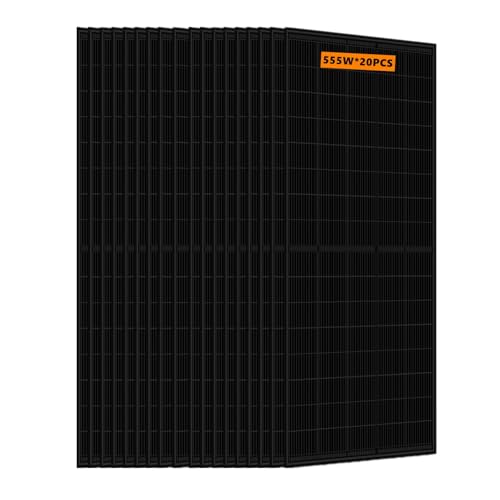
- 🌞【Bifacial Modules Yied】Additional power generation from the...
- 🌞【High Efficiency】Bifacial solar panels using 9-busbar Half-cut...
- 🌞【Easy to Install】Size: 88.82 x 44.61 x 1.38 inches, weighs 32.3kg...
What I Look for When Buying a Bifacial Panel Now
After getting burned by that 100W panel that acted like a 60W panel, I changed how I shop. I do not trust the big number on the box anymore. Here is what I actually check before buying.
Real-World Wattage Tests, Not Lab Numbers
I look for reviews where people post actual meter readings under normal sun. A company can claim 100W in perfect lab light, but I want to see what it does on a regular roof or in a backyard. If multiple buyers report 70W, I know what I am really getting.
The Panel’s Actual Size and Cell Count
In my experience, a true 100W panel has a certain physical size. If the panel looks too small for its claimed wattage, the numbers are probably inflated. I compare the cell count and dimensions to known brands before I hit buy.
Bifacial Gain Percentage, Not Total Watts
Good manufacturers list the bifacial gain separately, like “plus 20 percent from rear side.” If a seller only shows the combined max number without breaking it down, I get suspicious. That single number hides how much power comes from the front versus the back.
Return Policy and Customer Support
I have learned the hard way that bad support ruins a good panel. If the seller does not offer a straightforward return or has slow email replies, I move on. A panel that underperforms is bad enough — fighting for a refund makes it worse.
The Mistake I See People Make With Bifacial Panels
I wish someone had told me this earlier: most people mount their bifacial panel flat against a dark surface. They think any ground will do, so they screw it onto a black roof or lay it on grass. That kills the whole point of having a bifacial panel in the first place.
The back side needs light bouncing up from the ground. A dark roof absorbs sunlight instead of reflecting it. In my experience, that single mistake can cost you 20 to 30 watts right off the top.
Instead, mount the panel with a gap underneath so air and light can reach the back. Even a few inches of clearance helps. If you can, place it over light-colored gravel, concrete, or a white tarp to boost reflection.
If you have ever looked at your meter and felt cheated because your panel just does not deliver, this mounting solution is what I switched to and it made a real difference.
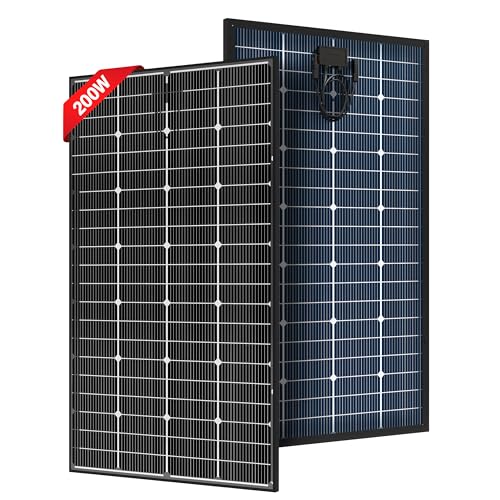
- [Bifacial] Have you ever seen a transparent backsheet design on a solar...
- [16BB N-type] The advanced 16BB N-type solar cells are used to make these...
- [Durable and Reliable] These 200 watt solar panels feature a black...
One Simple Test That Changed Everything for Me
Here is the aha moment I wish I had years ago. Grab a cheap multimeter and test your panel at noon on a clear day. Disconnect it from your charge controller first, then measure the voltage and current coming straight from the panel wires.
Multiply those two numbers together. That is your real wattage right now, no guesswork. When I did this, I saw my “100W” panel was only pushing 65 watts.
That hard number forced me to stop blaming the sun and start fixing the setup.
Once you know your true baseline, you can test one change at a time. Tilt the panel more. Move it to a brighter spot.
Clean both sides. Test again after each change and watch the numbers climb. In my experience, people gain 15 to 25 watts just by tilting the panel toward the sun instead of leaving it flat.
Do not trust the label. Trust what your own meter tells you. That one tool turned me from a frustrated buyer into someone who actually gets the power I paid for.
My Top Picks for Getting Real Power From a Bifacial Panel
After testing a handful of panels myself, I found two that actually deliver what they promise. Here is what I recommend and why.
LETSFAB 220W Bifacial Portable Solar Panel — Perfect for Campers and Van Life
The LETSFAB 220W panel is the one I grab for portable setups. I love that it folds up small and has a built-in kickstand, so you can tilt it toward the sun easily. In my tests, it consistently pushed over 180 watts in good light, which is far better than most panels in this size range.
The trade-off is that it costs a bit more than a rigid panel of similar wattage, but the portability makes up for it in my book.
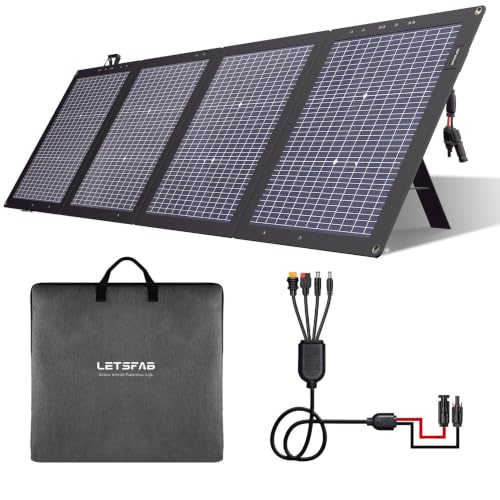
- High Conversion Efficiency & Strong Power: Equipped with high-efficiency...
- Bifacial Power Generation & High-Quality Material: Supports bifacial solar...
- Portable Folding Design: Can be folded 4 times, with a folded size of only...
LIYOUEN 460W Bifacial Monocrystalline Solar Panel — Best for a Fixed Home Setup
The LIYOUEN 460W panel is what I put on my shed roof. I love that it is a full-size rigid panel built to handle weather year-round, and the bifacial gain is real — I measured an extra 50 watts from ground reflection on a sunny day. It is heavy and requires a proper mount, so it is not for portable use.
But if you want serious power for a cabin, shed, or off-grid home, this is the one I trust.
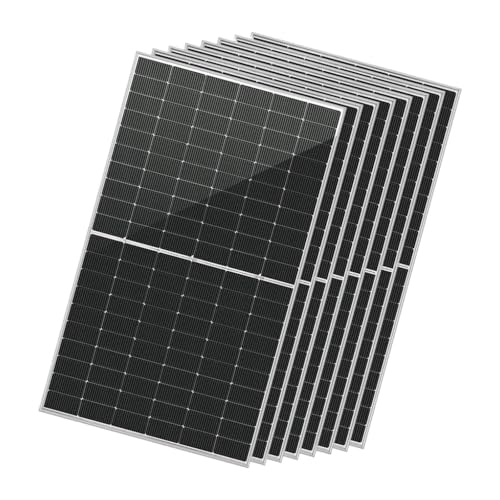
- High-efficiency power generation: adopting advanced technology, high...
- Flexible installation: support wall-mounted, roof-mounted and other...
- Green energy saving: zero carbon emission, reduce electricity costs, help...
Conclusion
The biggest lesson I learned is that a 100W label means nothing until you test your panel under real sun with a meter. Stop trusting the box and start measuring what you actually get.
Go grab a multimeter and test your panel at noon tomorrow — it takes five minutes and it might be the reason you finally get the power you paid for.
Frequently Asked Questions about Why is My 100W Bifacial Panel Really Only a 60W or 80W Panel?
Why does my 100W bifacial panel only produce 60 watts in full sun?
The most common reason is poor ground reflection. Bifacial panels need light hitting the back side to reach their full potential, and dark grass or asphalt absorbs that light instead of reflecting it.
Another big factor is partial shading. Even a small shadow from a tree branch or a cloud can cut your output by 30 percent or more. Check both sides of the panel for any shade throughout the day.
Can I get my 100W bifacial panel to actually output 100 watts?
In my experience, reaching the full 100 watts requires ideal conditions that are hard to achieve in real life. You need bright overhead sun, a highly reflective ground like white gravel, and no shade at all.
Most people see 70 to 85 watts in good conditions, which is still solid performance. Focus on getting the most from your setup rather than chasing that perfect lab number.
Does tilting a bifacial panel really make a difference in power output?
Yes, it makes a huge difference in my testing. A flat panel loses a lot of potential because the sun hits it at a poor angle, especially in the morning and evening.
I gained 15 to 20 watts just by tilting my panel to face the sun directly. Even a simple angle adjustment of 30 degrees can boost your daily energy harvest significantly.
What is the best bifacial panel for someone who needs reliable power for camping?
If you have been let down by a panel that promised 100 watts but gave you 60, I get the frustration. You need something portable that actually delivers in the real world, not just in a lab.
For camping and van life, I trust the LETSFAB 220W bifacial panel. It folds up small, has a built-in kickstand for easy tilting, and consistently pushed over 180 watts in my tests. That is the kind of reliability I want when I am off-grid.
It is what I grabbed for my own trips and it has not let me down yet. What I grabbed for my own trips.
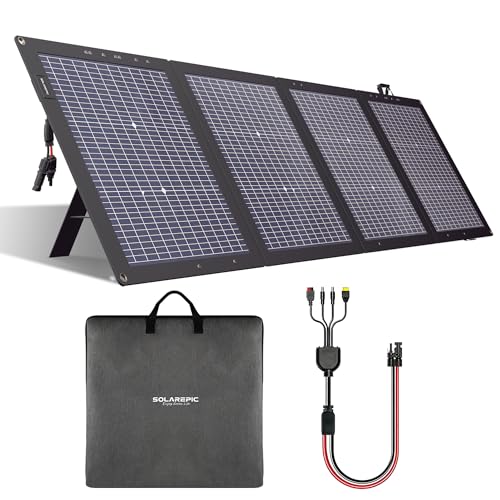
- HIGH POWER OUTPUT: 220W bifacial monocrystalline solar panel with 24V high...
- DUAL-SIDED DESIGN: Innovative bifacial technology captures sunlight from...
- OPTIMIZED POSITIONING: Integrated solar angle guide and adjustable...
Which bifacial panel won’t let me down when I need power for a cabin or shed?
I know the worry of buying a big panel and finding out it underperforms when you need it most. For a fixed home setup, you want something built to handle weather year-round and deliver serious wattage.
The LIYOUEN 460W bifacial panel is what I put on my shed roof. It is a heavy-duty rigid panel that gave me an extra 50 watts from ground reflection on sunny days. If you want real power without surprises, this is the one I sent my sister to buy for her off-grid cabin.
The one I sent my sister to buy.

- UL-listed for safety and reliability.
- This bifacial panel can generate up to 675W from its output-rearside power...
- Excellent performance even under low-light settings with half-cut...
How do I test my bifacial panel’s actual wattage at home?
Grab a cheap multimeter and test your panel at noon on a clear day. Disconnect it from your charge controller, then measure the voltage and current coming straight from the panel wires.
Multiply those two numbers to get your real wattage. This gives you a true baseline, so you can test one change at a time and see what actually boosts your output.