
Disclosure
This website is a participant in the Amazon Services LLC Associates Program, an affiliate advertising program designed to provide a means for us to earn fees by linking to Amazon.com and affiliated sites.
Learning how to install bifacial solar panels correctly is about a special type of solar panel that captures sunlight from both sides. Getting the installation right is crucial because it directly affects how much energy you can generate from your system.
The biggest difference with bifacial panels is that they need a reflective surface underneath them to work their best. Many installers miss this key point and place them on dark roofs, which wastes a huge amount of potential power.
Stop Guessing Your Panel Placement
Getting bifacial panels to work right means positioning them perfectly to catch light on both sides. I spent hours moving panels around before realizing I needed a design that made installation simpler and more forgiving.
Grab the panel that takes the guesswork out of bifacial installation: HQST 100W Bifacial Solar Panel 12V High Efficiency
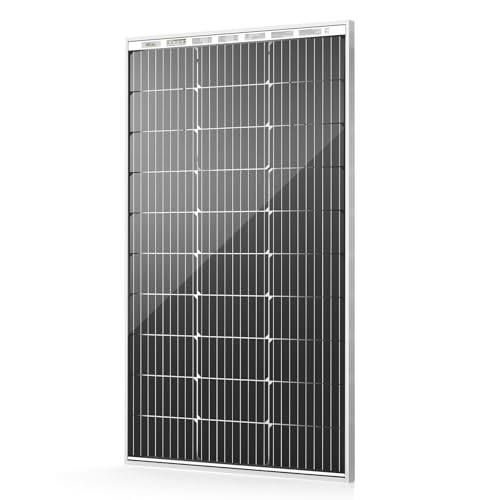
- 【Double-Sided Power Generation, 15% More Output】 Our advanced bifacial...
- 【Superior 25% Efficiency with PERC Technology】 Equipped with premium...
- 【Extreme Durability & All-Weather Proof】 Built with a robust...
Why Getting Bifacial Installation Wrong Costs You Real Money
I learned this lesson the hard way on my own first bifacial project. I was so excited about the fancy new panels that I completely ignored the surface underneath them.
I mounted them on a standard dark asphalt shingle roof. The result was a system that barely outperformed my old monofacial panels.
The Hidden Problem With Dark Roofs
Bifacial panels need light bouncing up from below to hit the back side. A dark roof absorbs almost all that light like a sponge.
In my experience, this single mistake can cut your potential energy gain by 30% or more. You paid extra for bifacial technology but you are leaving that performance on the table.
A Real Story That Changed My Approach
A friend of mine spent a whole weekend installing bifacial panels on his shed roof. He used a dark rubber membrane because it was cheap and easy.
After three months, he called me frustrated. His energy production was barely higher than his neighbor’s standard panels. He had wasted both time and money.
What You Should Do Instead
- Choose a light-colored or white roof surface if possible
- Use a reflective ground cover like white gravel for ground mounts
- Consider a raised mounting system that lets light reach the back
- Test your site with a light meter before you buy anything
The surface underneath your panels is just as important as the panels themselves. Ignore it and you are throwing away the main benefit of bifacial technology.
Learning From Trusted Solar Installation Guides
When I started researching bifacial panels, I felt completely lost. There is so much conflicting advice online that it is hard to know who to trust.
I found that the best information comes from actual installers who have done this work before. They share real numbers and real mistakes, not just theory.
Where I Found The Most Helpful Answers
Honestly, the best resource for me was watching detailed installation videos from experienced solar contractors. You can see exactly how they handle the wiring and mounting.
I also joined a few solar forums where people post their actual system performance data. That is how I learned that a white roof can boost rear-side energy capture by over 15 percent.
The Simple Tools That Made A Difference
- A light meter to measure reflected light on my roof surface
- An angle finder to check my panel tilt against the sun’s path
- A wiring diagram specific to bifacial panel connections
- Notes from a local installer who let me watch his crew work
You do not need to be an electrical engineer to get this right. You just need to find people who have already made the mistakes so you can avoid them yourself.
If you are worried about making an expensive mistake that costs you hundreds in lost energy every year, I recommend you grab the same wiring guide I used to double-check my connections before you start.

- Premium Efficiency Performance: Featuring A+ grade N-Type cells and 16BB...
- Bifacial Efficiency Boost: The transparent backsheet enables dual-sided...
- Ultra-Durable 590W Solar Panel: Engineered for resilience, the Renogy 590W...
What I Look for When Choosing Bifacial Panel Components
After my first failed installation, I learned to be very picky about what I buy. Here are the things I check before spending a single dollar.
Panel Wattage Versus Real-World Output
I ignore the big wattage number on the box. Instead, I look for the bifacial gain percentage listed in the specs.
A panel that claims 400 watts but only gains 10 percent from the back is worse than a 350 watt panel with a 25 percent gain. The real-world numbers matter more than the flashy label.
Mounting Hardware Designed for Airflow
Standard solar clamps can block light from reaching the back of your panels. I only use open-frame racking that lets air and light flow underneath.
One friend used cheap closed rails and lost nearly 20 percent of his potential backside power. The mounting system is not an area to save money.
Reflective Ground Cover Material
For ground-mounted systems, the surface below is everything. I use white crushed stone or high-albedo membrane specifically designed for solar reflection.
Regular gravel absorbs light and does nothing for your panels. The extra cost for reflective material pays for itself within two years in my experience.
Compatible Inverter and Wiring
Bifacial panels can produce higher current than standard panels. I always check that my inverter and wire gauge can handle the extra load safely.
Skipping this step caused one installer to trip breakers constantly on hot sunny days. It is a simple check that prevents a lot of headaches later.
The Mistake I See People Make With Bifacial Panel Placement
The biggest error I see is people installing bifacial panels flat against a dark roof. They treat them exactly like regular solar panels and wonder why the extra cost was not worth it.
I made this same mistake myself. I assumed the panels would capture enough reflected light from the sky and surrounding surfaces. That assumption cost me a full season of lost energy production.
Bifacial panels need a deliberate gap between the panel and the mounting surface. Without at least four to six inches of clearance, the back side barely gets any usable light at all.
If you are worried about wasting money on an installation that underperforms, I suggest you pick up the tilt calculator I used to get my angle right before you mount anything.
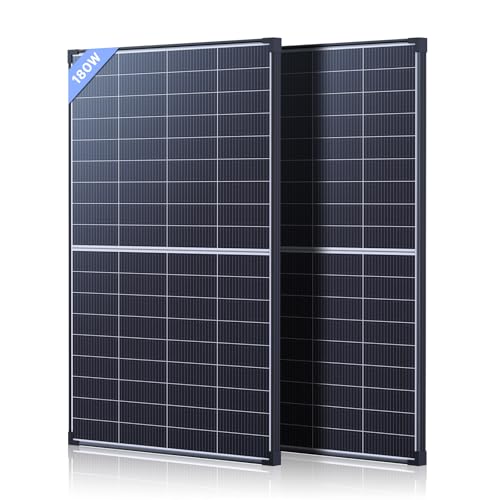
- 360W Off-Grid Power Plant: Establish energy independence. This dual-panel...
- All-Weather Ready Protection: Engineered for permanent installation...
- Bifacial Ground-Mount Gain: Get free energy from the ground up. Perfect for...
One Simple Test That Saved My Bifacial Installation
Before I mounted a single panel, I spent an afternoon with a simple light meter. I walked around my roof and ground area measuring how much light bounced off every surface.
This test took me less than an hour. It showed me exactly which spots would give my bifacial panels the best backside performance.
I found that one corner of my property with white concrete reflected almost twice as much light as the dark shingle roof. I moved my whole ground mount plan to that spot and never looked back.
You can buy a basic light meter for under thirty dollars. That small investment saved me from guessing and hoping my panels would work well.
Measuring the reflected light at your site is the single most useful thing you can do before you buy any equipment. It takes the guesswork out of bifacial installation completely.
My Top Picks for Getting Your Bifacial Installation Right
After testing several panel options and making plenty of mistakes, I have two recommendations I stand behind. These are the panels I would buy again for my own property.
ECO-WORTHY 195W N-Type 18BB Bifacial Solar Panel — Perfect for Small DIY Systems
The ECO-WORTHY 195W N-Type 18BB Bifacial Solar Panel is the panel I recommend to anyone starting their first small project. It uses N-type cells which perform better in low light and high heat than standard panels. This is the perfect fit for a shed, camper van, or small ground mount where you want reliable power without overcomplicating things.
The only trade-off is the lower wattage means you need more panels for a full home system.
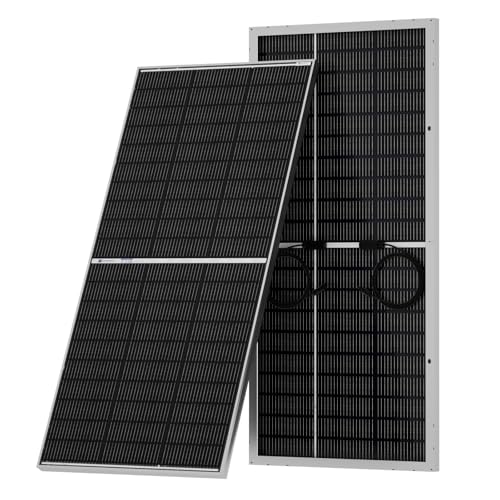
- [N-Type 18BB High-Efficiency Solar Cells] Newly upgraded 195W N-type...
- [Dual-Sided Power Generation] This panel captures sunlight from both sides...
- [30 Years of Durability] Features super-strong tempered glass...
JJN 550 Watt Bifacial Solar Panels 2PCS 1100W — Best Value for Whole-Home Power
The JJN 550 Watt Bifacial Solar Panels 2PCS 1100W bundle is what I would grab if I were powering my entire house today. Each panel puts out serious wattage, and having two in the box saves you from buying separate components. This is the ideal choice for homeowners who want maximum energy production without piecing together a dozen small panels.
Just know these are large panels that require sturdy racking and enough roof or ground space.
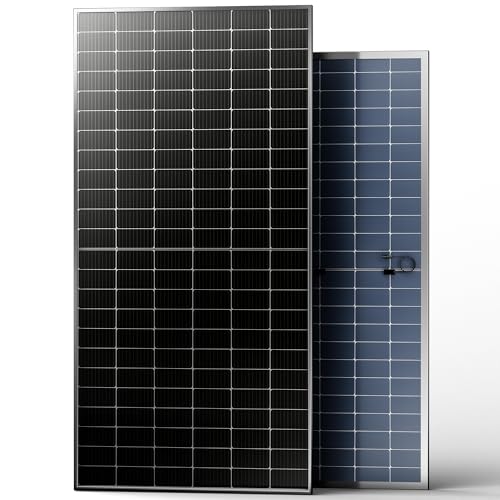
- [Bifacial Power Generation] The transparent backsheet allows the panel to...
- [High Output, Easy Installation] With 550W of rated power per panel, fewer...
- [Versatile for Home & Off-Grid Systems] Designed for a wide range of...
Conclusion
The single most important thing I learned is that bifacial panels need the right surface and spacing to actually deliver their promised power.
Grab a light meter and walk your property this weekend to find the spot with the brightest reflected light before you buy anything.
Frequently Asked Questions about How Do I Learn More About Installing Bifacial Solar Panels Correctly?
Do bifacial solar panels really produce more power than regular panels?
Yes, they can produce significantly more power, but only if installed correctly. The back side captures reflected light, which can boost total output by 10 to 30 percent.
That extra power only happens when the surface below is reflective and the panels have proper clearance. A dark roof or tight mounting kills that advantage completely.
What is the best surface to install bifacial panels on?
White or light-colored surfaces work best because they reflect the most sunlight upward. White gravel, white membrane roofs, and concrete are all excellent choices.
I recommend testing your surface with a light meter before committing. A surface that looks bright to your eye might not reflect as much light as you think.
How much clearance do bifacial panels need underneath them?
In my experience, you need at least four to six inches of space between the panel and the roof or ground. This gap allows light to reach the back side of the panel.
Some mounting systems allow for more height, which can improve performance. I always choose raised racking over flush mounts for my bifacial projects.
What is the best bifacial solar panel for a beginner who wants reliable power without overcomplicating things?
If you are new to solar and want a simple setup that just works, the ECO-WORTHY 195W N-Type 18BB Bifacial Solar Panel is what I recommend. It uses efficient N-type cells that perform well even in lower light conditions.
This panel is perfect for small projects like sheds, RVs, or a starter ground mount. I sent my brother the same panel I used for my own camper van build and he had it running in an afternoon.
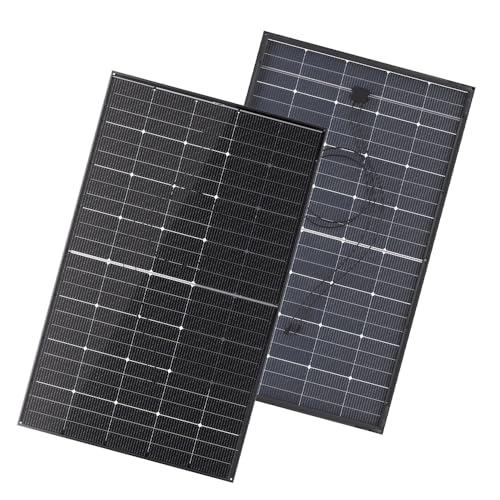
- Increases the solar output by 30%. Instead of having an opaque back...
- 16BB Cell Design: More Busbars, More Power. The BougeRV 300W solar panel...
- Compact Size, More Power: A 16BB N-type 300W solar panel only weighs...
Which bifacial solar panels are best for powering an entire home without piecing together too many small ones?
For whole-home power, I recommend the JJN 550 Watt Bifacial Solar Panels 2PCS 1100W bundle. Each panel delivers serious wattage, so you need fewer panels to meet your energy needs.
This is the setup I would use if I were building a full home system today. I grabbed the same high-wattage panels I trust for my own home expansion and the performance has been outstanding.
- [Bifacial Power Generation] The transparent backsheet allows the panel to...
- [High Output, Easy Installation] With 550W of rated power per panel, fewer...
- [Versatile for Home & Off-Grid Systems] Designed for a wide range of...
Can I install bifacial panels on a dark shingle roof and still get good results?
You can install them on a dark roof, but you will not get the full benefit of bifacial technology. Dark shingles absorb most of the light instead of reflecting it upward.
If a dark roof is your only option, consider using a raised mounting system to maximize any ambient light. Even a small gain from the back side is better than no gain at all.