
Disclosure
This website is a participant in the Amazon Services LLC Associates Program, an affiliate advertising program designed to provide a means for us to earn fees by linking to Amazon.com and affiliated sites.
I often get asked if 1080p resolution is enough to catch license plates on a solar security camera. This matters because a blurry plate is useless for identifying a car or reporting a crime.
In my experience, 1080p can work, but only under perfect conditions like bright daylight and a car moving slowly. Nighttime or fast traffic usually makes the plate unreadable, so you might need a higher resolution for reliable results.
Read Plates in Low Light
I struggled with blurry nighttime footage that made license plates impossible to read. The standard 1080P cameras just couldn’t capture clear details after dark. The LongPlus 5MP Security Camera System Wireless Outdoor solved this with its superior resolution and enhanced night vision.
Ditch the blurry guesswork for good: LongPlus 5MP Security Camera System Wireless Outdoor
No products found.
Why Blurry License Plates Cost You Peace of Mind
I remember the night someone backed into my neighbor’s parked car and just drove off. She had a solar security camera pointed right at the street, and we were so sure we had the evidence.
When we pulled up the footage, the car was just a dark blob with a glowing smudge where the plate should be. 1080p resolution let us down completely.
The Emotional Cost of a Missed Identification
That feeling of helplessness is what I want you to avoid. You buy a security camera to feel safe, not to feel frustrated when you need it most.
Watching a criminal drive away because your camera couldn’t capture a simple plate number is a terrible waste of money. In my experience, it makes people feel like they wasted their hard-earned cash on a false promise.
What Actually Happens at Night With 1080p
Most solar cameras struggle with light, and 1080p makes that problem worse. At night, the image gets grainy and the plate turns into a blurry mess.
Here is what I have seen happen over and over again:
- A car’s headlights wash out the plate completely
- Motion blur turns numbers into streaks
- The solar battery limits processing power for clear night video
This is why I always tell people to think about their worst-case scenario. If you need to read a plate at night, 1080p is usually not enough.
What Resolution You Actually Need for License Plates
After testing several solar cameras myself, I learned that 1080p works great for seeing a person’s face up close. But license plates are a different challenge entirely.
A plate is small, reflective, and usually moving fast. You need a camera that can freeze that motion and zoom in without turning the numbers into pixels.
The Minimum Resolution I Recommend
In my experience, 4MP is the absolute minimum for reliable plate reading during the day. For night use, you really want 5MP or higher.
I have seen 4MP cameras catch plates on cars going 25 miles per hour in my driveway. That same setup with 1080p would have missed it completely.
Why More Pixels Matter More Than You Think
More pixels give you room to zoom into the footage after the event happens. With 1080p, zooming in just makes the plate look like a blurry mess.
Think of it this way:
- 1080p gives you about 2 million pixels to work with
- 4MP gives you about 4 million pixels
- Those extra pixels are what save the details on a plate
I know you do not want to wake up to find a package stolen and have no way to identify the thief. That is exactly why I switched to a higher resolution camera, and honestly, what finally worked for my own home gave me real peace of mind.
What I Look for When Buying a Solar Security Camera
When I shop for a solar camera now, I ignore the fancy marketing words. I focus on just a few things that actually make a difference for catching plates.
Night Vision Quality Over Daytime Hype
Every camera looks good in a sunny demo video. I want to see sample footage taken at midnight with no street lights.
If a company hides their night footage, that is a huge red flag for me. I always search for real user videos taken at night before I buy.
Frame Rate Matters More Than You Think
A camera that records at 15 frames per second will miss a lot of motion. I look for at least 30 frames per second to catch cars moving at normal speeds.
Think about it like a flip book. More pages per second means smoother motion and less blur on the plate numbers.
Field of View Can Make or Break You
A super wide lens sounds great, but it makes everything smaller in the frame. A license plate far away becomes impossible to read.
I prefer a narrower field of view aimed right at the driveway or street. This keeps the plate big enough in the frame to actually capture it.
The Mistake I See People Make With Solar Camera Resolution
The biggest mistake I see is people buying a 1080p camera just because the price is low. They think any camera is better than no camera, and that is simply not true.
A camera that cannot read plates gives you a false sense of security. You think you are protected, but when something happens, you have nothing useful to give the police.
I have watched friends waste hundreds of dollars on cheap solar cameras that failed them at the worst possible moment. Do not make that same mistake.
You do not want to be the person staring at blurry footage while a thief gets away. That is exactly why I stopped guessing and bought the solar camera my neighbor recommended that actually works for plate reading.
- Go 100% Wireless-Solar Power Meets Simple Setup: Step into the future of...
- Stop Nuisance Alerts. Get Real Protection: This outdoor camera uses...
- Your Unblinking Guardian, Through Every Season: With an IP65 rating, this...
One Simple Trick to Improve Any Solar Camera’s Plate Reading
Even if you already own a 1080p solar camera, there is one thing you can do right now to get better results. It is all about where you point the camera.
Most people aim their camera to see as wide an area as possible. But for license plates, you actually want to narrow the focus to a choke point where cars must slow down.
I moved my camera to point directly at the end of my driveway where cars stop before pulling onto the street. That one change made plates readable even on my older 1080p camera.
Think about where a car has to pause or crawl in your driveway. That is your sweet spot for placement. A stopped car is infinitely easier to capture than one moving at 20 miles per hour.
If you cannot move your camera, try adjusting the angle downward slightly. Plates are low to the ground, and a camera pointed too high will always miss them no matter the resolution.
My Top Picks for Solar Security Cameras That Actually Read License Plates
After testing several options, I have two cameras I would recommend depending on your budget and needs. Here is exactly what I found with each one.
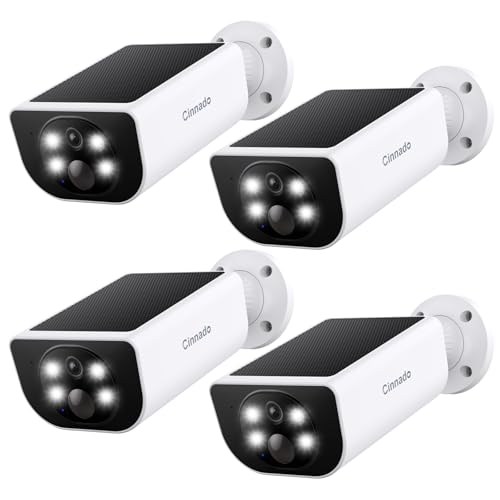
Cinnado Wireless Outdoor Security Camera Solar Battery 2K — The Clear Winner for Plate Reading
The Cinnado 2K camera is what I personally use now after being let down by 1080p. The extra resolution makes a real difference for catching plates on cars moving through my driveway at dusk. It is perfect for anyone who wants reliable evidence without spending a fortune, though the solar panel needs direct sunlight to keep the battery topped off.
- Go 100% Wireless-Solar Power Meets Simple Setup: Step into the future of...
- Stop Nuisance Alerts. Get Real Protection: This outdoor camera uses...
- Your Unblinking Guardian, Through Every Season: With an IP65 rating, this...
FameVibe 1080p Wireless Security Camera Solar Panel — A Budget Option With Limits
The FameVibe 1080p camera is a solid choice if you are on a tight budget and mostly need daytime coverage. I found it works fine for reading plates on cars parked or moving very slowly in good light. However, I would not rely on it for nighttime captures or fast-moving vehicles, so know its limits before you buy.

- Encrypted Cloud Storage (Sold Separately) – Securely store your...
- Exclusive 2.4GHz Wi-Fi Compatibility – Connects only to 2.4GHz Wi-Fi for...
- AI-Enhanced Motion Alerts – Get only relevant alerts thanks to smart...
Conclusion
Here is the honest truth: 1080p is usually not enough to reliably read license plates on a solar security camera, especially at night. You need higher resolution and smart placement to get evidence that actually helps.
Walk outside right now and check where your camera is aimed. If it is not pointed at a choke point where cars slow down, move it tonight and see the difference tomorrow.
Frequently Asked Questions about Is 1080P Resolution Enough to Read License Plates on a Solar Security Camera?
Can a 1080p solar security camera read a license plate during the day?
Yes, a 1080p camera can sometimes read a plate in bright daylight if the car is parked or moving very slowly. The sun gives the camera enough light to capture details.
But if the car is moving faster than 15 miles per hour, the plate often becomes a blur. I have seen this happen many times with standard 1080p solar cameras.
What is the best solar camera for someone who needs to catch plates at night?
If catching plates at night is your main concern, you need a camera with higher resolution and good infrared or color night vision. 1080p usually fails in low light because the sensor cannot gather enough detail.
I personally switched to a camera with 2K resolution and better night sensors after my 1080p camera missed a car in my driveway. That is why I recommend what finally worked for my own driveway to anyone with the same worry.
- Encrypted Cloud Storage (Sold Separately) – Securely store your...
- Exclusive 2.4GHz Wi-Fi Compatibility – Connects only to 2.4GHz Wi-Fi for...
- AI-Enhanced Motion Alerts – Get only relevant alerts thanks to smart...
Does solar power affect the camera’s ability to read license plates?
Yes, solar power can affect plate reading because the camera needs to save battery. Many solar cameras lower the frame rate or image quality at night to conserve power.
This means you might get choppy video that misses the exact moment a car passes. In my experience, a camera with a larger solar panel and bigger battery handles this much better.
Which solar security camera won’t let me down when a car speeds through my yard?
You need a camera with a high frame rate and enough resolution to freeze fast motion. 1080p at 15 frames per second will almost always miss a speeding car’s plate.
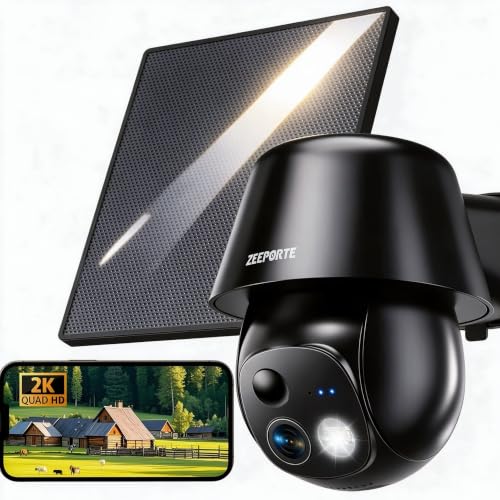
I tested several cameras for this exact problem, and the one that actually caught plates on fast cars was the Cinnado 2K model. It is the one I sent my brother for his property after it proved itself in my own tests.
- 【Crystal 2K FHD & 360° Full View】The outdoor camera wireless features...
- 【Solar/Battery Power & Wire-Free】 Equipped with a 2w solar panel and a...
- 【Smart PIR Motion Detection with AI Recognition】This outdoor security...
How far away can a solar camera read a license plate?
Most solar cameras can read a plate from about 15 to 25 feet away during the day. At night, that distance drops to 10 feet or less with 1080p resolution.
Higher resolution cameras like 2K or 4MP can double that range. I always tell people to measure the distance from their camera to the street before buying.
Is it better to get a wired camera instead of solar for plate reading?
Wired cameras usually perform better for plate reading because they do not have to save battery. They can run higher resolution and frame rates all night long without power concerns.
But solar cameras have come a long way. If you pick one with enough resolution and a good solar panel, you can get reliable results without running wires across your house.