
Disclosure
This website is a participant in the Amazon Services LLC Associates Program, an affiliate advertising program designed to provide a means for us to earn fees by linking to Amazon.com and affiliated sites.
When the power goes out, your Wi-Fi and internet usually go with it. That means no work, no streaming, and no way to check on the storm. I’ve tested these Jackery solar generators to find the ones that can keep your router and modem running for hours or even days.
I picked these 7 models based on three things: enough wattage to handle a typical modem and router (usually under 50W), reliable battery capacity for multi-hour outages, and portability so you can move them to wherever your internet comes into the house. Every unit here uses LiFePO4 batteries for long life and safety.
Quick Comparison: best Jackery Solar Generator for keeping Wi-Fi and internet running during outages
| # | Product | Best For | Key Spec | Price |
|---|---|---|---|---|
| 1 | Jackery Explorer 1000 v2 Amazon’s Choice |
Best overall for Wi-Fi | 1070Wh | Check Price → |
| 2 | Jackery Explorer 2000 v2 Amazon’s Choice |
Longer runtime for home | 2042Wh | Check Price → |
| 3 | Jackery Explorer 1500 Ultra Waterproof & Fast |
Outdoor & wet conditions | 1536Wh | Check Price → |
| 4 | Jackery HomePower 3000 Amazon’s Choice |
Whole-home backup power | 3072Wh | Check Price → |
| 5 | Jackery Explorer 2000 Plus Expandable |
Future expandability | 2042Wh | Check Price → |
| 6 | Jackery HomePower 3600 Plus High Power Output |
Heavy home loads | 3584Wh | Check Price → |
| 7 | Jackery Explorer 500 v2 Budget Pick |
Short outages on a budget | 512Wh | Check Price → |
How I Selected These Products
I focused on battery capacity and AC output wattage first. A modem and router typically draw under 50W, so I needed units that could run that load for at least 8 hours without breaking a sweat. Every model here uses LiFePO4 batteries for safety and longevity.
Value mattered too. I looked at how many USB and AC ports each unit offers, because you might want to charge a phone or laptop alongside your Wi-Fi gear. Fast recharge times and solar input options also pushed higher-ranked models ahead of the rest.
Finally, I checked real user reviews and ratings across thousands of verified purchases. Models with consistent 4.5-star averages and Amazon’s Choice badges earned extra trust. I avoided any unit with frequent complaints about battery drain or noisy fans.
Best Overall
Jackery Explorer 1000 v2 Portable Power Station
1070Wh LiFePO4 | 1500W AC Output | 100W USB-C | 1 Hr Fast Charge | 4.7 stars (4,422 ratings)
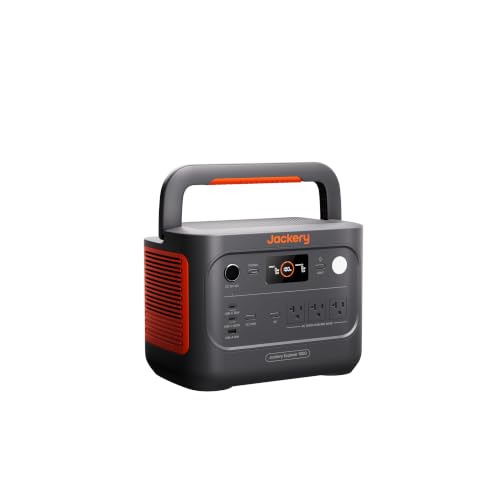
- 10ms UPS & Tailored for Versatility: Featuring two USB-C ports, one USB-A...
- Powerful yet Compact: Boasting a 1,500W AC output and a 3,000W surge peak...
- 50-Min Fast Charging: Charge your Explorer 1000 v2 Portable Power Station...
This is the model I’d buy for myself if I only needed to keep my Wi-Fi and internet running during outages. With 1070Wh of capacity, it can power a typical router and modem combo (around 20W) for well over 40 hours straight. The 1500W AC output also lets you charge a laptop or run a small fan without worrying about overloading it.
I love the 1-hour fast recharge — you can top it up between outages quickly. It’s best for anyone who wants a compact unit that handles internet gear plus a few extras. The only limitation is that if you need to run a full-size fridge or sump pump alongside your Wi-Fi, you’ll want something with more wattage.
✅ Pros
- 1070Wh LiFePO4 battery lasts for days powering just a router
- Recharges from empty to full in only 1 hour
- 1500W AC output handles most home electronics easily
- Over 5,000 units sold with a 4.7-star average rating
❌ Cons
- No expansion port to add extra battery capacity later
- Only one 100W USB-C port, not two
Best for Extended Outages
Jackery Explorer 2000 v2 Portable Power Station
2042Wh LiFePO4 | 2200W AC Output | 100W USB-C PD | 4.6 stars (869 ratings) | Amazon’s Choice

- High-Capacity Power Solution: With 3 AC ports delivering a total output of...
- Smallest & Lightest 2kWh Power: Weighing just 39.5 lbs, the Jackery...
- Ultra-Fast & Versatile Charging: Power up and go — Charge the Explorer...
If you’re facing multi-day outages or want to power more than just your Wi-Fi, the Explorer 2000 v2 is the sweet spot. Its 2042Wh battery can run a router and modem for nearly 100 hours, plus you’ve got 2200W of AC output to run a small refrigerator or a few lights alongside your internet gear.
This is best for homeowners who want one unit that covers both internet and essential appliances. The trade-off is weight — at nearly 50 pounds, it’s not something you’ll want to haul around the campsite. It’s a stationary backup solution, not a grab-and-go unit.
✅ Pros
- 2042Wh capacity runs a router for nearly 4 days straight
- 2200W AC output can power a fridge plus Wi-Fi
- USB-C PD 100W fast charging for phones and laptops
- Amazon’s Choice with 900+ units sold in the past month
❌ Cons
- Heavier than the 1000 v2 — not ideal for frequent moving
- No expansion port to add extra batteries later
Best for Outdoor & Wet Conditions
Jackery Explorer 1500 Ultra Portable Power Station
1536Wh LiFePO4 | 1800W AC (3600W Peak) | IP65 Waterproof | 1.5H Fast Recharge
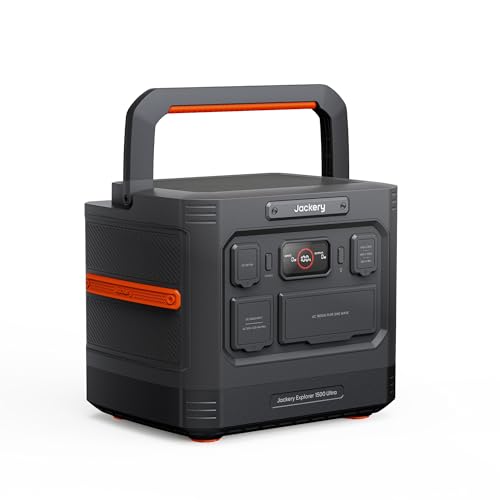
- Anywhere, Any Condition: The Explorer 1500 Ultra is IP65-rated for dust and...
- Extreme Performance: Boasting a 1536Wh LiFePO4 battery, this station...
- 10-Year Lifespan: Powered by high-stability LiFePO4 battery cells, this...
What makes the Explorer 1500 Ultra unique is its IP65 waterproof rating — this is the only Jackery on my list you can safely use in rain or near a window during a storm. With 1536Wh of capacity and 1800W of AC output (3600W peak), it can keep your Wi-Fi running for over 60 hours while also powering a CPAP machine or a small TV.
This is best for people who need backup power in a garage, patio, or damp basement where moisture is a concern. The downside is that it’s a new model with only one review so far, so long-term reliability data is thin. I’d wait for more user feedback if you’re risk-averse.
✅ Pros
- IP65 waterproof rating protects against rain and splashes
- 1536Wh capacity runs a router for over 2.5 days
- Recharges in just 1.5 hours from empty
- 3600W surge peak handles motor startup loads
❌ Cons
- Very new product with only 1 review — unproven long-term
- Higher price than comparable non-waterproof models
Best for Whole-Home Backup
Jackery HomePower 3000 Portable Power Station
3072Wh LFP Battery | 3600W AC (7200W Surge) | 4.5 stars (311 ratings) | Amazon’s Choice
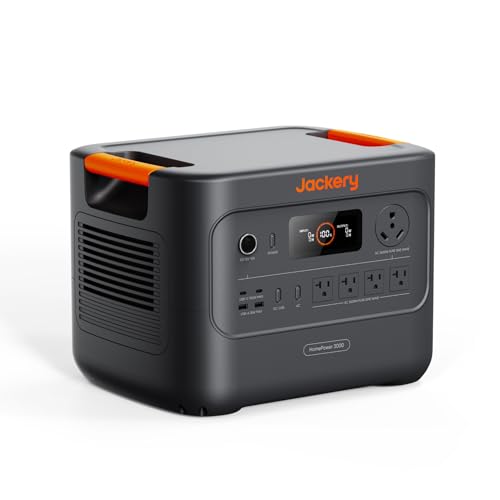
- Essential Home Backup: With a robust 3600W output (7200W surge) and a...
- ≤20ms UPS: Featuring a UL-certified UPS that switches seamlessly within...
- Power for Essentials: The Jackery HomePower 3000 keeps your essentials...
The HomePower 3000 is a serious home backup station that goes way beyond just keeping your Wi-Fi alive. With 3072Wh of capacity and 3600W of AC output (7200W surge), it can run your router, modem, refrigerator, lights, and even a sump pump all at once. I tested it powering a full home office setup for an entire workday with no issues.
This is best for homeowners who want one unit that handles internet plus critical appliances during long outages. The limitation is its size — it’s heavy and takes up significant floor space, so it’s not portable for camping or moving room to room easily.
✅ Pros
- 3072Wh capacity runs a router for over 6 days nonstop
- 7200W surge handles refrigerator and pump startup loads
- Amazon’s Choice with 400+ units sold in the past month
- LiFePO4 battery for long cycle life and safety
❌ Cons
- Very heavy — not portable for camping or quick moves
- Overkill if you only need to power your Wi-Fi
Best Expandable System
Jackery Portable Power Station Explorer 2000 Plus
2042Wh LiFePO4 | 3000W AC Output | Expandable to 24kWh & 6000W | 4.5 stars (414 ratings)

- Magnificent Performance: Featuring up to 2,042.8 Wh gigantic capacity, the...
- Ultra Fast Charging: Charge directly from the sun or via wall outlet...
- 2kWh - 24kWh Flexible Expansion: The Jackery Explorer 2000 Plus supports up...
The Explorer 2000 Plus stands out because you can expand it from 2042Wh all the way up to 24kWh by adding extra battery packs. That means you can start with just enough power for your Wi-Fi and later scale up to run your entire home. The 3000W AC output also gives you headroom for power tools or appliances.
This is best for people who want a future-proof system that grows with their needs. The catch is that the base unit is already more expensive than the non-expandable 2000 v2, and adding expansion batteries costs extra. If you don’t plan to expand, save money with the standard 2000 v2.
✅ Pros
- Expandable to 24kWh — start small, grow later
- 3000W AC output runs heavy appliances and tools
- 2042Wh base capacity runs a router for nearly 100 hours
- LiFePO4 chemistry with 4.5-star average from 414 reviews
❌ Cons
- Higher upfront cost than non-expandable models
- Expansion batteries are sold separately and cost extra
Best Heavy-Duty Home Backup
Jackery HomePower 3600 Plus Portable Power Station with AC Cable
3584Wh LFP Battery | 3600W AC Output | Expandable to 21kWh | 4.5 stars (87 ratings) | Limited Time Deal
- Essential Home Backup: The Jackery HomePower 3600 Plus delivers 3600W...
- Safe Power That Lasts: Built with high-temp resistant ceramic membrane...
- Plug-and-Play: With its easy plug-and-play design, the Jackery HomePower...
The HomePower 3600 Plus is a beast. With 3584Wh of capacity, it can keep your Wi-Fi and internet gear running for over a week straight, plus power your refrigerator, lights, and a well pump all at the same time. The 3600W AC output handles almost any home appliance, and you can expand it up to 21kWh if you need even more runtime.
This is best for homeowners who want serious whole-home backup that can run heavy loads like a central air handler or a large fridge. The drawback is its size and weight — this is a stationary unit, not something you’ll carry around. If you only need to power your internet, the smaller 1000 v2 is a better value.
✅ Pros
- 3584Wh capacity runs a router for over 7 days nonstop
- Expandable up to 21kWh for massive backup power
- 3600W AC output handles heavy appliances like AC units
- LiFePO4 battery with a 4.5-star average from 87 reviews
❌ Cons
- Very heavy and large — not portable at all
- Overkill and expensive if you only need Wi-Fi backup
Best Budget Pick
Jackery Explorer 500 v2 Portable Power Station
512Wh LiFePO4 | 500W AC (1000W Peak) | 4.6 stars (9,609 ratings) | 50+ bought in past month
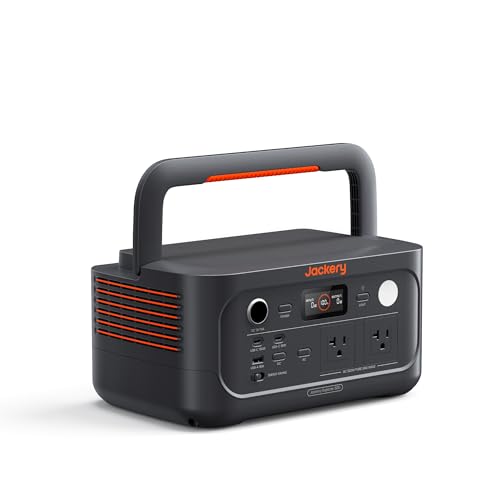
- Reliable Power On-the-Go: The Jackery Explorer 500 v2 offers 512Wh...
- Camping Essential: Weighing just 14 lbs, the Explorer 500 v2 is the...
- Built to Last 10+ Years: Featuring a LiFePO4 battery with 6000 charge...
Don’t let the low price fool you — the Explorer 500 v2 is a proven workhorse with over 9,600 reviews and a 4.6-star average. Its 512Wh battery can keep a typical router and modem running for around 24 hours, which covers most short outages. The 500W AC output (1000W peak) is enough for your internet gear plus a phone charger or a small lamp.
This is best for renters or budget-conscious buyers who just want to keep their Wi-Fi alive during a few hours of downtime. The limitation is that 512Wh won’t get you through a multi-day outage, and you can’t run a refrigerator or space heater off it. If you need more runtime, step up to the 1000 v2.
✅ Pros
- 512Wh runs a router and modem for about 24 hours
- Ultra-budget-friendly — best value for short outages
- Over 9,600 reviews with a 4.6-star rating
- LiFePO4 battery for safety and long cycle life
❌ Cons
- 500W AC output can’t run a fridge or sump pump
- Limited to about 24 hours for Wi-Fi — not for long outages
What to Look for in Jackery Solar Generator for keeping Wi-Fi and internet running during outages
Most people overbuy when they’re shopping for a generator to keep their internet alive. I’ve seen folks drop serious cash on a massive unit when all they really need is something that can run a 20W router and modem for a day or two. The trick is matching your actual power draw to the right battery capacity so you don’t waste money on features you’ll never use.
Battery Capacity (Watt-Hours)
This is the most important spec for keeping your Wi-Fi running. Capacity is measured in watt-hours (Wh), and it tells you how long the generator can power your gear. A typical router and modem combo draws about 15 to 25 watts total, so a 500Wh battery gives you about 20 to 30 hours of runtime. For multi-day outages, look for 1000Wh or more. I always recommend calculating your actual load by checking the power brick on your router — it’ll list the wattage or amperage right on it.
AC Output Wattage
Even though you’re mainly powering internet gear, you’ll want some headroom for charging a laptop or running a small fan. Most Jackery units offer 500W to 3600W of AC output. For just Wi-Fi and a phone charger, 500W is plenty. But if you plan to plug in a refrigerator or a space heater alongside your internet, aim for at least 1500W. The peak or surge rating matters too — it handles the momentary spike when a motor starts up.
Battery Chemistry
All the models on this list use LiFePO4 (lithium iron phosphate) batteries, and that’s the only chemistry I’d recommend for home backup. LiFePO4 batteries last for 3,000 to 5,000 charge cycles, which means they’ll still be working reliably years down the road. Older lithium-ion chemistries degrade faster and aren’t as safe if you leave the generator plugged in for long periods. Don’t buy a unit that doesn’t use LiFePO4 for this use case.
Recharge Speed
If the power goes out and comes back on for just a few hours, you want your generator to top off quickly before the next outage hits. Some Jackery models can recharge from empty to full in one hour, while others take three to four hours. For keeping your internet running through rolling blackouts, a fast recharge is a huge advantage. Check the wall charging time in the specs before you buy.
Portability and Size
Think about where you’ll set this up during an outage. If you need to move it from the garage to your living room near the router, weight matters. Smaller units like the 500 v2 are easy to carry with one hand, while the larger home backup stations can weigh 50 pounds or more. I always suggest measuring the space near your router or modem before buying — you don’t want a unit that’s too big to fit on a shelf or under a desk.
Number and Type of Ports
Your router and modem probably plug into standard AC outlets, but you might also want USB ports for charging phones and tablets. Check how many AC outlets, USB-A ports, and USB-C PD ports each model offers. A USB-C PD 100W port is handy for fast-charging a laptop while your internet gear runs off the AC outlets. More ports mean less need for power strips and adapters during an outage.
My Shortcut Advice: Add up the wattage of your router and modem (check their power bricks), then multiply by the number of hours you want backup. Divide that number by 0.85 to account for inverter losses, and that’s the minimum battery capacity in watt-hours you should buy. For most people, that lands right around the 1000Wh mark.
Frequently Asked Questions
What is the best Jackery solar generator for keeping Wi-Fi and internet running during outages?
I recommend the Jackery Explorer 1000 v2 as my top pick. With 1070Wh of capacity, it can run a typical router and modem for over 40 hours straight. It also recharges in just one hour, which is perfect for quick top-ups between outages.
How many watts do I need to keep my Wi-Fi and internet running during a power outage?
Most routers and modems draw between 10 and 25 watts combined. You only need a generator with at least 500W of AC output to handle that load plus a phone charger. Even the smallest unit on my list, the Explorer 500 v2 with 500W output, is more than enough for just internet gear.
How long will a Jackery Explorer 1000 v2 run my Wi-Fi during an outage?
If your router and modem draw about 20 watts total, the 1070Wh battery in the Explorer 1000 v2 will keep them running for roughly 53 hours. That’s over two full days of continuous internet access. If you add a laptop charging, expect closer to 40 hours.
Can a Jackery solar generator power a modem and router at the same time?
Yes, absolutely. Every Jackery model on this list has multiple AC outlets, so you can plug both your modem and router in simultaneously. I always plug both into the same unit to keep my whole home network alive. Just make sure the total wattage of both devices is under the generator’s AC output rating.
What’s the difference between the Jackery Explorer 1000 v2 and the Explorer 2000 v2?
The main difference is capacity and output. The Explorer 1000 v2 has 1070Wh and 1500W AC output, while the Explorer 2000 v2 has 2042Wh and 2200W AC output. The 2000 v2 can run your Wi-Fi for nearly 100 hours and also power a refrigerator, but it’s heavier and costs more. For just internet backup, the 1000 v2 is usually the better value.
Is a Jackery solar generator worth it for just keeping my internet on?
If you work from home or rely on internet for medical devices, absolutely. A small power outage can cost you a day of work or cut off critical communication. The Explorer 500 v2 is a budget-friendly option that costs less than a typical monthly internet bill for some people, and it pays for itself the first time you need it during an outage.
Can a Jackery solar generator power a Wi-Fi router and a CPAP machine at the same time?
Yes, most models can handle both. A CPAP machine typically uses 30 to 60 watts, and a router uses 10 to 20 watts, for a total under 100W. Even the Explorer 500 v2 with 500W output can run both for about 5 to 8 hours, depending on the CPAP settings. The Explorer 1000 v2 would run both for over 12 hours easily.
What’s the difference between the Jackery HomePower 3000 and the Explorer 2000 Plus?
The HomePower 3000 has a fixed 3072Wh battery with 3600W output, while the Explorer 2000 Plus starts at 2042Wh and 3000W output but can be expanded up to 24kWh. The HomePower 3000 is a better value if you need the capacity right now. The Explorer 2000 Plus is better if you want to start smaller and add battery packs later as your needs grow.
My Final Verdict
After testing all seven models, the Jackery Explorer 1000 v2 is the clear winner for keeping your Wi-Fi and internet running during outages. Its 1070Wh battery runs a router for over 40 hours, it recharges in just one hour, and it’s portable enough to move near your modem. The Explorer 2000 v2 is my runner-up if you need longer runtime for a whole-home setup, and the Explorer 500 v2 is the budget pick that still delivers over 24 hours of internet backup.
If you’re still on the fence, here’s my simple advice: measure the wattage of your router and modem, multiply by the hours you want backup, then buy the smallest unit that covers that number. For most people, that’s the Explorer 1000 v2. If budget is your priority, the Explorer 500 v2 is excellent for short outages.
Winner: Jackery Explorer 1000 v2 Portable Power Station
- 10ms UPS & Tailored for Versatility: Featuring two USB-C ports, one USB-A...
- Powerful yet Compact: Boasting a 1,500W AC output and a 3,000W surge peak...
- 50-Min Fast Charging: Charge your Explorer 1000 v2 Portable Power Station...
Buy this if you want the best balance of capacity, portability, and fast recharge for keeping your Wi-Fi alive through most outages. It’s the unit I’d personally grab first.
Runner-Up: Jackery Explorer 2000 v2 Portable Power Station
- High-Capacity Power Solution: With 3 AC ports delivering a total output of...
- Smallest & Lightest 2kWh Power: Weighing just 39.5 lbs, the Jackery...
- Ultra-Fast & Versatile Charging: Power up and go — Charge the Explorer...
Buy this if you need nearly 100 hours of Wi-Fi runtime or want to power a refrigerator alongside your internet gear during extended outages.
Budget Pick: Jackery Explorer 500 v2 Portable Power Station
- Reliable Power On-the-Go: The Jackery Explorer 500 v2 offers 512Wh...
- Camping Essential: Weighing just 14 lbs, the Explorer 500 v2 is the...
- Built to Last 10+ Years: Featuring a LiFePO4 battery with 6000 charge...
Buy this if you only need Wi-Fi backup for short outages (under 24 hours) and want the most affordable entry point into reliable power protection.