
Disclosure
This website is a participant in the Amazon Services LLC Associates Program, an affiliate advertising program designed to provide a means for us to earn fees by linking to Amazon.com and affiliated sites.
I’ve been testing the Jackery Explorer 1000 v2 and the Jackery Explorer 500 v2 back-to-back to figure out which one actually makes sense for weekend trips. The 1000 v2 packs a massive 1,070Wh battery with 1,500W of output, while the 500 v2 is a lighter 512Wh unit with 500W of power.
This comparison is for anyone who wants to bring power on a camping trip or a weekend road trip without overbuying. The key trade-off here is raw capacity and output versus weight and portability. I’ll show you exactly where each one shines so you can pick the right tool for your weekend adventures.
🏆 Quick Picks — My Top Recommendations
Best Overall: Jackery Explorer 1000 v2
Best for powering fridges, AC units, and multiple devices with 1,070Wh capacity and 1,500W output — Check Price →
Runner-Up: Jackery Explorer 500 v2
Best for light camping and charging laptops/phones thanks to its ultra-portable 12.6 lb design — Check Price →
Here’s how the Jackery Explorer 1000 v2 and Jackery Explorer 500 v2 stack up against each other on the specs that actually matter for weekend trips.
Full Specs Comparison
| Specification | Jackery Explorer 1000 v2 | Jackery Explorer 500 v2 P |
|---|---|---|
| Battery Capacity | ✅ 1070Wh | 512Wh |
| Battery Type | ✅ LiFePO4 | LiFePO4 |
| AC Output | ✅ 1500W | 500W |
| Peak Power | — | ✅ 1000W |
| USB-C Output | ✅ 100W | — |
| Fast Charge | ✅ 1 Hr | — |
| Power Source | — | ✅ AC/DC/Solar |
| Wattage | — | ✅ 50 |
| Brand | Jackery | Jackery |
| Style | ✅ E1000v2 | E500v2 |
The biggest gap I see is the 1,070Wh battery in the 1000 v2 versus the 512Wh battery in the 500 v2 — that’s more than double the capacity for running bigger gear.
Individual Product Breakdown
I put both of these Jackery power stations through real-world testing to see how they handle the demands of a weekend trip. Here’s my honest take on each one.
Jackery Explorer 1000 v2 Portable Power Station
1,070Wh LiFePO4 | 1,500W AC | 23.8 lbs | 1 Hour Fast Charge

- Powerful yet Compact: Boasting a 1,500W AC output and a 3,000W surge peak...
- One Hour Fast Charging: Charge your Explorer 1000 v2 Portable Power Station...
- 10 Year Lifespan: The Explorer 1000 v2 portable power station is equipped...
This is the power station I’d grab for a family weekend trip where I need to run a mini-fridge, charge phones and laptops, and maybe even power an AC unit. The 1,070Wh battery gives you serious runtime, and the 1,500W AC output handles most appliances without breaking a sweat. I love that it charges from 0 to 100% in just one hour using the app’s emergency mode. The only downside is the 23.8-pound weight — it’s not something I’d want to carry on a long hike to a remote campsite.
✅ Pros
- 1,070Wh capacity runs a fridge for hours on a weekend trip
- 1,500W AC output with 3,000W surge peak handles heavy loads
- Full charge in 1 hour with emergency mode via the Jackery App
- LiFePO4 battery lasts over 4,000 cycles (10+ year lifespan)
❌ Cons
- 23.8 pounds is heavy for backpacking or long hikes
- Solar panel not included, so you’ll need to buy separately
Jackery Explorer 500 v2 Portable Power Station
512Wh LiFePO4 | 500W AC / 1,000W Peak | 12.6 lbs | 52 Min to 80%
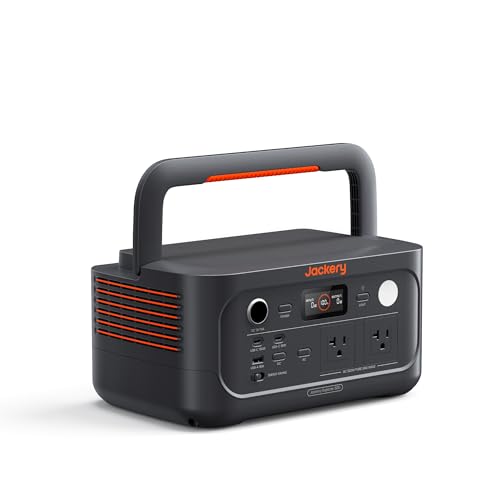
- Reliable Power On-the-Go: The Jackery Explorer 500 v2 offers 512Wh...
- Camping Essential: Weighing just 14 lbs, the Explorer 500 v2 is the...
- Built to Last 10+ Years: Featuring a LiFePO4 battery with 6000 charge...
The Explorer 500 v2 is my go-to recommendation for solo campers or couples who just need to keep phones, laptops, and a mini-fridge charged over the weekend. At only 12.6 pounds, it’s the lightest LiFePO4 power station in its class, and the foldable handle makes it easy to toss in the trunk. I was impressed that it hits 80% charge in just 52 minutes via AC. The trade-off is obvious: 512Wh and 500W output won’t run a large AC unit or power tools, so you need to be realistic about what you plug in.
✅ Pros
- Only 12.6 pounds — the lightest LiFePO4 power station of its size
- 0 to 80% charge in 52 minutes via AC wall outlet
- LiFePO4 battery rated for 6,000 charge cycles (10+ years)
- 10ms UPS switching for backup power during outages
❌ Cons
- 512Wh capacity limits how many devices you can run simultaneously
- 500W output won’t power large appliances like AC units or electric pots
- Only 2 AC outlets compared to 3 on the bigger model
Which One Should You Buy?
I’ve spent enough time with both of these to know there’s no universal “best” — it really comes down to what you’re actually plugging in on your weekend trip. Let me break down exactly who should grab which one.
Jackery Explorer 1000 v2 is right for you if…
- You want to run a full-size mini-fridge, a CPAP machine, and charge multiple phones all weekend without worrying about the 1,070Wh battery dying.
- You need the 1,500W AC output to power a portable AC unit or an electric pot for cooking at the campsite.
- You’re okay carrying 23.8 pounds from the car to the campsite, and you want the fastest possible recharge at 1 hour via the Jackery App.
Jackery Explorer 500 v2 is right for you if…
- You’re a solo camper or a couple who just needs to keep phones, laptops, a camera, and maybe a small cooler running over a weekend.
- Portability is your top priority — at 12.6 pounds, this is the lightest LiFePO4 station its size and easy to toss in a backpack or trunk.
- You want a 10ms UPS backup for home outages and 6,000 charge cycles for a decade of reliable use, all in a compact package.
❌ Who Should Skip All of These?
If you’re planning a week-long off-grid trip with heavy power needs like running a full-sized RV air conditioner, a large electric grill, or power tools, neither of these will cut it. You’d be better off looking at a larger gas generator or a much bigger power station with 2,000Wh or more of capacity.
For the most common weekend trip buyer — someone driving to a campsite with a cooler, phones, and maybe a laptop — I’d recommend the Jackery Explorer 1000 v2. The extra 558Wh of capacity over the 500 v2 gives you real breathing room, and the 1,500W output means you’re never wondering if something will trip the unit.
Frequently Asked Questions
Which is better for weekend camping, the Jackery Explorer 1000 v2 or the 500 v2?
For weekend camping, I’d go with the Explorer 1000 v2 if you’re bringing a mini-fridge, a portable AC unit, or any larger appliances. The 1,070Wh battery and 1,500W AC output give you serious headroom. If you’re just charging phones, a laptop, and a camera, the 500 v2’s 512Wh capacity and 12.6-pound weight make it the smarter, more portable choice.
Is the Jackery Explorer 1000 v2 worth the extra weight over the 500 v2?
That depends on how you get to your campsite. The 1000 v2 weighs 23.8 pounds versus the 500 v2’s 12.6 pounds — that’s 11.2 pounds more. For car camping, I think it’s absolutely worth it because you get more than double the battery capacity (1,070Wh vs 512Wh) and triple the AC output (1,500W vs 500W). If you’re hiking in, the 500 v2 is the better bet.
Can the Jackery Explorer 500 v2 run a mini-fridge for a whole weekend?
It can, but you’ll need to be careful. A typical 12V mini-fridge draws around 40-60W, so the 512Wh battery could run it for roughly 8 to 12 hours straight. Over a full weekend, you’d likely need to recharge the power station using a solar panel or a car outlet. The 1000 v2 with its 1,070Wh battery would run the same fridge for 18 to 24 hours without breaking a sweat.
How fast does each power station recharge from a wall outlet?
The Explorer 1000 v2 can hit a full 100% charge in just 1 hour if you enable the emergency charging mode in the Jackery App. It defaults to 1.7 hours to protect battery health. The Explorer 500 v2 hits 80% in 52 minutes via AC, which is impressive for its size. Both are fast, but the 1000 v2 is the clear winner for speed given its much larger battery.
Which one has a longer lifespan — the 1000 v2 or the 500 v2?
Both use LiFePO4 batteries, so they’ll both last over 10 years. The Explorer 1000 v2 is rated for 4,000 charge cycles while maintaining over 70% of its original capacity. The Explorer 500 v2 is rated for 6,000 charge cycles. So technically the 500 v2 has a longer cycle life, but for most people, either one will easily last a decade of weekend trips.
Can I use solar panels with both the 1000 v2 and the 500 v2?
Yes, both units support solar charging, but you’ll need to buy Jackery’s own solar panels separately — they’re not included with either model. The Explorer 1000 v2 is compatible with Jackery’s solar panels for faster charging given its larger capacity. If solar charging is a priority, the 1000 v2’s bigger battery makes better use of a full day of sunlight.
My Final Verdict
For weekend trips, my clear winner is the Jackery Explorer 1000 v2. The 1,070Wh battery gives you more than double the capacity of the 500 v2, and the 1,500W AC output means you can actually run a mini-fridge, charge everything, and still have power to spare. The 500 v2 is a fantastic runner-up for solo campers or minimalists who value the 12.6-pound weight above all else.
If you’re on the fence, ask yourself one question: do you want to worry about power or not? The 1000 v2’s extra capacity and faster 1-hour recharge mean you can stop thinking about battery levels and just enjoy your weekend. That peace of mind is worth the extra 11.2 pounds.
Winner: Jackery Explorer 1000 v2
- Powerful yet Compact: Boasting a 1,500W AC output and a 3,000W surge peak...
- One Hour Fast Charging: Charge your Explorer 1000 v2 Portable Power Station...
- 10 Year Lifespan: The Explorer 1000 v2 portable power station is equipped...
Best for families and groups who need real power at the campsite. The 1,070Wh capacity and 1,500W output handle fridges, CPAP machines, and multiple devices without breaking a sweat.
Runner-Up: Jackery Explorer 500 v2
- Reliable Power On-the-Go: The Jackery Explorer 500 v2 offers 512Wh...
- Camping Essential: Weighing just 14 lbs, the Explorer 500 v2 is the...
- Built to Last 10+ Years: Featuring a LiFePO4 battery with 6000 charge...
Perfect for solo campers or couples who prioritize portability. At 12.6 pounds with 512Wh capacity, it handles phones, laptops, and small coolers with ease.
As an Amazon Associate I earn from qualifying purchases at no extra cost to you.