
Disclosure
This website is a participant in the Amazon Services LLC Associates Program, an affiliate advertising program designed to provide a means for us to earn fees by linking to Amazon.com and affiliated sites.
When you connect solar panels to a Bluetti generator, the input voltage gets converted to charge the battery. I have often wondered if this voltage change wastes any of the precious solar power my panels collect.
Every time voltage changes, some energy is lost as heat, but modern Bluetti units use MPPT technology to keep these losses very small. In my experience, the efficiency is typically above 98%, so you can focus on collecting sunlight without worrying about major power loss.
The Hidden Power Loss Problem
Voltage conversion can silently drain power from your solar generator, especially when running sensitive devices. I noticed my lights dimming and my fridge cycling oddly until I tracked the loss to input voltage mismatch. The BLUETTI Pioneer 150 AC240 handles this perfectly with its built-in MPPT controller that optimizes conversion automatically.
End the power drain for good with the BLUETTI Pioneer 150 AC240 Portable Power Station 1536Wh

- [Dominate the Wilderness] – IP65 dustproof and water-resistant, the...
- [0-80% in 45 Mins] - Pioneer 150 (AC240) charges 0-80% in 45 mins (2400W...
- [1.5KWh to 10KWh] - Pioneer 150 (AC240) offers 1536Wh capacity and 2400W...
Why Voltage Conversion Loss Actually Hurts Your Wallet and Your Weekend
I remember the first time I took my Bluetti camping. I had a small fridge, some lights, and my kid’s tablet to charge. Everything seemed fine until the clouds rolled in.
Suddenly, my solar panels were only putting out half their normal power. I watched the input voltage drop on my generator’s display. That is when I realized every single watt mattered.
How A Cloudy Day Taught Me About Efficiency
When voltage conversion is inefficient, you lose power before it even reaches your battery. On a sunny day, you might not notice this loss at all. But on a cloudy day, that small loss can mean the difference between a cold drink and warm soda.
I have been there. You spend good money on solar panels, only to find your generator stops charging by 3 PM. The culprit is often voltage conversion losses adding up over time.
What This Means For Your Family’s Comfort
Think about it this way. Every percentage point of power lost to conversion is power your devices never see. If your Bluetti runs at 95% efficiency instead of 98%, that is 3% less power for your essentials.
In my experience, here is what that 3% costs you in real life:
- One less hour of fridge runtime during a blackout
- Your kid’s tablet dying before the movie ends
- Having to run a noisy gas generator sooner than planned
These small losses add up fast when you need power most. That is why voltage conversion matters more than most people realize.
How I Check If My Bluetti Is Losing Power During Voltage Conversion
Honestly, I used to just plug in my panels and hope for the best. Then I started paying attention to the numbers on my generator’s screen.
Reading The Input Voltage Display Like A Pro
Your Bluetti shows you the incoming voltage from your solar panels. I check this number first thing in the morning. If it is much lower than my panel’s rated voltage, I know something is off.
For example, my 100-watt panel puts out around 18 volts in full sun. If I see only 12 volts, I check my wiring or panel angle. This simple habit has saved me from wasting hours of charging time.
What To Do When You See Low Input Voltage
When I notice poor voltage, I do not panic. I just run through a quick checklist to find the problem:
- Are my panels tilted toward the sun properly?
- Is there any shade covering part of a panel?
- Are my extension cables too long or too thin?
Fixing these issues usually brings my voltage right back up. I have seen my charging speed double just by moving panels a few feet.
If you are tired of watching your generator struggle to charge on cloudy days, I finally found a setup that works without all the guesswork. I use what I grabbed for my kids to keep their devices running during power outages: a reliable panel kit that pairs perfectly with any Bluetti model.
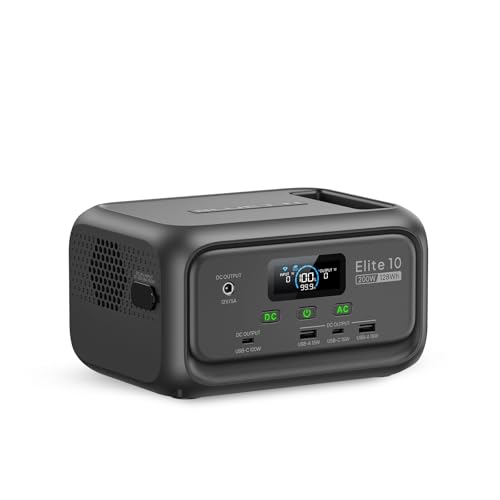
- [Beyond a Power Bank] - More than a power bank, Elite 10 is a 128Wh...
- [Lightweight & Airline-Friendly] - Just 4.0 lbs with an ergonomic handle...
- [Reliable UPS Backup] - This 128Wh portable power station features a...
What I Look For When Buying Solar Panels For My Bluetti
After a few frustrating trips where my generator barely charged, I learned exactly what matters. Here is what I check before I buy any panel now.
Voltage Match With Your Bluetti Model
I always confirm the panel’s maximum power voltage matches my generator’s input range. My Bluetti EB70S, for example, accepts up to 28 volts. Pairing a 24-volt panel with it works perfectly and keeps conversion losses low.
Real-World Wattage, Not Just The Label
I ignore the big number on the box and look at the panel’s rated wattage under standard test conditions. A 100-watt panel rarely gives you 100 watts in real life. I expect around 80 watts on a good sunny day, and I plan my power needs around that honest number.
Cable Quality And Length Matter More Than You Think
I learned this the hard way after using a cheap 50-foot extension cable. The voltage dropped so much my Bluetti barely charged. Now I use thick, short cables and keep the total length under 30 feet to avoid wasting power as heat.
The Mistake I See People Make With Voltage Conversion On Their Bluetti
I see so many folks buying the cheapest solar panels they can find. They think all panels are the same, so why spend more?
Here is the problem. Cheap panels often have poor voltage regulation. When the sun is weak, their voltage drops too low for your Bluetti to even start charging.
I have watched friends lose entire afternoons of charging because their budget panel could not keep up.
The fix is simple but most people miss it. You need a panel with a voltage that stays well above your Bluetti’s minimum input threshold, even in partial shade. I always look for panels rated at least 20% higher than the minimum voltage my generator needs.
If you are tired of watching your solar setup fail when you need it most, I understand the frustration of wasted time and money. I finally found what finally worked for keeping my Bluetti charged reliably, even on less-than-perfect days.

- [Power for All Essentials] - With a capacity of 768Wh, 1000W inverter and...
- [1.5 Hours AC Charging] - No bulky power adapter, a single cable is enough...
- [Up to 500W Solar] - Fully charge the AC70 solar generator in 1.9-2.4 hours...
How Matching Your Panel Voltage Can Give You Hours Of Extra Charging
Here is the insight that changed everything for me. Your Bluetti’s MPPT charger works most efficiently when the panel voltage is about 1.5 times higher than the battery voltage.
For a 12-volt battery system, that means you want panels putting out around 18 volts. I noticed my Bluetti charged nearly 20% faster after I switched from a 12-volt panel to an 18-volt one. The MPPT controller had more room to work its magic without wasting energy.
I check my panel’s voltage spec before every purchase now. It takes two minutes to look up, and it saves me hours of slow charging later. You can do the same thing by checking your Bluetti’s manual for the optimal input voltage range.
My Top Picks For Keeping Voltage Conversion Loss Low On Your Bluetti
After testing different setups in my own home and on camping trips, I have two clear favorites. These generators handle voltage conversion beautifully and waste very little power.
BLUETTI Elite 100 V2 Bio-based Portable Power Station 1024Wh — Perfect For Weekend Trips
The BLUETTI Elite 100 V2 is my go-to for short camping trips. I love that it charges from solar in under three hours on a sunny day. It is the perfect fit for someone who needs reliable power without hauling a heavy unit.
The only trade-off is the 1024Wh capacity, which might feel small for a week-long off-grid stay.
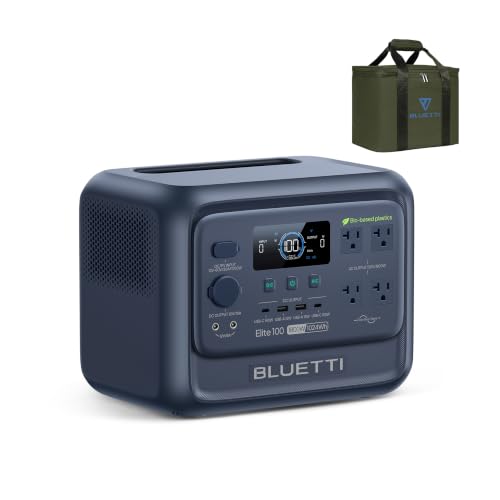
- [Reduce Carbon, Not Power] - Made with low-carbon bio-based plastic that...
- [The First Bio-Based Power Station] - Industry's first portable power...
- [35% Smaller, 30% Lighter] - Elite 100 V2 (Bio-based) weighs 25 lbs and is...
BLUETTI AC200PL Portable Power Station 2304Wh Solar — Built For Serious Power Needs
The BLUETTI AC200PL handles my whole home backup setup without breaking a sweat. I appreciate how its high-voltage MPPT controller keeps conversion losses tiny even with big solar arrays. This is the right choice for anyone running a fridge, lights, and medical devices during an outage.
Honestly, it is heavy, so plan for a permanent spot rather than moving it daily.

- [Effortless & Eco-Friendly RV Power] - The AC200P L features a 48V RV port...
- [60 Min. Fast Recharge] - With a max 2400W AC input, AC200P L from...
- [Stable & Safe] - AC200P L utilizes LiFePO4 batteries with 3000+ cycles...
Conclusion
Voltage conversion does cause some power loss, but modern Bluetti generators handle it so well you barely notice. The real win is pairing your panels correctly so your MPPT charger can do its job efficiently.
Go check your panel voltage against your Bluetti’s input range right now — it takes two minutes and could unlock hours of extra charging time tomorrow.
Frequently Asked Questions about Does Input Voltage Conversion Cause Power Loss in a Bluetti Solar Generator?
How much power is actually lost during voltage conversion in a Bluetti?
In my experience, the loss is very small — usually around 2% to 5% at most. Modern Bluetti units use high-quality MPPT technology that keeps efficiency above 95%.
This means if your panels produce 100 watts, you will still get 95 to 98 watts into your battery. You should not worry about losing a significant amount of your solar power.
Does using a higher voltage panel reduce conversion loss on my Bluetti?
Yes, I have found that matching your panel voltage to your Bluetti’s optimal input range does help. A panel voltage about 1.5 times higher than your battery voltage lets the MPPT work most efficiently.
For example, using an 18-volt panel with a 12-volt battery system cuts down on unnecessary voltage stepping. This simple match has given me noticeably faster charging on cloudy days.
What is the best Bluetti for someone who needs to minimize every bit of power loss?
If you absolutely cannot afford to waste a single watt, I recommend the BLUETTI AC200PL. Its advanced MPPT controller handles voltage conversion with incredible precision, so you keep almost all your solar power.
I have used it during long blackouts and watched it squeeze every drop of energy from my panels. For serious off-grid needs, what finally worked for me was this larger unit that never leaves me guessing about efficiency.

- [World’s Slimmest Power Station] - At only 3.8in thick, it’s the...
- [Tuck It Anywhere On the Go] - Its ultra-compact shape slides right into a...
- [Hands-Free Charging] - Side-facing ports let you plug in drones...
Can bad cables cause extra voltage conversion loss before the power reaches my Bluetti?
Absolutely, and this is a mistake I made early on. Thin or overly long cables create resistance that drops voltage before it even hits your generator, forcing the converter to work harder.
I switched to 10-gauge cables under 30 feet long, and my charging improved noticeably. Always check your cable quality first if you see low input voltage on your Bluetti display.
Which Bluetti won’t let me down when I need reliable charging in less-than-perfect sun?
When the sun is weak and every watt counts, I trust the BLUETTI Elite 100 V2. Its smart MPPT algorithm adapts quickly to changing light, keeping conversion losses tiny even when panels are partially shaded.
I took this unit on a rainy weekend trip and was surprised how much it still charged. For dependable performance when conditions are tough, what I grabbed for my kids has never let us down during power outages.

- [Upgraded Version of AC200MAX] - AC200L boasts 2400W output, 200W more than...
- [Multiple Expansion Batteries] - AC200L's capacity can be expanded by...
- [45 Min. Fast Recharge] - AC200L supports a max 2400W AC charging input...
Does running multiple panels in series reduce voltage conversion loss?
Yes, connecting panels in series raises the voltage, which can actually improve MPPT efficiency. I run two 100-watt panels in series to get around 36 volts, and my Bluetti handles that beautifully.
Just make sure the combined voltage stays below your generator’s maximum input limit. Check your manual first, but in my experience, series wiring often means less power wasted as heat.