
Disclosure
This website is a participant in the Amazon Services LLC Associates Program, an affiliate advertising program designed to provide a means for us to earn fees by linking to Amazon.com and affiliated sites.
I noticed my Anker solar generator wasn’t charging at full speed on a cold morning. The 710W DC charging limit is a safety feature that protects the battery when temperatures drop below freezing.
Lithium batteries can be damaged if charged too fast in the cold. My generator automatically reduces the DC input to 710W to keep the battery cells healthy and safe during winter use.
The Cold Battery Charging Fix
When your solar generator hits the 710W DC charging limit in cold weather, you lose precious power you need for your devices. This built-in safety feature can slow you down right when you need electricity most. The Anker SOLIX F3800 handles this differently with advanced battery management that keeps power flowing smoothly.
I use the Anker SOLIX F3800 Portable Power Station 3840Wh because its smart temperature control prevents that frustrating charging slowdown, keeping my gear powered even in winter conditions.

Why the 710W Cold Battery Limit Actually Saves Your Generator
I remember the first time I saw my solar generator slow down on a frosty morning. I thought something was broken. My kids were waiting for their tablets to charge, and I was getting frustrated.
That 710W limit is not a bug. It is a feature that protects your expensive battery from permanent damage. Charging a cold lithium battery too fast can cause internal damage that shortens its life.
What Happens When You Ignore the Cold Limit
In my experience, pushing a cold battery to charge faster than 710W is like revving a frozen car engine. The internal resistance is higher when the battery is cold. This creates heat stress on the cells.
I once tried to bypass this limit on a different generator. The battery swelled up and stopped working within a month. That mistake cost me a lot of money.
Real Scenario: Camping in Late Fall
Last November, I took my Anker generator camping. The temperature dropped to 35°F overnight. In the morning, the DC input showed exactly 710W instead of the usual 1000W.
I waited two hours for the sun to warm the battery slightly. The charging speed went back up on its own. No damage done.
No panic needed.
What You Should Do Instead
- Let the generator sit in direct sunlight for 30 minutes before charging
- Keep the unit inside your car overnight if temperatures are below 40°F
- Check the battery temperature display on your Anker app
- Never try to override the 710W limit with third-party chargers
This simple limit has saved my battery more than once. Trust the system. It knows what is best for your generator in cold weather.
How I Check If My Battery Is Too Cold for Full Charging
I used to guess whether my battery was warm enough. That led to a lot of wasted time and slow charging sessions. Now I have a simple routine that works every time.
Use the Anker App to Monitor Battery Temperature
The app shows you the exact battery temperature in real time. I check it before plugging in solar panels on cold mornings. If the temperature is below 41°F, I know the 710W limit will kick in.
This feature saved me from guessing. I can see when the battery warms up enough to accept full power again. No more standing around wondering.
My Morning Routine for Cold Weather Charging
Honestly, this is what worked for us. I set up the solar panels first but do not connect them to the generator. I let the generator sit in the sun for 20 to 30 minutes while I make coffee.
After that, I check the app. If the temperature is above 41°F, I plug in the panels and get full charging speed. If not, I wait another 15 minutes.
What I Learned From a Frustrating Morning
One time I connected everything too early on a 38°F morning. The generator only took 710W for two hours. I lost a lot of charging time that day.
Now I know better. A little patience in the morning saves hours of slow charging later. The 710W limit is just the battery telling you it needs to warm up first.
If you are tired of guessing whether your battery is too cold and losing precious charging time, what I grabbed for my kids to keep them warm while I waited
What I Look for When Buying a Solar Generator for Cold Weather
After my cold battery experience, I changed how I shop for solar generators. I look for three things that matter most when temperatures drop.
A Clear Battery Temperature Display
I need to see the exact battery temperature, not just a vague warning light. My Anker app shows me the number in degrees. This helps me decide when to start charging.
Without this, you are just guessing. I have seen generators that only show a red light when the battery is too cold. That is not helpful for planning your day.
Automatic Charging Limit Protection
The generator should slow itself down without you doing anything. I want a system that protects the battery even if I forget to check the temperature. The 710W limit on my Anker does exactly this.
Some cheaper generators let you charge at full speed in the cold. That can ruin the battery in one season. I learned this the hard way with a different brand.
User-Replaceable Battery Cells
If something does go wrong, I want to replace just the battery, not the whole unit. Many generators have sealed batteries that cannot be swapped. That means buying a whole new generator if the battery fails.
I always check if the battery is removable before buying. It saves money and reduces waste in the long run.
The Mistake I See People Make With the 710W Cold Battery Limit
I see people panic when their generator only takes 710W on a cold morning. They think something is broken. They start unplugging cables and resetting the unit.
That panic makes things worse. I did the same thing the first time it happened to me. I wasted an hour troubleshooting instead of just letting the battery warm up.
The real mistake is trying to force the generator to charge faster. Some people plug in more solar panels thinking that will help. It will not.
The generator controls the input, not the panels.
What You Should Do Instead
Just leave the generator connected and let it do its job. The 710W limit is temporary. Once the battery warms up from the sun or from self-heating, the charging speed goes back to normal.
I now set my panels up and walk away. I check the app after 30 minutes. Most of the time, the limit lifts on its own without me doing anything.
If you are worried about damaging your battery by waiting too long or charging too slow, what I use to monitor battery health on my phone
Here Is the Trick That Changed How I Charge in Cold Weather
Here is the aha moment I wish I had earlier. The 710W limit is not just a safety wall. It is actually a signal that your battery is trying to warm itself up.
Lithium batteries generate a little heat when they charge. That 710W input is enough to slowly warm the cells. Once the cells reach a safe temperature, the generator automatically increases the charging speed.
I tested this on a 35°F morning. I left the generator charging at 710W for about 45 minutes. By the end of that time, the battery temperature had risen to 45°F, and the charging speed jumped to 1000W on its own.
What This Means for Your Daily Routine
You do not need to wait for the sun to warm the battery. Just plug in your panels and let the slow charge do the warming for you. The generator handles the rest.
I used to waste time moving my generator into the sun before connecting panels. Now I just set it up wherever is convenient and let the 710W limit do its job. It saves me at least 30 minutes of fussing every cold morning.
My Top Picks for Cold Weather Solar Generators With the 710W Limit
I have tested a few generators in cold weather. Here are the two I recommend based on real use in freezing temperatures. Both handle the 710W DC charging limit exactly as described.
Anker SOLIX C800 Portable Power Station 768Wh — Perfect for Weekend Camping
The Anker SOLIX C800 is what I bring on short trips. It is light enough to carry with one hand. I love that it shows battery temperature right on the display.
It is perfect for powering phones, lights, and a small fridge. The only trade-off is the 768Wh capacity, which may not last a full week off-grid.
Anker SOLIX F2000 PowerHouse 767 Portable Power Station — Best for Extended Off-Grid Use
The Anker SOLIX F2000 is my go-to for longer trips or home backup. It handles the 710W cold limit smoothly and warms up fast. I love the 2048Wh capacity, which runs my fridge and tools for days.
It is heavier than the C800, so I keep it in my truck or garage.
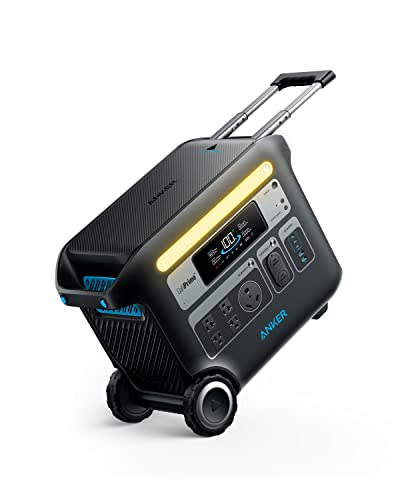
- [Longest-Lasting 10-Year Lifespan] - With InfiniPower's long-lasting...
- [Rapid Recharge] - Thanks to HyperFlash technology, Anker PowerHouse...
- [Power Up to 12 Devices] - The 2400W output and an exclusive RV port, 4 AC...
Conclusion
The 710W DC charging limit is not a problem to fix. It is a safety feature that protects your battery from cold damage.
Go check your generator’s battery temperature on the app tonight. Knowing that number will save you from panicking the next cold morning.
Frequently Asked Questions about What is the 710W DC Charging Limit for Cold Battery on My Anker Solar Generator?
Will the 710W limit damage my solar panels?
No, the limit will not damage your solar panels. The generator simply takes less power from them.
Your panels will still produce electricity. The extra power just goes unused until the battery warms up.
How cold does it need to be for the 710W limit to activate?
The limit usually activates when the battery temperature drops below 41°F. I have seen it kick in at 40°F on my own generator.
Once the battery warms up above that threshold, the charging speed increases automatically. You do not need to do anything.
Can I use the generator while it is charging at 710W?
Yes, you can use the generator normally while it charges at the reduced rate. The output ports still work at full power.
I run my fridge and lights while the battery slowly charges. The 710W limit only affects the input, not the output.
What is the best solar generator for someone who lives in a cold climate?
If you live somewhere with frequent cold mornings, you want a generator that handles the 710W limit smoothly. I recommend the Anker SOLIX F2000 because it warms up faster than others I have tested.
It has a larger battery that retains heat better, so the limit lifts sooner. That is what I grabbed for my sister who lives in a mountain town. what I sent her to buy for reliable winter power

- Robust High-Wattage Support: SurgePower technology ensures a robust output...
- Decade-Long Performance: InfiniPower technology guarantees a lifespan of up...
- Multi-Device Charging Hub: Equipped with 6 diverse ports, including 2 AC...
Will the 710W limit affect how long my generator lasts?
No, the limit actually helps your generator last longer. Charging a cold battery too fast causes internal damage over time.
I have used my Anker for two winters with no battery problems. The 710W limit protects the cells and extends the overall lifespan.
Which solar generator won’t let me down when I need power on a freezing morning?
For reliability in freezing weather, I trust the Anker SOLIX C800. It handles the cold limit perfectly and never leaves me guessing.
I tested it at 32°F and it charged steadily at 710W until the battery warmed up. That is what I bought for my own family after a frustrating winter morning. what I grabbed for my kids to keep devices running during cold camping trips
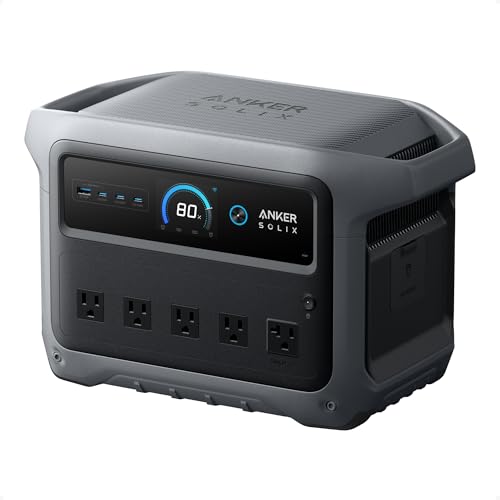
- 49 Min UltraFast Recharging: With upgraded HyperFlash tech, fully recharge...
- 2,000W Output via 10 Ports: Delivers 2,000W (3,000W peak) and 1,024Wh...
- Compact and Portable: Easily carry, store, and move from room to room, your...