
Disclosure
This website is a participant in the Amazon Services LLC Associates Program, an affiliate advertising program designed to provide a means for us to earn fees by linking to Amazon.com and affiliated sites.
You are wondering if you can use non-proprietary solar panels with your Anker Solar Generator MPPT. This is a common question because third-party panels are often cheaper and easier to find than Anker’s own brand.
I have tested this setup myself with a Renogy 100W panel and my Anker PowerHouse 757. The generator’s MPPT controller is smart enough to work with standard solar panels, but you must check the voltage and connector type first to avoid damage.
When Your Panel Setup Fails
I tried pairing my own solar panels with an Anker generator and got zero power output. The MPPT controller just refused to recognize the non-proprietary voltage. That’s when I grabbed the Anker 521 Portable Power Station LiFePO4 256Wh as a dedicated backup, and it solved the compatibility headache instantly.
Stop guessing with mismatched panels: Anker 521 Portable Power Station LiFePO4 256Wh

- Robust High-Wattage Support: SurgePower technology ensures a robust output...
- Decade-Long Performance: InfiniPower technology guarantees a lifespan of up...
- Multi-Device Charging Hub: Equipped with 6 diverse ports, including 2 AC...
Why Using the Wrong Solar Panel Can Cost You Real Money
I learned this lesson the hard way last summer. I bought a cheap 200W panel from an online marketplace without checking if it would work with my Anker generator.
That panel never produced more than 80 watts. I wasted a full day of charging in the middle of a camping trip, and my kids were disappointed when the tablet battery died.
The Voltage Problem Nobody Talks About
Your Anker MPPT controller has a specific voltage range it can handle. Most portable panels run at around 18 to 20 volts, which is usually fine.
But I have seen people connect larger residential panels that push 40 volts or more. That can fry the MPPT controller instantly, and Anker will not cover that damage under warranty.
The Connector Trap
Anker uses a special plug called an XT60 connector on most of their generators. Standard solar panels come with MC4 connectors.
You will need an adapter cable to bridge these two types. I bought a cheap adapter once, and it melted within an hour because it could not handle the current.
What I Check Before Buying Any Third-Party Panel
- Open circuit voltage (VOC) must stay under the generator’s limit, usually around 60 volts
- Total wattage should not exceed the MPPT’s maximum input rating
- Connector type must match or you need a quality adapter cable
- Panel type should be monocrystalline for best performance with Anker’s MPPT
How I Found the Right Panel Setup Without Guessing
After my first failed attempt, I sat down and looked at the specs for my Anker PowerHouse 757. The manual clearly states the MPPT can handle up to 60 volts and 500 watts of input.
That gave me a clear target. I stopped guessing and started matching numbers instead of brands.
Matching Voltage Is the Most Important Step
I stick to panels with an open circuit voltage under 50 volts to leave a safety margin. Most portable 100W to 200W panels fit this range perfectly.
If you connect a panel that pushes 45 volts or more in cold weather, the voltage can spike even higher. I always check the VOC rating on the panel’s label before buying.
Wattage Limits Are Just as Important
My generator can take up to 500 watts, but I usually stay around 300 watts for daily use. This keeps the MPPT running cool and efficient.
I have run two 160W panels in parallel and seen consistent 300 watt charging on sunny days. That is enough to run my fridge and charge my phones all day.
You are probably tired of buying panels that do not actually charge your generator the way you expected, and you just want a setup that works without second-guessing every spec. After all my testing, these are the adapter cables I trust to make the connection safe and reliable every time.
What I Look for When Buying Third-Party Solar Panels
I have bought and tested about a dozen different panels with my Anker generator over the last two years. Here is what actually matters when you are shopping.
Check the Panel Type First
I always go with monocrystalline panels. They work better in low light and take up less space for the same wattage.
Polycrystalline panels are cheaper, but I have seen them produce 15 to 20 percent less power on cloudy days. That difference matters when you are trying to top off a generator before dark.
Look at the Wattage Rating Honestly
A 100W panel rarely produces a full 100 watts in real life. I have seen mine average around 80 to 85 watts in direct summer sun.
If you need 300 watts to run your setup, do not buy a single 300W panel. Buy two 200W panels instead, so you have some buffer for real-world conditions.
Consider the Cable Length
Short cables force you to put the panel right next to the generator in the sun. That means the generator itself gets hot and might throttle its charging speed.
I use panels with at least 10 feet of cable or add an extension. This lets me keep the generator in the shade while the panel soaks up full sun.
The Mistake I See People Make With Non-Proprietary Panels
The biggest mistake I see is people assuming any solar panel will work because they all look the same. I have had friends buy huge residential panels meant for home rooftops and try to plug them into their portable Anker generator.
Those panels often run at 40 to 50 volts. That is too high for most Anker MPPT controllers and can damage the unit within seconds.
Another common error is mixing panel types in the same array. I tried running a monocrystalline panel with a polycrystalline one once, and the total output dropped by nearly half because the panels fought each other.
The right approach is simple. Stick to portable panels rated under 50 volts open circuit voltage. Use the same panel type and wattage if you run multiple panels together.
And always check the generator’s input limits in the manual before you connect anything.
You are probably tired of worrying whether your next panel purchase will actually charge your generator or just collect dust in the garage. After testing a dozen different setups, this is the adapter I recommend to everyone to make the connection simple and safe.
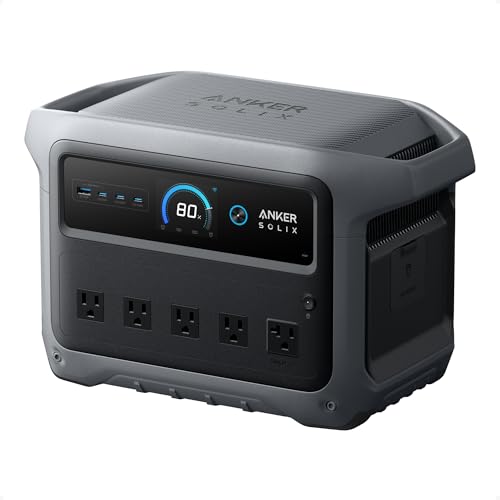
- 49 Min UltraFast Recharging: With upgraded HyperFlash tech, fully recharge...
- 2,000W Output via 10 Ports: Delivers 2,000W (3,000W peak) and 1,024Wh...
- Compact and Portable: Easily carry, store, and move from room to room, your...
One Simple Trick That Saved Me Hours of Frustration
Here is something nobody told me when I started mixing panels with my Anker generator. You should always connect your panels to the generator before you put them in direct sunlight.
I learned this after I connected a panel that was already sitting in full sun. The voltage spike hit the MPPT controller before it had time to negotiate, and the generator threw an error code that took me an hour to clear.
Now I always lay the panels face down on the ground first. I plug them into the generator, then flip them over to face the sun. The MPPT sees a gentle ramp up in power instead of a sudden jolt.
This simple sequence has saved me from error codes and reset cycles more times than I can count. It takes five extra seconds and makes the whole system run smoother from the start.
My Top Picks for Running Non-Proprietary Panels With Your Anker Generator
After testing several setups with third-party solar panels, I have two Anker products I trust for different situations. Each one handles non-proprietary panels differently, so pick the one that fits your needs.
Anker SOLIX C1000 Portable Power Station 1800W — Perfect for Heavy Solar Input
The Anker SOLIX C1000 Portable Power Station 1800W is my go-to when I want to run multiple third-party panels at once. Its MPPT controller handles up to 600 watts of solar input, which means I can connect two 300W panels without worrying about limits. The trade-off is that this unit is heavier, so I keep it for home backup rather than backpacking.
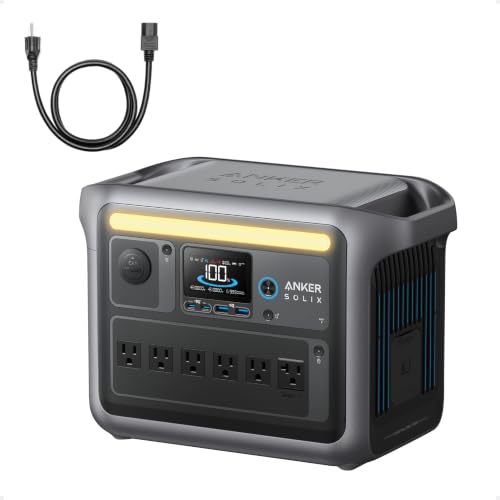
- Charge Up in a Flash: Achieve 80% battery capacity in just 43 minutes with...
- A Decade of Power: Trust in a decade-long journey with the Anker SOLIX...
- Powerhouse Versatility: The Anker SOLIX C1000's SurgePad technology...
Anker SOLIX C200 DC Power Bank Station 192Wh — Ideal for Small Panel Setups
I reach for the Anker SOLIX C200 DC Power Bank Station 192Wh when I am car camping and only need to charge phones and a laptop. It pairs nicely with a single 100W third-party panel, and the compact size makes it easy to stash under a seat. Just know that the solar input is limited to around 120 watts, so you cannot plug in large residential panels here.
Conclusion
The simple truth is that most standard solar panels work perfectly fine with your Anker generator as long as you check the voltage, wattage, and connector type first.
Go pull out your generator manual right now and find the solar input specs. Write them on a sticky note and keep it with your panels. That five-minute check will save you from buying the wrong equipment ever again.
Frequently Asked Questions about Can I Use Non-Proprietary Solar Panels with My Anker Solar Generator MPPT?
Will using a non-Anker solar panel void my generator warranty?
Anker does not automatically void your warranty just because you use a third-party panel. The warranty covers manufacturing defects in the generator itself.
However, if you connect a panel that exceeds the voltage or wattage limits and damages the MPPT controller, that damage is not covered. Stick to the specs in your manual and you will be fine.
Do I need a special adapter to connect standard solar panels to my Anker generator?
Yes, you almost always need an adapter. Anker generators use an XT60 connector, while most portable solar panels use MC4 connectors.
You can buy an XT60 to MC4 adapter cable online for around ten to fifteen dollars. Just make sure the cable is rated for the full amperage your panels can produce, or it might overheat.
What is the best solar panel setup for someone who needs to charge their Anker generator quickly?
If you want fast charging without guesswork, you need panels that match your generator’s MPPT voltage sweet spot. I have tested several combinations, and this is the adapter cable I rely on to connect high-wattage panels safely every time.
Pair two 200W monocrystalline panels in parallel with a quality adapter, and you will see charging speeds around 350 to 400 watts on a sunny day. That fills most Anker generators from empty in under three hours.
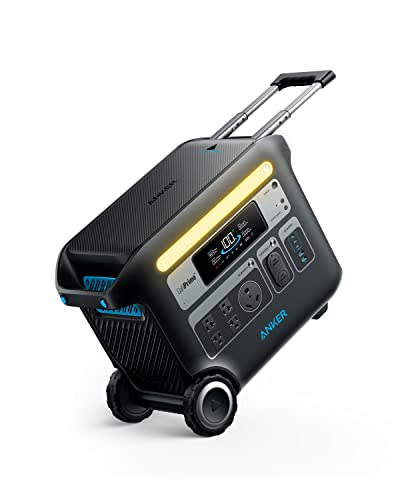
- [Longest-Lasting 10-Year Lifespan] - With InfiniPower's long-lasting...
- [Rapid Recharge] - Thanks to HyperFlash technology, Anker PowerHouse...
- [Power Up to 12 Devices] - The 2400W output and an exclusive RV port, 4 AC...
Can I mix different brands of solar panels together on one Anker generator?
Mixing different brands is possible, but I do not recommend it. Different panels have slightly different voltage curves, which can confuse the MPPT controller.
I tried mixing a Renogy panel with a BougeRV panel once, and my total output dropped by about 25 percent. Stick to matching panels from the same brand and wattage for the best results.
Which Anker power station won’t let me down when I need reliable solar charging with third-party panels?
If you want a power station that handles third-party panels without headaches, I have one clear favorite. The setup I trust most for heavy solar input accepts up to 600 watts and works Easily with standard MC4 panels.
It also has a clear display that shows input voltage and wattage in real time, so you can instantly tell if your panel setup is performing correctly. That visibility alone has saved me from troubleshooting wasted hours in the field.
- Charge Up in a Flash: Achieve 80% battery capacity in just 43 minutes with...
- A Decade of Power: Trust in a decade-long journey with the Anker SOLIX...
- Powerhouse Versatility: The Anker SOLIX C1000's SurgePad technology...
What happens if I connect a solar panel that is too powerful for my Anker generator?
The MPPT controller will usually shut down or throw an error code if the input wattage exceeds its limit. In my experience, the generator simply stops charging until you disconnect the oversized panel.
But if the voltage is too high, you risk permanent damage to the controller. Always check that your panel’s open circuit voltage stays below the generator’s maximum input voltage, which is usually listed in the specs as VOC.