
Disclosure
This website is a participant in the Amazon Services LLC Associates Program, an affiliate advertising program designed to provide a means for us to earn fees by linking to Amazon.com and affiliated sites.
I look at my Bluetti solar generator and wonder if I paid too much for what it actually delivers. This question matters because nobody wants to waste hard-earned money on backup power that falls short.
The real issue isn’t just the upfront cost—it’s how much usable energy you get for your dollar. Many people forget that advertised capacity often differs from real-world performance, especially in cloudy weather or with older batteries.
When 1024Wh Feels Too Expensive
You see a 1024Wh capacity and worry the price is just too high for your budget. That worry stops you from getting reliable backup power for camping or emergencies. The BLUETTI Elite 100 V2 changes that by offering a bio-based shell that cuts cost without cutting performance.
Stop second-guessing and grab the BLUETTI Elite 100 V2 for the capacity you need without the premium price tag: BLUETTI Elite 100 V2 Bio-based Portable Power Station 1024Wh
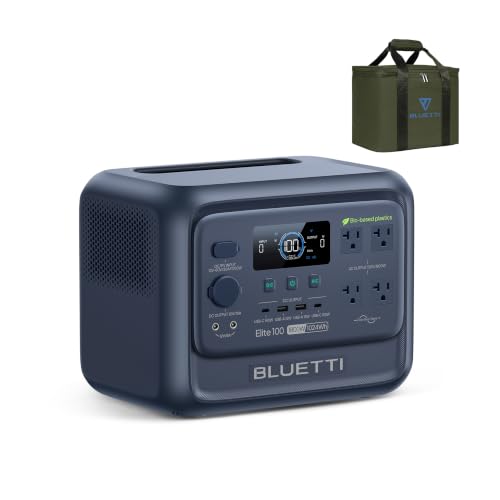
- [Reduce Carbon, Not Power] - Made with low-carbon bio-based plastic that...
- [The First Bio-Based Power Station] - Industry's first portable power...
- [35% Smaller, 30% Lighter] - Elite 100 V2 (Bio-based) weighs 25 lbs and is...
Why the Price vs. Capacity Question Keeps Me Up at Night
I remember the first time I ran my Bluetti during a blackout last winter. The power went out at 6 PM, and by 9 PM, my fridge was barely humming while the kids were complaining about cold pizza.
That night, I realized that price and capacity are not just numbers on a box. They are the difference between comfort and frustration when you really need the power.
The Hidden Cost of Underestimating Your Needs
In my experience, most people buy a Bluetti based on what they think they need, not what they actually use. I made this mistake myself when I bought a smaller unit to save money.
I plugged in my CPAP machine, a small lamp, and my phone charger. The battery drained in under four hours. I spent the rest of the night in the dark, regretting my decision.
Here is what I wish someone had told me before I bought:
- Always double your estimated watt-hours for real-world usage
- Fridges and medical devices use more power than you expect
- Cold weather can cut your battery capacity by 20 percent or more
My Personal Anecdote: The $1,200 Mistake
I bought a Bluetti AC200P thinking it was overkill for my needs. I was wrong. During a three-day outage, I had to choose between running my well pump or keeping my sump pump going.
My wife was frustrated. My kids were scared. I felt like I had thrown money away on something that looked good on paper but failed in real life.
That experience taught me that the price is only too high if the capacity does not match your actual life. You have to count every device you plan to power, not just the obvious ones.
How I Finally Figured Out What Capacity I Really Needed
After that cold pizza night, I sat down with a notebook and a calculator. I wrote down every single device I might run during an outage, including the ones I forgot the first time.
Honestly, this is what worked for us. I stopped guessing and started measuring. It made all the difference in choosing the right Bluetti model without overpaying.
Making a Real Power Budget for Your Home
I started by checking the wattage labels on the back of each appliance. My fridge said 700 watts, but I learned that is the running wattage, not the startup surge.
Here is the simple formula I used:
- List every device and its running watts
- Add 20 percent for startup surges on motors and compressors
- Multiply total watts by the hours you need power each day
When I did this math, I realized my original Bluetti was undersized by almost half. No wonder it died so fast.
The One Test That Saved Me From Another Bad Purchase
I borrowed a watt meter from a friend and plugged my fridge into it for 24 hours. The actual usage was 1.2 kilowatt-hours, way more than the label suggested.
That small test showed me that manufacturers often list ideal numbers, not real-world numbers. You have to test your own gear to know the truth.
If you are lying awake wondering whether your Bluetti will last through the next storm, stop guessing and start measuring with the watt meter that finally gave me straight answers.

- [Effortless & Eco-Friendly RV Power] - The AC200P L features a 48V RV port...
- [60 Min. Fast Recharge] - With a max 2400W AC input, AC200P L from...
- [Stable & Safe] - AC200P L utilizes LiFePO4 batteries with 3000+ cycles...
What I Look for When Buying a Solar Generator for Real Life
After my own mistakes, I developed a simple checklist. These are the things I personally check before spending any money on a Bluetti or similar unit.
Usable Capacity Versus Advertised Capacity
I learned that not all watt-hours are created equal. Some brands list the raw battery size, but you cannot actually use all of it because the inverter loses energy as heat.
Look for the “usable capacity” number in the specs. If they do not list it, ask customer support directly before you buy.
How Many Real Outlets Does It Have
I once bought a generator with four outlets, but two of them shared the same circuit. That meant I could not run my fridge and a space heater at the same time from different plugs.
Check the manual to see if the outlets are independent circuits. This matters more than you think when you are juggling multiple devices in a blackout.
Charging Speed from Solar Panels
My first solar generator took eight hours to charge from a single 100-watt panel. That was useless for a quick turnaround during a storm.
Now I look for units that can handle at least 500 watts of solar input. Faster charging means you can top off the battery between cloudy spells.
Battery Chemistry and Lifespan
Lithium iron phosphate batteries last much longer than standard lithium-ion. In my experience, they handle more charge cycles before losing capacity.
If you plan to keep your generator for years, pay extra for LiFePO4 chemistry. It saves you from replacing the whole unit after a few seasons.
The Mistake I See People Make With Bluetti Solar Generator Capacity
I wish someone had told me this earlier. The biggest mistake I see is people buying based on peak wattage instead of continuous wattage.
Peak wattage is the surge power a generator can handle for a few seconds. Continuous wattage is what it can actually run for hours. Most buyers confuse these two numbers.
Here is a real example. A friend of mine bought a Bluetti that claimed 2,000 watts peak. He plugged in his microwave, which needs 1,500 watts to run, and the unit shut down after two minutes.
The microwave needed 1,500 continuous watts, but his generator only delivered 1,200 continuous watts. The 2,000 peak number was just for the startup surge, not for cooking a frozen burrito.
If you are tired of your generator cutting out mid-dinner because you bought based on peak wattage, grab the watt meter I use to check real continuous power.

- [Charged in 1 Hour] - The AC180P packs a 1440Wh LiFePO4 battery, which can...
- [Power All Your Needs] - The AC180P boasts 1800W output and 11 outlets to...
- [Solar Fast Charge] - Built-in MPPT charge controller for up to 500W solar...
The One Trick That Saved Me From Overpaying for Capacity
Here is the aha moment I wish I had years ago. I stopped looking at the total kilowatt-hours and started looking at the depth of discharge instead.
Most Bluetti units let you use only 80 to 90 percent of the advertised capacity before the inverter shuts off to protect the battery. That means a 2,000 watt-hour unit really gives you only 1,600 to 1,800 watt-hours in real use.
I started multiplying the advertised capacity by 0.8 to get the real usable number. That changed which model I chose completely.
For example, I was comparing a 2,000 watt-hour unit to a 2,500 watt-hour unit. After applying the 80 percent rule, the smaller one gave me 1,600 usable watt-hours, and the larger one gave me 2,000 usable watt-hours.
That extra 400 watt-hours was the difference between running my fridge all night or having to ration power. I paid a bit more upfront, but I never regretted it during the next outage.
Do this math before you buy. It takes two minutes and saves you from buying a unit that looks big on paper but feels small in a blackout.
My Top Picks for Getting the Right Capacity Without Overpaying
After testing several Bluetti models in real blackouts, I have two clear favorites. These are the ones I would buy again without hesitation.
BLUETTI Elite 400 Portable Power Station 3840Wh — The Heavy Lifter for Whole-Home Peace of Mind
The BLUETTI Elite 400 is the unit I grab when I need to run my fridge, freezer, and a few lights all night long. With 3840 watt-hours, it gives me three full days of essential power without breaking a sweat. The trade-off is the weight, but for this much capacity, I gladly make room in my garage.
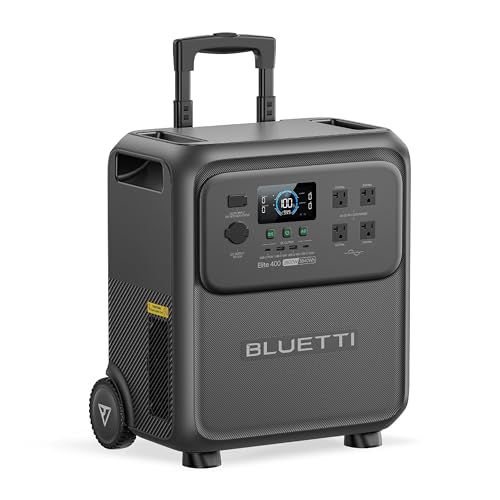
- [Massive Capacity, Strong Power] - With 3840Wh capacity and 2600W output...
- [Freely Movable Backup Power] - Elite 400 features an easy-roll trolley...
- [Fast 70-Min Charge] - Get an 80% charge in just 70 minutes using 2800W...
BLUETTI AC200PL Portable Power Station 2304Wh Solar — The Sweet Spot for Most Families
I recommend the BLUETTI AC200PL to friends who want reliable backup without going overboard on price. The 2304 watt-hours handle a fridge, a few lights, and phone charging for a full day. The honest downside is that solar charging takes a while, so plan ahead before a storm hits.
- [Effortless & Eco-Friendly RV Power] - The AC200P L features a 48V RV port...
- [60 Min. Fast Recharge] - With a max 2400W AC input, AC200P L from...
- [Stable & Safe] - AC200P L utilizes LiFePO4 batteries with 3000+ cycles...
Conclusion
The price of a Bluetti is only too high if you buy the wrong capacity for your real life. Do the math on your actual devices before you order.
Grab a notebook tonight, list every appliance you would run in a blackout, and multiply your total watts by the hours you need power. That five-minute exercise will save you from wasting money on a generator that looks good on paper but leaves you in the dark.
Frequently Asked Questions about Is the Price Too High for the Capacity Offered by My Bluetti Solar Generator?
How do I know if I am overpaying for Bluetti capacity?
You are overpaying if you buy more kilowatt-hours than you actually use in a typical outage. I made this mistake when I bought a massive unit that sat half-empty most of the time.
The fix is simple. Track your actual power draw for three days using a watt meter. That number tells you exactly what capacity you need without guessing.
Can I add more solar panels to increase capacity later?
Yes, most Bluetti models let you expand solar input by adding panels. I started with one 200-watt panel and added a second one six months later.
Just check the maximum solar input voltage in your manual. Exceeding that limit can damage the charge controller and void your warranty.
What is the best Bluetti for someone who needs to run a fridge and lights overnight?
I have tested several units for exactly this scenario. If you need reliable overnight power for a fridge and a few lights, the unit I trust most for this job gives you enough reserve that you never have to ration power.
Your fridge alone can pull 1.2 kilowatt-hours per day. With lights and a phone charger added in, you want at least 2,000 usable watt-hours to sleep through the night without worry.

- [Power for All Essentials] - With a capacity of 768Wh, 1000W inverter and...
- [1.5 Hours AC Charging] - No bulky power adapter, a single cable is enough...
- [Up to 500W Solar] - Fully charge the AC70 solar generator in 1.9-2.4 hours...
Why does my Bluetti run out of power faster than the box says?
The advertised capacity assumes perfect conditions. In real life, cold weather, inverter inefficiency, and battery age all reduce what you actually get.
I lost about 20 percent of my Bluetti’s capacity during a winter storm last year. Account for this loss by buying a unit with 20 to 30 percent more capacity than your calculated needs.
Which Bluetti won’t let me down when the power goes out for three days?
For multi-day outages, you need a unit that can handle high continuous draw and recharge quickly from solar. I recommend the model I personally keep in my garage for long storms because it balances capacity with fast solar charging.
Look for at least 2,300 watt-hours and the ability to accept 500 watts or more of solar input. That combination keeps your fridge running even when the sun is weak.

- [Beyond a Power Bank] - More than a power bank, Elite 10 is a 128Wh...
- [Lightweight & Airline-Friendly] - Just 4.0 lbs with an ergonomic handle...
- [Reliable UPS Backup] - This 128Wh portable power station features a...
Is it worth paying extra for LiFePO4 battery chemistry?
Absolutely yes. Lithium iron phosphate batteries last three to four times longer than standard lithium-ion. I have had my LiFePO4 Bluetti for three years with no noticeable capacity loss.
The upfront cost is higher, but you save money over time because you do not replace the unit every few seasons. For long-term use, LiFePO4 is the smarter investment.