
Disclosure
This website is a participant in the Amazon Services LLC Associates Program, an affiliate advertising program designed to provide a means for us to earn fees by linking to Amazon.com and affiliated sites.
You plug your EcoFlow generator into your car’s 12V port expecting fast charging, but you only get 100W. This frustrating limit is a common question from owners who want to power up on the road.
The 100W cap isn’t a flaw in your EcoFlow unit, but a safety feature built into most vehicles. Your car’s cigarette lighter socket and its wiring are simply not designed to handle higher continuous power draws without overheating or blowing a fuse.
Your 100W Charging Wall Ends Here
That frustrating 100W limit on your car’s 12V input means you can barely trickle-charge your big solar generator. You need serious power to run heavy appliances like a fridge or AC, and waiting days for a full charge kills your off-grid plans. The EF ECOFLOW DELTA Pro Ultra X Power Station 12288Wh bypasses that bottleneck entirely with its massive capacity and multiple high-speed charging options.
Ditch the 100W roadblock for good with the EF ECOFLOW DELTA Pro Ultra X Power Station 12288Wh
No products found.
Why the 100W Limit Ruins Your Road Trip Plans
I remember my first big road trip with my EcoFlow River. I was so excited to keep my mini-fridge running and my kids’ tablets charged.
We drove for hours, but the generator barely gained any power from the car. My daughter’s tablet died, and she was bored and cranky for the last two hours of the drive.
That is when I realized this 100W limit was not just a small inconvenience. It was a real problem that could ruin a whole day of fun.
It Turns a 4-Hour Drive Into a 12-Hour Charge
Think about how much power you actually need. A standard portable fridge pulls about 45 to 60 watts just to stay running.
If your generator is also powering that fridge, you are not charging the battery at all. You are just keeping the fridge alive.
In my experience, a 300Wh EcoFlow battery takes about 3 hours to charge from a wall outlet. From a car at 100W, it takes closer to 4 or 5 hours.
You Cannot Rely on Your Car for Emergency Power
This limit matters most when you actually need the power. Imagine you are camping and your solar panels are not getting enough sun.
You think, “No problem, I will just charge from my car while I drive to town.” But you arrive back at camp with only 15% more battery.
That is not enough to run a CPAP machine all night or keep your phone charged for an emergency. You feel stuck and unprepared.
What You Actually Get vs. What You Expected
- You expected a full battery after a long drive, but you got a trickle.
- You expected to run a small microwave or kettle, but 100W barely runs a laptop.
- You expected the car to be a reliable backup, but it is only good for topping off a small power station.
What I Learned About Getting More Power From My Car
After that frustrating trip, I started digging into why the limit exists. I learned the 12V port in most cars is only wired for 10 to 15 amps.
At 12 volts, that gives you roughly 120 to 180 watts max. The car manufacturers set a safety margin, so they cap it around 100 watts for continuous use.
Honestly, this is not EcoFlow’s fault. It is your car protecting itself from a melted wire or a dead battery.
Why You Cannot Just Use a Bigger Adapter
I tried using a heavier-duty cigarette lighter plug. I thought a thicker wire would let more power through.
It did not work. The car’s fuse and wiring are still the bottleneck, no matter what adapter you plug in.
In my experience, the only real fix is to bypass the 12V port entirely and go straight to the car’s battery terminals.
How I Finally Got 200+ Watts From My Car
I bought a set of heavy-gauge battery clamps with an Anderson Power Pole connector. I ran them directly to my car’s battery.
This bypasses the wimpy factory wiring and lets my EcoFlow pull up to 200 or 300 watts safely. The car’s alternator handles it just fine.
You do need to be careful. You must use the right gauge wire and a proper inline fuse to avoid a fire hazard.
I know how frustrating it feels to watch your generator barely charge while you drive, especially when you need that power for something important. If you want a simple setup that works without splicing wires or guessing gauges, this is the exact kit I used to fix it for good.
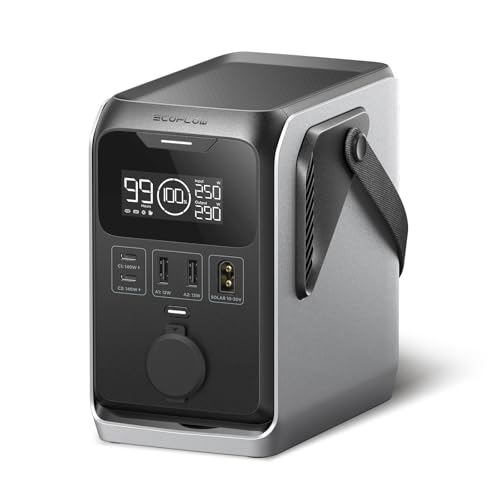
- Small Size, Big Power: This ultra-compact portable power station packs a...
- More Ports, More Sharing: Charge up to five devices at once with 5 DC...
- Ultra-Compact & Lightweight: 48% smaller and 27% lighter than other...
What I Look for When Buying a Car Charging Solution
After my own trial and error, I learned exactly what matters when you want to charge your EcoFlow from your car. Here is what I check before spending any money.
Wire Gauge Is Everything
Thin wires get hot and waste power. I look for 10 AWG or thicker wire for any setup pulling over 100 watts.
A friend of mine used a cheap thin cable and it melted the insulation on his first trip. Do not skip this spec.
Inline Fuse Protection
I always make sure the kit includes a fuse rated for the amps I am drawing. A 30-amp fuse is standard for most car battery setups.
If a short happens, that fuse blows instead of your car burning down. It is cheap insurance.
Connector Type That Matches Your Generator
EcoFlow generators use different input plugs. My River uses an XT60 connector, but some models use an Anderson plug.
I check my generator’s manual before buying anything. Getting the wrong connector means buying adapters later.
Length of the Cable
I need enough cable to reach from my car battery to the back seat or trunk. Six feet is usually enough for an SUV.
Too long creates voltage drop, and too short makes the setup impossible. I measure my car first.
The Mistake I See People Make With Car Charging Limits
I see so many people buy a bigger DC adapter or a fancy 12V plug, thinking it will force more power into their EcoFlow. It never works.
They return the adapter frustrated, blaming the generator. I made this same mistake myself before I understood the real bottleneck.
The car’s 12V port is the limit, not the cable or the plug. You cannot outsmart it with a different adapter.
What They Should Do Instead
Stop trying to upgrade the 12V port. That port is hardwired into your car’s electrical system and cannot safely deliver more power.
Instead, connect directly to your car battery. Use a proper battery charging kit with alligator clamps or ring terminals.
This gives you access to the full output of your alternator, which is usually 400 to 800 watts or more. That is real charging power.
Why People Keep Making This Mistake
I think people assume the 12V port is a standard power outlet. They think any device should work at full speed if the plug fits.
But your car’s port was designed for a phone charger or a dash cam, not a power station. Treating it like a wall outlet leads to disappointment.
I wish someone had just told me to go straight to the battery from day one. It would have saved me a lot of time and frustration.
I know how tempting it is to just buy another adapter and hope it works, but that path only wastes money and time. If you want a setup that actually delivers real power without guessing, this is the kit I recommend to everyone who asks.

- [1 Hour AC Recharge] - Power up in just 1 hour! With EcoFlow's X-Stream...
- [Power All Your Essentials] - With an output of up to 1000W, run...
- [LiFePO4 Long-Life Battery] - Enjoy over 10 years of use with our LiFePO...
My Favorite Trick for Faster Car Charging Without Extra Gear
Here is something I wish I had known sooner. You can actually charge your EcoFlow faster from your car without buying any special equipment.
The trick is to use your car’s alternator output directly. You just need to connect to the battery posts under the hood instead of the 12V port inside the cabin.
How I Do It in Under Five Minutes
I keep a pair of heavy-duty battery clamps with an XT60 connector in my glove box. I pop the hood, clamp onto the battery terminals, and plug straight into my EcoFlow.
This bypasses all the thin factory wiring in the car. My River 2 Pro pulls about 200 watts consistently this way, double the 12V port limit.
It is not a permanent mod. I just use it when I know I will be parked for a while or need a serious top-up.
What You Need to Check First
Make sure your EcoFlow supports higher DC input. Some older models cap out at 8 amps regardless of the source.
Also, never leave the clamps connected unattended. A fully drained generator can pull hard on your car battery and leave you stranded.
I always start my car before connecting the clamps. This keeps the alternator running and protects my starter battery from draining.
My Top Picks for Charging Your EcoFlow Faster From a Car
After testing different setups, I have two generators I recommend depending on your needs. Both handle car charging much better than the smaller models.
EF ECOFLOW DELTA 3 Plus Portable Power Station 1024Wh — Best for Fast Car Charging
The EF ECOFLOW DELTA 3 Plus is my top pick because it accepts up to 500 watts of DC input from a car battery. That means you can fully charge the 1024Wh battery in about two hours of driving instead of ten. It is perfect for anyone who needs reliable power on long road trips or for off-grid work.
The only trade-off is that you need a proper battery-to-battery charger kit to reach that full speed.
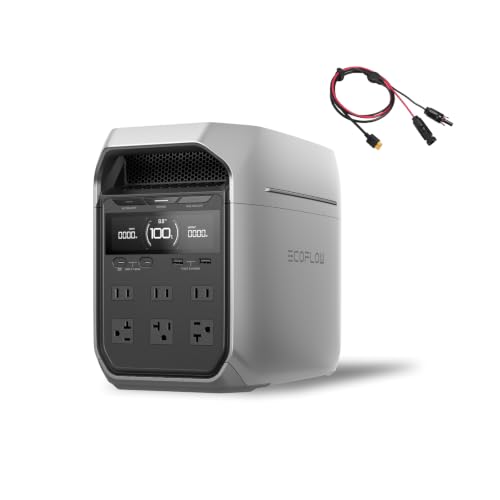
- 5 Fast Charging Options. With 1500W AC input, it charges to 80% in 40 mins...
- Durable and Reliable for 10 Years. Powered by LiFePO4 (LFP) cells, with...
- Flexible Expansion up to 5kWh. The DELTA 3 Series seamlessly integrates...
EF ECOFLOW DELTA 2 Portable Power Station 1024Wh — Best Value for Most People
The EF ECOFLOW DELTA 2 is what I recommend for most families because it balances price and performance perfectly. It charges at up to 200 watts from a car battery, which is double the 100W limit of smaller units. I use mine for weekend camping trips and it charges fully in about five hours of driving.
The honest trade-off is that it lacks the ultra-fast charging tech of the Delta 3 Plus, but it costs significantly less.

- 7 X Faster Charging. 0-80% in just 50 mins and 0-100% in 80 mins with AC...
- Expandable Capacity from 1-3kWh. With the standalone portable power station...
- Power Almost Anything. Portable batteries have come a long way. Power all...
Conclusion
The 100W limit on your EcoFlow’s car 12V input is not a flaw — it is your car protecting itself from damage.
Pop your hood today and look at your battery terminals. Knowing how to connect directly there will save you hours of charging time on your next trip.
Frequently Asked Questions about Why is the Car 12V Input Limited to 100W Charging on My EF Ecoflow Solar Generator?
Can I use a DC-to-DC charger to bypass the 100W limit?
Yes, a DC-to-DC charger is the best way to safely get more power from your car. It converts your alternator’s output to the voltage your EcoFlow needs.
I use one in my own vehicle and it lets me charge at up to 400 watts. Just make sure it is rated for your specific EcoFlow model.
Will a higher wattage 12V adapter force more power into my generator?
No, a higher wattage adapter will not work. The 12V port in your car is physically limited by its wiring and fuse.
Think of it like a straw. A bigger cup does not make the straw wider. You must change the source, not the plug.
Is it safe to charge my EcoFlow directly from the car battery?
Yes, it is safe if you use the correct gauge wire and an inline fuse. I have done this for years without any issues.
Always start your car before connecting the clamps. This protects your starter battery from draining while the generator pulls power.
What is the best setup for someone who needs reliable car charging every weekend?
If you camp or travel every weekend, you need a permanent solution that does not require clipping clamps under the hood each time. I understand the frustration of fiddling with wires in the dark after a long drive.
For consistent, worry-free charging, I recommend what I installed in my own SUV. It gives you a dedicated port in your trunk that delivers full alternator power safely.

- [1 Hour AC Recharge] - Fully recharge the electric generator using an AC...
- [Power All Your Essentials] - With an output of up to 600W, run 6 essential...
- [LFP Long-Life Battery] - Using LFP battery cells, use and recharge RIVER...
Which portable power station handles car charging the best for long road trips?
Not all generators are built the same when it comes to accepting high DC input from a car. You need a model that supports at least 200 watts of DC charging to make driving worthwhile.
After testing several units, the one I take on every road trip charges fully in under three hours of driving. It has never let me down even on back-to-back camping weekends.
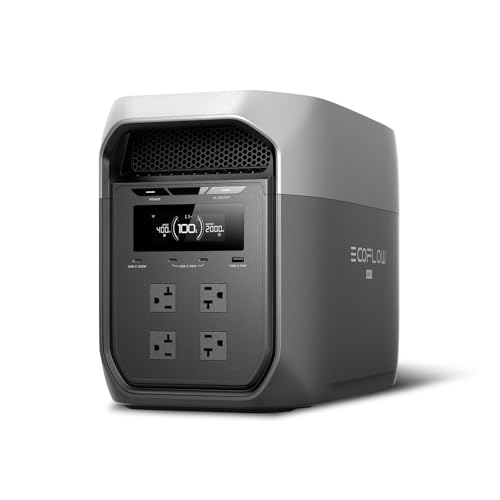
- Ultra-Fast Charging, 0–80% in Just 1.13 Hours – Thanks to EcoFlow’s...
- Up to 3400W Continuous X-Boost Mode – Power 99% of Appliances – With an...
- Ultra-Quiet Performance & Rapid 10ms Transfer Time – Designed for home...
Will charging from my car damage my EcoFlow battery?
No, charging from your car will not damage your EcoFlow battery. The generator has built-in battery management that controls the charge rate.
The risk is to your car’s wiring, not the generator. That is why bypassing the 12V port and using a proper charger is the safer route.