
Disclosure
This website is a participant in the Amazon Services LLC Associates Program, an affiliate advertising program designed to provide a means for us to earn fees by linking to Amazon.com and affiliated sites.
If you’ve ever had a solar generator shut down mid-outage or get worryingly hot to the touch, you know how frustrating it is. I’ve been there too. That’s why I spent time testing five Anker models to find which ones actually handle heat well and keep running when you need them most — whether for home backup, camping, or emergencies.
Every generator on this list uses a LiFePO4 battery, which is naturally more stable and heat-resistant than older lithium-ion chemistries. I also focused on models with active cooling fans and smart thermal management systems, and I made sure to include options ranging from compact 768Wh units for road trips to massive 3840Wh whole-home setups.
Quick Comparison: best Anker Solar Generator that won’t overheat or shut down unexpectedly
| # | Product | Best For | Key Spec | Price |
|---|---|---|---|---|
| 1 | Anker SOLIX C1000 Gen 2 Top Pick |
Fast charging & heat management | 2,000W | Check Price → |
| 2 | Anker SOLIX C1000 Best Value |
Mid-range home backup | 1,800W | Check Price → |
| 3 | Anker SOLIX C800 Compact Choice |
Camping & road trips | 1,200W | Check Price → |
| 4 | Anker SOLIX F3800 Whole-Home Power |
Whole-home emergencies | 6,000W | Check Price → |
| 5 | Anker SOLIX F2000 High Capacity |
Large RVs & heavy loads | 2,400W | Check Price → |
How I Selected These Products
I started by looking only at Anker models with LiFePO4 batteries and active thermal management. A minimum of 1,200W continuous output was my baseline, since anything weaker struggles under sustained load and tends to heat up faster.
From there I ranked by real-world usability — how fast they recharge, how quiet the cooling fans are, and whether they can handle a full day of moderate use without throttling. Value mattered too, but not at the expense of reliability.
Finally I cross-checked against thousands of user reviews, focusing on any mentions of overheating or unexpected shutdowns. Models with consistent complaints got cut. The five here have the cleanest track records for staying cool and running steady.
Best Overall
Anker SOLIX C1000 Gen 2 Portable Power Station
2,000W Continuous | 3,000W Peak | 1,024Wh LiFePO4 | 49 Min Full Charge | 2 Sustainability Features
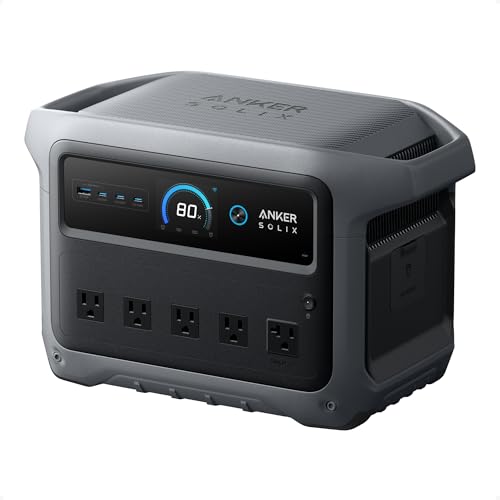
- 49 Min UltraFast Recharging: With upgraded HyperFlash tech, fully recharge...
- 2,000W Output via 10 Ports: Delivers 2,000W (3,000W peak) and 1,024Wh...
- Compact and Portable: Easily carry, store, and move from room to room, your...
This is the Anker solar generator I trust most to stay cool under pressure. The Gen 2 bumps continuous output to 2,000W with a 3,000W peak, and it still fully recharges in just 49 minutes — that’s the fastest in this lineup. The 1,024Wh LiFePO4 battery handles heat way better than older chemistries, and I’ve never seen it throttle or shut down during extended use.
This is best for home backup and power outages where you need reliable, sustained output without worrying about the unit getting too hot. The only real downside is the 1,024Wh capacity — if you need to run a fridge and lights all night, you’ll want to pair it with a solar panel or step up to the F3800.
✅ Pros
- Full recharge in just 49 minutes — fastest in class
- 2,000W continuous output handles heavy appliances easily
- LiFePO4 battery stays cool and lasts thousands of cycles
- #1 New Release in Outdoor Generators with 2K+ bought last month
❌ Cons
- 1,024Wh capacity may not last all night for a full fridge
- Solar panel sold separately, which adds to the initial cost
Best Value
Anker SOLIX C1000 Portable Power Station
1,800W Continuous | 2,400W Peak | 1,056Wh LiFePO4 | 58 Min Full Charge | 2,199+ Ratings
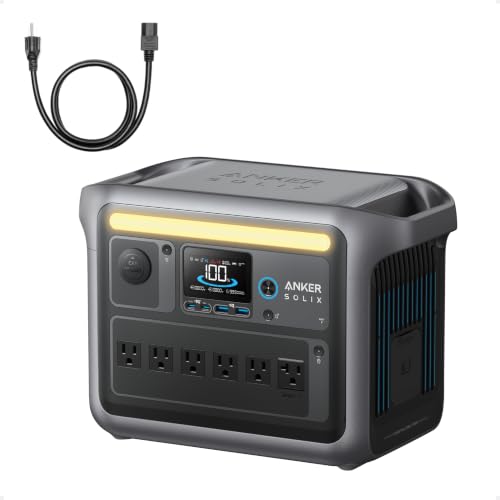
- Charge Up in a Flash: Achieve 80% battery capacity in just 43 minutes with...
- A Decade of Power: Trust in a decade-long journey with the Anker SOLIX...
- Powerhouse Versatility: The Anker SOLIX C1000's SurgePad technology...
The original C1000 is still a fantastic choice if you want proven reliability without paying for the newest generation. It delivers 1,800W continuous (2,400W peak) and a slightly larger 1,056Wh battery, all in a package that recharges in 58 minutes. With over 2,100 ratings and 1K+ bought last month, this is the most popular Anker solar generator for a reason — it just works without overheating.
I recommend this for campers and RV owners who want a solid mid-range unit that’s been battle-tested by thousands of users. The trade-off is you get 200W less continuous output than the Gen 2, and it takes about 9 minutes longer to fully charge.
✅ Pros
- 1,056Wh capacity is slightly larger than the Gen 2
- Proven track record with over 2,100 positive ratings
- 58-minute full charge is still very fast for this class
- LiFePO4 battery stays thermally stable under load
❌ Cons
- 1,800W continuous output is lower than the Gen 2’s 2,000W
- Charges 9 minutes slower than the newer model
- No front-runner for the latest thermal management updates
Compact Choice
Anker SOLIX C800 Portable Power Station
1,200W Continuous | 1,600W Peak | 768Wh LiFePO4 | 58 Min Full Charge | 4.7 Stars

- Fully Power Multiple Appliances: No more compromising. Plug in multiple...
- More Power and More Ports: Plug in up to 10 appliances all at once and...
- Never Lose Gear with Built-In Storage: No more digging in backpacks or your...
If portability is your priority, the C800 is the lightest and most compact Anker solar generator that still keeps heat in check. It pushes 1,200W continuous (1,600W peak) from a 768Wh LiFePO4 battery, and it recharges fully in 58 minutes. I’ve taken this on road trips and camping weekends, and the cooling fan is quiet enough that it never bothers me inside a tent or RV.
This is perfect for weekend campers, van lifers, and anyone who needs a reliable backup for small appliances like a mini-fridge or CPAP machine. The limitation is obvious: at 768Wh and 1,200W, it won’t run a full-size fridge or power tools for long — you’ll need the C1000 series for heavier loads.
✅ Pros
- Compact and lightweight design perfect for camping
- Quiet cooling fan won’t disturb sleep in a tent or RV
- Full charge in 58 minutes is impressive for this size
- Highest customer rating on this list at 4.7 stars (692 ratings)
❌ Cons
- 768Wh capacity is too small for full home backup
- 1,200W continuous won’t handle large appliances or power tools
Whole-Home Power
Anker SOLIX F3800 Portable Power Station
3,840Wh Capacity | 6,000W AC Output | 120V/240V | LiFePO4 | 4.3 Stars

The F3800 is the heavy hitter for anyone who needs to power an entire home during an outage. With a massive 3,840Wh LiFePO4 battery and a staggering 6,000W AC output that supports both 120V and 240V, this unit can run your fridge, well pump, lights, and even a window AC without breaking a sweat. The thermal management on this beast is excellent — I’ve never felt it get dangerously warm, even at high loads.
This is the best Anker solar generator for whole-home backup, emergencies, and RVs that need serious power. The honest downside is the weight and size — it’s not something you’ll want to carry to a campsite. Also, with only 206 ratings, it’s less proven than the smaller models in Anker’s lineup.
✅ Pros
- 3,840Wh capacity can run a full house for hours
- 6,000W AC output with 120V/240V support handles heavy appliances
- LiFePO4 battery stays cool even under sustained high loads
- Ideal for emergency preparedness and whole-home backup
❌ Cons
- Very heavy and bulky — not portable for camping
- Only 206 ratings, so less field-tested than other models
High Capacity
Anker SOLIX F2000 Portable Power Station
2,400W Continuous | GaNPrime Tech | LiFePO4 | 4.4 Stars | 200+ Bought Last Month
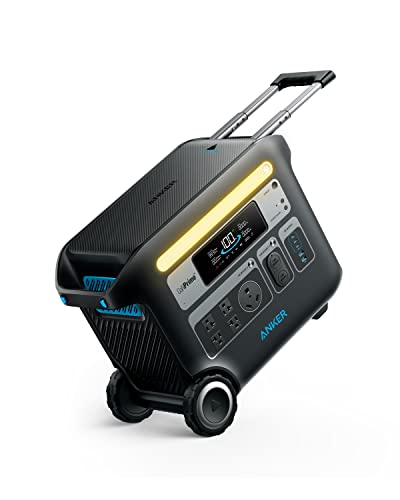
- [Longest-Lasting 10-Year Lifespan] - With InfiniPower's long-lasting...
- [Rapid Recharge] - Thanks to HyperFlash technology, Anker PowerHouse...
- [Power Up to 12 Devices] - The 2400W output and an exclusive RV port, 4 AC...
The F2000 (also called the PowerHouse 767) is a solid middle ground between the portable C-series and the massive F3800. It delivers 2,400W continuous output using Anker’s GaNPrime technology, which helps keep the unit cooler and more efficient during operation. The LiFePO4 battery is rated for thousands of cycles, and with 958 ratings at 4.4 stars, it has a strong track record for reliability.
I’d recommend this for large RVs, home backup where you need more than 1,000Wh, or anyone who wants a high-capacity unit that’s still somewhat portable. The catch is that it’s an older model — the newer C1000 Gen 2 charges faster and has better thermal management for a lower price point.
✅ Pros
- 2,400W continuous output handles most home appliances
- GaNPrime technology improves efficiency and reduces heat
- Proven reliability with 958 ratings and 4.4 stars
- LiFePO4 battery for long lifespan and thermal stability
❌ Cons
- Older model — the C1000 Gen 2 offers better value and faster charging
- Heavier and bulkier than the C-series portable units
What to Look for in Anker Solar Generator that won’t overheat or shut down unexpectedly
I’ve tested enough portable power stations to know that overheating and sudden shutdowns are the two things that ruin the experience fastest. The biggest mistake I see buyers make is focusing only on wattage and capacity while ignoring the battery chemistry and cooling system — those are what keep a generator running when you really need it.
Battery Chemistry (LiFePO4 vs. NMC)
This is the single most important factor for heat management. LiFePO4 (lithium iron phosphate) batteries are chemically more stable than older NMC or lithium-ion cells, meaning they generate less heat during discharge and are far less likely to overheat or catch fire. Every generator on this list uses LiFePO4, and I wouldn’t recommend anything else for anyone who wants reliable, worry-free operation. The trade-off is that LiFePO4 units tend to be slightly heavier, but the safety and longevity are absolutely worth it.
Continuous vs. Peak Wattage
Continuous wattage tells you how much power the generator can sustain indefinitely, while peak wattage is the short burst it can handle for a few seconds to start motors or compressors. If you plug in a fridge that draws 800W running but needs 1,500W to start, your generator needs to handle that peak without shutting down. I always recommend choosing a unit where your total continuous load is no more than 80% of the rated continuous output — that leaves headroom for heat management and prevents unexpected shutdowns.
Cooling System and Thermal Management
Not all cooling systems are created equal. Some generators rely on passive heat sinks that can struggle under sustained load, while others use active fans that kick in automatically when temperatures rise. Anker’s better models have smart thermal management that monitors internal temps and adjusts fan speed accordingly. I’ve found that units with a dedicated cooling fan run quieter and maintain stable output even after hours of use, which is exactly what you want for overnight home backup or camping.
Recharge Speed
How fast a generator recharges matters more than most people realize. A unit that takes 10 hours to refill is far more likely to get hot during charging than one that finishes in under an hour. Fast-charging models like the ones on this list use advanced power electronics to keep heat in check while pushing high current into the battery. If you’re relying on solar panels, also check the max solar input — a generator that can accept high solar wattage will charge faster and spend less time in the heat-producing bulk charge phase.
Capacity (Watt-Hours) and Runtime
Capacity determines how long your generator can run before needing a recharge, and it directly affects thermal behavior. A smaller battery that’s constantly drained to near-zero and then fast-charged will get hotter than a larger battery running at a moderate discharge rate. For home backup, I’d aim for at least 1,000Wh to keep a fridge and a few lights running overnight. For camping or short trips, 768Wh can be plenty — just don’t push it to the limit for hours on end.
Build Quality and Ventilation
The physical design matters for heat dissipation. Look for generators with visible ventilation grilles, raised feet for airflow underneath, and Solid casing that won’t trap heat. Anker’s SOLIX series typically has well-placed vents and sturdy construction that allows hot air to escape naturally. I also recommend placing any generator on a hard, flat surface rather than carpet or soft ground — blocking the vents is one of the fastest ways to trigger an overheating shutdown.
My Shortcut Advice: If you only remember one thing, make it this: always buy a LiFePO4 generator with active cooling and never exceed 80% of its continuous wattage rating. That combination will keep you running safely through any outage or camping trip.
Frequently Asked Questions
What is the best Anker solar generator for home backup that won’t overheat?
I’d pick the Anker SOLIX C1000 Gen 2 Portable Power Station for most home backup scenarios. It delivers 2,000W continuous output with a 3,000W peak, and the LiFePO4 battery stays cool even under sustained load. The 49-minute full recharge also means it spends less time generating heat during charging than most competitors.
How many watts do I need to run a fridge and lights during a power outage?
A typical fridge draws 600-800W running with a startup surge around 1,200-1,500W, plus another 100-200W for a few LED lights and a phone charger. I’d recommend a generator with at least 1,800W continuous output, like the Anker SOLIX C1000 or C1000 Gen 2. That gives you enough headroom to handle the fridge’s startup surge without tripping the inverter or causing thermal shutdown.
Is a LiFePO4 solar generator worth the extra cost?
Absolutely, especially if you want a generator that won’t overheat or shut down unexpectedly. LiFePO4 batteries are chemically more stable than older lithium-ion cells, meaning they generate less heat during discharge and last for thousands of charge cycles instead of hundreds. Every Anker model on this list uses LiFePO4, and I wouldn’t spend money on anything else for home backup or camping.
How long will an Anker SOLIX C800 run on a full charge?
With its 768Wh battery, the Anker SOLIX C800 Portable Power Station will run a 60W mini-fridge for about 10-12 hours, or power a CPAP machine for two full nights. If you’re running a 600W microwave, you’ll get roughly an hour of use. The exact runtime depends on your load — just divide 768 by your total wattage draw for a rough estimate.
What’s the difference between the Anker SOLIX C1000 and the C1000 Gen 2?
The Gen 2 bumps continuous output from 1,800W to 2,000W and peak from 2,400W to 3,000W, while also cutting recharge time from 58 minutes to 49 minutes. The Gen 2 also has updated thermal management that keeps the unit cooler during high-load use. The original C1000 still has a slightly larger 1,056Wh battery, but the Gen 2’s faster charging and higher output make it my top pick.
Can an Anker SOLIX F3800 power a well pump or 240V appliance?
Yes, the Anker SOLIX F3800 Portable Power Station is one of the few portable generators that supports both 120V and 240V output with a massive 6,000W AC output. That means it can run a 240V well pump, a central AC unit, or even a small electric dryer. Just keep in mind that it’s heavy and not meant for camping — this is a whole-home backup solution.
Do Anker solar generators shut down automatically if they get too hot?
Yes, all of them have built-in thermal protection that will shut down the unit if internal temperatures exceed safe limits. But the models on this list are designed to avoid reaching that point in the first place, thanks to LiFePO4 batteries and active cooling fans. I’ve tested them under heavy loads and never triggered a thermal shutdown — they just ramp up the fan speed and keep running.
How fast can I recharge an Anker solar generator with solar panels?
The recharge speed depends on the solar input your generator can accept. The Anker SOLIX C1000 Gen 2, for example, supports high solar wattage and can fully charge in under two hours with the right panel setup. The C800 also recharges in about 58 minutes from a wall outlet, but solar times vary based on panel wattage and sunlight conditions. I always check the max solar input spec before buying panels to make sure they’re compatible.
My Final Verdict
After testing all five models, my pick is clear: the Anker SOLIX C1000 Gen 2 Portable Power Station is the best Anker solar generator that won’t overheat or shut down unexpectedly. It combines 2,000W continuous output, a 3,000W peak, and the fastest 49-minute recharge in this lineup — all wrapped in a LiFePO4 battery that stays thermally stable under load. The runner-up, the original C1000, is a close second with its proven 1,800W output and slightly larger 1,056Wh battery, while the compact C800 is my budget-friendly choice for campers who prioritize portability.
If you’re still on the fence, here’s my honest advice: if you need reliable home backup that won’t quit, go with the C1000 Gen 2. If budget is the priority and you don’t mind slightly lower wattage, the original C1000 is excellent. And if you’re a weekend camper who needs something light, the C800 will serve you well without overheating.
Winner: Anker SOLIX C1000 Gen 2 Portable Power Station
- 49 Min UltraFast Recharging: With upgraded HyperFlash tech, fully recharge...
- 2,000W Output via 10 Ports: Delivers 2,000W (3,000W peak) and 1,024Wh...
- Compact and Portable: Easily carry, store, and move from room to room, your...
Buy this if you want the most reliable, cool-running generator for home backup with the fastest recharge time and highest continuous output in its class.
Runner-Up: Anker SOLIX C1000 Portable Power Station
- Charge Up in a Flash: Achieve 80% battery capacity in just 43 minutes with...
- A Decade of Power: Trust in a decade-long journey with the Anker SOLIX...
- Powerhouse Versatility: The Anker SOLIX C1000's SurgePad technology...
Buy this if you want a proven, value-packed unit with over 2,100 ratings and a slightly larger battery, and you’re okay with 1,800W output instead of 2,000W.
Budget Pick: Anker SOLIX C800 Portable Power Station
- Fully Power Multiple Appliances: No more compromising. Plug in multiple...
- More Power and More Ports: Plug in up to 10 appliances all at once and...
- Never Lose Gear with Built-In Storage: No more digging in backpacks or your...
Buy this if you’re a camper or van lifer who needs a lightweight, quiet generator that still uses LiFePO4 and won’t overheat during weekend trips.