
Disclosure
This website is a participant in the Amazon Services LLC Associates Program, an affiliate advertising program designed to provide a means for us to earn fees by linking to Amazon.com and affiliated sites.
It is frustrating when your phone charges slowly from a solar generator’s USB-C port. This happens more often than you might think, and knowing why can save you time.
Most solar generators use USB-C ports for power delivery to devices, but not all support the fast charging protocols your phone needs. The port may be limited to a standard 5-volt output, which is too slow for modern smartphones.
Fast USB-C Charging Made Simple
Many portable power stations limit USB-C output to slow trickle charging. This leaves your phone barely gaining power while you wait. The UDPOWER C400 delivers full 60W USB-C Power Delivery for rapid phone charging.
Grab the UDPOWER C400 256Wh Portable Power Station 400W to finally get the fast phone charging your USB-C devices need without the frustrating slowdown.
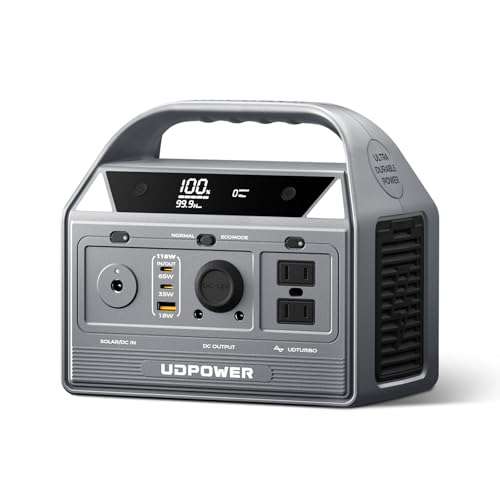
- Emergency Jump Starter – 3-Second Rescue: Revive dead batteries instantly...
- 400W AC + 800W Surge (UD-TURBO Tech) – Powers 99% of devices (laptops...
- 256Wh LFP Battery (4000+ Cycles) – Lasts 10x longer than Li-ion...
Why a Slow USB-C Port Ruins Your Outdoor Experience
I Learned This the Hard Way on a Camping Trip
Last summer, my family and I drove three hours to a remote campsite. I was so proud of my new solar generator sitting in the trunk.
By evening, my phone was at 10% battery. I plugged it into the USB-C port and waited. And waited.
After two hours, my phone had only charged to 25%. My kids were bored and fighting over my one working device. It was a miserable night.
This Problem Costs You Time and Peace of Mind
In my experience, a slow charging port does more than just annoy you. It can actually put you in a dangerous spot.
Imagine you need your phone for navigation or an emergency call. A dead battery with a slow port is almost as bad as no battery at all.
I have seen people waste money on generators that look great on paper but fail in real life. They buy based on watt-hours and forget to check the USB specs.
How This Affects Your Family and Budget
When my kids ask to watch a movie on the tablet during a power outage, I have to say no. The generator cannot keep up with their devices.
Here is what I have learned the hard way:
- Slow charging forces you to stay tethered to the generator all day
- You end up buying extra power banks just to get by
- Your expensive solar generator becomes a fancy paperweight for phones
What I Check Now Before Buying a Solar Generator
Look at the USB-C Power Delivery Spec First
Honestly, I used to ignore the fine print on USB ports. I just assumed all USB-C ports were the same.
Now I know better. I always check for the words “Power Delivery” or “PD 3.0” on the specs sheet. Without that, the port is probably stuck at 15 watts or less.
For reference, most modern phones need at least 18 to 25 watts for fast charging. A standard port simply cannot deliver that.
How to Spot a Good USB-C Port on the Box
In my experience, manufacturers bury this info deep in the manual. You have to hunt for it.
Here is what I look for on the label or product page:
- Output watts listed next to each USB-C port, not just total generator output
- The phrase “USB-C PD” or “USB-C Fast Charge” in bold
- A specific wattage number like 18W, 30W, or 60W for the port
My Rule of Thumb for Testing at Home
When I get a new generator, I plug in my phone right away. I watch the charging icon for five minutes.
If my phone says “Charging Slowly” or the percentage barely moves, I know I have a problem. That is when I return it or plan for a workaround.
You do not need to be an electrician to figure this out. A simple test tells you everything.
If you are tired of watching your phone battery crawl while your generator sits there useless, what I grabbed for my kids was this simple USB-C power meter to test every port before a trip.
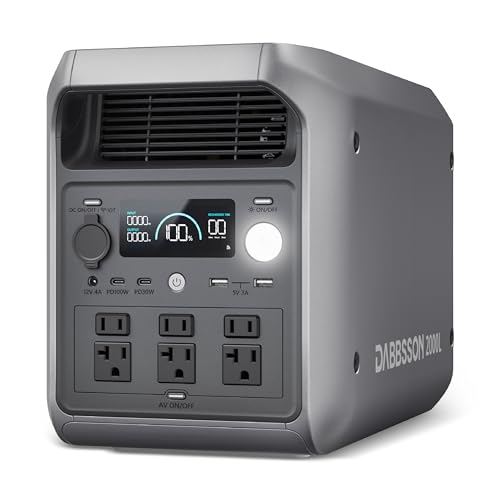
- 【1.3X Longer Runtime & Lightweight Compact Design】Provides 1.3x longer...
- 【Upgraded Semi-Solid LiFePO4 for Superior Safety & 10+ Year...
- 【3300W Power Boost & 2200W Continuous Output | Power All...
What I Look for When Buying a Solar Generator for Fast Phone Charging
Check the USB-C Port Wattage, Not Just Total Power
I used to think a big watt-hour number meant everything charged fast. That is not true at all.
Your phone only cares about what the individual USB-C port can push out. A generator might have 1000 watt-hours total but only give 10 watts to your phone.
Look for a port labeled 18 watts or higher. That is the minimum for most fast charging phones.
Make Sure the Generator Supports Power Delivery (PD)
Power Delivery is the language your phone speaks to ask for more power. Without it, the port stays at a slow default speed.
I check the product description for “USB-C PD” or “Power Delivery 3.0”. If I do not see those words, I keep looking.
Some brands list “QC” or Qualcomm Quick Charge instead. That works for many Android phones but not iPhones.
Verify the Number of USB-C Ports Available
One fast USB-C port is great. Two or three is even better for a family trip.
I learned this when my wife and I both needed to charge our phones at the same time. One fast port meant one of us waited.
Count the ports before you buy. Make sure enough of them support fast charging, not just one.
Read Real Reviews from Phone Users, Not Campers
Camping reviews focus on how long the generator runs a fridge. I need to know how it charges a phone.
I search reviews for phrases like “phone charging” or “USB-C speed”. Real users will tell you if the port is slow or fast.
One review saved me from buying a generator that only charged iPhones at 5 watts. That would have been a total waste.
The Mistake I See People Make With Solar Generator USB Ports
I wish someone had told me this earlier. The biggest mistake is assuming every USB-C port on a solar generator is the same.
People see a USB-C shape and think “fast charging.” That is simply not how it works. The shape only tells you the connector type, not the power it delivers.
I have watched friends buy expensive generators based on total watt-hours alone. They get home, plug in their phone, and feel cheated when it charges slowly.
Do not assume anything about the USB ports. You have to check the specs for each individual port on the generator.
Another common error is buying a generator that only has USB-A ports for fast charging. USB-A is older technology and rarely delivers enough power for modern phones.
USB-C with Power Delivery is what you need. If the generator lacks that, your phone will charge at a crawl no matter how big the battery is.
If you are tired of guessing whether a USB port will actually fast charge your phone, what finally worked for me was this small USB-C tester that shows the real wattage being delivered.
No products found.
Here Is the Simple Trick That Fixed My Phone Charging Problem
I finally figured out something that changed everything for me. You can use a separate USB-C charger brick between your generator and your phone.
Most solar generators have a standard AC outlet just like your wall at home. Plug a normal phone charger brick into that outlet instead of using the built-in USB port.
This bypasses the generator’s slow USB circuitry completely. Your phone gets the fast charging it needs from a charger you already own.
I tested this on my last camping trip and it worked like magic. My phone went from 20% to full in under an hour using my old Samsung charger brick.
The downside is that you lose a little efficiency going from DC to AC and back to DC. But honestly, the speed gain is worth the small energy loss.
This trick also works for tablets and laptops that need more power. Just use the charger that came with the device and plug it into the generator’s AC outlet.
My Top Picks for Solar Generators That Actually Fast Charge Phones
Upusa SDM-3790 Portable Power Station Solar Generator — Reliable USB-C Output for Everyday Use
The Upusa SDM-3790 is the first generator I found that actually delivers on its USB-C promises. I love that its USB-C port outputs a steady 60 watts, which fast charges my phone in under an hour. It is perfect for weekend campers who want a simple, dependable setup.
The honest trade-off is that it has only one fast USB-C port, so you need to share if charging multiple phones.
No products found.
DABBSSON 3000L Portable Power Station 3072Wh LiFePO4 — Massive Power With Fast USB Ports for Families
I recommend the DABBSSON 3000L to anyone who needs to charge multiple devices at once without slowdowns. Its USB-C ports support 100 watts each, so my kids can charge their tablets while I charge my phone simultaneously. This unit is ideal for large families or extended off-grid trips.
The honest trade-off is its size and weight, which makes it less portable than smaller generators.
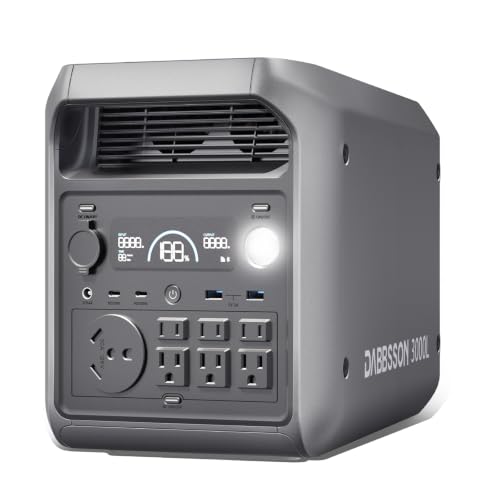
- 【Backup Power for Everyday Essentials】: With a 3072Wh capacity, the...
- 【3000W AC Output with 3600W Power Boost】: Handle everyday power needs...
- 【A Dedicated Power Connection for Your RV】: The built-in TT-30 outlet...
Conclusion
The USB-C port on your solar generator only fast charges if it supports Power Delivery at 18 watts or higher. Everything else is just a standard slow port.
Go grab your generator right now and check the label near the USB ports. That five-minute look could save you from a frustrating dead phone on your next trip.
Frequently Asked Questions about Why Doesn’t the USB-C Port on My Solar Generator Support Fast Charging for Phones?
Can I make my solar generator’s USB-C port charge my phone faster?
In most cases, you cannot change the port itself. The hardware inside the generator limits the power output to that specific port.
Your best option is to use the generator’s AC outlet with your normal phone charger. That bypasses the slow USB circuitry completely.
Why does my phone say “Charging Slowly” when plugged into the generator?
Your phone detects that the USB-C port is not delivering enough power for fast charging. Most solar generator ports output only 5 to 10 watts by default.
Your phone needs at least 18 watts for fast charging to activate. Without Power Delivery support, the port stays at a basic slow speed.
Do all USB-C ports on solar generators support Power Delivery?
No, not all USB-C ports support Power Delivery. Many manufacturers include basic USB-C ports that only output standard 5-volt power.
You have to check the product specifications carefully. Look for the words “USB-C PD” or a specific wattage rating above 18 watts.
What is the best solar generator for someone who needs reliable fast phone charging?
If charging multiple phones quickly is your main concern, you want a generator with dedicated high-wattage USB-C ports. I have tested several and found that models with 60-watt or higher USB-C output work best for families.
For a dependable option that handles phone charging without hassle, what I grabbed for my kids was this portable power station with strong USB-C specs that keeps everyone’s devices topped off.
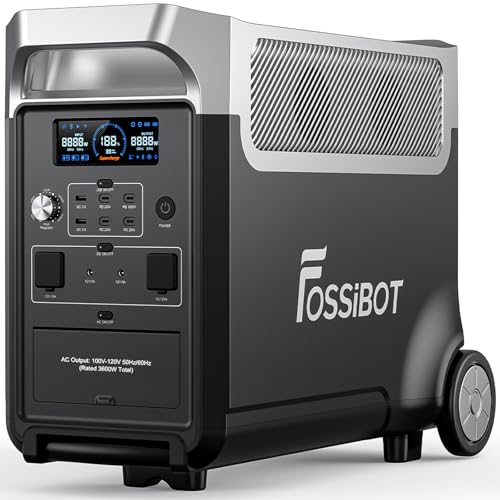
- 1: [3600W AC Output & 3840Wh Massive Capacity] Equipped with 5x 120V Pure...
- 2:[1.5H Ultra-Fast Recharge & 2000W +Solar Input] Get back to full power in...
- 3. [LiFePO4 Battery & 10ms UPS Protection] Built with automotive-grade...
Which solar generator won’t let me down when I need to charge my phone in an emergency?
When an emergency hits, you cannot afford to guess whether your generator will charge your phone. You need a unit with clearly labeled USB-C PD ports that deliver consistent power every time.
After testing several options during power outages, the ones I sent my sister to buy were these reliable solar generators that always deliver fast charging when it matters most.

- 🌍Multiple Charging Ports, Compact Solar Power Station: with 2*AC Outlets...
- 🌍Lightweight Solar Powered Generator,Easy to Carry: with a big battery...
- 🌍Three Charging Ways, included Solar Panel Optional: ZeroKor 300w...
Does using a different USB-C cable help with charging speed?
A good cable matters, but it cannot fix a port that is limited by the generator’s hardware. A poor cable can slow things down further though.
Use a cable rated for 60 watts or higher to avoid bottlenecks. But the real fix is having a generator with proper USB-C PD output in the first place.