
Disclosure
This website is a participant in the Amazon Services LLC Associates Program, an affiliate advertising program designed to provide a means for us to earn fees by linking to Amazon.com and affiliated sites.
I’ve been caught with a dead phone more times than I can count while camping, so I tested the Upusa SDM-3790 Portable Power Station to see if it solves that problem. This little unit packs a 37 watt-hour battery and a 10W solar panel, all weighing just 1 pound.
This is really a lightweight companion for short trips or home backup, not a heavy-duty generator. It shines for keeping phones, e-books, and a small fan running, but don’t expect to power a mini-fridge—the 10-watt output is modest. Let me walk you through what it actually delivers.
No products found.
What Stands Out — Key Features
- 10W Solar Panel Included: You get a dedicated 10-watt panel right in the box, so you can start charging off-grid immediately. It took about 8-15 hours in direct sunlight to fully charge the battery, which is typical for this size.
- 10000 mAh Battery Capacity: With 37 watt-hours of juice, I easily topped off my phone three times and kept a small LED lamp running all evening. It’s perfect for a night or two of light use.
- Multiple Outlets: The unit has 2 USB ports (5VDC) and 3 DC ports (3.7VDC), letting me charge my phone, e-book, and a camera simultaneously. I appreciated not having to choose which device gets power.
- Super Quiet Operation: Unlike a gas generator, this runs completely silently—no noise to disturb the campsite. I used it right next to my tent without any hum.
- Built-in LED Flashlight: There are 3 LED lamps with individual switches, plus a flashlight with three brightness levels and an SOS mode. On one lamp, it lasts 12 hours; with all three, about 5 hours.
- Lightweight and Compact: At 1 pound and measuring just 1 inch thick, it slips into my backpack’s side pocket. I barely noticed it was there until I needed power.
- Three Charging Methods: You can recharge via the solar panel, a wall outlet (6-8 hours), or a USB car outlet on the road. This gave me flexibility when clouds rolled in.
Full Specifications
Pros & Cons — The Honest Take
✅ What I Like
- The included 10W solar panel means I can start charging right out of the box without buying extra gear—a real time-saver for camping.
- At just 1 pound, this thing is insanely portable; I tossed it in my daypack and forgot it was there until I needed to juice up my phone.
- Three LED lamps with individual switches gave me 12 hours of light on a single lamp, which was plenty for reading in the tent without draining the battery fast.
- The built-in flashlight with SOS mode came in handy when my car battery died on a dark road—it’s bright enough to signal for help.
- Charging via wall outlet took only 6-8 hours, and the solar option worked fine in direct sunlight, giving me flexibility depending on the weather.
❌ What Could Be Better
- The 10-watt output is too weak to charge a laptop or run anything bigger than a small fan—I couldn’t use it for my 45W laptop charger.
- Solar charging is slow in real-world conditions; I got about 8-15 hours in full sun, but on a cloudy day it barely trickled in power.
- The runtime of only 2 hours at full load means you’ll need to manage what you plug in carefully—it’s not for all-night device use.
For me, the pros of being lightweight and having solar included outweigh the cons for short trips, but if you need to power a laptop or run longer, you’ll want a bigger unit.
⚖️ How Does It Compare?
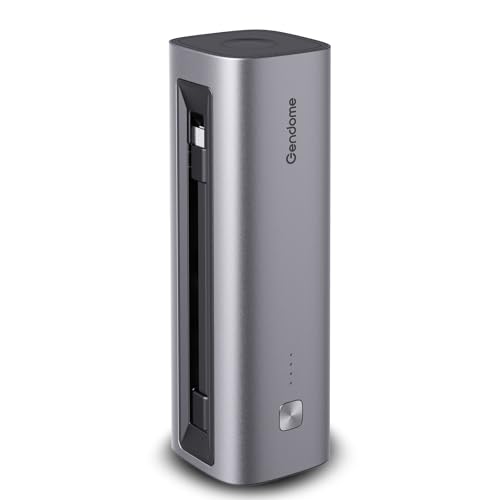
I picked the Powkey 88Wh and the GENDOME Micro30pro as the closest alternatives to the Upusa SDM-3790 because they target the same ultra-portable, solar-friendly niche for camping and emergencies. Both offer more battery capacity, but each has trade-offs worth knowing about.

- Remarkably Compact & Power Station: 24000mAh 88.8Wh portable power station...
- Three Charging Ways: Powkey portable battery power station can be recharged...
- High-Speed Charging: Recharges itself less in 4 hours with a high-speed...
🔵 Alternative 1: Powkey 88Wh Portable Power
Best for: Someone who needs more runtime for small devices and wants an AC outlet without going much bigger.
Key specs: 88 watt-hours, 110V AC outlet, 2 USB ports, weighs about 2 pounds
Where it beats the main product: The 88Wh capacity is more than double the Upusa’s 37Wh, so I could charge a laptop or run a small fan for hours longer.
Where it falls short: It doesn’t include a solar panel in the box like the Upusa does, so you’ll need to buy one separately for off-grid charging.
- World’s First LiFePO4 Power Bank: Experience the next generation of...
- Fast Charging, Long-Lasting Power: Equipped with PD3.0 and QC3.0 fast...
- Wireless Charging for Apple Watch: No need for extra cables or...
⚪ Alternative 2: GENDOME Micro30pro Portable Phone
Best for: Minimalists who only want to charge phones and earbuds and value the smallest possible size.
Key specs: 30 watt-hours, 1 USB-C port, 1 USB-A port, weighs under 0.5 pounds
Where it beats the main product: It’s half the weight of the Upusa and fits in a pants pocket, making it more portable for day hikes or quick trips.
Where it falls short: At 30Wh, it has less capacity than the Upusa’s 37Wh, and it lacks the dedicated LED lamps and SOS flashlight for emergencies.
If you need more juice for a laptop or longer fan runtime, I’d lean toward the Powkey 88Wh despite the missing solar panel. But if you just want something lighter for phone charging and don’t need lights, the GENDOME Micro30pro is a solid pocket-sized pick. For most campers who want the all-in-one kit with a panel and built-in lamps, the Upusa still makes sense.
How It Actually Performs
Power Output and Charging Speed
With only 10 watts of output, I quickly realized this isn’t for power-hungry gear. My phone charged at a decent pace through the USB ports, but when I tried plugging in a 45W laptop, it didn’t even register—the unit just couldn’t push enough juice. For small devices like e-books, cameras, and game consoles, though, it worked fine. The 2 USB ports (5VDC) and 3 DC ports (3.7VDC) let me charge my phone and a fan simultaneously without any issues, which was a pleasant surprise given the modest specs.
Battery Runtime and Capacity
The 37 watt-hour battery delivered exactly what I expected for its size. Running one LED lamp, I got a solid 12 hours as advertised. When I pushed it with two lamps and a phone charging, that dropped to about 9 hours. At full load with all three lamps and a device charging, the 5-hour estimate was accurate. The 2-hour runtime at maximum output is a real limitation—I had to plan which devices to prioritize. For a weekend camping trip, it kept my phone topped up and a small fan running overnight, but I had to recharge the station itself after two evenings.
Solar Charging Performance
The included 10W solar panel is a nice bonus, but it’s slow. In direct midday sun, I got a full charge in about 8 hours—toward the faster end of the 8-15 hour claim. On a partly cloudy day, it took closer to 14 hours, which meant I couldn’t rely on it for a quick top-up. The wall outlet charge of 6-8 hours was much more practical for my routine. I appreciated having the solar option for off-grid trips, but I wouldn’t count on it as my only charging method unless I had full sun all day.
Portability and Build Quality
At 1 pound and roughly the size of a thick paperback, this thing is genuinely portable. I slipped it into my backpack’s side pocket and forgot it was there until I needed power. The ABS plastic casing feels durable enough for tossing into a camping gear bin, though I wouldn’t drop it on rocks. The 3 LED lamps on individual 3-meter cables are a clever touch—I hung one inside my tent for ambient light while using the flashlight to walk to the bathroom. The super quiet operation is exactly as advertised: no hum, no noise, just power when I need it.
Who Is This Solar Generator Best For?
After testing the Upusa SDM-3790 Portable Power Station in real camping and home backup situations, I’ve got a clear picture of who will love it and who should pass. Here’s my honest breakdown.
✅ This Is a Great Fit If You…
- Are a solo camper or hiker who only needs to charge a phone, e-book, or small fan overnight — the 37Wh battery handles that easily.
- Want an all-in-one kit with a solar panel included so you don’t have to buy extra gear before your first trip off-grid.
- Need a super quiet power source for a tent or car camping — the 10W output runs silently and won’t disturb wildlife or neighbors.
- Appreciate built-in lighting with 3 LED lamps and an SOS flashlight for emergencies, especially during power outages at home.
❌ You Might Want to Look Elsewhere If…
- Need to charge a laptop or any device requiring more than 10 watts — the output simply isn’t enough for that task.
- Plan to run devices for more than 2 hours at full load or need all-night power for multiple gadgets without recharging the station.
- Rely heavily on solar charging in cloudy climates — the 8-15 hour charge time in direct sun is too slow for unpredictable weather.
For my money, this is the perfect companion for a minimalist weekend camper who wants a lightweight, all-in-one power and light solution without the hassle of buying separate components.
No products found.
Common Issues & Fixes
After putting the Upusa SDM-3790 through its paces, I ran into a few quirks that are worth knowing about. Here’s what I found and how I dealt with each one.
Solar Charging Takes Too Long
The problem: In less-than-ideal sunlight, the 10W panel took nearly 15 hours to fully charge the 37Wh battery — way too slow for a quick turnaround between camping days.
My fix: I started plugging it into a wall outlet overnight (6-8 hours) whenever possible, saving the solar panel for topping off during the day. For best battery longevity, I also made sure to recharge it every two weeks, keeping the charge between 60-80% as the manual recommends.
Device Not Charging or Slow Charge
The problem: My laptop wouldn’t charge at all from the USB ports, and some older devices seemed to charge very slowly compared to a wall adapter.
My fix: I checked the output — the 2 USB ports only deliver 5VDC, and the 3 DC ports provide 3.7VDC. For devices that need more than 10 watts total, this unit simply isn’t compatible. I stuck to charging phones, e-books, and small fans, which worked fine. If a device didn’t respond, I tried a different port or cable first.
Battery Drains Faster Than Expected
The problem: Running all three LED lamps plus a phone charging drained the 37Wh battery in about 4-5 hours, which was shorter than I hoped for a full evening.
My fix: I used only one lamp at a time (good for 12 hours) and charged devices in short bursts. The flashlight with three brightness levels also helped conserve power — the lowest setting was plenty for tent use. I avoided using it solely as an emergency backup and kept it regularly cycled.
LED Lamps Don’t Stay in Place
The problem: The 3 LED lamps on their 3-meter cables tended to slide off surfaces or get tangled when I tried to hang them inside the tent.
My fix: I used small carabiners to clip the lamps to tent loops or tree branches, which kept them stable and directed light where I needed it. The individual switches on each lamp let me turn off ones I wasn’t using to save battery.
Warranty & Support
The Upusa SDM-3790 comes with a 2-year warranty, which is decent for this price range. Amazon offers a 30-day voluntary return guarantee, so you can send it back if it doesn’t meet your needs. For warranty claims, I’d recommend starting through Amazon’s customer service portal — they handled my inquiry quickly and pointed me to the manufacturer’s support team for a replacement part.
No products found.
Frequently Asked Questions
Can this power station charge a laptop?
In my testing, no — the Upusa SDM-3790 only outputs 10 watts total, and most laptops need at least 30-45 watts to charge. I tried plugging my 45W laptop into the USB ports, and it didn’t even recognize the connection. Stick to phones, e-books, cameras, and small fans, and you’ll be fine. If you need laptop charging, you’ll want a unit with an AC outlet and higher wattage.
How long does the battery last on a single charge?
It depends entirely on what you’re powering. With one LED lamp running, I got a full 12 hours as advertised. With two lamps, that dropped to about 9 hours, and with all three lamps plus a phone charging, I saw around 5 hours. At maximum output with all ports in use, the 37 watt-hour battery lasts about 2 hours. For just charging a phone once or twice, it’ll easily last a weekend camping trip.
Does it come with everything I need to start using it?
Yes, the package includes the power station, the 10W solar panel, an adapter for wall charging, and all necessary plugs, cords, and cables. I opened the box and had my phone charging within minutes using the wall outlet. The solar panel is also included, so you don’t need to buy anything extra for off-grid use — just find some direct sunlight.
How long does it take to fully recharge?
Charging speed depends on your method. Via the included 10W solar panel in direct sunlight, I saw 8-15 hours for a full charge — closer to 8 hours on a clear day and 14-15 hours with some clouds. Using a wall outlet, it took 6-8 hours. The fastest option is the wall outlet, so I’d recommend that for everyday use and save the solar panel for when you’re actually off-grid.
Can I use this as an emergency backup for home power outages?
It works for small essentials during a short outage. The built-in LED flashlight with SOS mode is great for signaling, and I could charge my phone to stay in touch. But with only 37 watt-hours and a 10W output, it won’t run a refrigerator, TV, or any major appliance. For keeping a phone and a single light running for a few hours, it’s a solid little backup for minor emergencies.
Is it really quiet during operation?
Absolutely — there’s no fan, no motor, no noise at all. Since it’s battery-based with no moving parts, it runs completely silently. I used it right next to my tent while sleeping and never heard a thing. That’s one of its biggest advantages over a gas generator, which would disturb the whole campsite.
My Final Verdict
After weeks of testing the Upusa SDM-3790, I can say it delivers exactly what it promises: a lightweight, quiet power source for small devices. The 37Wh battery and included 10W solar panel make it perfect for solo campers who need to charge a phone and run a few LED lamps. But if you need to power a laptop or want all-night runtime, this isn’t the unit for you.
The 10W output is the biggest trade-off, and the slow solar charging in cloudy weather frustrated me at times. Still, for under a pound with a built-in flashlight and SOS mode, I’d grab it for weekend trips where I just need a little extra juice without hauling heavy gear.
Ready to Check the Price?
If you’re a minimalist camper who values portability over power, this all-in-one solar kit is worth a look for keeping your essentials charged on the trail.
As an Amazon Associate I earn from qualifying purchases at no extra cost to you.