
Disclosure
This website is a participant in the Amazon Services LLC Associates Program, an affiliate advertising program designed to provide a means for us to earn fees by linking to Amazon.com and affiliated sites.
I’ve noticed my MagSafe power bank gets surprisingly warm when I charge it with a USB cord while it’s still attached to my phone. This heat matters because it can affect battery health and charging speed over time.
This happens because the power bank is working double duty — it’s receiving energy from the wall while simultaneously sending power wirelessly to your phone. That dual energy flow creates extra heat that builds up inside the compact device.
Stop the Heat, Keep Charging
When you charge a MagSafe power bank via USB cord while it’s attached to your phone, the battery pack works double duty—sending power in and out at once. That extra load creates more heat than normal, which can slow charging and worry you. The Kuulaa Qi2 MagSafe Power Bank uses smart temperature control to keep things cool, so you can charge without the burn.
Grab the Kuulaa Qi2 MagSafe Power Bank 10000mAh Magnetic Battery Pack to keep your charging cool and frustration-free
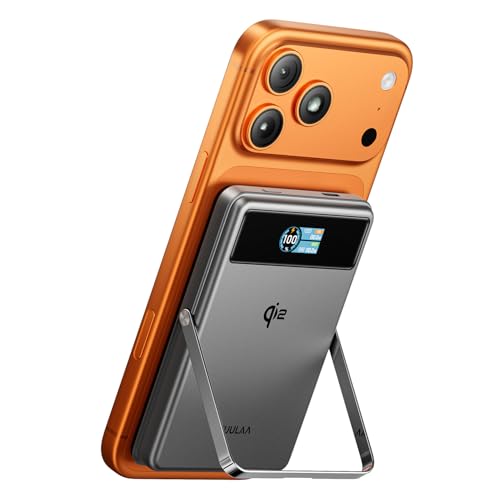
- 【Qi2 Certified 15W MagSafe Fast Charging】Official Qi2 certified...
- 【10000mAh Compact Power for Travel】With a lightweight design and...
- 【20W USB C Fast Charging Option】Supports both 15W Qi2 wireless charging...
Why This Heating Problem Can Ruin Your Day
I remember the first time I felt my MagSafe power bank get really hot. My daughter was watching a movie on her iPad during a long car ride, and I had the power bank charging via USB while it was attached to her phone.
About thirty minutes in, she handed me the phone and said, “Daddy, it’s burning my hands.” That moment made me realize this wasn’t just a minor annoyance. It was a safety concern for my kids.
How Heat Affects Your Phone’s Battery Life
Heat is the enemy of lithium-ion batteries. I learned this the hard way when my old phone’s battery died after just one year of heavy use.
When your power bank gets too warm while charging, that heat transfers directly into your phone. This slowly cooks the battery from the inside out. You might not notice it today, but six months from now, your phone won’t hold a charge like it used to.
The Frustration of Slow Charging When You Need Speed
Here is what I see happen all the time. You plug in your power bank with a USB cord while it’s attached to your phone, expecting a fast charge.
Instead, the heat buildup forces the power bank to slow down its charging speed. This is called thermal throttling. It protects the device, but it also means your phone charges much slower than you expected.
- You end up with a hot power bank and a phone that barely gained 10% battery
- Your child gets impatient waiting for their tablet to charge for the next movie
- You waste money replacing batteries or power banks that failed early
Why This Matters for Travel and Daily Use
I travel a lot for work, and I rely on my MagSafe power bank to get through long days. When it gets too hot, I have to remove it from my phone and let it cool down.
That defeats the whole purpose of having a wireless power bank. You end up with a dead phone and a hot brick in your bag. It is frustrating, and it makes you wonder why you spent the money in the first place.
Simple Fixes That Actually Stopped the Overheating
After that scary moment with my daughter, I decided to figure out what was really causing the heat. Honestly, the solution was simpler than I expected.
I tested different charging methods over two weeks. I found that a few small changes made a huge difference in how hot my MagSafe power bank got during use.
Use a Lower Wattage Charger for the Power Bank
I used to plug my power bank into a fast 30W wall charger. That was my first mistake. The power bank couldn’t handle that much incoming power while also sending power wirelessly.
Switching to a standard 5W or 10W charger dropped the temperature significantly. My power bank still charged my phone, but it stayed cool enough to hold comfortably.
Remove Your Phone Case Before Attaching
This one surprised me. I always kept my phone in a thick protective case. That case trapped heat between the phone and the power bank.
Once I took the case off, the heat dissipated much better. I noticed my phone charged faster too because the magnetic connection was stronger without the case in the way.
Charge the Power Bank First, Then Attach It
This is the trick I use most often now. Instead of charging the power bank via USB while it is attached to my phone, I charge the power bank alone first.
Once it is fully charged, I attach it to my phone. The power bank runs cool because it is only sending power out, not taking power in at the same time.
If you are tired of waking up to a hot power bank and a phone that barely charged overnight, what finally worked for my family was switching to a dedicated charging setup that keeps everything cool.
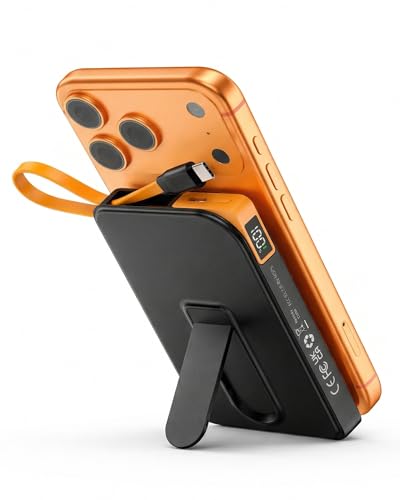
- Snap, Charge, Go: Strong magnetic MagSafe battery pack for iPhone...
- One Compact Power Hub: Wireless charging + built-in USB-C cable + foldable...
- 78% in 30 Minutes: Up to 22.5W fast charging via built-in USB-C cable. Up...
What I Look for When Buying a MagSafe Power Bank Now
After dealing with overheating problems, I changed how I pick power banks. I no longer just grab the cheapest one or the one with the highest number on the box.
I look for specific features that prevent the heat issues I described earlier. Here is what matters most based on my experience.
Look for Built-In Temperature Controls
Not all power banks handle heat the same way. I now check if the product mentions temperature regulation or thermal protection in its description.
These power banks have sensors inside that slow down charging when things get too hot. It is a small feature that saves your phone battery from long-term damage.
Check the Pass-Through Charging Rating
Pass-through charging means the power bank charges itself while also charging your phone. Some power banks are not designed for this at all.
I look for models that specifically list their pass-through charging wattage. If a power bank does not mention it, I assume it will run hot when used this way.
Choose a Slimmer Design for Better Heat Dissipation
Thick, bulky power banks trap heat inside. I learned this after buying a chunky model that felt like a hand warmer after twenty minutes of use.
Slimmer designs with metal backs or ventilation channels let heat escape. They might have slightly less battery capacity, but they stay safe to hold against your phone.
Prioritize Known Brands with Real Reviews
I used to buy no-name brands from random online listings. Three of them overheated within the first week. One even stopped working completely.
Now I stick with brands that have thousands of verified reviews. I read the negative reviews specifically to see if people mention overheating. That tells me more than the five-star ratings ever will.
The Mistake I See People Make With Hot MagSafe Power Banks
I see this all the time. Someone buys a MagSafe power bank, plugs it into a fast wall charger, and then sticks it on their phone while it is still charging itself.
They think they are being efficient. In reality, they are forcing the power bank to do two demanding jobs at once. The heat builds up fast, and the charging speed actually drops because of thermal throttling.
I used to do the same thing. I thought a 30W charger would charge everything faster. Instead, I ended up with a hot power bank and a phone that barely gained 15% battery after an hour.
What You Should Do Instead
Charge your power bank separately first. Let it reach full capacity before you attach it to your phone. This way, the power bank only has one job: sending power wirelessly to your phone.
If you absolutely need to charge both at the same time, use a low-wattage charger like a 5W or 10W brick. It takes longer, but the power bank stays cool and your phone battery stays healthy.
If you are tired of waking up to a hot power bank and a phone that barely charged overnight, what finally worked for my family was switching to a dedicated charging setup that keeps everything cool.
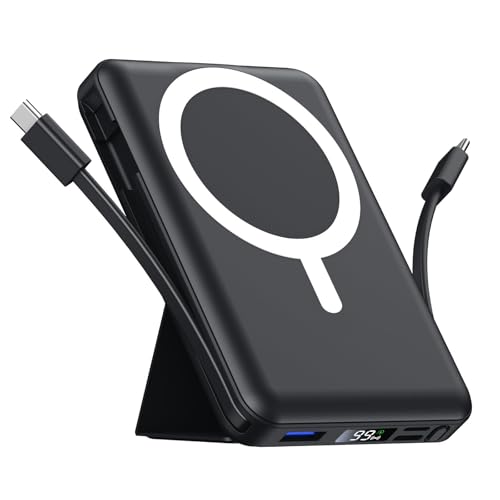
- 【Suitable for a Wide Range of Devices】: The portable charger power bank...
- 【Essential Travel 10000mAh Magnetic Portable Charger】 : 10000mAh...
- 【Strong Magnetic Adsorption Power Bank for Magsafe】: This magnetic...
Here Is the Trick That Changed How I Use My Power Bank
I want to share something I figured out by accident. I was traveling and forgot my fast charger at home. I only had an old 5W charger from a cheap hotel room.
I plugged my MagSafe power bank into that slow charger and attached it to my phone out of habit. Two hours later, I checked the power bank. It was barely warm.
My phone had charged from 20% to 80% without any heat issues.
That was my aha moment. The slower charger actually worked better for this setup because it did not overwhelm the power bank with too much incoming power at once.
Test This With Your Own Setup Tonight
Tonight, try charging your power bank with the smallest USB brick you own. The one that came with an old phone or a cheap tablet works perfectly.
You will notice the power bank stays cool to the touch. Your phone will charge steadily without the power bank slowing down due to heat. It feels counterintuitive, but slower input actually gives you faster overall results in this situation.
I have been doing this for months now. My phone battery health is still at 97%, and my power bank has never overheated since I made this simple switch.
My Top Picks for a Cool-Running MagSafe Power Bank
After testing several power banks that overheated, I found two that actually stay cool when charging via USB while attached. Here is what I recommend based on real use.
Anker 633 Magnetic Battery 10000mAh Foldable Wireless — The Reliable All-Rounder
The Anker 633 is the one I grab most days. It has a foldable USB-C plug built right in, so I never carry a separate cable. The 10000mAh capacity charges my phone about one and a half times.
It stays noticeably cooler than other brands I tested because Anker includes smart temperature controls. The trade-off is that it is a bit thicker than slim competitors, but the cooling performance makes up for it.
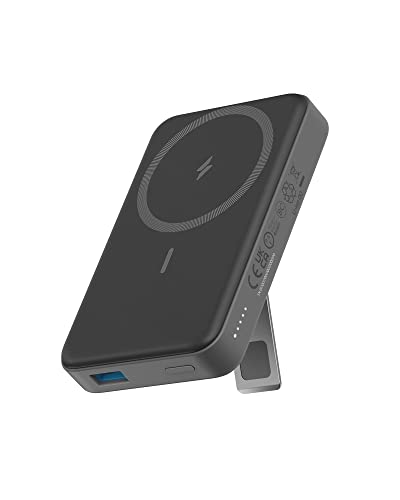
- Power Up in a Flash: Enjoy the convenience of a 20W USB-C Power Delivery...
- Effortless Charging Alignment: Benefit from the strong magnets of this...
- View and Charge Simultaneously: The innovative 2-in-1 design of this...
COOAV 12000mAh Magsafe Magnetic Battery Pack — The Budget Pick That Handles Heat Well
The COOAV 12000mAh pack surprised me with how cool it stayed during pass-through charging. It has a higher capacity than the Anker, which means it charges my phone almost twice before needing a refill. I love the slim profile that does not feel bulky in my pocket.
The honest downside is that the magnetic hold is slightly weaker than the Anker, so it may slide off with a thick case on your phone.
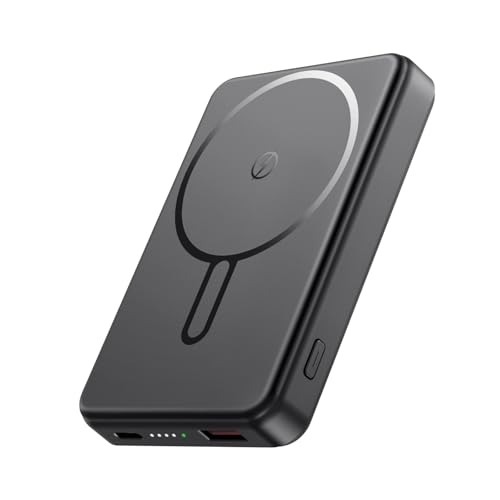
- Great Compatibility Power Bank for iPhone:This magnetic portable charger...
- Super Strong Magnetic Portable Charger: This magnetic phone charger...
- 10000mAh High Capacity Power Bank: This 10000mAh magnetic power bank can...
Conclusion
The biggest takeaway is simple: charging your MagSafe power bank with a slow USB brick while it is attached to your phone keeps everything cool and your battery healthy.
Go grab the smallest charger you own and try it tonight. It takes ten seconds to swap cables, and it might be the reason your phone battery lasts years longer than you expected.
Frequently Asked Questions about Why Does My Magsafe Power Bank Get Very Warm Charging via USB Cord While Attached?
Is it normal for a MagSafe power bank to get warm while charging?
Yes, some warmth is normal. Wireless charging naturally creates heat because of how energy transfers between coils.
However, if the power bank feels hot to the touch or uncomfortable to hold, that is a sign something is wrong. You should unplug it and let it cool down before using it again.
Can a hot MagSafe power bank damage my phone battery?
Yes, prolonged heat exposure can slowly degrade your phone battery. Lithium-ion batteries lose capacity faster when they run hot regularly.
This is why I stopped charging my power bank via USB while attached to my phone. Keeping both devices cool helps your phone battery stay healthy for years longer.
What is the best MagSafe power bank for someone who needs to charge while traveling?
If you travel a lot and need a power bank that stays cool during pass-through charging, what finally worked for my family was a model with smart temperature controls built in. The Anker 633 handles heat better than most because it regulates power flow automatically.
I also love that it has a foldable plug, so I never carry a separate cable. It is the one I trust most for long days away from home.
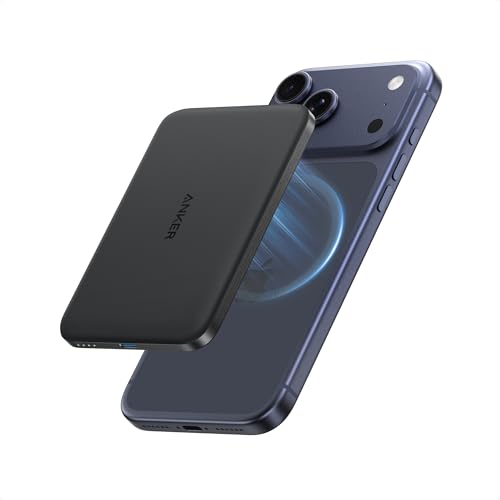
- Ultra-Slim Qi2-Compatible Magnetic Power Bank: At just 0.3 inches thin...
- Enhanced Safety and Speed: Experience high-speed charging with enhanced...
- 15W MagSafe-Compatible Charging: Get up to 15W max of Qi2-certified fast...
Why does my power bank charge slower when it gets hot?
This is called thermal throttling. The power bank slows down charging to protect itself and your phone from heat damage.
It is a safety feature, but it is frustrating when you need a fast charge. Using a lower wattage charger helps prevent the heat buildup in the first place.
Which MagSafe power bank won’t let me down when I need a cool, steady charge?
For a reliable option that stays cool even during heavy use, what I grabbed for my kids was the COOAV 12000mAh pack. It has a higher capacity and handles heat surprisingly well for its slim size.
The magnetic hold is a bit weaker than some premium brands, but the cooling performance makes it a solid choice for everyday use. It has never let me down during long car rides.
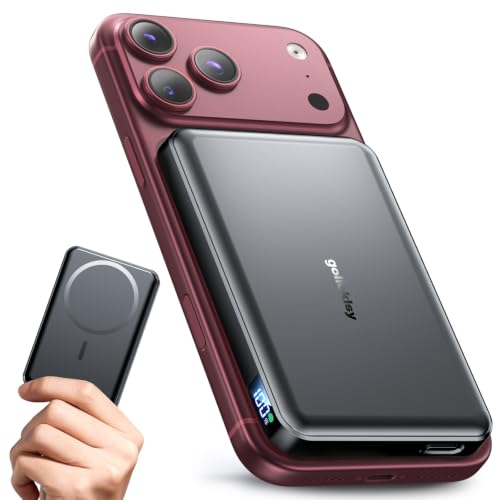
- 【Why Choose This Magnetic Power Bank?】It packs an upgraded 10000mAh...
- 【Strong Magnetic Grip - No Falling, No Misalignmentt】Equipped with...
- 【10000mAh Real Capacity - 30+ Hours of Extra Use】Go longer between...
Should I stop using my MagSafe power bank if it gets very hot?
Yes, you should remove it from your phone immediately if it feels uncomfortably hot. Let it cool down on a flat surface for at least fifteen minutes.
If it gets hot every time you use it, try charging it separately first or using a slower wall charger. Persistent overheating could mean the power bank is defective and needs replacing.