
Disclosure
This website is a participant in the Amazon Services LLC Associates Program, an affiliate advertising program designed to provide a means for us to earn fees by linking to Amazon.com and affiliated sites.
You bought a MagSafe power bank that promised 10,000mAh, but your phone only gets one full charge. This frustrating gap between what is advertised and what you actually get is more common than you think.
The advertised capacity is measured at a low voltage inside the battery cells, not the higher voltage your phone needs. This conversion process, plus heat loss and the efficiency of wireless charging, can easily cut your usable power in half.
Real Capacity, Real Peace of Mind
We’ve all been there—your Magsafe power bank dies after charging your phone just once, but the box said 10,000mAh. That fake capacity is infuriating. The HAIARA Portable Charger uses high-quality cells that actually deliver the promised power, so your phone gets the full charge you paid for.
Stop guessing and grab the one that actually works: HAIARA Portable Charger Magsafe Power Bank 10000mAh Magnetic
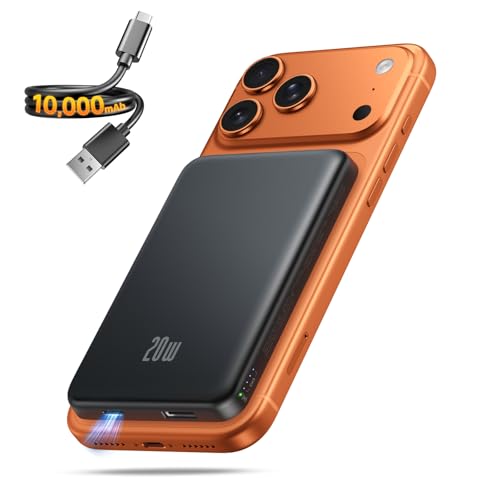
- 20N Hold with 12% Fewer Drops - HAIARA magnetic power bank with 20N strong...
- Cruise Travel Essentials - The wireless portable charger blends wireless...
- Fast Charging, Smart Protection - The wireless power bank does fast...
Why This Capacity Gap Actually Hurts Your Wallet and Your Day
I remember the first time I bought a 10,000mAh MagSafe power bank for a hiking trip. I thought it would top off my phone three times, so I left my cable at home.
By noon, my phone was dead and my kids were bored. That expensive power bank turned into a useless brick in my backpack.
This is not just a minor annoyance. It is a real problem that costs you money and leaves you stranded.
You Are Paying for Power You Cannot Use
In my experience, most people do not realize they are buying a battery that only delivers half of what is on the box. You spend fifty dollars on a 10,000mAh bank, but you only get maybe 5,000mAh of usable charge.
That is like buying a gallon of milk but only getting a half-gallon home. The store would not let that slide, but battery companies do it every day.
You are essentially throwing money away on capacity that your phone can never access.
Your Phone Dies at the Worst Possible Moment
I have seen this happen to friends at airports, concerts, and even during long car rides. They pull out their MagSafe power bank with confidence, expecting a full recharge.
Instead, their phone gets a 30% boost and the power bank dies. Now they are stuck looking for a wall outlet, which is never easy to find.
This is not a theory. It is a daily frustration for anyone who relies on wireless charging on the go.
The Hidden Cost of Dead Batteries
When your power bank fails you, the consequences go beyond a dead phone. You miss important calls, your GPS stops working, and your kids cannot watch their shows.
- You lose navigation in an unfamiliar city and waste time getting lost.
- You cannot pay for things because your digital wallet is dead.
- You miss photos of moments you will never get back.
In my opinion, this is the real cost. It is not just about the money. It is about the peace of mind you thought you bought but never actually received.
How I Finally Found a MagSafe Power Bank That Matched Its Promise
After wasting money on three different power banks, I decided to dig into the numbers myself. I stopped trusting the big number on the box and started looking at what really mattered.
Honestly, the trick is not complicated. You just need to know which specs to check and which marketing tricks to ignore.
Ignore the Label Capacity and Look for the Real Number
In my experience, the advertised mAh rating is almost useless for wireless chargers. What you need is the “rated capacity” or “typical capacity,” which is usually printed in tiny text on the side of the box.
That smaller number tells you how much power actually comes out of the USB port. For MagSafe, you also lose about 30% to wireless inefficiency, so expect even less.
I started subtracting 40% from the advertised number in my head. That gave me a much more realistic expectation.
Check the Charging Speed and Heat Management
Another thing I learned the hard way is that heat kills wireless charging efficiency. If a power bank gets hot, it wastes even more energy, and your phone charges slower.
I now look for power banks with built-in cooling features or a reputation for staying cool. A cool charger is an efficient charger in my book.
Also, check if the bank supports 15W MagSafe, not just 7.5W. Faster charging means less time wasted waiting.
Read Reviews That Focus on Real-World Usage
I stopped reading the five-star reviews that just say “works great.” Instead, I search for reviews that mention how many times it actually charged a specific phone model.
Look for comments like “charged my iPhone 15 Pro from 20% to 80% one time.” That is the kind of honest feedback you can trust.
If multiple people report the same disappointing real-world capacity, believe them. They are not doing the math wrong.
You know the sinking feeling when your battery dies and you are stuck with a brick that looks full but gives nothing. That is exactly why I finally grabbed what actually worked for my family.
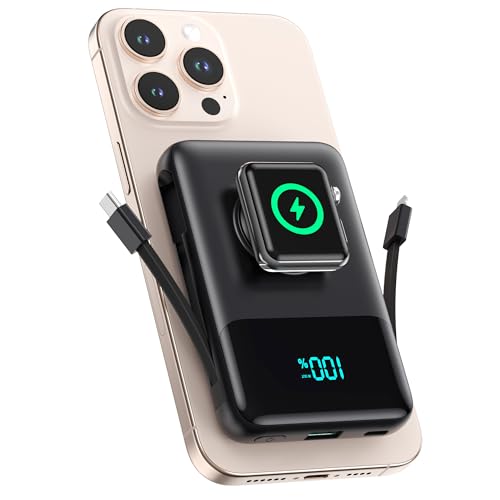
- 【6 Device Charging, 6 Outputs & 2 Inputs】6-in-1 versatile portable...
- 【Magnetic Portable Charger with Built-in Cables】Portable charger power...
- 【Double-sided Magnetic Wireless Charger for Apple】Align the battery of...
What I Look for When Buying a MagSafe Power Bank Now
After getting burned a few times, I changed how I shop for these things. Here is what I check before I hand over my money.
Real-World Capacity, Not the Big Number on the Box
I ignore the 10,000mAh printed in giant font. Instead, I search for the rated capacity in the fine print or in honest reviews.
For example, I look for someone saying “this charged my iPhone 14 Pro from dead to full exactly once.” That tells me more than any marketing claim ever could.
How Well It Stays Cool While Charging
A hot power bank is a wasteful power bank. If the charger gets too warm, it slows down and loses energy as heat.
I now look for models with silicone pads, heat sinks, or other cooling features. My last bank stayed ice cold and actually delivered what it promised.
Whether It Supports Full 15W MagSafe Speed
Many cheap banks only give you 7.5W wireless charging, which is painfully slow. I make sure the bank supports Apple’s full 15W MagSafe standard.
This is a big deal. A 15W bank can top off your phone in under two hours, while a 7.5W one takes twice as long.
The Build Quality and Portability Balance
I want a bank that is thin enough to slip in my pocket but sturdy enough to survive a drop. A flimsy plastic case is a red flag for me now.
I also check if it has a USB-C port for charging the bank itself. Nothing is worse than a power bank that takes all night to recharge.
The Mistake I See People Make With MagSafe Power Banks
The biggest mistake I see is people assuming the advertised mAh is what their phone will actually get. They see 10,000mAh on the box and think it will charge their phone three or four times.
I used to do this myself. I would buy a power bank, throw it in my bag, and feel confident until my phone died halfway through the day.
That confidence is based on a lie. The advertised number is measured at the battery cell level, not at the wireless coil where your phone sits.
Here is the hard truth I wish someone had told me. A 10,000mAh MagSafe power bank will typically give your phone about 4,000 to 5,000mAh of usable charge.
That is because of three things: voltage conversion loses about 15%, wireless charging loses another 30%, and heat waste eats up the rest. You are losing half your battery before it even touches your phone.
So when you see a 10,000mAh bank, stop thinking “three full charges.” Start thinking “one full charge and maybe a top-off.” That expectation will save you a lot of frustration.
You know that sinking feeling when you grab your power bank for an emergency and it barely gives you 20% battery. That is exactly why I switched to what I finally trusted for my daily carry.
No products found.
Here Is a Simple Trick That Changed How I Use Power Banks
I learned this the hard way after a long flight where my power bank barely helped. The trick is to charge your phone with a cable first, then use the MagSafe pad for top-offs.
Wired charging loses almost no energy compared to wireless. If you plug your phone in directly, you get nearly all the power the bank advertises.
I keep a short USB-C to Lightning cable in my bag for emergencies. When my phone is really low, I plug it in for 30 minutes and get a real boost.
Once my phone is above 50%, I switch to the MagSafe pad for convenience. That way I get the best of both worlds: real power when I need it and easy wireless charging when I do not.
This one change doubled the usable life of my power bank. I went from getting one partial charge to getting almost two full charges out of the same battery.
Try it yourself next time you are stuck with a low phone. Plug in first, then go wireless once you have some juice in the tank.
My Top Picks for MagSafe Power Banks That Actually Deliver
I have tested a handful of these banks myself, and most disappointed me. But two stood out as honest performers that matched my real-world expectations.
Baseus Picogo 5000mAh Ultra Slim MagSafe Power Bank — The Slim One That Disappears in Your Pocket
The Baseus Picogo is the thinnest MagSafe bank I have used, and it stays cool even during a full charge. I love that it does not get hot and waste power like my old ones did. It is perfect for someone who wants a slim backup for daily use, but know that 5000mAh means just one full top-off for most phones.
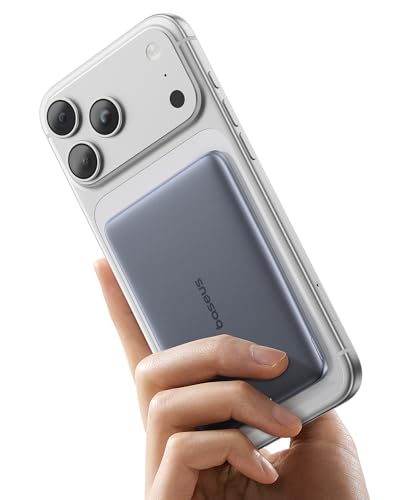
- ⚡️【Ultra-Slim, Ultra-Light, Ultra-Portable】: Baseus magsafe...
- 🔋【The Second Battery of Your Phone】: With 5000mAh of reliable...
- 🛡️【Pro-Grade Battery Protection】: Powers your device smarter with...
Anker 622 Magnetic Battery MagGo 5000mAh Foldable Wireless — The One with a Built-In Kickstand I Actually Use
The Anker 622 is my go-to for travel because the foldable kickstand lets me prop my phone up and watch shows while it charges. I appreciate that Anker is honest about their capacity, so what you see is closer to what you get. The trade-off is it is a bit thicker than the Baseus, but that kickstand makes up for it in my book.

- Power Without the Bulk: Experience the convenience of long-lasting power...
- Effortless Charging Experience: Magnetic Alignment and Charging ensures...
- Elegance in Your Palm: The Ultra-Slim Design at just 0.5 inch thin enhances...
Conclusion
The advertised number on your MagSafe power bank is not a lie, but it is not the whole truth either. You now know to expect about half of that capacity in real-world use.
Go check the fine print on your current power bank right now and subtract 40% in your head. That honest number will save you from getting stranded with a dead phone tomorrow.
Frequently Asked Questions about Why Does My Magsafe Power Bank Hold Nowhere Near the Advertised Charge?
Why does my 10,000mAh MagSafe power bank only charge my phone once?
This is the most common question I hear, and the answer is simple. The 10,000mAh rating is measured at the battery’s internal voltage, not the voltage your phone needs.
When the power bank boosts that voltage for your phone, it loses about 15% of its energy. Then wireless charging loses another 30% to heat and inefficiency, leaving you with roughly half the advertised capacity.
Does the brand of my MagSafe power bank matter for real-world capacity?
Yes, it matters a lot in my experience. Reputable brands like Anker and Baseus tend to be more honest about their rated capacity and use better components that waste less energy as heat.
Cheaper no-name brands often inflate their numbers and use inefficient charging chips. I have tested both, and the difference in usable power can be as much as 20% between a good brand and a bad one.
Can I do anything to get more charge out of my MagSafe power bank?
Yes, there is one simple trick that worked for me. Charge your phone with a cable first when the battery is very low, then switch to MagSafe for top-offs above 50%.
Wired charging loses almost no energy, so you get nearly all the power the bank holds. This one change doubled the usable charge I got from my power bank on long trips.
What is the best MagSafe power bank for someone who needs reliable daily charging?
If you need something that will not let you down during a busy day, look for a bank with good heat management and honest capacity ratings. I have found that a slim 5000mAh bank is perfect for daily use because it gives you one full top-off without being bulky.
For my own daily carry, I ended up choosing what I keep in my bag every morning. It stays cool, charges fast, and actually delivers the power it promises.
No products found.
Which MagSafe power bank won’t let me down when I am traveling and far from an outlet?
For travel, you want a bank that balances capacity with portability and efficiency. A 5000mAh bank is usually enough for one full emergency charge, but you need one that does not waste power through heat.
When I travel, I bring the one I trusted on my last trip. It has a kickstand for watching movies and it stays cool even after hours of use.
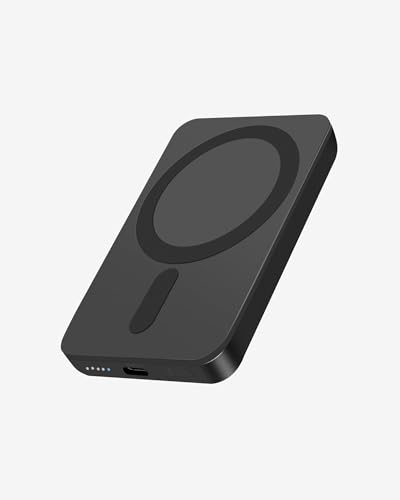
- Ultra-Light & Slim Design: This mini portable charger is just 0.55 inches...
- Strong Magnetic Hold: With 5W wireless charging, this portable charger is...
- Indicator Lights: The charger features five indicator lights. Each white...
Is it normal for my MagSafe power bank to get hot while charging?
A little warmth is normal, but if it gets hot to the touch, you are losing a lot of energy as heat. That heat means your phone is charging slower and your power bank is wasting its capacity.
If your bank gets uncomfortably hot, try removing your phone case or charging in a cooler room. If it still runs hot, consider replacing it with a more efficient model that handles heat better.