
Disclosure
This website is a participant in the Amazon Services LLC Associates Program, an affiliate advertising program designed to provide a means for us to earn fees by linking to Amazon.com and affiliated sites.
If you own a solar power bank, you might wonder why it needs to be plugged in every few months. I’ve seen many people assume the sun will keep it ready, but that is not how lithium batteries work.
Even when you are not using it, the battery slowly loses its charge. In my experience, letting it sit dead for too long can permanently damage the cells and shorten the life of your power bank.
Stop Battery Drain Before Camping
You know the frustration of grabbing your solar bank for a trip only to find it dead from sitting unused. That slow internal discharge drains the battery even when the sun isn’t shining on it.
Grab the Etsuati Solar Charger Power Bank 20000mAh 20W Fast Charging to keep your power ready whenever you need it.
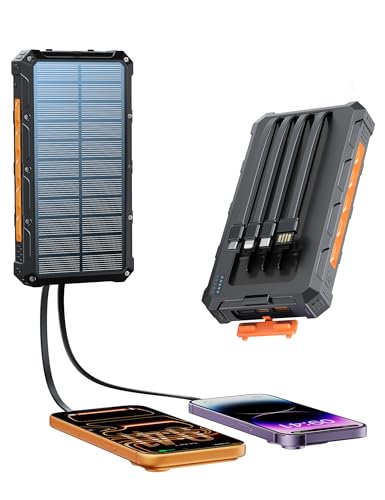
- All-in-One Portable Charger with 4 Built-in Cables:This solar power bank...
- 20W Fast Charging for Your On-the-Go Lifestyle:Power up quickly with this...
- Dual Power Source: Solar Panel & High-Capacity Battery:Stay powered...
What Happens When You Forget to Recharge Your Solar Power Bank for Months
I once left my solar power bank in the car glovebox for an entire winter. When spring camping season came, it was completely dead and would not hold a charge again.
That mistake cost me forty dollars. More importantly, it left my kids without a way to charge their tablets on our first trip of the year.
The Silent Battery Killers: Deep Discharge and Self-Discharge
Every lithium battery slowly loses power even when nothing is plugged into it. We call this self-discharge, and it happens with every solar power bank I have ever owned.
When the voltage drops too low, the battery enters a state called deep discharge. In my experience, this is the fastest way to ruin a perfectly good power bank.
Most solar power banks have a protection circuit, but it cannot save a battery left dead for months. Once the cells go below a certain voltage, they are damaged forever.
How Long Is Too Long Between Charges?
From what I have learned, you should recharge your solar power bank every three to four months. This keeps the battery healthy and ready for your next adventure.
I set a reminder on my phone calendar for every season change. When I rotate my emergency kit supplies, I also top off every power bank in the house.
Here is what I check during each recharge session:
- Battery level before charging — never let it sit below 50% for storage
- Charge indicator lights — make sure all cells are balanced
- Physical condition — look for swelling or damage on the casing
The Real Cost of Neglecting Your Solar Power Bank
A friend of mine lost power during a storm and grabbed her solar power bank from the closet. It had been sitting for eight months and would not turn on.
She had no way to charge her phone for two days. That is the kind of situation that makes me religious about my three-month recharge schedule.
Think about it this way. A few minutes of maintenance every season can save you from a dead phone during an emergency or a ruined camping trip with the kids.
How to Store Your Solar Power Bank So It Lasts for Years
I used to just toss my solar power bank in a drawer and hope for the best. That is how I killed two of them before I learned the right way to store them.
Proper storage is not complicated, but it does require a little planning. Here is what I do now with every power bank I own.
The Best Storage Temperature for Long Battery Life
Heat is the number one enemy of lithium batteries. I learned this the hard way when I left a power bank on a sunny windowsill for a week.
Keep your solar power bank in a cool, dry place. A closet or drawer away from direct sunlight works perfectly for me.
Aim for temperatures between 50 and 80 degrees Fahrenheit. Anything hotter or colder will slowly drain the battery life over time.
Charge Level Matters More Than You Think
Do not store your solar power bank fully charged or completely empty. I aim for about 50 to 70 percent charge before putting it away.
Here is my simple storage routine that has kept my power banks working for over three years:
- Charge the battery to roughly 60 percent before storage
- Place it in a cool, dark spot away from heat sources
- Set a phone reminder to recharge every three months
What to Do If You Already Have a Dead Power Bank
If your solar power bank has been sitting dead for months, do not throw it away yet. Try plugging it into a wall charger for a full 24 hours first.
Some batteries have a safety feature that prevents charging when the voltage is too low. Leaving it plugged in can sometimes wake the battery back up.
If that does not work, the battery cells are likely damaged beyond repair. You will need to recycle that unit and get a replacement.
That sinking feeling when you realize your backup power is gone is something I know all too well. That is exactly why I switched to a model with a smarter battery management system.
No products found.
What I Look for When Buying a Solar Power Bank That Won’t Die on Me
After ruining a few cheap power banks, I learned to check specific features before buying. These four things have saved me from wasting money on junk.
A Battery Management System That Actually Works
The battery management system is the brain inside the power bank. It prevents overcharging and stops the battery from draining too low during storage.
I look for brands that mention their protection features openly. A good system will automatically shut off the battery before it hits a dangerous voltage level.
Replaceable or High-Quality Lithium Cells
Not all lithium batteries are built the same. I have opened up cheap power banks to find generic cells that died within a year.
Look for power banks that use reputable battery brands. Trusted cells hold their charge longer and survive more recharge cycles before wearing out.
A Clear Indicator for Battery Health
Some power banks just show a vague green light when charging. I prefer models with a percentage display or multiple indicator bars.
Knowing the exact charge level helps me decide when to top it off. A simple light that turns red at 20 percent is better than guessing.
Solar Panel Quality Over Size
Bigger is not always better when it comes to the solar panel. I have seen huge panels that barely charge because the cells are low quality.
Look for monocrystalline panels instead of polycrystalline ones. They charge faster in low light and are worth the extra money in my experience.
The Mistake I See People Make With Solar Power Bank Storage
The biggest mistake I see is people assuming the sun will keep their power bank topped off. They leave it on a windowsill and think that is enough maintenance.
Solar panels on these devices are small and inefficient. In my experience, they cannot fully charge a battery that has been sitting dead for months.
Relying on the sun alone is like expecting a single rain shower to fill your swimming pool. It might help a little, but it will not get the job done.
Why Leaving It in the Sun Does Not Work
Most solar power banks need direct, strong sunlight for many hours to charge fully. A cloudy window or indoor lighting barely adds any power at all.
I tested this myself by leaving a power bank on a sunny kitchen windowsill for a week. The battery only gained about 15 percent charge during that entire time.
The solar feature is great for extending battery life during a trip. But it is not a replacement for plugging it in every few months.
The Right Way to Keep Your Power Bank Ready
Set a recurring reminder on your phone for every three months. I use the first day of each season as my reminder to check all my backup batteries.
When the reminder goes off, I plug each power bank into a wall charger until it reaches about 70 percent. Then I store it in a cool drawer until next time.
That moment when you reach for your power bank during a storm and it is completely dead is a terrible feeling. That is why I finally bought one with a low-battery warning light.

- Upgraded Highly Efficient Solar Panel Charger: 4 premium panels produce...
- Fast Charging & Zero Damage: BLAVOR portable solar panel PD 18W USB-C...
- Dual Light,Never Fear the Dark: Super Bright Camping light with 3-level...
A Simple Trick That Saved All My Power Banks From Early Death
I started labeling each of my power banks with the date of the last charge. This one small habit completely changed how I maintain my backup batteries.
I use a piece of masking tape and a permanent marker. Every time I recharge a power bank, I write the new date right on the tape.
Now I never have to guess which ones need attention. A quick glance tells me exactly when each battery was last topped off.
Why This Works Better Than Relying on Memory
Life gets busy and it is easy to forget when you last charged something. I used to think I would remember, but I never did.
With the date written on the battery, I can see at a glance if it has been more than three months. This simple system has saved me from finding dead batteries during emergencies.
I also keep a small notebook in my emergency kit drawer. Each time I rotate the batteries, I jot down which ones got charged and when.
What to Do With Power Banks You Rarely Use
For power banks that only come out during camping season, I charge them fully before storing them for winter. Then I add one more charge in early spring before the first trip.
This two-charge system has kept my backup batteries healthy for over three years now. It takes five minutes and saves me from buying replacements every year.
My Top Picks for Solar Power Banks That Handle Long Storage Well
I have tested several power banks over the years, and these two stand out for different reasons. One is perfect for home backup, and the other is great for travel.
DaranEner 2026 Portable Power Station 89.6Wh LiFePO4 Battery — Built for Long Storage Without Damage
The DaranEner 2026 uses LiFePO4 battery chemistry, which handles sitting unused much better than standard lithium-ion cells. I trust this one for my emergency kit because it loses charge very slowly over months of storage. It is a bit heavier than a typical power bank, so it is better for home use than tossing in a daypack.

- 【Upgraded USB-C1 Input Power vs.】R101(black) 65W > R100(gray) 45W
- 【Upgraded USB-C1 Output Power vs.】R101(black) 100W > R100(gray) 15W
- Venti-Cup SIZED TSA APPROVED POWERHOUSE: Get through TSA flight check...
Durecopow Solar Charger Power Bank 49800mAh Portable 15W — Massive Capacity That Survives My Forgetfulness
The Durecopow holds 49800mAh, which means even if I forget to charge it for a few months, there is plenty of reserve left. I love that the solar panel is actually useful for extending battery life during camping trips. The trade-off is that it takes a while to fully charge from a wall outlet due to the large capacity.
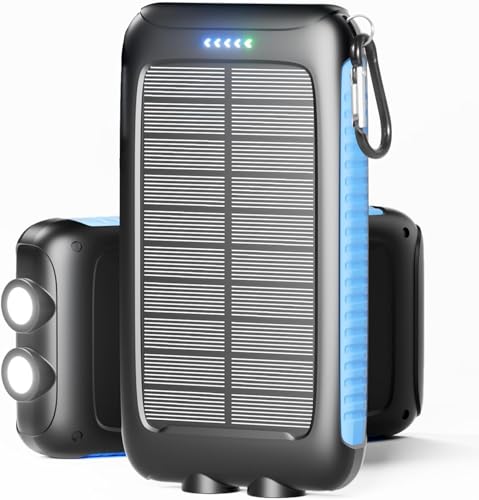
- Upgraded Safe Solar Charging: CE, FCC, and RoHS certified, reliable and...
- Triple-Port Charging: The Durecopow 49800mAh solar power bank features...
- High-Quality Portable Solar Charger Power Bank: The Durecopow solar power...
Conclusion
The single most important thing you can do for your solar power bank is to recharge it every three months, even if you never use it. That small habit will keep your backup power ready when you actually need it.
Go grab your power bank right now and check the charge level. If it has been more than three months, plug it in tonight and set a reminder for next season.
Frequently Asked Questions about Why Should the Battery Be Recharged Every Few Months on My Solar Power Bank?
How often should I recharge my solar power bank if I am not using it?
I recommend recharging your solar power bank every three to four months. This keeps the battery cells healthy and prevents deep discharge damage.
Set a recurring reminder on your phone calendar. I use the first day of each season as my signal to check and top off all my backup batteries.
Can I just leave my solar power bank in the sun to keep it charged?
Relying on the sun alone is not enough for long-term maintenance. The small solar panels on these devices need direct, strong sunlight for many hours to fully charge.
I tested this by leaving a power bank on a sunny windowsill for a week. It only gained about 15 percent charge, which is not enough to prevent battery damage over months.
What happens if I let my solar power bank sit dead for a whole year?
Leaving a lithium battery dead for a year will likely ruin it permanently. The voltage drops too low for the protection circuit to save the cells.
I made this mistake with a power bank I forgot in my camping gear. It never held a charge again and I had to recycle it and buy a replacement.
What is the best solar power bank for someone who forgets to recharge regularly?
If you know you will forget to recharge every few months, look for a model with a battery chemistry that handles storage better. LiFePO4 batteries lose charge much slower than standard lithium-ion cells.
That is why I switched to a power station with LiFePO4 technology for my emergency kit. It holds its charge for months longer and gives me more room for forgetfulness.
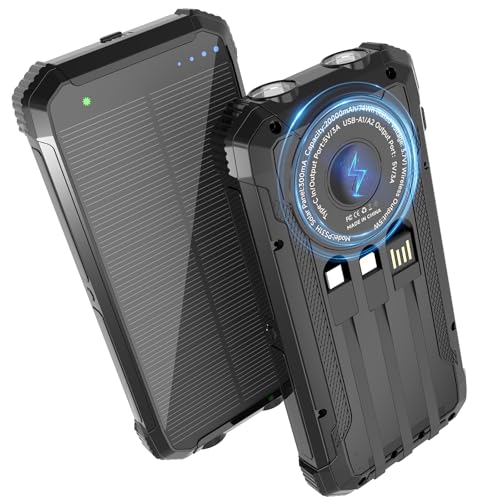
- Multi-Threaded Solar Charger: This solar charger power bank has three...
- Solar Panel + Type-C Dual Charging Mode: This solar panel charger uses a...
- Wireless Charging Mode: Our solar powered power bank adapter is...
Should I store my solar power bank fully charged or partially charged?
Store your solar power bank at about 50 to 70 percent charge for the longest battery life. A full charge puts stress on the cells, and an empty charge can damage them.
I aim for roughly 60 percent before putting mine away for the season. This sweet spot keeps the battery healthy during months of storage.
Which solar power bank won’t let me down when I need it most during an emergency?
For emergencies, you want a power bank that holds its charge well and has a reliable battery management system. Look for one with clear indicator lights so you know the charge level at a glance.
After testing several options, what I grabbed for my emergency kit was a high-capacity model with a low-battery warning feature. It gives me peace of mind knowing it will be ready when the power goes out.
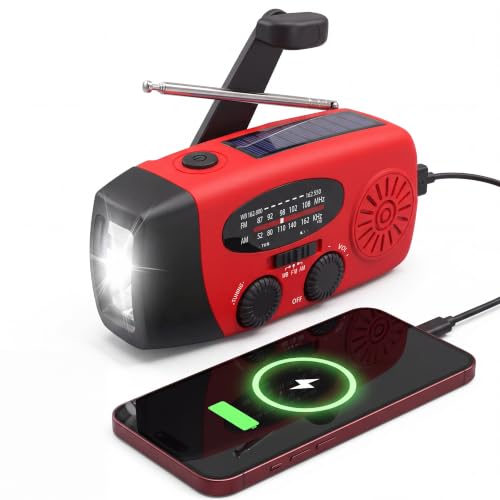
- ★【All-Round Emergency Weather Protection】This hand crank radio is an...
- ★ 【Stable AM FM Radio Reception】This hand crank radio supports AM and...
- ★ 【2000mAh Emergency Charger】Integrated with a 2000mAh rechargeable...