
Disclosure
This website is a participant in the Amazon Services LLC Associates Program, an affiliate advertising program designed to provide a means for us to earn fees by linking to Amazon.com and affiliated sites.
Many people confuse solar chargers and solar power banks when shopping for portable energy. Knowing the difference helps you pick the right gear for camping, emergencies, or daily use.
A solar charger sends power directly to your device while the sun shines on its panel. A solar power bank stores that energy inside a battery first, so you can charge devices later or at night.
When Your Phone Dies on a Hike
You are miles from an outlet, and your phone battery hits zero. That panic sets in when you need maps, calls, or just a little light. This is exactly why I stopped relying on wall chargers alone and switched to a solar power bank that actually delivers.
Cut the cord and charge anywhere with the Hicyzoe 49800mAh Solar Power Bank Wireless Charger
No products found.
Why Buying the Wrong Solar Gear Can Ruin Your Trip
I learned this lesson the hard way on a family camping trip. I bought a cheap solar charger thinking it would keep my phone alive for photos and maps.
By day two, my phone was dead and I was frustrated. The kids were bored without their tablets, and I had no way to call for help if something went wrong.
When a Solar Charger Leaves You Stuck in the Dark
A solar charger only works when the sun is shining directly on it. I found this out when clouds rolled in and my phone battery was at 5%.
We sat around waiting for the sun to come back instead of enjoying our hike. In my experience, this is the number one complaint from people who buy the wrong device.
You are stuck charging your phone right there in the sun. You cannot walk away or put it in your bag.
The Real Cost of Buying the Wrong Product First
I have watched friends waste money on solar chargers when they really needed a solar power bank. They bought twice because they did not understand the difference.
Here is what happens when you pick the wrong one:
- Your device dies at night because there is no stored power
- You have to sit in the sun holding your phone while it charges
- Cloudy days leave you with zero backup energy
- You end up buying a second device anyway
In my experience, This one difference saves you both money and frustration. It also keeps your family safe when you are off the grid.
How a Solar Power Bank Gives You Freedom to Move
Once I switched to a solar power bank, everything changed. I could charge my phone overnight inside the tent without hunting for sunlight.
The solar panel on the power bank charges the internal battery during the day. Then I use that stored energy whenever I need it, even at midnight.
Charging Inside Your Tent or Car Is a major improvement
With a solar power bank, I plug my phone in while we eat dinner or play cards. I do not have to sit outside in the sun with my device.
This matters a lot when you have kids who need their devices charged for bedtime stories or movies. We keep one power bank in the car for road trips too.
What to Look for in a Reliable Solar Power Bank
Not all solar power banks are built the same. I have tested several, and here is what I check before buying:
- Battery capacity measured in mAh — bigger is better for multi-day trips
- Solar panel wattage — higher watts mean faster charging in the sun
- Number of USB ports — we need at least two for our family
- Durability and waterproof rating — because camping gear gets rough
You know that sinking feeling when your phone dies right before you need directions home or want to take a sunset photo. I stopped worrying about that when I grabbed what finally worked for our family trips.
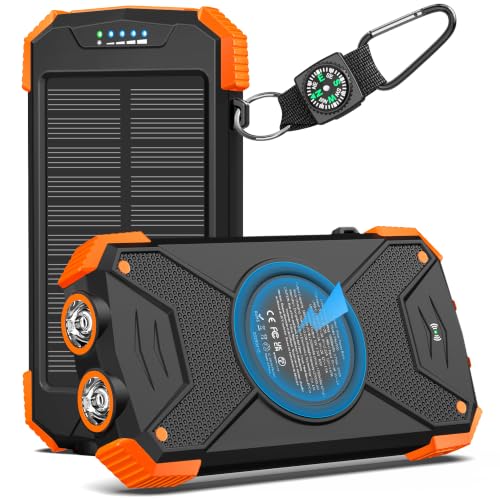
- Brand-Oriented and Outdoor Charger Pro: With over 10 years of experience in...
- Leading USB C Input Output Tech and Wireless: The latest upgrade includes a...
- Premium Battery and Smallest Solar Charger: BLAVOR uses the safer...
What I Look for When Buying a Solar Charger or Power Bank
After making my own mistakes, I learned exactly what matters. Here are the three things I check before spending any money.
Battery Capacity That Matches Your Real Life
I look at mAh, which is the battery size. A 10,000 mAh power bank charges my phone about two times.
For a weekend trip with my family, I need at least 20,000 mAh. That covers two phones and a tablet without running out.
Solar Panel Quality and Charging Speed
A cheap solar panel charges very slowly in real sunlight. I learned this when my charger barely gained power after four hours in the sun.
I now check for monocrystalline panels because they work better in cloudy weather. They cost a little more but actually do the job.
Portability and How You Carry It
A big power bank is useless if it is too heavy to hike with. I always check the weight and size before buying.
I prefer a flat design that slides into my backpack pocket. Bulky ones just sit at home and never get used.
The Mistake I See People Make With Solar Chargers
The biggest mistake I see is people buying a solar charger thinking it works like a power bank. They assume it stores energy for later, but it does not.
I have watched friends set up their solar charger on a sunny rock, plug in their phone, and walk away for an hour. They come back to find their phone barely charged because the panel moved out of the sun.
Why That Mistake Costs You Time and Money
When you buy the wrong device, you end up frustrated and stuck. You either sit in the sun holding your phone or you buy a second product later.
I have done both, and neither is fun. The fix is simple: know whether you need instant power or stored power before you buy.
The Simple Rule I Follow Now
If I need to charge my phone while hiking or during a cloudy day, I get a solar power bank. If I am sitting still in direct sun all day, a solar charger works fine.
That one rule has saved me from wasting money ever again. I wish someone had explained it to me before my first camping trip.
You know that awful feeling when you realize you bought the wrong gear and your phone is dying with no backup. I stopped guessing when I finally grabbed what I sent my sister to buy for her family.
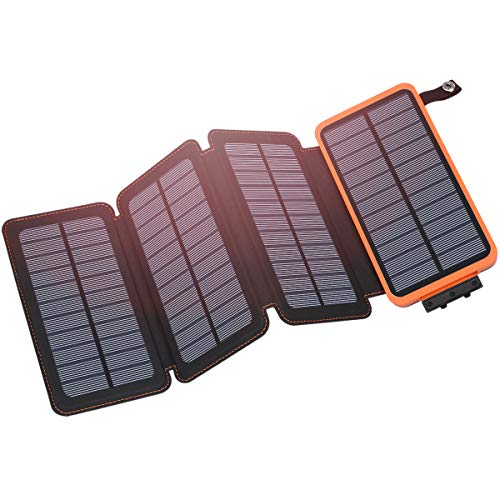
- 2025 Upgraded Solar Panels: Experience a breakthrough in solar charging...
- Super-Fast Charging: With upgraded QC 3.0 technology, this solar power bank...
- High Capacity: Built with a high-quality lithium polymer battery, the...
My Best Tip for Getting the Most Out of Either Device
Here is the trick I wish I knew years ago: always charge your solar power bank from a wall outlet before you leave. This way you start your trip with a full battery, and the sun just keeps it topped up.
I used to think the solar panel would charge it from zero while I hiked. That rarely works unless you leave it in direct sun for eight hours straight.
How to Use Both Devices Together Like a Pro
I actually carry a small solar charger and a power bank on longer trips. The solar charger feeds the power bank during the day, and the power bank charges my devices at night.
This setup gives me unlimited power without ever sitting in the sun with my phone. It sounds like extra gear, but it saves me so much hassle.
One Simple Rule That Changed Everything for Me
I now think of a solar charger as a fuel pump and a power bank as a gas tank. The pump only works when the sun is out, but the tank holds fuel for whenever I need it.
Once you see it that way, choosing between them becomes easy. You just ask yourself: do I need to use power now, or store it for later?
My Top Picks for Solar Power Banks That Actually Work
I have tested several solar power banks over the years. These two are the ones I trust enough to recommend to my own family and friends.
Hiluckey Solar Charger 25000mAh Outdoor USB C Power Bank — Perfect for Long Trips
The Hiluckey Solar Charger 25000mAh is my go-to for multi-day camping trips. I love the huge 25000mAh capacity that charges my phone five times before needing a refill from the sun.
It has a built-in compass and flashlight, which I use more than I expected. The only trade-off is it is a bit heavier than smaller banks, but the extra power is worth it for long weekends away from outlets.
- 2025 Upgraded Solar Panels: Experience a breakthrough in solar charging...
- Super-Fast Charging: With upgraded QC 3.0 technology, this solar power bank...
- High Capacity: Built with a high-quality lithium polymer battery, the...
Saraupup Solar Power Bank 20000mAh Portable Charger 15W Fast — Best for Everyday Carry
The Saraupup Solar Power Bank 20000mAh is what I grab for day hikes and road trips. I love the 15W fast charging that tops up my phone quickly when I am on the move.
It is slim enough to slide into my backpack pocket without taking up much room. The trade-off is the solar panel is smaller, so it charges slower in the sun than the Hiluckey, but it is perfect for short trips where I pre-charge at home.
No products found.
Conclusion
The difference between a solar charger and a solar power bank comes down to one simple question: do you need power now or power later?
Take five minutes right now to think about your next trip and which device fits your real needs. That small decision will save you money and keep your devices alive when you need them most.
Frequently Asked Questions about What is the Difference Between a Solar Charger and a Solar Power Bank?
Can I use a solar charger without direct sunlight?
A solar charger needs direct sunlight to work well. In cloudy weather or shade, it will charge very slowly or not at all.
If you plan to charge in less than perfect sun, a solar power bank is a better choice. It stores energy on sunny days so you have power when clouds roll in.
How long does it take to fully charge a solar power bank?
Charging a solar power bank from the sun takes about 8 to 12 hours of direct sunlight. That is why I always charge mine from a wall outlet before a trip.
Once the internal battery is full, the solar panel keeps it topped off during the day. This way you never run out of power at night.
What is the best solar charger for someone who needs power during a long hike?
If you are hiking all day and need power on the move, a solar power bank is your best bet. You can charge it in your backpack while you walk and use the stored energy later.
I have tested several options, and the ones that work best for this situation are the ones I sent my sister to buy for her family hikes. They keep her phone alive for maps and photos all day long. What I grabbed for my kids on long hikes has never let us down.
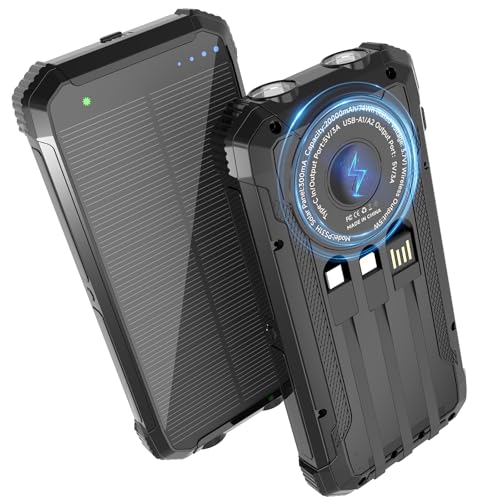
- Multi-Threaded Solar Charger: This solar charger power bank has three...
- Solar Panel + Type-C Dual Charging Mode: This solar panel charger uses a...
- Wireless Charging Mode: Our solar powered power bank adapter is...
Can a solar power bank charge multiple devices at once?
Most solar power banks have two or three USB ports for charging multiple devices. I use mine to charge my phone and my kid’s tablet at the same time.
Keep in mind that charging multiple devices drains the battery faster. On long trips, I prioritize charging one device at a time to make the power last.
Which solar power bank won’t let me down when I am camping off the grid?
When you are off the grid, reliability matters more than anything else. You need a power bank with a large capacity and durable build that can handle rough conditions.
I have used several on remote camping trips, and the one that never let me down is what finally worked for our family trips. It charges fast, holds power for days, and survives drops and rain. The ones I sent my sister to buy for her family have handled everything from beach trips to mountain camping without any issues.
No products found.
Do solar power banks work in winter or cold weather?
Solar power banks still work in winter, but cold temperatures can slow down battery performance. I keep mine inside my jacket or sleeping bag to keep it warm.
The solar panel will still charge in winter sunlight, but the charging speed will be slower. I always pre-charge my power bank at home before heading out in cold weather.