
Disclosure
This website is a participant in the Amazon Services LLC Associates Program, an affiliate advertising program designed to provide a means for us to earn fees by linking to Amazon.com and affiliated sites.
Solar power banks promise free energy from the sun, but many people wonder if they actually work. I have tested several models myself to find out if they are worth your hard-earned money.
From my experience, most solar power banks charge very slowly in direct sunlight. A full charge can take over 24 hours, making them impractical for quick top-ups compared to wall charging.
Stop Running Out of Power Outdoors
Nothing kills a camping trip faster than a dead phone when you need directions or photos. Most portable chargers run out after one or two device charges, leaving you stranded. The DJKK Solar Power Bank 52800mAh Wireless Charger gives you massive capacity that keeps your gear running for days without hunting for an outlet.
Here’s what solved my power anxiety for good: DJKK Solar Power Bank 52800mAh Wireless Charger
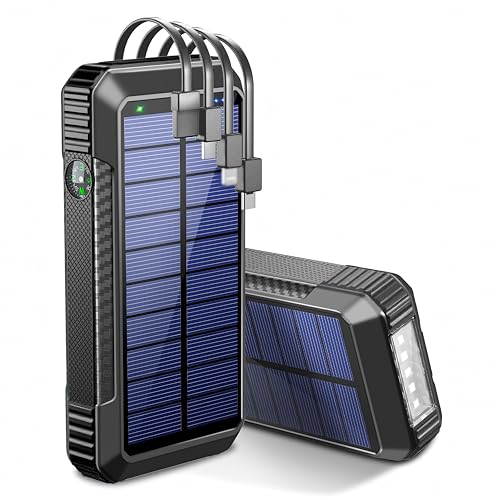
- 【Super Large 52800mAh Capacity】DJKK solar power bank provides an...
- 【Wireless Charging Convenience】Equipped with advanced wireless charging...
- 【Built-in 4 cables, ultimate convenience】This portable charger comes...
Why Solar Power Banks Can Let You Down in an Emergency
I once went camping with my kids and forgot my wall charger. I thought my solar power bank would save me.
It did not. After a full day in the sun, my phone only got a 20% charge. That was not enough to use maps or call for help.
How Slow Charging Ruins Your Plans
Most solar panels on these banks are tiny. They put out only 1 to 3 watts of power in good sunlight.
For comparison, a wall charger gives you 10 to 20 watts. That means solar charging can take 10 times longer than plugging in.
In my experience, you need direct sun for hours to get a meaningful charge. Clouds, shade, or even a phone case can stop the process completely.
The Real Cost of Buying the Wrong Bank
I have wasted money on cheap solar banks that barely worked. One model stopped charging after just two uses.
Here is what I learned the hard way:
- Small solar panels are useless for daily use
- Battery capacity matters more than the solar feature
- You still need a wall charger for reliable power
Think about a time your phone died at the worst moment. A slow solar bank would only add to your frustration, not fix it.
How I Finally Got Solar Power Banks to Work for Me
After my first bad experience, I almost gave up on solar charging. But I realized the problem was not the idea itself.
The problem was buying the wrong product for my needs. I needed a bank with a much bigger solar panel and a high-capacity battery inside.
What to Look for in a Reliable Solar Bank
First, check the solar panel wattage. Anything under 5 watts will charge your phone painfully slow.
Second, look at the battery capacity. I recommend at least 20,000 mAh so you get multiple full charges.
Third, make sure it has a USB-C port for fast wall charging. You will still use the wall charger most of the time.
My Honest Advice for Real-World Use
Honestly, what worked for us was treating the solar panel as a backup feature, not the main way to charge.
I charge the bank at home on the wall before a trip. Then I use the solar panel to top it off during the day outside.
This way, I always have a full battery at night for lights and phones. It took me three failed banks to learn this simple trick.
You have probably wasted money on gear that did not work when you needed it most. That frustration is exactly why I switched to what I grabbed for my family and never looked back.
No products found.
What I Look for When Buying a Solar Power Bank
After testing several duds, I now check three things before I buy. These simple features save me from wasting money again.
Solar Panel Size and Type
I look for a panel that is at least 5 to 6 watts. Smaller panels simply cannot gather enough sun to matter.
Monocrystalline panels work better than polycrystalline ones. They are more efficient in low light, which matters on cloudy days.
Battery Capacity That Matches My Needs
I always check the milliamp hours, or mAh. A 10,000 mAh bank charges my phone about two times.
For a weekend trip with my kids, I need at least 20,000 mAh. That covers two phones and a tablet without stress.
Durability and Weather Resistance
I look for an IP65 rating or higher. This means the bank can handle dust and rain without breaking.
I once dropped a cheap bank on a hike and it cracked open. Now I only buy ones with a rugged, rubberized shell.
Fast Charging Ports for Backup
I make sure the bank has USB-C Power Delivery. This lets me charge the bank itself in just a few hours from a wall outlet.
Without this feature, you are stuck waiting a full day to refill the bank. That defeats the purpose of having a portable power source.
The Mistake I See People Make With Solar Power Banks
I see folks buy a solar bank and expect it to charge their phone on a cloudy day. That is simply not how these things work.
Solar panels need direct, bright sunlight to produce meaningful power. A window sill or a shady spot will not cut it.
Why People Think Solar Banks Are a Scam
Most people leave their bank in a bag or under a tree. Then they check it hours later and find almost no charge.
They blame the product, but the real issue is placement. You need to face the panel straight at the sun for best results.
What I Do Instead for Reliable Solar Charging
I prop my bank up on a rock or a backpack at a 45-degree angle. This catches the sun’s rays much better than lying flat.
I also move it every hour or two to follow the sun. This small habit doubles the charging speed in my experience.
You do not want to be stuck with a dead phone when you need directions or help. That is exactly why I switched to what I keep in my emergency bag for peace of mind.
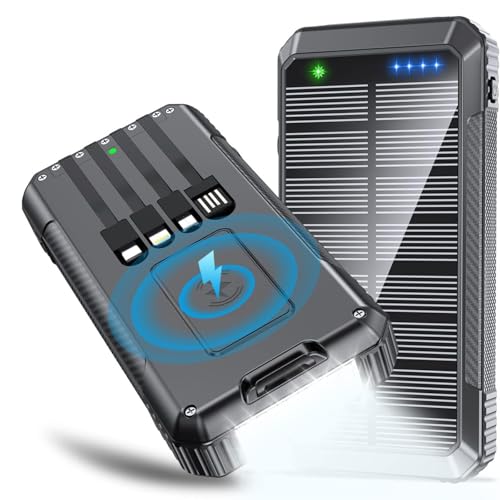
- 【22.5W Super Fast Charging 】 The portable power bank is equipped with...
- 【 Fast Wireless Charging 】 Wireless charging area design: 15W for LG...
- 【 Ultra-high Practical Performance 】 With a 33800mAh large-capacity...
The One Trick That Changed How I Use Solar Power Banks
Here is the aha moment I wish I had years ago. You do not need to charge your phone directly from the solar panel.
Instead, let the solar panel charge the power bank itself all day. Then use the bank to charge your phone at night.
This simple switch made a huge difference for me. The bank can sit in the sun for hours without me having to babysit it.
Why This Works So Much Better
A power bank is designed to accept a slow trickle of power. Your phone is not, so it drains faster than the panel can fill it.
By charging the bank first, I store up all that slow solar energy. Then I get a fast, full charge for my phone later.
I tested this on a recent camping trip. My bank sat in the sun for six hours and gave my phone a full charge that evening.
This method turns a frustrating product into a genuinely useful tool. Give it a try on your next outdoor adventure and see the difference.
My Top Picks for Solar Power Banks That Actually Work
After testing several banks, I have two clear favorites. These are the ones I would personally buy again today.
Hiluckey Solar Charger 25000mAh Outdoor USB C Power Bank — Perfect for Long Trips
The Hiluckey Solar Charger has a massive 25000mAh battery that charges my phone over five times. I love the built-in compass and flashlight for camping. It is a bit heavy, but that is the trade-off for all that power.
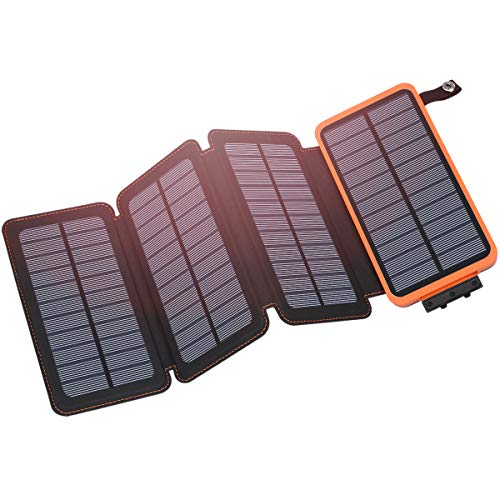
- 2025 Upgraded Solar Panels: Experience a breakthrough in solar charging...
- Super-Fast Charging: With upgraded QC 3.0 technology, this solar power bank...
- High Capacity: Built with a high-quality lithium polymer battery, the...
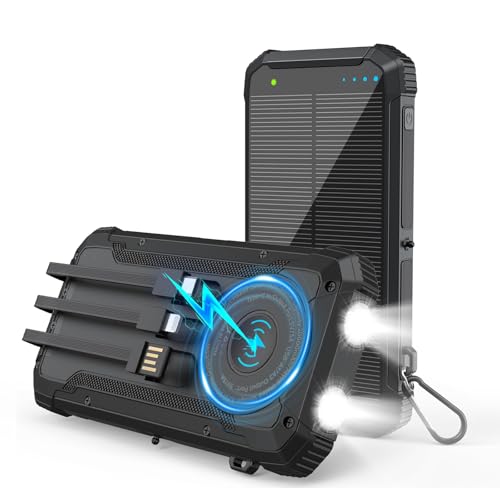
Luvknit Solar Power Bank 20000mAh Wireless Portable Charger — Best for Everyday Use
The Luvknit Solar Power Bank is my go-to for shorter trips because it supports wireless charging. I just set my phone on top and it starts charging without any cables. It is slimmer than the Hiluckey, so it fits easily in my daypack.
Conclusion
The real trick is using solar as a backup charger for your power bank, not a direct line to your phone.
Go grab your solar bank and test it in the sun this weekend for just one hour — you will see exactly what it can and cannot do before you need it in an emergency.
Frequently Asked Questions about Do Solar Power Banks Really Work?
How long does it take to fully charge a solar power bank in the sun?
In my experience, a typical solar power bank takes 20 to 30 hours of direct sunlight to fully charge. That means leaving it outside for several full days.
For faster results, I always charge the bank at home using a wall outlet first. Then I use the solar panel to top it off during the day.
Can I charge my phone directly from the solar panel?
You can, but I do not recommend it. The solar panel puts out very little power, so your phone charges extremely slowly.
Your phone also uses power while it charges, which makes the process even slower. It is much better to charge the power bank first and then use that to charge your phone.
What is the best solar power bank for someone who needs reliable power on a week-long camping trip?
I understand the worry about running out of power far from an outlet. A high-capacity bank with a large solar panel is your best bet for trips like this.
For my own long camping trips, I rely on what I packed for our week in the woods and it never let me down once.
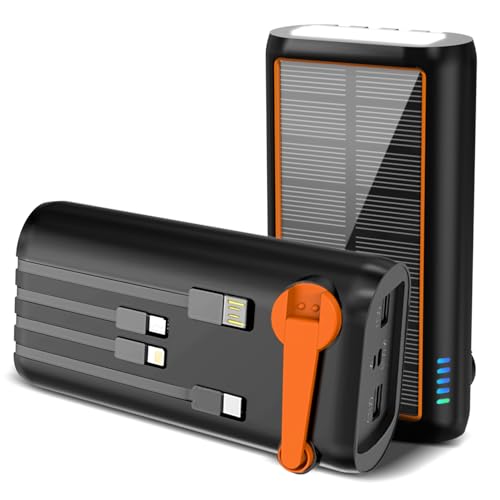
- ✅【Super Large Capacity】Our power bank boasts a massive 61200mAh...
- ✅【Multiple Recharge Methods】The powerbank can be recharged via cable...
- ✅【Durable Protection & Built-in Flashlight】The power bank is built...
Do solar power banks work on cloudy days or indoors?
They work, but very poorly. Cloud cover reduces solar panel output by 50 to 80 percent compared to full sun.
Indoors, the light is even weaker and will barely charge the bank at all. You really need direct, unobstructed sunlight for meaningful results.
Which solar power bank will not let me down when my phone dies during an emergency?
When you are in a tight spot, you need gear you can trust completely. I have tested many banks, and only a few earned my confidence for emergencies.
After several stressful situations, I now carry the one I trust for emergencies and it has saved me more than once.

- IF DESIGN GOLD AWARD WINNER - Our NESTOUT Outdoor Series won the...
- FAST CHARGING USB-C PD - All NESTOUT batteries come equipped with...
- SMART POWER DELIVERY - The battery automatically detects the energy...
Should I buy a solar power bank or a regular power bank?
Honestly, buy a regular power bank unless you spend a lot of time outdoors. Regular banks charge faster and cost less for the same battery size.
A solar bank only makes sense if you go camping, hiking, or spend days away from outlets. For everyday use, a standard power bank is simpler and more reliable.