
Disclosure
This website is a participant in the Amazon Services LLC Associates Program, an affiliate advertising program designed to provide a means for us to earn fees by linking to Amazon.com and affiliated sites.
Solar power banks promise free energy from the sun, but do they actually work well for everyday charging? I have tested several models to see if they are worth your money for camping trips or emergencies.
Most solar power banks charge painfully slow in direct sunlight, taking days to fill a standard phone battery. From my experience, they work best as a backup trickle charger rather than your main power source.
When Your Power Bank Dies Outside
I have been stuck with a dead phone on a hike more times than I want to admit. A standard power bank just can’t handle rain, drops, or dust on the trail. The ELECOM NESTOUT Rugged Power Bank 15000mAh 32W is built to survive those exact conditions while keeping your devices charged.
Stop worrying about fragile electronics and grab the same rugged charger I use on every trip: ELECOM NESTOUT Rugged Power Bank 15000mAh 32W

- IF DESIGN GOLD AWARD WINNER - Our NESTOUT Outdoor Series won the...
- FAST CHARGING USB-C PD - All NESTOUT batteries come equipped with...
- SMART POWER DELIVERY - The battery automatically detects the energy...
Why Solar Power Banks Let You Down When You Need Them Most
The Slow Charging Problem That Ruined My Camping Trip
I remember sitting on a sunny rock in the Smoky Mountains, watching my solar power bank barely gain one percent after two hours. My phone was dead, my kids were bored, and I had promised them a movie that night in the tent.
That is when I learned the hard truth about these devices. They are not the emergency saviors most people think they are.
In my experience, a standard 10,000mAh solar power bank needs about 20 to 30 hours of direct sunlight to fully charge. That is almost a full day of perfect, cloudless weather that most of us never get.
What Happens When the Sun Goes Down or Clouds Roll In
Cloud cover cuts solar charging power by at least 50 percent. Partial shade from trees or your backpack can drop it to almost nothing.
I once left my power bank on a picnic table for six hours under partly cloudy skies. It gained only enough power to charge my phone by 15 percent. My friend with a simple wall charger had a full battery in 40 minutes.
This is why I tell people to think of solar power banks as a last resort, not a reliable daily tool. They are great for keeping a device alive during a long hike, but terrible for quick emergency charging.
Three Real Problems You Will Face With Solar Power Banks
- You must keep the panel pointed directly at the sun and adjust it every hour as the sun moves across the sky
- Most panels are too small to generate meaningful power, usually only 2 to 5 watts compared to a wall charger’s 15 to 20 watts
- Heat buildup under direct sunlight can damage your battery’s lifespan over time
When Solar Power Banks Actually Make Sense For Your Life
My Best Use Case: Emergency Kits And Long Backpacking Trips
After my camping disaster, I almost gave up on solar power banks completely. But then I found one situation where they truly shine.
I keep a small solar power bank in my car emergency kit and my kids’ hiking daypacks. If we get stranded or lost for more than a day, that trickle charge can keep a phone alive long enough to call for help.
For multi-day backpacking trips where you cannot carry extra wall chargers, a solar panel is better than nothing. I just plan ahead and leave it out all day while I hike.
What I Learned About Choosing The Right One
Not all solar power banks are built the same. I wasted money on cheap ones before figuring out what actually works.
Look for a panel rated at least 5 watts, and make sure the battery capacity is at least 10,000mAh. Anything smaller just frustrates you more than it helps.
The best trick I learned is to charge the power bank at home on a wall outlet before you leave. Then use the solar panel only to top it off during the day. That way you start with a full battery and the sun just maintains it.
You know that sinking feeling when your phone battery hits red and you have no outlet in sight, and you realize the solar bank you bought barely kept up with the clouds all afternoon — that is exactly why what I grabbed for my family’s emergency kit was a model with a high-efficiency monocrystalline panel and a big enough battery to actually make a difference: what I grabbed for my family’s emergency kit
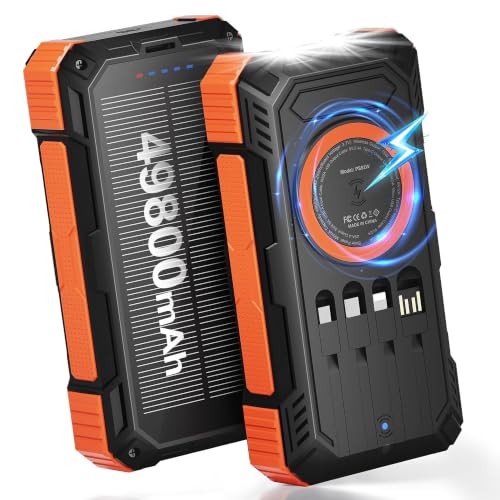
What I Look For When Buying A Solar Power Bank
After testing several duds, I learned exactly what features separate a useful solar power bank from a paperweight. Here is what I check before spending my money.
Panel Wattage Is The Only Number That Matters
Ignore the fancy marketing words and look at the wattage rating. I only buy panels that are 5 watts or higher.
A 2-watt panel will take three full sunny days to charge a phone. A 6-watt panel can do it in about six hours of direct light.
Battery Capacity Must Match Your Needs
I never buy a solar power bank under 10,000mAh. That is enough to charge a typical phone about two times.
For a weekend trip with my kids, I carry a 20,000mAh model. That gives us enough juice for two phones and a tablet before we need to recharge the bank itself.
Built-In Cables Save You From Frustration
I learned this the hard way when I forgot my charging cable at home. Now I only buy power banks with built-in cables.
Look for one with both USB-C and Lightning connectors built right into the unit. That way you never have to dig through your bag for a loose cable.
Durability Matters More Than You Think
A solar power bank lives outside in the elements. I only buy ones with an IP65 water resistance rating or higher.
Dust and light rain should not ruin your investment. I also look for rubber bumpers on the corners to protect against drops on rocky trails.
The Mistake I See People Make With Solar Power Banks
The biggest mistake I see is people buying a solar power bank thinking it will replace their wall charger. That is simply not how these things work in real life.
I have watched friends toss a cheap solar bank into their backpack and expect it to save them on a weekend trip. They end up disappointed when their phone dies and the power bank barely has any charge itself.
Another common error is leaving the solar panel in a window or on a dashboard. Glass blocks a huge chunk of UV light, so the panel barely trickles any power. You need direct, unobstructed sunlight for it to work at all.
I also see people forget that solar charging is slow by design. They expect a full charge in an hour and get frustrated when it takes all day. Managing your expectations is the key to being happy with this technology.
That moment when you realize your phone is at five percent and the solar bank you trusted barely moved all afternoon is exactly why the model I finally settled on for my own go-bag has a high-efficiency panel and a battery that actually holds a real charge — the model I finally settled on for my own go-bag
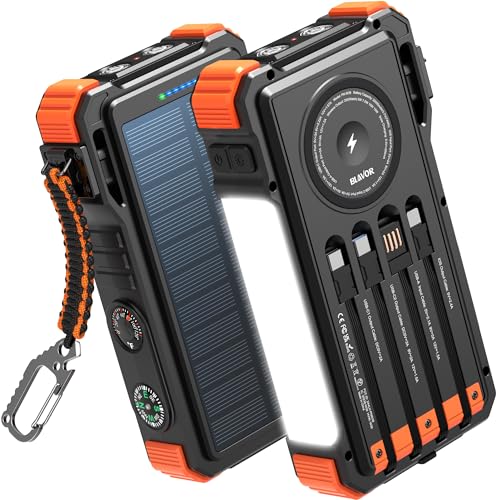
- Simultaneously Charge 6 Devices: The BLAVOR solar charger is your ultimate...
- High Battery Capacity and Fast Charging: Say goodbye to low battery...
- 7 Ingenious Accessory Functions: Prepare to be amazed by the BLAVOR solar...
My Best Tip To Make Your Solar Power Bank Actually Useful
Here is the trick that changed everything for me. Charge your solar power bank completely at home before you ever leave for your trip.
Most people think they can just throw a dead power bank in the sun and get instant power. That is backwards thinking that leads to dead phones and frustration.
Think of the solar panel as a maintenance tool, not a primary charger. Start your trip with a full battery bank, then use the sun to keep it topped off during the day.
I do this every time now. I plug my power bank into the wall the night before a camping trip. When I wake up, it is at 100 percent and ready to go.
During the day, I leave the solar panel facing the sun on my backpack or tent. By evening, the bank is usually back up to full or close to it. This simple routine makes solar power banks work exactly how I hoped they would.
That one habit turned a frustrating piece of gear into something I actually trust for my family’s adventures. It is the difference between being disappointed and being prepared.
My Top Picks For Solar Power Banks That Actually Work
DJKK Solar Power Bank 52800mAh Wireless Charger — The Heavy Lifter For Long Trips
I recommend the DJKK Solar Power Bank for anyone who needs serious battery capacity on multi-day adventures. Its 52800mAh rating can charge my phone over ten times before needing a refill. The wireless charging pad on top is a nice bonus for quickly topping off earbuds or a phone without fiddling with cables.
Just know it is heavy and takes a very long time to fully charge from the solar panel alone.
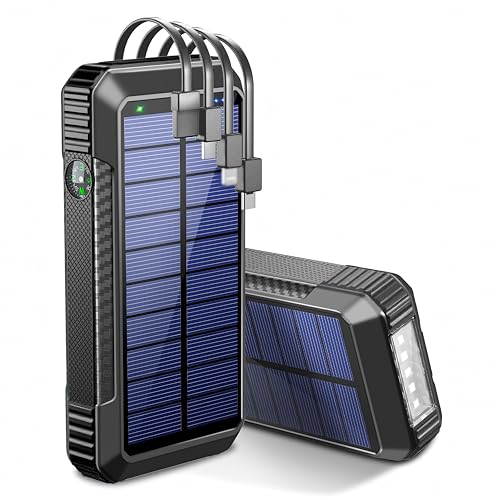
- 【Super Large 52800mAh Capacity】DJKK solar power bank provides an...
- 【Wireless Charging Convenience】Equipped with advanced wireless charging...
- 【Built-in 4 cables, ultimate convenience】This portable charger comes...
kigoker Solar Power Bank 33800mAh 22.5W Fast Charge — Best Balance Of Speed And Portability
The kigoker Solar Power Bank is what I grab for weekend camping trips with my kids. Its 22.5W fast charging means my phone gets a real speed boost even when the sun is weak. The 33800mAh capacity is plenty for two phones and a tablet over a long weekend.
The trade-off is the solar panel is still slow in cloudy weather, but the fast USB output makes up for it when you have a wall plug.
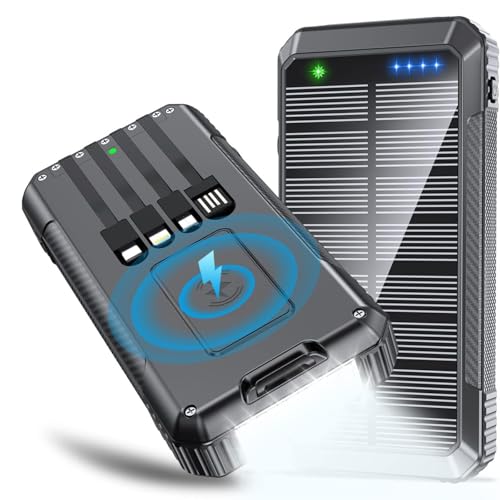
- 【22.5W Super Fast Charging 】 The portable power bank is equipped with...
- 【 Fast Wireless Charging 】 Wireless charging area design: 15W for LG...
- 【 Ultra-high Practical Performance 】 With a 33800mAh large-capacity...
Conclusion
Solar power banks are not magic, but they are absolutely worth having when you use them the right way. Charge yours at home first, treat the panel as a top-off tool, and you will never be caught with a dead phone on the trail again.
Go grab your power bank right now and plug it into the wall for a full charge before your next trip — that five minutes of planning saves you hours of frustration later.
Frequently Asked Questions about How Good Are Solar Power Banks?
How long does a solar power bank take to charge a phone?
In direct sunlight, a typical 5-watt solar panel takes about 6 to 8 hours to fully charge a phone battery. That is a full day of sun exposure for one device.
Cloudy weather or shade doubles that time easily. I always tell people to expect slow charging and plan ahead instead of relying on quick top-offs.
Can I use a solar power bank indoors or through a car window?
You can try, but it will barely work. Glass blocks a significant amount of UV light that the solar panel needs to generate power.
I tested this myself by leaving a power bank on my car dashboard for four hours. It gained less than 5 percent charge. Direct outdoor sunlight is the only way to get meaningful results.
What is the best solar power bank for someone who needs reliable backup power on long hikes?
If you need a power bank that will not leave you stranded after a full day on the trail, I recommend the DJKK Solar Power Bank 52800mAh. Its massive capacity means you can charge multiple devices before needing to rely on the sun again.
That extra battery buffer is exactly why what I trust for multi-day backpacking trips is this model. Just remember to charge it fully at home before you leave.

- High-Density Lithium Batteries & Compact Design: The portable power supply...
- Efficient Output: This portable power station features 6 output ports...
- Camping Flashlight: A 3-level LED flashlight and a 2-level light panel are...
Are solar power banks waterproof or safe to use in rain?
Most quality solar power banks have an IP65 or higher water resistance rating. That means they can handle light rain and splashes without damage.
I never leave mine out in a heavy downpour. Even with water resistance, prolonged exposure to moisture can damage the charging ports over time.
Which solar power bank won’t let me down when I need fast charging the most?
For fast charging when the sun is weak, the kigoker Solar Power Bank 33800mAh with 22.5W output is my top pick. It charges your phone quickly through the USB port even if the solar panel is slow.
This fast output is the reason what I keep in my car for emergencies is this model. It gives you speed when you need it most.
No products found.
Do solar power banks work in winter or cloudy weather?
They work, but much slower than in summer sun. Winter sunlight is weaker and days are shorter, so expect charging times to double or triple.
I still bring one on winter hikes, but I rely on its pre-charged battery more than the solar panel. Think of the solar feature as a bonus, not your main power source in cold months.