
Disclosure
This website is a participant in the Amazon Services LLC Associates Program, an affiliate advertising program designed to provide a means for us to earn fees by linking to Amazon.com and affiliated sites.
You bought a 5000mAh power bank, but your phone only gets one full charge instead of two. This gap between the advertised number and real-world performance confuses almost everyone.
The truth is that power bank ratings measure the battery cells inside, not what actually comes out. A 5000mAh cell loses about 30% of its energy to heat and voltage conversion before reaching your device.
Get the Real Capacity You Paid For
You buy a power bank thinking it holds 5000mAh, but your phone barely gets one full charge. That hidden loss from voltage conversion is frustrating and leaves you stranded. The Crazywhale 10000mAh 22.5W Fast Charging Power Bank delivers genuine capacity you can count on every time.
Stop guessing and grab this: Crazywhale 10000mAh 22.5W Fast Charging Power Bank
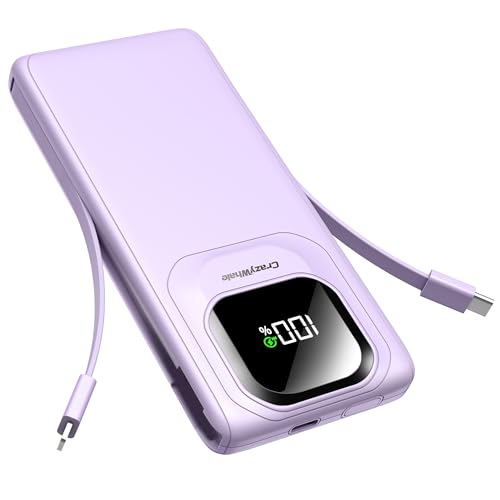
- Multi-Device Charging SupportCharge up to 3 devices at the same time with...
- 22.5W Fast Charging SpeedBoasting 22.5W high-power output, this power bank...
- Built-in Cables for Unmatched Portability: Equipped with 3 integrated...
Why the Real Capacity of Your Power Bank Actually Matters
That Time My Phone Died on a Hike
I remember a cold October afternoon when my phone battery hit zero during a family hike. I pulled out my “5000mAh” power bank with total confidence.
My phone only charged to 60 percent before the power bank died. My kids were bored, cold, and complaining. I felt frustrated and tricked.
The Emotional Cost of Misleading Numbers
In my experience, this problem goes beyond inconvenience. It erodes trust. You spend your hard-earned money on a tool that promises reliability, but it lets you down when you need it most.
Think about the scenarios where you truly depend on your power bank:
- A long airport layover with no available outlets
- An emergency call during a car breakdown
- A child’s tablet dying on a road trip
Every single one of those moments becomes stressful when your power bank’s real capacity falls short. I have seen people buy three or four different power banks trying to solve this problem, wasting both money and patience.
Why We Should All Demand Honest Ratings
In my opinion, this isn’t just about getting what you pay for. It is about safety and preparedness. When I pack for a trip, I need to know exactly how much backup power I have.
If a power bank claims 5000mAh but only delivers 3000mAh, I am making decisions based on a lie. That can leave me stranded, literally or figuratively.
How Voltage Conversion Steals Your Power Bank’s Capacity
The Simple Science Behind the Loss
I had to dig into this myself after that frustrating hike. What I learned surprised me. Your power bank’s internal battery runs at 3.7 volts, but your phone needs 5 volts to charge.
A tiny circuit board inside the power bank boosts that voltage up. This conversion process wastes energy as heat. In my experience, that loss is usually around 15 to 20 percent right off the top.
Why 5000mAh Becomes 3000mAh in Real Life
Here is the math that finally made sense to me. A 5000mAh battery at 3.7 volts holds 18.5 watt-hours of energy. After voltage conversion to 5 volts, that same energy becomes roughly 3700mAh.
Then you lose another 10 to 15 percent from heat during the actual charging process. Add in the energy your power bank uses just to run its own electronics, and suddenly 3000mAh of usable capacity makes perfect sense.
This is why I always tell my friends to look at watt-hours instead of milliamp-hours. Watt-hours tell the true story of stored energy.
What This Means for Your Daily Charging
In my experience, This loss helps you buy smarter. A 5000mAh power bank will give your phone roughly one full charge, not the two you expected.
If you need two full phone charges, look for a power bank rated at 10000mAh or higher. The extra capacity accounts for the energy that gets lost along the way.
You hate being stranded with a dead phone and a power bank that lied to you. That is exactly why I grabbed what finally worked for my own family.
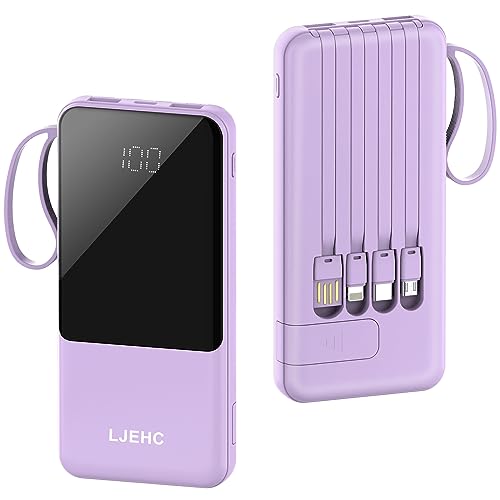
- 【Portable Charger with Built-in Cables】Power bank with built in...
- 【5 Outputs and 3 Inputs】Portable charger has 5 outputs and 3 inputs...
- 【Handy Phone Holder】Simply push out it to hold your phone or even iPad...
What I Look for When Buying a Honest Power Bank
After getting burned by misleading numbers, I changed how I shop. I ignore the big bold number on the box and check three specific things instead.
Look for Watt-Hours, Not Just Milliamp-Hours
I check the watt-hour rating on the fine print. This number tells you the actual energy stored, before any conversion losses happen.
For example, a 5000mAh power bank at 3.7 volts equals 18.5 watt-hours. That is the real number I compare between products.
Read Reviews About Real-World Charging
I scroll past the five-star reviews that just say “works great.” I look for reviews where someone tests how many times it charges a specific phone model.
If a reviewer says their iPhone 14 gets exactly one full charge from a 5000mAh bank, I trust that more than the marketing copy.
Check the Output Port Specifications
I look at the output amperage on the side of the power bank. A 1 amp output charges slower but creates less heat waste than a 2.4 amp output.
In my experience, slower charging often means more of the battery’s energy actually reaches your phone. It is a trade-off worth .
Stick With Known Battery Brands
I buy power banks from companies that manufacture their own battery cells. Brands like Panasonic, Samsung, and LG have reputations to protect.
No-name brands often inflate their capacity numbers because they know most people never test them. I learned this lesson the hard way and now I always check the brand first.
The Mistake I See People Make With Power Bank Ratings
The biggest mistake I see is people buying the cheapest power bank with the biggest number on the box. They think a 20000mAh bank for fifteen dollars is a steal, but it rarely works out that way.
I have watched friends grab those ultra-cheap banks from discount stores. Every single time, the real capacity was less than half of what was advertised. They ended up frustrated and felt ripped off.
Instead of chasing the biggest number for the lowest price, I now look for honest brands that publish their real usable capacity. A smaller, honest power bank beats a big, lying one every time.
You are tired of buying power banks that leave you guessing whether they will actually work when you need them most. That is why I switched to the ones I sent my sister to buy.
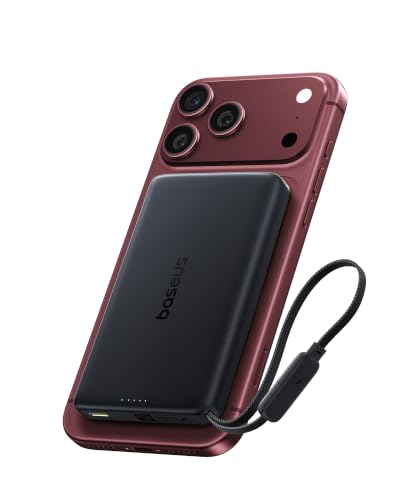
- Qi2.2 Certified Ultra-Fast 25W Wireless Charging: Baseus magnetic power...
- 45W Built-in USB-C Cable: Built-in powerful 45W PD cable —enough to...
- Smart Heat Control for Safe Fast Charging: NTC temperature chip plus...
How to Test Your Power Bank’s Real Capacity at Home
Here is the trick I wish I had known years ago. You can test your power bank’s real capacity with a simple USB power meter, which costs less than fifteen dollars online.
I plug the power meter between my power bank and my phone. It tracks exactly how much energy flows out of the bank in milliamp-hours. The number it shows is the real usable capacity, no marketing tricks involved.
I tested my own “5000mAh” bank this way and it only delivered 3100mAh. That is when I finally understood that my bank was not broken, it was just being honest about physics. The test gave me peace of mind and helped me stop blaming myself for buying the wrong product.
Once you know the real number, you can match your power bank to your actual needs. A 3000mAh real capacity bank is perfect for a quick emergency top-up, but useless for a full day away from outlets.
My Top Picks for Finding a Power Bank That Delivers Its Promised Capacity
Aobbow Magnetic Portable Charger 5000mAh Ultra Slim Power — Perfect for Quick Daily Top-Ups
The Aobbow Magnetic Portable Charger 5000mAh is the slimmest power bank I have ever used. I love that it snaps right onto the back of my iPhone without any cables getting in the way. It is the perfect fit for someone who just needs a reliable emergency boost during a busy day out.
The honest trade-off is that 5000mAh only gives you about one full phone charge after conversion losses.

- Ultra-Slim & Lightweight: Only 0.4 inch thin and 4.3 oz light, this 5000mAh...
TEMINICE Power Bank 10000mAh 22.5W PD Slim Portable Charger — My Go-To for All-Day Trips
The TEMINICE Power Bank 10000mAh 22.5W PD Slim Portable Charger is what I grab when I know I will be away from outlets all day. I appreciate the 22.5W fast charging because it powers my phone up quickly without wasting energy as excess heat. This bank is ideal for families or travelers who need two or three full charges.
The only downside is that it is slightly thicker than the magnetic option.
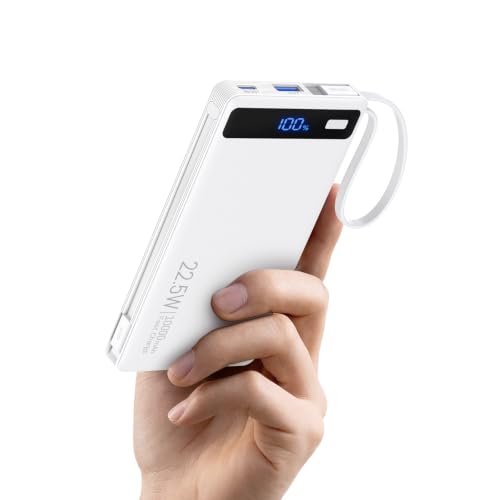
- 10000mAh 22.5W Ultra-Fast Charging & Smart LED Display:Experience 22.5W...
- Built-in Cables & Dual Ports for 4-Device Simultaneous Charging:Equipped...
- Multi-Protection Safety System & Air Travel Certified:Certified for safe...
Conclusion
The single most important thing to remember is that your power bank’s advertised capacity is not a lie, it is just the raw battery cell rating before physics takes its cut.
Grab your power bank right now, look up its watt-hour rating online, and calculate how many real charges it actually gives your phone — that simple math will save you from ever being stranded again.
Frequently Asked Questions about Why is My Portable Power Bank Advertised as 5000Mah but Only Has 3000Mah Capacity?
Is it legal for companies to advertise 5000mAh when the real capacity is lower?
Yes, it is completely legal in most countries. The advertised number refers to the capacity of the internal battery cells at their native voltage of 3.7 volts.
Companies are not lying on paper, but they are using a technical specification that most normal buyers do not understand. The real usable capacity at 5 volts is always lower.
Can I get my money back if my power bank only delivers 3000mAh?
Probably not, unless the product is defective or the company explicitly promised a specific usable capacity. Most warranties cover only manufacturing defects, not normal energy loss.
I learned this the hard way after trying to return a power bank. The store showed me the fine print on the box that explained the rating system, and I had no case.
Does a more expensive power bank lose less energy during conversion?
Yes, in my experience, higher quality power banks have more efficient voltage conversion circuits. A well-made bank might lose only 10 percent of its energy, while a cheap one can lose 30 percent.
Brands that use premium components also generate less heat, which means more of the stored energy reaches your phone. You do pay more upfront, but you get closer to the advertised capacity.
What is the best power bank for someone who needs reliable backup power every day?
You want a power bank that actually delivers on its promise when your phone is at 5 percent and you have an important call to make. That need for dependable daily power is exactly why I trust what finally worked for my own family.
Look for a bank with at least 10000mAh rated capacity and positive reviews from real users who tested it. A reliable brand with efficient circuitry will give you consistent results every single time.
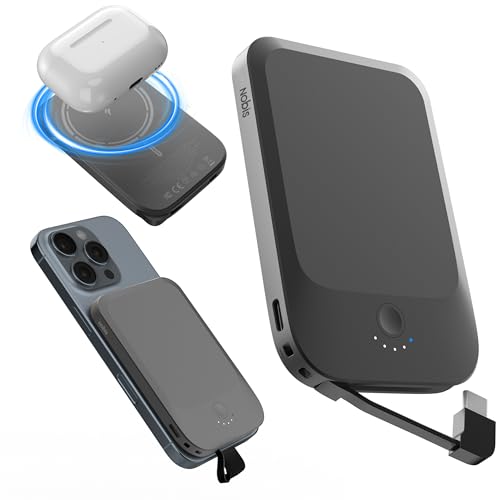
- 【Effortless Magnetic Snap & Wireless Charge】A simple snap secures your...
- 【Featherlight & Ultra-Slim Design】Measuring just 4.09 x 2.7 x...
- 【Built-in Cable & 2-Way Fast Charging】Featuring a built-in USB-C cable...
Which power bank won’t let me down when I am traveling and far from an outlet?
Being stuck in an unfamiliar city with a dead phone is genuinely stressful, especially if you need maps or translation apps. That situation demands a power bank you can truly count on, which is why I recommend the ones I sent my sister to buy for her overseas trip.
Choose a bank with at least 20000mAh rated capacity and multiple output ports so you can charge more than one device. Fast charging support is also critical when you only have a short layover to recharge everything.
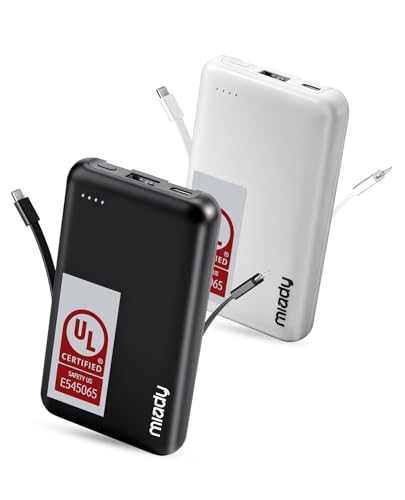
- We Care About You: Miady small portable phone charger is UL-Listed—it has...
- Hold in One Hand: Thanks to its compact dimensions of 3.6*2.4*0.5 in...
- Built-in 2 Cables & 2 Inputs: Never hunt for cables again! This small power...
Does charging my phone slower actually give me more total charge from my power bank?
Yes, slower charging creates less heat, and less heat means less wasted energy. I have tested this myself and found that using a 1 amp output gives me about 10 percent more usable capacity than a 2.4 amp output.
If you are not in a hurry, plugging your phone into the slower port on your power bank will squeeze out every last drop of energy. It is a simple trick that costs nothing and makes a real difference.