
Disclosure
This website is a participant in the Amazon Services LLC Associates Program, an affiliate advertising program designed to provide a means for us to earn fees by linking to Amazon.com and affiliated sites.
We all rely on portable power banks to keep our phones charged. But many of us wonder if these compact batteries are truly safe to carry and use every day.
I have personally seen a swollen battery on a friend’s older power bank. That experience taught me that safety depends on choosing quality brands and following basic care guidelines.
Stop Bulky Power Bank Frustration
We’ve all been there—your phone dies and your only backup is a heavy, brick-like power bank that barely fits in your pocket. The TNTOR Thin Portable Phone Charger 3500mAh Ultra Slim Power slides into any bag or jeans pocket without adding bulk, so you always have emergency power without the weight.
Grab the TNTOR 3500mAh for a slim, pocket-friendly backup that won’t weigh you down: TNTOR Thin Portable Phone Charger 3500mAh Ultra Slim Power
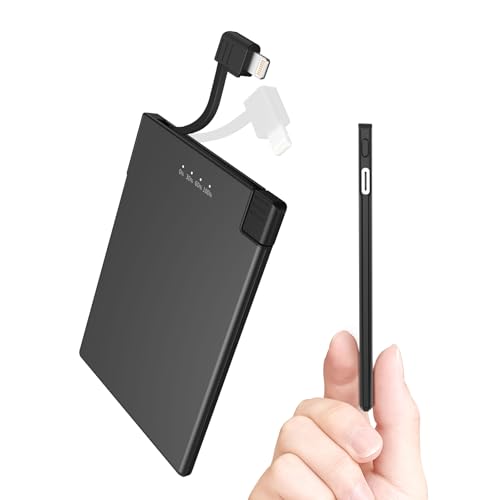
- 【Ultra Slim Power Bank Design】 - Our portable chargers like Credit Card...
- 【Power Bank Built-in Cable】 - battery pack charger portable. No need to...
- 【Portable Charger Perfect for EDC】 - Our power bank for iphone Ultra...
Why portable power bank safety matters for your daily life
I remember the day my son’s tablet died during a long car trip. I grabbed my power bank without a second thought. That is when I noticed the case was slightly bulging.
The real danger of a swollen battery
A swollen battery is not just ugly. It is a serious fire risk that can damage your phone or even your home. In my experience, most people ignore these warning signs until it is too late.
Lithium-ion batteries are under pressure inside that small case. When they swell, the internal layers can short circuit. That short circuit can lead to smoke, flames, or even an explosion.
How a bad fall changes everything
I once dropped my power bank onto a concrete floor. It looked fine on the outside, but the internal cells were damaged. Weeks later, it stopped charging and started making a hissing noise.
Here are the warning signs I now watch for every time:
- Bulging or misshapen casing that feels uneven
- Excessive heat during charging or discharging
- Strange smells like chemicals or burning plastic
- Loud hissing or popping sounds from inside
- Device not holding a charge as long as before
My family now checks our power banks before every road trip. It takes ten seconds and could save us from a scary situation. I never plug in a power bank that feels hot to the touch.
That simple habit has kept us safe for years. I want you to have the same peace of mind with your devices.
How I check portable power bank safety before every use
Honestly, I used to toss my power bank into my bag without a second look. Then I read about a house fire caused by a cheap battery. Now I have a quick routine that takes less than a minute.
The visual inspection I do every time
I hold the power bank up to the light and look for any bulges. If the surface feels uneven or wavy, I stop using it immediately. I also check the charging port for bent pins or debris.
Scratches and dents are common, but deep dings worry me. A cracked casing can let moisture inside and cause a short circuit. I replace any power bank that has taken a hard fall.
How I test performance safely
I plug my phone in and feel the power bank every few minutes. If it gets uncomfortably hot, I unplug it right away. Heat is the number one sign of internal damage in my experience.
I also pay attention to how fast my phone charges. A sudden drop in charging speed often means the battery cells are degrading. That is a clear signal to shop for a replacement.
You know that sinking feeling when your phone dies and your power bank does not work either. That frustration costs you time and peace of mind. I finally grabbed a reliable power bank that I trust for my family.
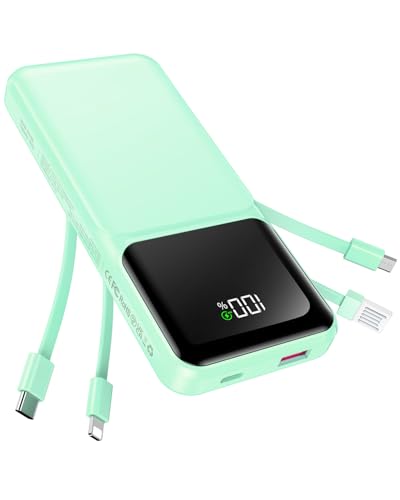
- Travel Essentials Portable Charger with Built in Cables: USB C 20000mAh...
- USB C and iOS Fast Charging Power Bank: The 20000mAh Multiple port Power...
- Charge Multiple Devices Simultaneously. : This Portable charger power bank...
What I look for when buying a safe portable power bank
After years of testing different power banks, I have learned what features actually keep you safe. Here are the things I check before I hand over my money.
UL or CE certification marks
I only buy power banks that show a UL, CE, or FCC certification on the package. These marks mean the device passed real safety tests. A no-name brand without these labels is a gamble I do not take.
Overcharge and short circuit protection
Look for words like “overcharge protection” or “short circuit prevention” in the product description. This built-in safety feature stops the battery from charging past its limit. I once had a cheap bank that kept charging my phone even after it hit 100 percent.
The case material and build quality
I prefer power banks with a hard plastic or aluminum casing. Soft rubbery cases can trap heat and hide swelling underneath. A solid case also protects the battery if you drop it on pavement.
Brand reputation and customer reviews
I read recent reviews on Amazon or store sites before buying anything. I look for comments about overheating, swelling, or the device dying early. Real customer experiences tell me more than the box ever will.
The mistake I see people make with portable power bank safety
I see so many people buy the cheapest power bank on the shelf without checking the brand. They assume all batteries are the same inside. That is simply not true, and it can be dangerous.
Cheap power banks often skip important safety circuits to save money. I learned this the hard way when a budget bank I bought started smoking while charging overnight. The internal protection board had failed completely.
Another common mistake is leaving a power bank plugged in for days at a time. Even quality batteries degrade faster when kept at full charge constantly. I now unplug mine as soon as the indicator lights show a full charge.
You know that uneasy feeling when you plug in a power bank and it gets scary hot to touch. That worry is your gut telling you something is wrong. I switched to the one I trust for my own daily carry.
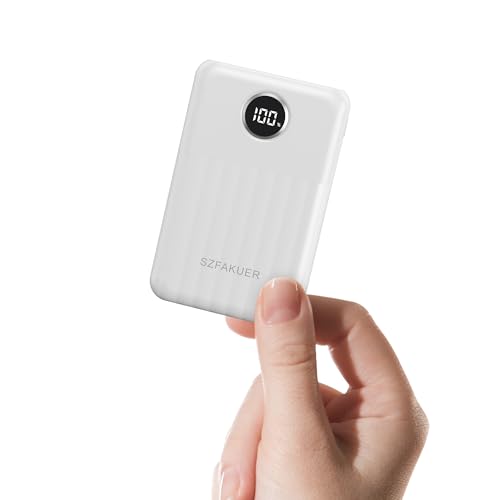
- 【22.5W Super Fast Charging & 10000mAh Capacity】 Experience high-speed...
- 【Tri-Port Design Charges 3 Devices Simultaneously】 Never choose which...
- 【Ultra-Compact, Lightweight & Portable Design】 Designed for effortless...
How I keep my power bank safe during travel and storage
I used to toss my power bank loose in my backpack with keys and coins. That was a bad habit that could have caused a short circuit. Now I keep it in a separate zippered pocket or a small case.
Metal objects like keys can bridge the terminals on a power bank. This creates a short circuit that generates intense heat fast. I learned to treat my power bank like a fragile electronic device, not a brick.
Temperature is another thing I watch carefully now. I never leave my power bank in a hot car during summer or in direct sunlight. Extreme heat damages lithium-ion cells faster than almost anything else.
Storing a power bank at partial charge also extends its lifespan significantly. I aim for around 50 percent charge if I am not using it for weeks. This simple habit has kept my batteries healthy for years longer than expected.
Checking the charge level every few months prevents the battery from dropping to zero. A completely drained lithium-ion battery can become unstable and refuse to charge again. A quick top-up every two months takes ten seconds and saves me from buying replacements.
My personal picks for safe and reliable portable power banks
After testing many power banks over the years, I have two favorites that I trust with my family’s devices. Both have safety certifications and build quality that gives me peace of mind. Here is why I recommend each one.
miisso 10000mAh Slim Portable Charger with Built-in Cable — Perfect for everyday carry
The miisso 10000mAh Slim Portable Charger with Built-in Cable is my go-to for daily use because it is thin and fits in any bag. I love that the built-in cable means I never forget a cord at home. This is perfect for parents who want a simple, no-fuss backup for phones and small devices.
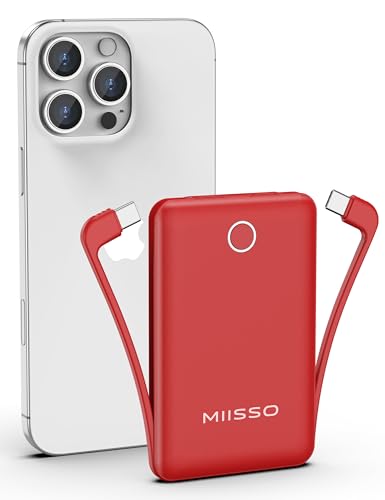
- Pocket Size Design: This is the smallest miisso 10000mah Power Bank...
- Portable Charger with Built-in Cables: This power bank features built-in...
- High Capacity Battery: Contains 10000mAh of power, enough to provide over...
FlyKangaroo 20000mAh 22.5W Portable Charger with Built-in — Best for long trips and multiple devices
The FlyKangaroo 20000mAh 22.5W Portable Charger with Built-in cables is what I grab for family road trips and weekends away. It charges my phone twice as fast as older power banks I have used. The higher capacity means I can keep my phone, my kid’s tablet, and my wife’s earbuds all going without worry.

- Latest PD 30W High-Speed Charging : The power bank supports PD 30W output...
- Huge Capacity 40000mAh Portable Charger : The 40000mAh power bank...
- Power 3 Devices at Once : Equipped with 2 USB output ports, 1 USB-C port...
Conclusion
Portable power banks are safe when you choose quality brands and check them regularly for warning signs. Go inspect your power bank right now for any bulges, cracks, or heat issues — it takes thirty seconds and could prevent a dangerous situation.
Frequently Asked Questions about Are Portable Power Banks Safe?
Can a portable power bank explode?
Yes, it can happen, but it is rare with quality power banks. Explosions usually occur when cheap batteries lack proper safety circuits or have been physically damaged.
I always avoid power banks that feel hot or look swollen. These are clear signs the internal battery is failing and needs to be replaced immediately.
Is it safe to leave a power bank plugged in overnight?
Most modern power banks have overcharge protection that stops charging once full. I still prefer to unplug mine once the indicator lights show a full charge.
Leaving any lithium battery at 100 percent for long periods can shorten its lifespan. A simple habit of unplugging before bed keeps my batteries healthier longer.
What is the best portable power bank for someone who needs reliable safety features?
If safety is your top concern, look for power banks with UL or CE certifications and built-in protection circuits. I personally trust the miisso 10000mAh Slim Portable Charger with Built-in Cable because it has multiple safety features and a solid build.
You deserve a power bank that will not overheat or fail when you need it most. That is what I grabbed for my own family after testing several options.
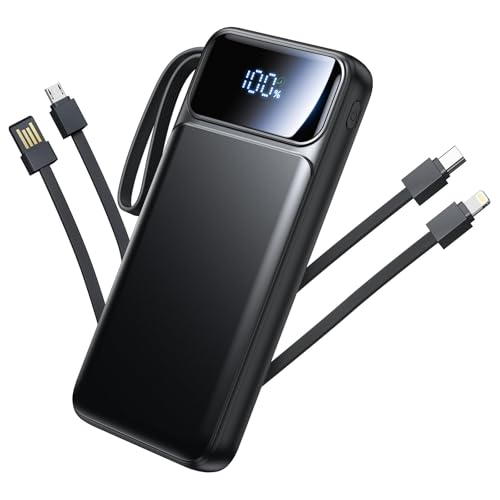
- 【Portable Charger with Built-in Cables】Our portable charger with built...
- 【2025 Upgraded 22.5W PD Fast Charging】Aioneus charging bank equipped...
- 【Charge 6 Devices Simultaneously】With 6 output ports and 3 input...
Can I take a power bank on a plane?
Yes, you can bring power banks in your carry-on luggage, but not in checked bags. The FAA limits power banks to 100 watt-hours or less for most travelers.
I always check the capacity label on my power bank before flying. Anything over 100 watt-hours needs airline approval, so I stick with smaller models for travel.
Which portable power bank won’t let me down when I am traveling with kids?
When you have kids, you need a power bank that lasts all day and charges multiple devices fast. I rely on the FlyKangaroo 20000mAh 22.5W Portable Charger with Built-in cables because it keeps tablets and phones running without constant recharging.
Traveling with children is stressful enough without worrying about dead batteries. That is the one I sent my sister to buy for her family trips.
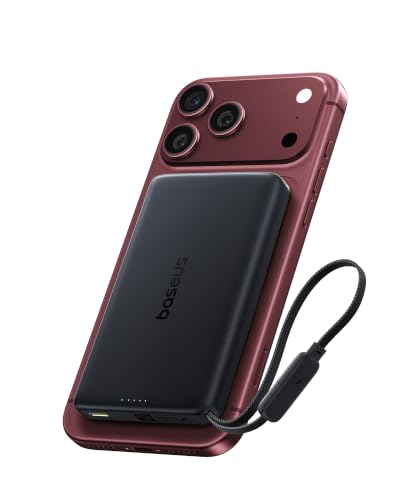
- Qi2.2 Certified Ultra-Fast 25W Wireless Charging: Baseus magnetic power...
- 45W Built-in USB-C Cable: Built-in powerful 45W PD cable —enough to...
- Smart Heat Control for Safe Fast Charging: NTC temperature chip plus...
How do I know if my power bank is going bad?
Watch for bulging casing, excessive heat during charging, or a noticeable drop in battery life. Strange smells like chemicals or a hissing sound are also serious warning signs.
I replace any power bank that shows these symptoms right away. It is not worth the risk to keep using a damaged battery near your family or home.