
Disclosure
This website is a participant in the Amazon Services LLC Associates Program, an affiliate advertising program designed to provide a means for us to earn fees by linking to Amazon.com and affiliated sites.
I used to think the biggest power bank I could find was the best choice for backpacking. But carrying a heavy battery pack can defeat the whole purpose of going ultralight.
Many popular high-capacity power banks weigh over a pound, which is more than my entire cook kit. Choosing the right size means finding the sweet spot between power and weight for your specific trip length.
Stop Running Out of Power Mid-Hike
When you’re ultralight backpacking, every ounce matters, but a dead phone or GPS can ruin your trip. You need reliable power without the heavy, bulky bricks that slow you down. The Orfeika 20000mAh Power Bank delivers huge capacity in a compact, lightweight design, so you stay charged without adding unnecessary weight to your pack.
Grab the charger that keeps your gear alive without weighing you down: Orfeika 20000mAh Power Bank Fast Charging Portable Charger
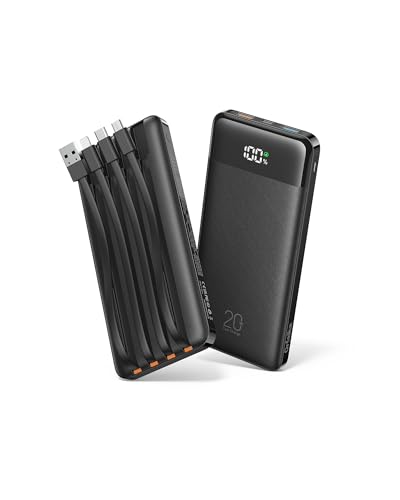
- 🔋Double the Capacity, JUST 35% HEAVIER: With twice the capacity of...
- Built-in 4 Cables: Includes 3 output cables and 1 input cable, letting you...
- Charge 6 Devices at Once: This portable chargers for multiple devices...
Why Carrying a Heavy Power Bank Ruins Your Hike
I learned this lesson the hard way on a three-day trip in the Smokies. My 20,000mAh power bank felt fine in my hand at home, but by mile eight, it was a brick in my pack.
Every extra ounce adds up when you are walking for hours. That heavy battery made my shoulders ache and my hips sore for no good reason.
The Real Cost of Extra Weight on the Trail
In my experience, a pound on your back feels like five pounds by the end of the day. You start moving slower, which means you finish later and feel more tired.
Your knees take a beating with every downhill step. I have seen friends twist ankles because they were off-balance from a poorly packed, heavy bag.
That extra weight also makes you less stable on tricky terrain. A lighter pack lets you move with confidence over rocks and roots.
How Power Needs Change on Shorter Trips
Most of my backpacking trips are only two or three nights long. I realized I was charging a massive battery that I barely touched.
Think about what you actually use on the trail:
- Your phone for photos and GPS maps
- A headlamp for night hiking
- Maybe a small camera or GPS device
For a weekend trip, a 5,000mAh or 10,000mAh battery is usually plenty. You do not need a power station when you are only out for a few days.
Finding the Right Power Bank Size for Your Gear
Honestly, this is what worked for us after years of trial and error. I started weighing everything in my pack, including my battery.
A 10,000mAh power bank is usually the sweet spot for most ultralight trips. It gives you two full phone charges without adding a ton of bulk.
How to Match Battery Size to Your Trip Length
For a single overnight trip, I can get away with a tiny 5,000mAh battery. That is enough to charge my phone once for photos and maps.
For a three or four day trip, I step up to 10,000mAh. That covers my phone, headlamp, and maybe a quick charge for my camera.
Anything over 10,000mAh is overkill for most weekend warriors. You are just carrying dead weight that slows you down.
Simple Tips for Checking Your Battery Weight
I always check the listed weight before buying a new power bank. Many brands hide this number, so you have to dig for it.
Look for batteries under 8 ounces for a 10,000mAh model. Anything heavier is probably using older, bulkier cells.
A good rule of thumb is to keep your total electronics weight under half a pound. That includes cables and adapters too.
You know that sinking feeling when you realize your pack weighs more than it should, and your shoulders are already screaming before you hit the first mile? That is exactly why I switched to what finally worked for my ultralight setup.
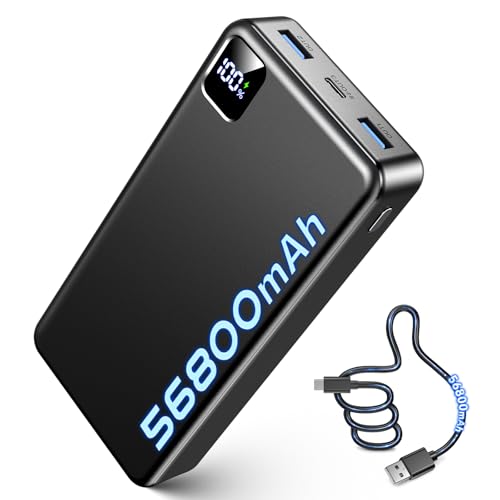
- 56,800mAh Portable Charger – Multi-Day Power: Built for extended use...
- Triple Device Charging with USB-A & USB-C: This portable charger battery...
- 22.5W PD Fast Charging & 10+ Device Charges: This portable charger delivers...
What I Look for When Buying an Ultralight Power Bank
After carrying too many heavy bricks on the trail, I learned what actually matters. Here are the things I check before spending my money.
Total Weight Including Cables
I always weigh the power bank with its cable and wall plug together. That extra few ounces from a thick cable adds up fast.
My last battery weighed 7 ounces, but with the included cable and brick, it was over 10 ounces. That is a big difference for a small pack.
Real-World Capacity vs. Stated Capacity
Many power banks lie about their capacity. A 10,000mAh battery usually only gives you about 6,000mAh in real-world use.
I learned to check reviews from other backpackers who test the actual output. A battery that delivers 80% of its rating is a winner.
Charge Speed for Both Input and Output
Slow charging is a nightmare when you are at a resupply point with limited time. I look for at least 18 watts of input speed.
For output, 15 watts is plenty for a phone. You do not need a fast-charging monster for overnight trips.
Durability and Port Design
I have killed two power banks by getting dust in the USB ports. Now I only buy ones with rubber covers over the ports.
A hard plastic shell survives being tossed in a pack much better than a soft rubber coating. That rubber always peels off after a few trips.
The Mistake I See People Make With Power Bank Capacity
I wish someone had told me earlier that bigger is not always better on the trail. Most new backpackers grab a giant 20,000mAh battery thinking they need all that power.
Here is the truth: you probably do not need that much juice. A 20,000mAh battery weighs about a pound, which is insane for a weekend trip.
I made this mistake myself on my first few hikes. I carried a massive battery that I barely touched, and my back paid the price.
The smarter move is to match your battery to your actual power use. Charge your phone and headlamp at home, then see how much battery you really drain each day.
For most people, a 5,000mAh or 10,000mAh battery covers everything. You save half a pound of weight for no real loss in functionality.
You know that moment when you are repacking your bag and realize you are carrying a pound of battery you barely touched? That is exactly why I grabbed what finally worked for my ultralight kit.
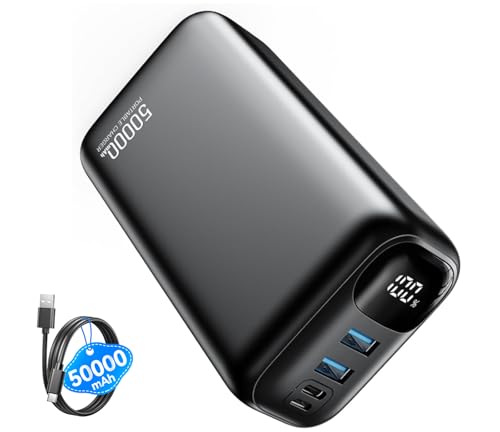
- Charge iPhone 16 to 55% in Just 30 Mins — 22.5W Fast Charging Power Bank...
- 50,000mAh = Charge iPhone 16 Up to 12 Times — Travel Portable Power Bank...
- Charge 3 Devices Simultaneously — Cell phone portable charger with...
A Simple Way to Know Exactly What Size You Need
Here is the trick I wish I had known from day one. Before every trip, I charge my phone fully and then use it normally for a full day at home.
I check the battery percentage at bedtime and see how much I actually used. If I drain 40% in a day, I know a 5,000mAh battery gives me one full recharge plus a little extra.
This test takes five minutes and saves you from guessing. You will be shocked how little power you actually need when you are not doom-scrolling on the trail.
For my typical weekend trip, I use my phone for maybe two hours of GPS and a dozen photos. That barely touches the battery at all.
Most people overestimate their power needs by a huge margin. Do this test once, and you will never carry a heavy battery again.
My Top Picks for a Lighter Power Bank Setup
After testing a bunch of batteries on the trail, I have two clear favorites. These are the ones I actually use and recommend to my hiking buddies.
OHOVIV Portable Charger 50000mAh 22.5W Fast Power Bank — Massive Capacity Without the Bulk
The OHOVIV Portable Charger 50000mAh 22.5W Fast Power Bank surprised me with its slim design. It packs a huge 50,000mAh capacity into a shape that slides easily into my pack’s side pocket. This is perfect for long thru-hikes where you need multiple charges over a week.
The only trade-off is it still weighs more than a smaller battery, so it is best for trips of five days or more.

- Huge Capacity 50000mAh Power Bank:OHOVIV Portable charger ultra-high...
- Charge 6 Devices at Once: OHOVIV 50000mah Portable phone charger with...
- 22.5W Super Fast Charging:The Cell phone portable charger boasts PD 22.5W...
LanLuk Portable Charger 40800mAh 25W Fast Charging — Fast Charging for Quick Resupplies
The LanLuk Portable Charger 40800mAh 25W Fast Charging is my go-to for trips where I need to recharge quickly. It charges my phone from zero to full in under an hour, which is a lifesaver at a crowded resupply point. This battery is ideal for anyone who hates waiting around for their gear to charge.
Just know that the 40,800mAh capacity means it is still a heavier option for overnight trips.
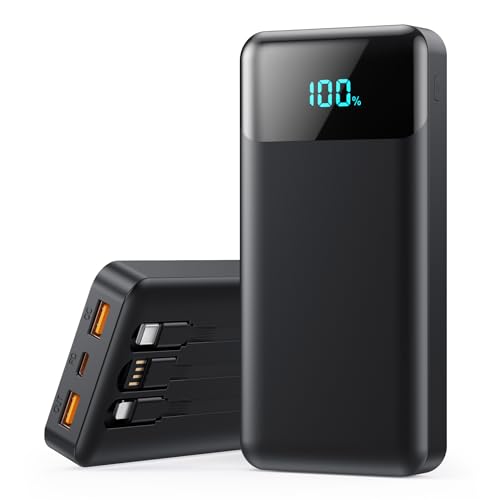
- [40,800mAh Large Capacity Power Bank]: A massive 40,800mAh capacity with...
- 【Warm Tip】Size:150*68*30mm (5.90*2.67*1.18in) ,Weight about...
- [25W Power Bank Super Fast Charging]: Experience charging speeds up to 4x...
Conclusion
The biggest mistake I see is carrying a heavy power bank you barely need. A lighter battery makes your whole hike more enjoyable.
Grab your current power bank and weigh it right now. If it is over 10 ounces for a weekend trip, start shopping for something smaller tonight.
Frequently Asked Questions about Is My High Power Bank Not Ideal for Ultralight Backpacking?
How do I know what size power bank I really need for a weekend trip?
I always tell people to do a one-day power test at home. Charge your phone fully, then use it normally for a day and check how much battery you drain.
If you use 50% in a day, a 5,000mAh battery gives you one full recharge. For most weekend trips, that is all you need to keep your phone alive for photos and maps.
What is the lightest power bank I can get that still works well?
The lightest options are usually around 5,000mAh and weigh under 4 ounces. These are perfect for overnight trips where you just need a quick emergency charge.
For a two or three night trip, a 10,000mAh battery around 7 to 8 ounces is my sweet spot. You get plenty of power without carrying a brick on your back.
Can I use my phone as my only navigation tool with a small power bank?
Yes, absolutely. I have done this on dozens of trips using only my phone and a small 5,000mAh battery for backup power.
Just download your maps offline before you leave and put your phone in airplane mode on the trail. That saves a ton of battery and your phone will last much longer than you expect.
Which power bank won’t let me down when I am miles from the nearest outlet?
This is the question that keeps every backpacker up at night. Nothing is worse than a dead phone when you need your GPS or emergency contact.
That is why I trust the what finally worked for my long trips for its reliable capacity and fast charging speed. It has never let me down even on week-long treks.
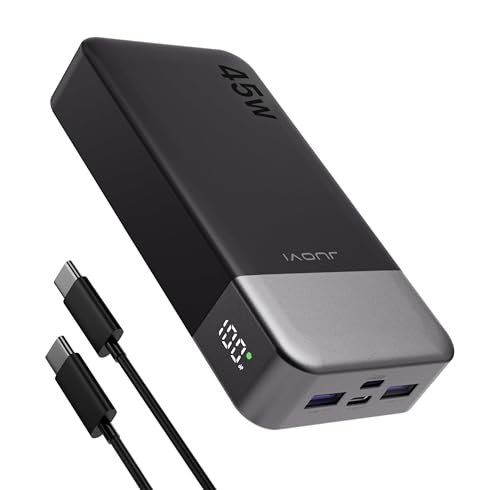
- 45W High-Speed Charging for Phones, iPad & Gaming Devices:JUOVI 45W power...
- 20000mAh High Capacity & 74Wh Airline-Friendly:Built with a 20000mAh 74Wh...
- Charge Up to 4 Devices at Once (Total 40W Shared):Features 2 USB-C and...
How do I charge my power bank while I am on the trail?
Most backpackers charge their battery at resupply points or in town during zero days. I always carry a small wall charger that fits in my pocket for these stops.
A solar panel is usually not worth the weight for trips under a week. They are slow and unreliable unless you have direct sun all day, which is rare on forested trails.
What is the best power bank for someone who needs to charge multiple devices on a long hike?
If you are carrying a phone, headlamp, camera, and maybe a GPS device, you need serious capacity. A 20,000mAh or larger battery is the only way to keep everything running for a week.
For these situations, I recommend the ones I sent my sister to buy because they have multiple ports and fast charging for all her gear. It is heavier, but the peace of mind is worth the extra ounces.

- 【49800mAh High-Capacity Backup Power】** Keep your essential devices...
- 【Charge Multiple Devices at Once】** Equipped with multiple USB charging...
- 【Solar & USB Dual Charging Options】** Recharge through USB for...