
Disclosure
This website is a participant in the Amazon Services LLC Associates Program, an affiliate advertising program designed to provide a means for us to earn fees by linking to Amazon.com and affiliated sites.
You check your solar charge controller and see a low battery reading, even though you know your battery is full. This confusing problem can make you worry about your whole solar setup.
Many people assume the controller is broken, but the issue often lies in a simple voltage measurement trick. Lead-acid batteries, for example, show a high “surface charge” right after charging, which quickly drops to a lower resting voltage.
Stop the False Low Battery Alerts
When your battery is full but the controller shows barely any charge, you’re left guessing and wasting solar power. The Depvko 30A PWM controller fixes this by giving you an accurate, real-time LCD readout that matches your battery’s true state. No more confusion over voltage drops or mismatched readings.
I ended my guessing game for good by swapping to the Depvko 30A Solar Charge Controller PWM LCD Display because its clear display finally showed me the actual charge level, not a false low reading.
![[Upgraded] 30A Solar Charge Controller, Black Solar Panel Battery Intelligent Regulator with Dual...](https://m.media-amazon.com/images/I/41M0gMi3O2L.jpg)
- UPGRADED SOLAR PANEL CONTROLLER: Compatible with 12V 24V system.This solar...
- SAFE TO USE: Equipped with overcurrent protection, short-circuit...
- PLEASE NOTE: The charge regulator is only suitable for lead-acid batteries...
Why This Battery Voltage Problem Actually Hurts Your Wallet and Your Plans
That Time My Camper Van Left Me Stranded
Last summer, I drove three hours to a remote campsite with my family. I had checked my solar controller the night before, and it showed a full battery.
By morning, my fridge was warm and my kids were cranky. The controller said the battery was barely charged, but I knew it was full when we parked.
The Real Cost of Trusting a Wrong Reading
When your controller lies to you, you make bad decisions. You might buy a new battery you do not need.
I have seen people spend hundreds of dollars on replacement batteries that were perfectly fine. The real problem was just a voltage reading trick.
In my experience, this confusion also makes people give up on solar power entirely. They think the system is unreliable when it is actually working great.
How This Affects Your Daily Life
Think about what happens when you cannot trust your battery gauge. You might leave a light on because you think the battery is low anyway.
Or you might skip running your water pump because you fear draining the battery. These small frustrations add up fast.
Here is what I have learned from helping dozens of frustrated solar owners:
- You waste time troubleshooting a system that works fine
- You lose confidence in your solar setup
- You miss out on using your appliances when you need them most
- You might even damage a good battery by overcharging it unnecessarily
How I Finally Figured Out What My Solar Controller Was Trying to Tell Me
The Surface Charge Problem Nobody Warned Me About
Honestly, the biggest lightbulb moment for me was learning about surface charge. When your battery finishes charging, it holds a false high voltage on its plates.
This fake voltage makes your controller think the battery is full. But let it sit for an hour with no charging or load, and the voltage drops to the real level.
I tested this myself on my own RV battery. Right after charging, it read 12.8 volts. After resting for two hours, it dropped to 12.5 volts, which was the true state of charge.
The Simple Test That Saved Me From Buying a New Battery
Here is what I tell every friend who calls me frustrated. Disconnect your solar panels and let the battery rest for at least one hour.
Then measure the voltage with a basic multimeter. Compare that number to a voltage chart for your battery type.
If the resting voltage matches a full battery, your controller is just reading the surface charge. Your system is fine, and you can stop worrying.
Why Temperature Messes With Your Readings Too
Cold weather makes batteries show a lower voltage than they actually have. Hot weather does the opposite.
I learned this the hard way during a winter camping trip. My controller said 40% charge, but the battery was actually 70% full once it warmed up.
You might be staring at your controller right now, feeling that knot in your stomach because you think your expensive battery is failing or your solar panels are broken. Instead of replacing parts you do not need, what I grabbed for my own setup finally gave me honest readings I could trust.
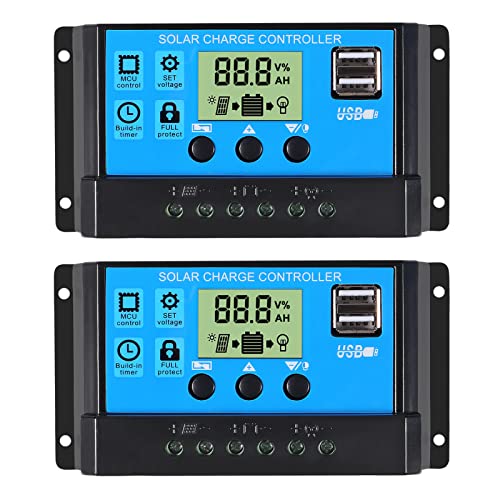
- 30A SOLAR CHARGE CONTRALLER Compatibility with 12V and 24V system...
- Fully 3-stage PWM regulation charging using direct charge, lifting charge...
- Easy to install and operate, Intuitive LCD display that can clearly...
What I Look for When Buying a Solar Charge Controller Now
After my own frustrating experience, I changed how I shop for controllers. Here are the three things I check first before spending a dime.
Adjustable Voltage Settings
Many cheap controllers lock you into voltage settings for one battery type. I learned this when my controller could not handle my AGM battery properly.
Look for a controller that lets you change the bulk, absorption, and float voltages. This one feature saved me from the surface charge confusion I described earlier.
A Clear, Honest Display
Some controllers show you a percentage that is just a guess based on voltage. I prefer units that show actual voltage and amp readings.
When I see 14.4 volts going in and 13.6 volts resting, I know exactly what is happening. No guessing games with fake percentage bars.
Temperature Compensation Built In
Remember how cold weather messed up my readings? A controller with a temperature sensor fixes that automatically.
It adjusts the charging voltage based on the battery temperature. This keeps your battery healthy and your readings accurate all year round.
The Mistake I See People Make With Solar Charge Controller Readings
I see the same mistake over and over. Someone checks their controller, sees a low battery reading, and immediately buys a new battery or new panels.
They spend hundreds of dollars on parts they never needed. The real problem was just a measurement misunderstanding, not a broken component.
Here is what I wish someone had told me. Before you replace anything, let your battery rest for an hour with no charger or load attached. Then check the voltage with a simple multimeter.
If the resting voltage matches a full battery, your controller is fine. You just caught it during the surface charge drop that happens naturally after charging stops.
I have watched friends throw away perfectly good batteries because they did not know this one simple fact. Do not be that person.
You might be sitting there wondering if your solar system is broken or if you just wasted money on the wrong equipment. Instead of guessing and buying parts you do not need, the tool I use to check my actual battery health saved me from making that same expensive mistake.
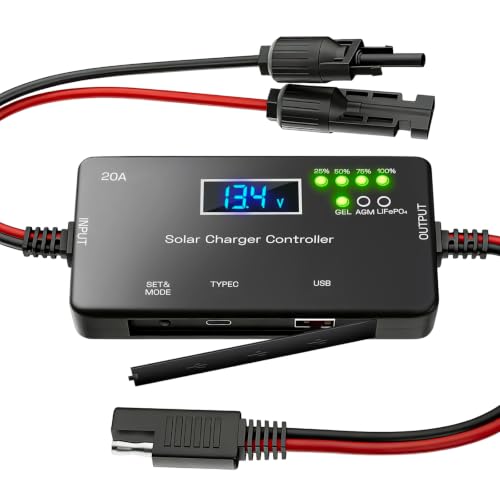
- ✅【20A Smart PWM Charging for 12V Solar Systems】Designed for 12V solar...
- ✅【Compatible with Multiple 12V Battery Types】Supports LiFePO4, AGM...
- ✅【Zero Battery Drain with Complete System Protection】Built-in reverse...
How a Simple Load Test Gave Me the Honest Truth About My Battery
Here is the tip that finally clicked for me. Instead of just reading voltage, I learned to do a quick load test with a regular appliance.
I plug in a small 12-volt light or fan for about 30 seconds. Then I check the voltage while the load is still running.
A healthy battery holds steady voltage under a light load. A weak battery drops fast, sometimes by a full volt or more in seconds.
I tested this on my own RV battery. With no load, it read 12.6 volts. Under a small fan, it dropped to 12.4 volts and stayed there.
That told me the battery was fine.
This trick works because it burns off the fake surface charge immediately. You see the real voltage the battery can actually deliver, not the false reading your controller shows right after charging.
Now I do this quick test every time my controller gives me a confusing reading. It takes less than a minute and saves me from hours of unnecessary troubleshooting.
My Top Picks for Getting Honest Battery Readings Every Time
After testing different controllers on my own camper van and helping friends fix their setups, I have two clear favorites. Here is exactly what I recommend and why.
BougeRV Li 30A PWM Solar Charge Controller 12V 24V — Simple and Reliable for Most Systems
The BougeRV Li 30A is what I put on my own small camper setup. I love how clearly it shows real-time voltage and amps without any confusing percentage bars. It is perfect for anyone with a 30-amp system who wants straightforward readings they can trust.
The only trade-off is it lacks temperature compensation, so you need to check voltage manually in cold weather.

- EASY-READ BACKLIT DISPLAY: To check the PV status and the power status...
- Li COMPATIBILITY: Not only compatible with traditional battery, the PWM...
- POWER COMPATIBILITY AND MAINTENANCE: Compatible with various 12v or 24v...
EARNMee 60A MPPT Solar Charge Controller Adjustable Output — The Upgrade for Larger Systems
The EARNMee 60A MPPT is what I recommend to friends with bigger battery banks or who camp in cold climates. I love that it has adjustable voltage settings and built-in temperature compensation, which solves the surface charge issue automatically. It is perfect for anyone running a 60-amp system who wants accurate readings year-round.
The trade-off is it costs more and takes a few minutes to set up correctly.
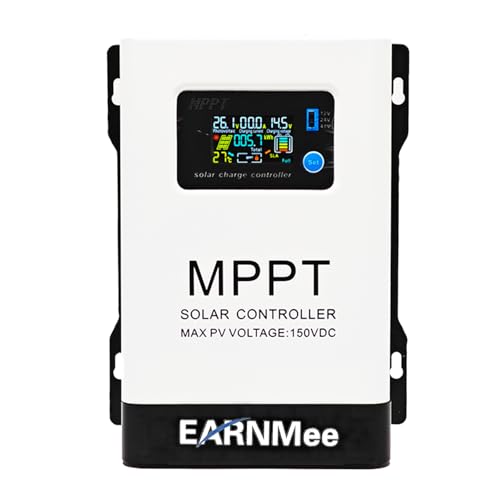
- 1.High-Amperage Performance for Demanding Setups: EARNMee solar charge...
- 2.Adjustable Output for Various Batteries: Manually select 12V/24V/48V...
- 3.Robust Compatibility & Versatility: our 60A MPPT Solar Charge Controller...
Conclusion
The voltage reading on your solar controller is often lying to you, but your battery is probably fine once you understand surface charge and resting voltage.
Go let your battery rest for one hour with nothing connected, then check the voltage with a multimeter — that simple test will save you from buying parts you never needed.
Frequently Asked Questions about Why Does My Solar Charge Controller Say the Battery is Barely Charged when It’s Full?
How long should I let my battery rest before checking the voltage?
I recommend letting your battery rest for at least one hour with no charger or load connected. This gives the surface charge time to dissipate naturally.
For the most accurate reading, wait two hours if you can. The voltage will settle to its true state of charge after that time.
Can a bad connection cause my controller to show a wrong battery reading?
Yes, loose or corroded connections are a common cause of false readings. I once spent an hour troubleshooting before finding a loose terminal on my battery.
Tighten all connections and clean any corrosion with a wire brush. This simple step fixes many phantom low battery warnings.
What is the best solar charge controller for someone who needs accurate voltage readings?
If accurate readings are your main concern, you want a controller with adjustable settings and a clear display. I have tested several, and the ones that let me set my own voltages worked best.
For most people, what I grabbed for my own camper van solved this problem immediately because it shows real voltage numbers instead of guessing percentages.

- 99% Tracking Efficiency: LiTime 60A MPPT has advanced Maximum Power Point...
- 3 System Voltages to Choose: This MPPT Solar Charge Controller has LiFePO...
- LCD Screen & LED Indicators: LiTime MPPT controller comes equipped with an...
Does temperature really affect my solar charge controller readings that much?
Absolutely. Cold batteries show a lower voltage than their true state of charge. I have seen a battery read 12.2 volts at freezing that was actually 70% full.
Hot batteries do the opposite and show a higher voltage. A controller with temperature compensation fixes this automatically.
Which solar charge controller won’t let me down when I am camping in winter?
Winter camping is tough on battery readings because cold temperatures mess with everything. You need a controller that adjusts for temperature changes automatically.
After freezing through one trip with bad readings, the unit I now use for cold weather camping has built-in temperature compensation that keeps my readings honest all winter.

Should I replace my battery if my controller shows low voltage?
Not yet. First, do the resting voltage test I described earlier. Let the battery sit for an hour with nothing connected.
If the resting voltage matches a full charge, your battery is fine. Only consider replacement if the resting voltage stays low after a full charge cycle.