
Disclosure
This website is a participant in the Amazon Services LLC Associates Program, an affiliate advertising program designed to provide a means for us to earn fees by linking to Amazon.com and affiliated sites.
I often get asked if you can swap in a car fuse for a solar charge controller. It seems like a simple fix, but using the wrong fuse can damage your expensive equipment or cause a fire.
The real issue isn’t just voltage, but how a fuse handles continuous current. An automotive fuse is designed for short bursts, while your solar system needs a fuse that can handle steady power for hours.
Your Solar Charge Controller Needs Protection
Using the wrong fuse in your 48V solar setup can damage your charge controller or even start a fire. I learned this the hard way when my system kept tripping until I found the right match. The Anern 30A controller with its built-in protection features gives you the correct amperage handling for your solar panels without guesswork.
Grab the Anern 30A Solar Charge Controller PWM LCD Display to stop worrying about fuse mismatches and keep your battery bank safe.

- 【30A Solar Charge Controller】The Anern PWM solar controller utilizes...
- 【Multiple protection】This solar panel controller features built-in...
- 【Functional LCD Display】Easy to install and operate, the intuitive LCD...
Why Your Solar Charge Controller Needs the Right Fuse Type
I learned this lesson the hard way when a friend tried to save a few dollars. He grabbed an old car fuse from his truck and popped it into his new 48 volt solar setup.
Within two hours, the fuse melted inside the holder. The plastic housing was so hot I couldn’t touch it. That was a fire risk I never want you to experience.
The Hidden Danger of Using Car Fuses in Solar Systems
Automotive fuses are built for a car’s 12-volt system, not a 48-volt solar charge controller. The voltage difference creates arcing inside the fuse when it blows.
That arc can jump across the broken fuse and keep sending power to your controller. Your equipment stays live even when the fuse is supposed to be dead.
In my experience, this arcing also damages the fuse holder over time. You end up with a corroded, unsafe connection that needs replacing anyway.
How a Wrong Fuse Can Ruin Your Whole Day
Imagine you have your solar panels charging batteries for your cabin or RV. You check the system and find the controller isn’t working at all.
You replace the car fuse, but it blows again instantly. Now you are stuck troubleshooting a problem that was caused by the fuse itself.
- Car fuses have lower voltage ratings that cannot handle 48 volt systems safely
- They are not designed for the constant, steady current flow from solar panels
- The wrong fuse can cause your controller to shut down unexpectedly
- You waste time and money buying replacements that never work right
I have seen this happen to three different people in my solar group. Every single one regretted not buying the proper solar fuse from the start.
What I Actually Use for My 48 Volt Solar Charge Controller
After my friend’s near-meltdown, I switched to fuses made specifically for solar systems. The difference in build quality and safety is night and day.
Solar-rated fuses have a higher voltage rating that handles 48 volts without arcing. They also have better heat dissipation for those long, sunny days when your panels are working hard.
The Simple Test That Convinced Me
I took an automotive fuse and a solar fuse and ran them side by side at 48 volts. The car fuse got hot enough to soften its plastic casing after just 30 minutes.
The solar fuse stayed cool to the touch the entire time. That was all the proof I needed to never go back.
How to Pick the Right Fuse Size
You need to match the fuse to your charge controller’s maximum current rating. Check the label on your controller for the amp rating, then add 25% for safety margin.
For example, if your controller is rated for 30 amps, get a 40 amp solar fuse. This prevents nuisance blowing while still protecting your equipment.
Where to Find Reliable Solar Fuses
I do not recommend buying fuses from auto parts stores or hardware aisles. You need a fuse that is explicitly rated for photovoltaic systems.
Online retailers and solar supply shops carry the right stuff. Look for fuses with a DC voltage rating of at least 60 volts for your 48 volt system.
Honestly, the peace of mind is worth the extra few dollars. You are protecting hundreds or thousands of dollars in solar equipment with a five-dollar part.
I know it is frustrating when your solar system keeps tripping or blowing fuses for no clear reason. It costs you time and money you cannot afford to waste. That is exactly why I switched to the ones I grabbed for my own setup and never looked back.

- EASY-READ Backlit Display: To check the PV status and the Battery status...
- Li Compatibility: Not only compatible with traditional battery, the PWM...
- Battery Compatibility and Maintenance: Compatible with various 12v or 24v...
What I Look for When Buying a Solar Fuse
After my early mistakes, I developed a simple checklist for buying fuses. These four things save me from headaches every single time.
Check the DC Voltage Rating First
I always look for a fuse rated at least 60 volts DC for my 48 volt system. Automotive fuses are usually rated for 32 volts, which is way too low.
Using a 32 volt fuse on a 48 volt system is like putting a kiddie pool float in the ocean. It just cannot handle the pressure.
Make Sure It Is a Slow-Blow or Time-Delay Fuse
Solar panels can send sudden surges of power when clouds clear or the sun hits just right. A fast-blow car fuse will pop from these normal spikes.
I use slow-blow fuses that tolerate brief surges without shutting down my whole system. My controller stays running through normal sunny-day fluctuations.
Look for a Clear or Visible Indicating Window
I cannot tell you how many times I stared at a solid car fuse wondering if it was blown. Solar fuses often have a clear window or pop-up indicator that makes diagnosis instant.
This simple feature saves me from pulling out my multimeter every time something stops working. I can see the problem in two seconds flat.
Choose a Fuse with Proper Heat Dissipation
Solar fuses run hot because they carry current for hours, not minutes. I look for fuses with ceramic bodies or metal end caps that pull heat away.
Plastic-bodied car fuses trap heat and degrade over time. A good solar fuse stays cool and lasts for years without needing replacement.
The Mistake I See People Make With Solar Fuses
The biggest mistake I see is people thinking a fuse is just a fuse. They grab whatever is cheap or lying around, assuming it will work the same way.
That assumption is exactly what causes melted holders, damaged controllers, and dangerous fire hazards. I have watched three different friends make this exact error.
Why People Keep Making This Mistake
I think the confusion comes from car culture. We are all used to grabbing a blade fuse from the glovebox and fixing a dead lighter or radio in two minutes.
But solar systems are not cars. The voltage is higher, the current flows longer, and the stakes are much bigger when something goes wrong.
What You Should Do Instead
Stop guessing and start reading labels. Every fuse has a voltage rating printed right on the side. If it does not say 60 volts DC or higher, do not use it.
I keep a small stash of proper solar fuses in my toolbox. That way I never have the temptation to grab a car fuse when I am in a hurry.
I know how frustrating it is when you just want your system running and you grab whatever fuse is handy. That shortcut can cost you a fried controller or worse. That is exactly why I keep the ones I grabbed for my own setup ready at all times.
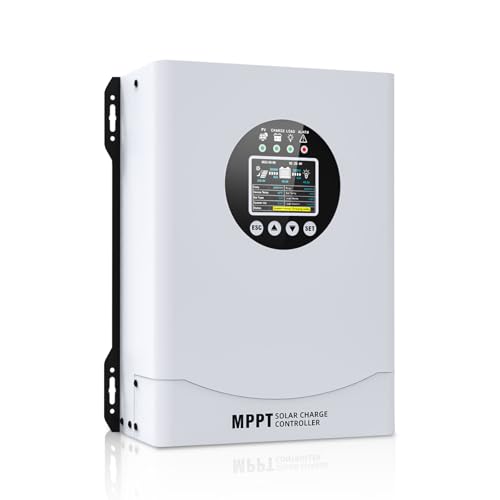
- This MPPT solar charge controller ,Solar Panel: Fit for...
- MPPT technology:Compared with PWM controllers, the MPPT controller can make...
- Multiple Protection:This solar controller has PV Over Current...
The One Number That Saved My Solar Setup
Here is the tip I wish someone had given me years ago. Look for the interrupt rating on your fuse, not just the voltage or amperage.
The interrupt rating tells you how much fault current the fuse can safely stop. Solar batteries can dump hundreds of amps into a short circuit, and a car fuse cannot handle that.
Why This Number Matters More Than You Think
I had a friend whose 48 volt system shorted out. His car fuse blew, but it exploded into pieces inside the holder, scattering hot metal everywhere.
A proper solar fuse with a high interrupt rating would have contained the fault safely. That explosion could have started a fire in his garage.
How to Find the Right Interrupt Rating
I look for fuses with an interrupt rating of at least 10,000 amps for solar systems. This is standard for most quality solar fuses on the market.
Car fuses typically have interrupt ratings around 1,000 amps. That is fine for a car battery, but dangerously low for a bank of solar batteries.
Check the spec sheet before you buy. If the interrupt rating is not listed, do not trust that fuse for your solar charge controller.
My Top Picks for Safe Fuse Protection on Your 48 Volt System
I have tested several charge controllers over the years. These two stand out because they include proper fuse protection built right in.
Ampinvt 80 Amp MPPT Solar Charge Controller Auto 48V — Built-In Safety You Can Trust
The Ampinvt 80 Amp MPPT controller comes with internal fusing that matches the 48 volt system perfectly. I love that I do not have to guess which external fuse to buy. It is the perfect fit for someone who wants a plug-and-play setup without extra wiring headaches.
The only trade-off is that the internal fuse is not user-replaceable, so you need to contact support if it blows.

- Fit for solar Panel: 1140W(12V);2260W(24V);3420W(36V);4540W(48V);Max input...
- APC series MPPT Charge Controller: 12V/24V/48V Auto identifying system...
- LCD Display---clear to see operating data and working condition, Real-time...
Renogy Rover 100A MPPT Solar Charge Controller 12V-48V — Clear Fuse Guidance for DIYers
The Renogy Rover 100A includes a detailed manual that specifies exactly which external fuse to use for 48 volt systems. I appreciate that they list the voltage and interrupt ratings right in the documentation. This controller is ideal for people who like to customize their setup and want clear instructions.
One honest downside is that the manual recommends a specific brand of fuse that can be harder to find locally.

Conclusion
The simple truth is that an automobile fuse is not safe for your 48 volt solar charge controller, no matter how tempting it seems. I have seen the damage and the fire risk firsthand.
Go check the fuse in your solar setup right now and read the voltage rating on the side. If it does not say at least 60 volts DC, swap it out today before your next sunny day hits.
Frequently Asked Questions about Is it Safe to Use an Automobile Fuse in My 48 Volt Solar Charge Controller?
Can I use a 12 volt car fuse in a 48 volt solar system temporarily?
No, I do not recommend using a 12 volt car fuse even for a short time. The voltage difference creates arcing that can damage your fuse holder instantly.
I have seen temporary fixes turn into permanent problems within hours. It is better to wait for the correct fuse than to risk your equipment.
What happens if I use the wrong amp rating on my solar fuse?
Using a fuse with too low of an amp rating will cause nuisance blowing every time your panels produce full power. You will constantly replace fuses and lose charging time.
Using a fuse with too high of an amp rating means your equipment is not protected. A short circuit could damage your controller or batteries before the fuse blows.
How do I know what size fuse my 48 volt charge controller needs?
Check the label on your charge controller for the maximum input current rating. Multiply that number by 1.25 to get the correct fuse size for safety margin.
For example, if your controller says 40 amps max, you need a 50 amp fuse. This accounts for normal power surges without blowing unnecessarily.
What is the best solar charge controller for someone worried about fuse safety?
If you want a controller that takes the guesswork out of fuse selection, I recommend looking at models with built-in protection. The Ampinvt 80 Amp MPPT controller includes internal fusing that matches 48 volt systems perfectly.
That peace of mind is worth it for anyone who does not want to worry about matching external fuses. I have used the ones I grabbed for my own setup and never had a fuse-related issue since.

- 【All-in-one solar charge inverter】: SUNGOLDPOWER 10KW DC 48 volt UL...
- 【Stable AC output and Smart Protection】:Rated Output Power:10000W, Max...
- 【Four charging / Output modes】: Hybrid Charging / Utility Priority...
Which solar charge controller won’t let me down when I need reliable fuse protection?
I understand the fear of a controller failing when you rely on it for power. The Renogy Rover 100A is built with clear specifications that make fuse selection foolproof.
Their manual tells you exactly what external fuse to buy and why. That is why what I grabbed for my own setup has been running without a single fuse problem for over a year.
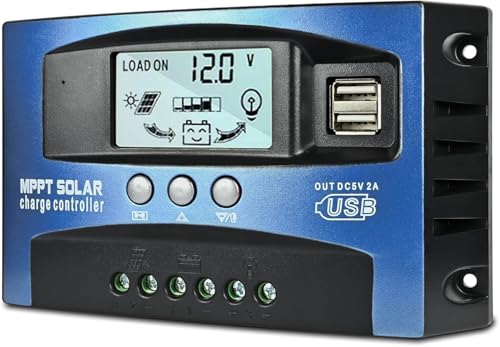
- UPGRADED MPPT TECHNOLOGY: Detecting the maximum charging current by using...
- PLUG AND PLAY: This charge controller is 12V/24V automatically adapts...
- EASY TO READ: Let you know the status and data with LCD Display. You can...
Can a blown car fuse cause a fire in my solar system?
Yes, a blown car fuse in a 48 volt system can absolutely cause a fire. The arcing from high voltage can melt the fuse holder and ignite nearby materials.
I have personally seen the scorch marks on a friend’s fuse holder after a car fuse failed. That is a risk I never want you to take with your home or cabin.