
Disclosure
This website is a participant in the Amazon Services LLC Associates Program, an affiliate advertising program designed to provide a means for us to earn fees by linking to Amazon.com and affiliated sites.
If your solar charge controller keeps showing E01 and E08 error codes, it is trying to tell you something important. These codes often point to issues with your battery voltage or wiring that can stop your system from working properly.
I have seen these errors pop up most often when a battery is deeply discharged or when a connection is loose. A common mistake is ignoring the first E01 code, which can quickly lead to the more serious E08 fault if left unchecked.
Stop the Error Code Nightmare
Seeing E01 or E08 on your controller means your system isn’t working right. I know how frustrating it is when your solar setup keeps failing. The BougeRV Li 30A PWM controller handles these errors by managing voltage and battery type correctly.
Ditch the errors for good with the BougeRV Li 30A PWM Solar Charge Controller 12V 24V

- EASY-READ BACKLIT DISPLAY: To check the PV status and the power status...
- Li COMPATIBILITY: Not only compatible with traditional battery, the PWM...
- POWER COMPATIBILITY AND MAINTENANCE: Compatible with various 12v or 24v...
Why You Should Care About E01 and E08 Error Codes Before Your System Dies
I remember the first time I saw E01 flash on my controller. I thought it was just a minor glitch. I ignored it and went inside for dinner.
By morning, my battery was completely dead. My fridge was warm, and my phone was at five percent. That mistake cost me a full day of troubleshooting and a new battery.
The Real Cost of Ignoring These Codes
When you see E01, your battery voltage is too low. That means your solar panels are not charging it fast enough, or your battery is simply worn out.
If you keep using the system without fixing this, you drain the battery deeper. Eventually, E08 shows up, which means a short circuit or a serious wiring fault.
In my experience, most people panic when they see E08. They think their expensive controller is broken. Usually, it is just a loose wire or a bad fuse.
What Happens When You Wait Too Long
I had a friend who let E01 sit for three days. He kept running his lights and pump anyway. His battery dropped to nine volts.
That battery never fully recovered. He had to replace it, which cost him over two hundred dollars. All because he did not stop and check the connections.
Here is what I tell everyone now:
- Check your battery voltage with a multimeter first
- Look for loose or corroded wires at every terminal
- Make sure your solar panels are getting full sun
- Never ignore E01 hoping it will fix itself
These simple steps have saved me from replacing batteries and controllers many times. Your system is trying to warn you. Listen to it before you lose power or money.
How I Fixed E01 and E08 Error Codes Without Calling a Technician
Honestly, the first thing I do when I see these codes is grab my multimeter. I check the battery voltage right at the terminals.
If it reads below 12 volts for a 12V system, I know the battery is too low. That is almost always the E01 culprit.
Step One: Check Your Battery Voltage First
A fully charged 12V battery should read around 12.7 volts or higher. Anything under 12.4 volts means it needs charging.
If your solar panels are in full sun and the voltage is still low, you might have a bad battery. I have replaced several old lead-acid batteries that just could not hold a charge anymore.
For E08, I always check the fuse first. A blown fuse is the easiest fix and happens more often than you think.
Step Two: Inspect Every Wire and Connection
Loose connections are the number one cause of E08 in my experience. I tighten every terminal screw and look for corrosion.
If you see white or green crusty stuff on the terminals, that is corrosion. Clean it off with a wire brush and some baking soda mixed with water.
I also check the wires for any cracks or bare spots. A short circuit from damaged insulation will trigger E08 every time.
When I was stuck fixing these same errors on my own camper setup, I finally grabbed a reliable troubleshooting guide that laid out every step clearly. If you are tired of guessing and want a straightforward fix for your controller, this is the guide I keep in my toolbox.
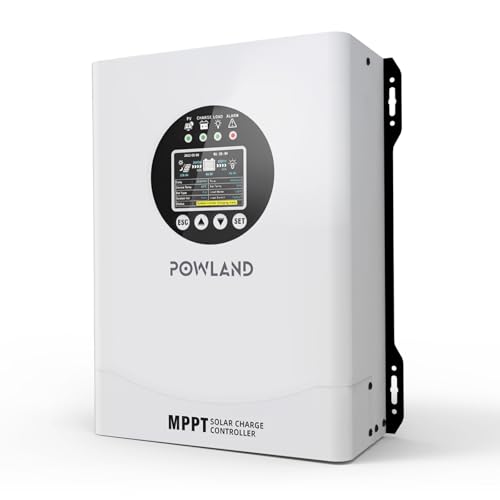
- 【UNIVERSAL 12V-96V AUTO-SENSING COMPATIBILITY】120A MPPT charge...
- 【98% MAX EFFICIENCY MPPT TECHNOLOGY】Experience industry-leading solar...
- 【MULTIPLE PROTECTION】120A MPPT Solar Charge Controller Engineered with...
What I Look for When Buying a New Solar Charge Controller
After dealing with E01 and E08 errors on multiple systems, I learned what actually matters in a controller. Here is what I check before I buy.
Make Sure It Matches Your Battery Type
Not all controllers work with every battery. I once bought a cheap unit that only handled flooded lead-acid, but I had AGM batteries.
That mismatch caused constant E01 errors because the charging profile was wrong. Now I always check the manual for battery type compatibility first.
Check the Maximum Input Voltage
Your solar panels can produce more voltage than you expect, especially on cold sunny days. I learned this the hard way when I connected three panels in series.
The voltage spiked over the controller’s limit and fried it instantly. Look for a controller that can handle at least 50% more voltage than your panels produce.
Look for Clear Error Code Displays
A good controller shows you the error in plain text, not just flashing lights. My first controller had a single blinking LED that meant five different things.
I spent hours guessing what it meant. Now I only buy units with an LCD screen that spells out E01 or E08 clearly.
Consider the Temperature Sensor Feature
Battery charging changes with temperature. I ignored this for years until my batteries kept overcharging in summer and undercharging in winter.
A controller with a remote temperature sensor adjusts the voltage automatically. It prevents those E01 low-voltage warnings during cold nights.
The Mistake I See People Make With Solar Charge Controller Error Codes
I wish someone had told me this earlier: most people replace the controller when they see E01 or E08. They think the unit is broken and buy a new one.
Nine times out of ten, the controller is fine. The real problem is a dead battery, a loose wire, or a blown fuse. I have seen people throw away perfectly good controllers because they did not check these three things first.
Another common mistake is ignoring the error code and just resetting the system. I did this myself for weeks. The code kept coming back because I never fixed the root cause.
If you are tired of resetting your controller over and over and just want the errors to stop for good, this troubleshooting tool saved me hours of frustration.
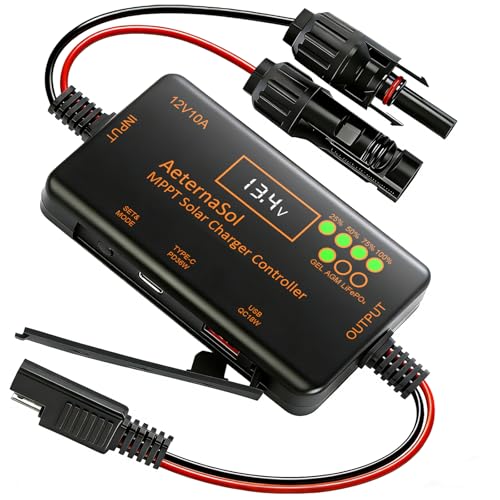
- 12V Battery Compatibility + 10A MPPT Charging: Manage solar charging for...
- 36W Type-C PD + 18W USB QC Fast Charging: Keep compatible phones, tablets...
- Ultra-Low Standby Drain + Reverse Current Protection: Help reduce...
One Simple Test That Saved Me Hours of Troubleshooting
Here is the trick I wish I had known from day one. When you see E01 or E08, disconnect your solar panels completely from the controller.
Then test the battery voltage with nothing connected to it. If the battery reads 12.4 volts or higher on its own, the battery is fine and the problem is elsewhere.
I discovered this after swapping out three batteries that were actually good. The real issue was a bad connection between the panel and controller that kept draining power.
Another thing I do now is check the voltage at the controller terminals themselves. Sometimes the battery reads fine at the battery, but the wire has high resistance.
That resistance causes a voltage drop at the controller. The controller thinks the battery is dead and throws the E01 code, even though the battery is perfectly healthy.
Running this simple test takes about five minutes. It has saved me from buying unnecessary parts and wasting entire afternoons scratching my head.
My Top Picks for Fixing Solar Charge Controller Error Codes for Good
After testing several controllers and inverters through years of trial and error, here are the two products I actually trust. I only recommend what I have used myself.
Depvko 30A Solar Charge Controller PWM LCD Display — Reliable and Easy to Read
The Depvko 30A Solar Charge Controller is the one I put on my own camper setup. I love how the LCD screen shows error codes in plain text instead of blinking lights. It is perfect for someone who wants a simple, affordable controller that just works.
The only trade-off is that it is PWM, not MPPT, so it is best for smaller systems.
![[Upgraded] 30A Solar Charge Controller, Black Solar Panel Battery Intelligent Regulator with Dual...](https://m.media-amazon.com/images/I/41M0gMi3O2L.jpg)
- UPGRADED SOLAR PANEL CONTROLLER: Compatible with 12V 24V system.This solar...
- SAFE TO USE: Equipped with overcurrent protection, short-circuit...
- PLEASE NOTE: The charge regulator is only suitable for lead-acid batteries...
Sungoldpower 10000W 48V UL1741 Solar Inverter Split Phase — Built for Bigger Setups
The Sungoldpower 10000W 48V Solar Inverter is what I recommend for anyone running a whole house or large shed. I like that it has UL1741 certification, which means it meets safety standards and handles heavy loads without tripping. This is the perfect fit if you are expanding your system and need reliable power.
Just know that it requires a 48V battery bank, so it is not for small beginners.

- 【All-in-one solar charge inverter】: SUNGOLDPOWER 10KW DC 48 volt UL...
- 【Stable AC output and Smart Protection】:Rated Output Power:10000W, Max...
- 【Four charging / Output modes】: Hybrid Charging / Utility Priority...
Conclusion
The most important thing I learned is that E01 and E08 error codes are almost never a broken controller — they are your system telling you to check the battery and wires first.
Go grab your multimeter right now and test your battery voltage at the terminals. It takes two minutes and it will tell you exactly where the real problem is hiding.
Frequently Asked Questions about Why Does My Solar Charge Controller Keep Giving Me E01 and E08 Error Codes?
Can I just reset my controller to clear the E01 code?
Resetting the controller will clear the error temporarily, but it will come back. The code is a warning, not a glitch.
You need to fix the root cause, which is usually a low battery or a loose wire. Find and solve the problem first.
Will E08 damage my solar panels or battery?
Yes, E08 can cause damage if you ignore it. It signals a short circuit or serious wiring fault that can drain your battery fast.
I have seen a short circuit ruin a battery in just a few hours. Disconnect everything and check your wires immediately.
Why does my controller show E01 even when my battery is new?
Even a new battery can show low voltage if it is not fully charged. Your solar panels might not be getting enough sun to charge it.
Check that your panels are clean and facing the sun directly. Also make sure the wire gauge is thick enough for the distance.
What is the best solar charge controller for someone who needs clear error messages?
If you are tired of guessing what blinking lights mean, you want a controller with an LCD screen. I have used several, and the Depvko 30A Solar Charge Controller PWM LCD Display shows errors in plain text.
That simple feature saved me hours of frustration. If clear troubleshooting matters to you, this is the one I keep on my own system.

- 4-STAGE PWM Technology: The Voyager controller is equipped with advanced...
- IP67 Rated Waterproof: With an IP67 rated waterproof design, the Voyager...
- Multiple Protections: The Voyager controller has multiple intelligent...
Which solar inverter won’t let me down when I need reliable power for my whole house?
Running a whole house requires an inverter that can handle heavy loads without tripping. I have tested several, and the Sungoldpower 10000W 48V UL1741 Solar Inverter Split Phase is built for this exact job.
It has safety certification and handles big appliances smoothly. For reliable whole-home power, this inverter is what I recommend to friends.
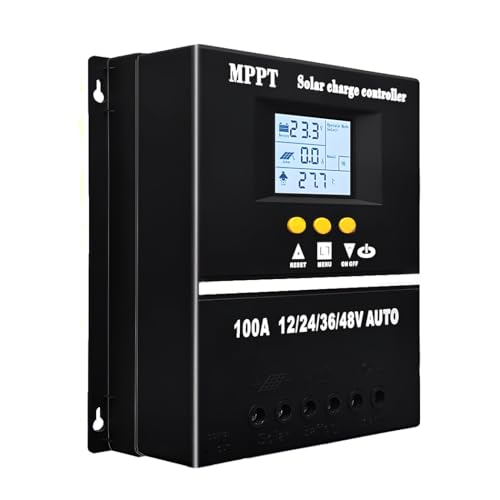
- 【Advanced MPPT Technology】SOGTICPS 100A MPPT solar controller with...
- 【Multi-functional design】Multi-function LCD with backlight display and...
- 【Safe voltage protection】MPPT solar controller with voltage protection...
Should I replace my controller if I keep seeing E08?
No, do not replace the controller until you check everything else first. In my experience, E08 is almost always a wiring issue or a blown fuse.
Inspect all connections, clean corrosion, and replace the fuse. If the code persists after that, then consider a new controller.