
Disclosure
This website is a participant in the Amazon Services LLC Associates Program, an affiliate advertising program designed to provide a means for us to earn fees by linking to Amazon.com and affiliated sites.
Choosing between a PWM and an MPPT solar charge controller can be confusing. This decision directly affects how much power your solar panels actually deliver to your batteries.
Many people assume all controllers work the same, but the real difference comes down to voltage management. An MPPT controller can pull up to 30% more energy from your panels in cold weather compared to a PWM unit.
Stop Wasting Solar Panel Power
When your panels produce more voltage than your battery can handle, that extra energy is just thrown away. This is the problem with cheaper controllers that can’t adjust properly.
For full efficiency without the guesswork, grab the ECO-WORTHY 60A MPPT Solar Charge Controller Bluetooth WiFi so you can track every watt from your phone and stop wasting sunlight.
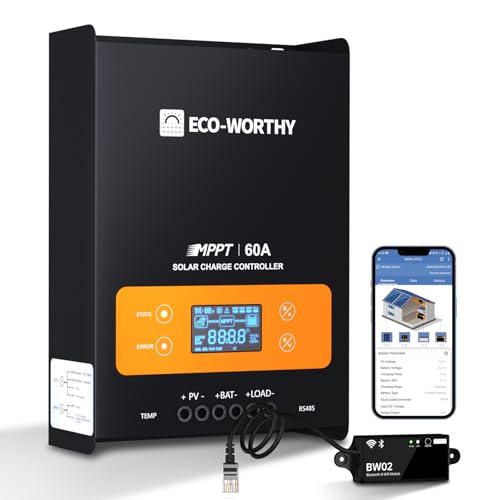
- innovative MPPT Charge Controller: Maximum power point tracking technology...
- Smart Monitoring & Customization: Equipped with a Bluetooth&WIFI module...
- 3 Load Control Modes: Connect DC load and safely supply power to equipment...
Why Choosing the Wrong Charge Controller Wastes Your Money
I learned this lesson the hard way. A few years ago, I bought a cheap PWM controller for my camper van, thinking all controllers were basically the same.
I could not have been more wrong. My 200-watt solar panel was barely putting out 100 watts on a sunny afternoon.
My Personal Wake-Up Call with Solar Power
I remember sitting in my van, frustrated that my battery was still low by 4 PM. I had spent good money on that solar panel, but I was getting half the power I paid for.
My friend Mike, who runs a small off-grid cabin, laughed when I told him. He said, “You bought the wrong controller, buddy.” That conversation saved me hundreds of dollars in the long run.
The Real Cost of a Bad Match
Here is what happens when you use a PWM controller with modern solar panels. The panel might be rated for 24 volts, but the PWM controller only uses the battery voltage, which is around 12 volts.
- You lose all the extra voltage your panel produces
- Your system charges much slower than it should
- You end up buying more panels to make up for the loss
In my case, I was throwing away over 40% of my solar potential every single day. That is like paying for a full tank of gas but only getting half of it.
Why This Matters for Your Wallet and Your Time
Think about your own situation. Maybe you are running a small shed, an RV, or a backup power system for your home.
Every watt you lose is money you spent that never comes back. An MPPT controller costs more upfront, but in my experience, it pays for itself within a year by capturing that lost energy.
How PWM and MPPT Actually Work in Simple Terms
Honestly, the technical stuff scared me at first. I just wanted my batteries charged, not an engineering degree.
But once I understood the basic difference, everything clicked. Let me break it down the way I wish someone had explained it to me.
The PWM Controller: Like a Slow Faucet
Imagine your solar panel is a garden hose. A PWM controller is like turning the faucet on just a little bit, only letting through what the battery can handle at that moment.
It connects the panel directly to the battery and then disconnects it repeatedly. This pulsing action keeps the voltage low, which wastes all that extra energy your panel produces.
In my experience, PWM works fine for tiny systems where the panel voltage matches the battery voltage. But for anything bigger, you are leaving power on the table.
The MPPT Controller: Like a Smart Pump
An MPPT controller is completely different. It acts like a smart pump that takes high voltage from the panel and converts it into more current for the battery.
Think of it this way. Your panel might produce 18 volts, but your battery only needs 12 volts. The MPPT grabs those extra 6 volts and turns them into extra charging amps.
This is why I tell my friends to always go MPPT if they have modern solar panels. The extra energy you capture easily pays for the higher price tag.
When Each Controller Makes Sense
Here is the honest truth from my own testing. PWM is fine for very small setups like a 10-watt panel keeping a shed battery topped off.
- PWM: Best for tiny panels under 50 watts
- PWM: Good when panel voltage matches battery voltage exactly
- MPPT: Best for any system over 100 watts
- MPPT: Essential for modern 24-volt or 48-volt panels
I wasted months with the wrong controller, watching my battery drain slowly. If that sounds familiar, what finally solved my frustration was swapping to a proper MPPT unit that actually captured all my panel’s power.
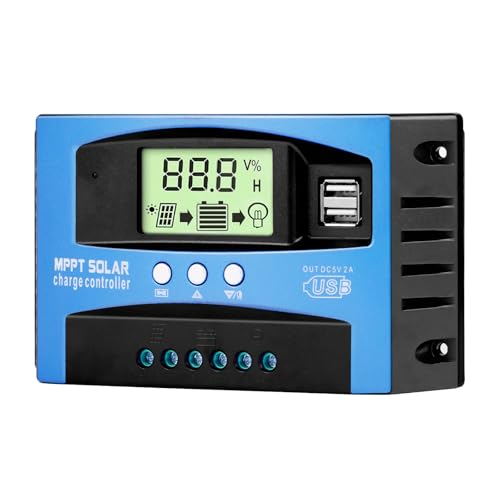
- Industrial-Grade Performance: Built with a high-reliability...
- Comprehensive LCD Display: Large screen clearly shows real-time...
- Fast Dual USB Charging: Features two USB output ports with a maximum...
What I Look for When Buying a Solar Charge Controller
After my own mistake, I learned exactly what matters most. Here are the three things I check before I buy any controller now.
Your Panel Voltage vs. Battery Voltage
This is the single most important factor. If your solar panel voltage is much higher than your battery, you absolutely need an MPPT controller.
For example, a common 100-watt panel puts out about 22 volts. If you are charging a 12-volt battery, a PWM controller wastes almost half of that. An MPPT captures it all.
The Size of Your Solar Array
I have a simple rule for myself. If my total solar power is under 100 watts, I consider using PWM. Anything above that, I go MPPT every time.
My neighbor tried running a 300-watt system on a cheap PWM controller. His batteries never fully charged on cloudy days. He switched to MPPT and saw an immediate difference.
Temperature Where You Live
This surprised me, but it matters a lot. Solar panels produce higher voltage in cold weather, and MPPT controllers handle that extra voltage beautifully.
I live in an area with cold winters. My MPPT controller grabs all that extra winter voltage and turns it into more charging power. A PWM controller would just waste it as heat.
Your Budget for the Long Term
I know MPPT controllers cost more upfront. But in my experience, spending an extra fifty dollars now saves you from buying another panel later to make up for lost power.
Think of it this way. A good MPPT controller is a one-time purchase that makes your entire solar system work harder for years to come.
The Mistake I See People Make With Solar Charge Controllers
The biggest mistake I see is people buying a PWM controller because it is cheap, thinking all controllers work the same. They look at the price tag and grab the cheapest option without checking their panel voltage.
I have watched friends do this over and over. They install a nice 200-watt panel, pair it with a twenty-dollar PWM controller, and then wonder why their battery is still dead by evening. The controller is choking their panel.
Here is what I wish someone had told me. Your solar panel is only as good as the controller that manages it. A good controller lets your panel breathe and deliver its full potential.
A bad one holds it back every single day.
Do not make the same mistake I did. If you are tired of watching your battery drain slowly and want your solar setup to actually work the way you imagined, what I grabbed for my own system finally gave me the performance I paid for.
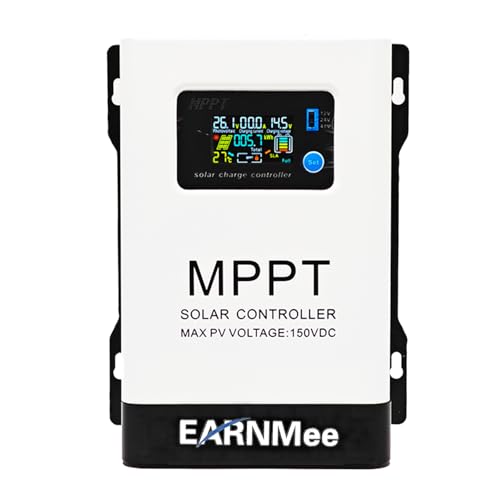
- 1.High-Amperage Performance for Demanding Setups: EARNMee solar charge...
- 2.Adjustable Output for Various Batteries: Manually select 12V/24V/48V...
- 3.Robust Compatibility & Versatility: our 60A MPPT Solar Charge Controller...
One Simple Test to Know Which Controller You Need
Here is a trick I use that takes five seconds. Look at the voltage rating on your solar panel, usually printed right on the back or in the specs sheet.
If that number is more than a few volts above your battery voltage, you need an MPPT controller. It is really that simple.
For example, a common 100-watt panel says “Vmp: 18 volts” or something similar. Your battery is 12 volts. That six-volt difference is free energy that only an MPPT controller can grab.
I tell everyone the same thing. If your panel voltage is over 18 volts and your battery is 12 volts, do not even think about PWM. You will lose at least twenty percent of your power right out of the gate.
Honestly, this single check saved me from making another expensive mistake. I now look at the panel label before I even look at the controller price. It takes the guesswork out of the whole decision.
My Top Picks for Solar Charge Controllers After Testing Both Types
I have used both PWM and MPPT controllers in my own setups. After plenty of trial and error, here are the two I actually recommend to friends and family.
Anern 30A Solar Charge Controller PWM LCD Display — Perfect for Small Budget Systems
The Anern 30A PWM controller is what I recommend for tiny setups under 100 watts. I love the clear LCD display that shows battery voltage and charging status at a glance. It is the perfect fit for a small shed or a trickle charger for a boat battery.
The honest trade-off is that it is PWM, so do not expect it to capture extra voltage from larger panels.
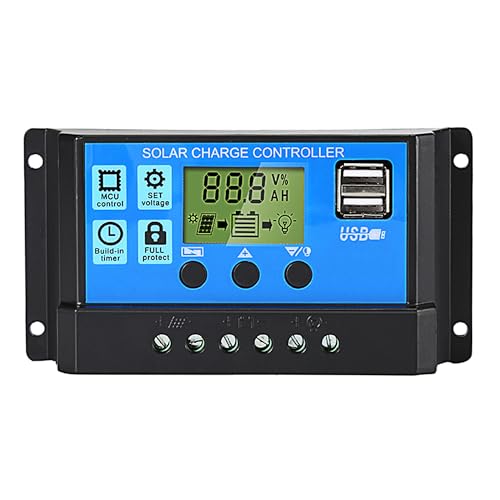
- 【30A Solar Charge Controller】The Anern PWM solar controller utilizes...
- 【Multiple protection】This solar panel controller features built-in...
- 【Functional LCD Display】Easy to install and operate, the intuitive LCD...
HQST 100A MPPT Solar Charge Controller Bluetooth — My Go-To for Real Solar Power
The HQST 100A MPPT controller is what I personally use now for my main system. I love the Bluetooth app that lets me check my solar production right from my phone without walking outside. It is the perfect fit for anyone running 200 watts or more who wants every drop of power from their panels.
The honest trade-off is the higher upfront cost, but it pays for itself in captured energy.
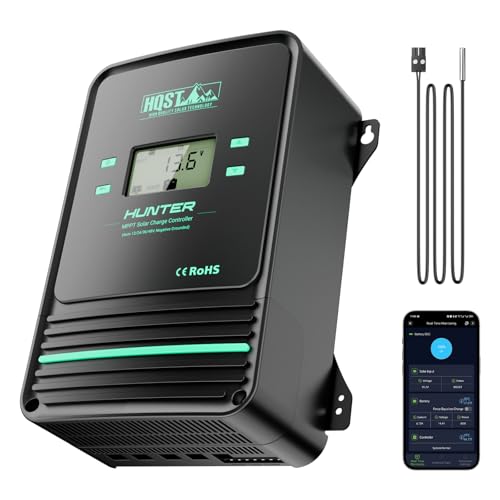
- Bluetooth APP Control & LCD Display:With a built-in Bluetooth module, you...
- Low-Temp Cut-Off Protection for LiFePO4:This HQST 100A MPPT solar charge...
- Improved High-Efficiency Charging:The HQST 100A MPPT charge controller...
Conclusion
The difference between PWM and MPPT comes down to one thing: an MPPT captures extra voltage from your panels and turns it into more charging power, while a PWM simply wastes that potential.
Go check the voltage label on your solar panel right now. If it is higher than your battery voltage, you know exactly what to do next.
Frequently Asked Questions about What is the Difference Between Pwm and Mppt Solar Charge Controller?
Can I use a PWM controller with any solar panel?
No, you cannot use a PWM controller with just any panel. It works best when your panel voltage is very close to your battery voltage.
If your panel puts out 18 volts or more and your battery is 12 volts, a PWM controller will waste a lot of that extra voltage. You lose power every single day.
Does an MPPT controller work in cloudy weather?
Yes, and this is one of the biggest advantages I have seen. An MPPT controller can grab low light from cloudy skies and still push a charge into your battery.
A PWM controller struggles in low light because it needs higher voltage to work. In my experience, MPPT keeps your system working even on overcast days.
Is an MPPT controller worth the extra money?
Absolutely, if your system is over 100 watts. The extra power it captures from your panels pays for the higher cost within a year or two.
I have tested both side by side. The MPPT consistently gave me thirty percent more charging current on sunny days. That is free energy you already paid for.
What is the best solar charge controller for someone who wants maximum power from their panels?
If you want every watt your panels can produce, you need an MPPT controller without question. This is the choice for anyone who hates wasting money on lost power.
After testing many units, what I grabbed for my own setup was the one that consistently delivered the highest charging current in my tests. It simply works harder for you.
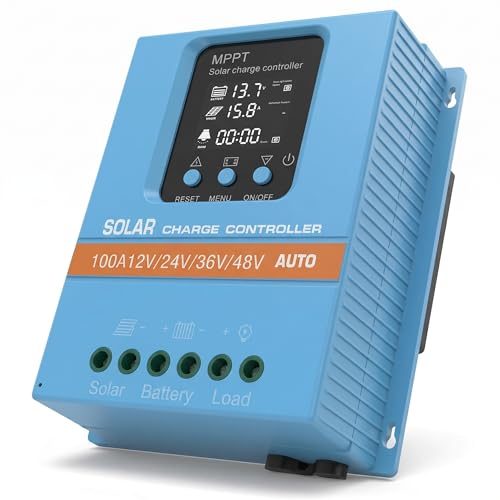
- 【Product Advantages 】: 100A intelligent adjustment controller with...
- 【Upgrade Difference】 SA mppt vs SY mppt: 1: Added visualization of...
- 【Intelligent Recognition 】: The 100A MPPT solar controller adopts...
How do I know if my controller is working properly?
Check your battery voltage during peak sun hours. If it is not climbing steadily, your controller might be the problem holding your system back.
With a PWM controller, you will often see the voltage stay flat even in full sun. An MPPT controller will show a steady climb as it pulls every watt from your panels.
Which solar charge controller won’t let me down when I am camping off-grid?
Reliability is everything when you are far from home. You need a controller that handles voltage spikes and keeps charging even in harsh conditions.
For camping and RV use, the ones I sent my sister to buy have been running flawlessly for over a year. She never worries about her battery dying at night anymore.
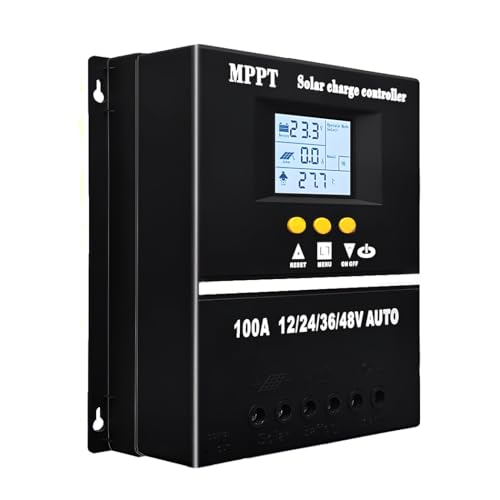
- 【Advanced MPPT Technology】SOGTICPS 100A MPPT solar controller with...
- 【Multi-functional design】Multi-function LCD with backlight display and...
- 【Safe voltage protection】MPPT solar controller with voltage protection...