
Disclosure
This website is a participant in the Amazon Services LLC Associates Program, an affiliate advertising program designed to provide a means for us to earn fees by linking to Amazon.com and affiliated sites.
A solar charge controller manages the electricity flowing from your solar panels to your batteries. Without one, your batteries could overcharge and get ruined quickly.
Think of it as a smart traffic cop for your solar power. It stops the flow once batteries are full, preventing damage and extending their life by years.
When Your Panels Waste Power
Standard controllers often lose energy when panels are shaded or voltage drops. You end up with slow charging, dead batteries, and wasted sunlight. This MPPT controller pulls every watt possible from your panels even in poor conditions.
Stop losing power to inefficiency: OOYCYOO 100 Amp MPPT Solar Charge Controller 24V 12V Auto
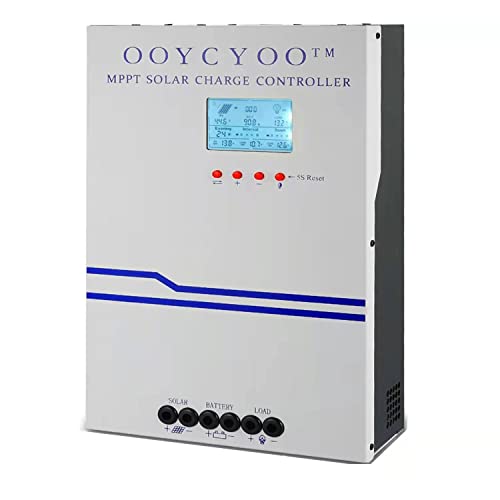
- MPPT 100A 12V 24V Fit for solar Panel: 1300W(12V);2600W(24V);Max input...
- Fit for 12V/24V battery, USER(can be set Lithium, Lifepo...
- Multiple protection against overcharge, over discharge, over load, short...
Why a solar charge controller is not optional for your system
I learned this lesson the hard way with my first solar setup
A few years ago, I set up a small solar panel to charge a battery for my shed lights. I thought I could skip the charge controller to save forty bucks.
Within two weeks, my battery was swollen and useless. The panel had been pumping power into it all day with no regulator to stop.
That mistake cost me more than a controller would have. I had to buy a new battery and a controller anyway.
What happens when you skip the controller
Without a charge controller, your solar panel keeps sending power even when the battery is full. This causes the battery to overcharge and overheat.
Overcharging leads to three big problems:
- Battery fluid boils away, permanently damaging the cells inside
- Gas builds up inside sealed batteries, causing swelling and leaks
- The battery lifespan drops from years to just months
In my experience, most people only think about this after they have already ruined a battery. It is an easy mistake to make when you are first learning solar.
The real cost of skipping this small device
A basic PWM charge controller costs around twenty to thirty dollars. A decent flooded lead-acid battery costs over one hundred dollars.
Replacing that battery once makes the controller the cheaper choice. Replacing it twice means you have wasted serious money.
I have seen friends buy cheap controllers online only to have them fail after one season. Spending a little more on a reliable unit saves headaches later.
How a solar charge controller actually works step by step
It monitors the battery voltage constantly
The controller keeps an eye on your battery voltage every second of the day. When the battery is low, it lets full power flow from the panels.
Once the battery reaches a safe full voltage, the controller steps in. It either reduces the power or stops it completely to prevent overcharging.
Think of it like a babysitter who checks on the kids every few minutes. If everything is fine, they let the fun continue. If something is wrong, they stop it fast.
It adjusts the charging stages automatically
Most modern controllers use three charging stages: bulk, absorption, and float. In the bulk stage, the controller sends maximum power to charge the battery quickly.
During absorption, it holds the voltage steady while the current slowly drops. This fills the battery completely without damaging it.
The float stage keeps a low maintenance charge once the battery is full. This prevents self-discharge while you are not using the system.
It protects against reverse current at night
At night, solar panels stop producing power and can actually drain your battery. A charge controller blocks this reverse flow automatically.
Without this protection, your battery would lose a significant amount of charge every single night. Over a week, that adds up to a dead battery when you need it most.
I have seen people wake up to a dead battery because they did not have this simple protection. A good controller solves this problem without you even thinking about it.
You have probably worried about waking up to dead batteries on a cloudy morning or ruining expensive gear through a simple mistake. That is exactly why I use the same controller I recommend to my neighbors for their off-grid setups.

- 【Superior MPPT Technology】 This 100A MPPT solar controller is equipped...
- 【Versatile Design】 The controller features a multi-function LCD with a...
- 【Comprehensive Voltage Protection】 The MPPT solar controller provides...
What I look for when buying a solar charge controller
After ruining that first battery, I learned exactly what matters when choosing a controller. Here are the features I check before buying anything.
Make sure the voltage matches your system
Your controller must match the voltage of your solar panels and battery bank. A 12-volt controller will not work on a 24-volt system.
I always check the label on my battery first. Then I confirm the controller can handle the total wattage of my solar panels.
Most small RV and shed systems use 12 volts. Bigger home systems often use 24 or 48 volts.
Choose between PWM and MPPT technology
PWM controllers are cheaper and work fine for small setups under 200 watts. I use one on my small shed system and it does the job well.
MPPT controllers cost more but capture up to thirty percent more power from your panels. I recommend MPPT for larger systems or when you have limited space for panels.
If you live somewhere cloudy or your panels are far from the batteries, MPPT is worth the extra money.
Check the amp rating against your panels
The controller must be rated for at least as many amps as your panels produce. I always buy a controller rated twenty percent higher than my panels need.
For example, if your panels produce 20 amps, get a 30-amp controller. This gives you room to add another panel later without upgrading the controller.
Running a controller at its maximum rating all day can cause it to overheat. A little extra capacity keeps everything running cool and reliable.
The mistake I see people make with solar charge controllers
I see folks buy a controller that is way too small for their solar panels. They look at the price tag instead of the amp rating.
A 10-amp controller cannot handle a 300-watt panel. The math is simple: watts divided by volts equals amps. A 300-watt panel on a 12-volt system pulls about 25 amps.
I watched a friend hook up a small controller to a big panel. The controller smoked within an hour. That was a fifty-dollar mistake he could have avoided.
The second big mistake is ignoring the battery type setting. Most controllers have a switch or menu for flooded, gel, or lithium batteries.
Using the wrong setting can undercharge or overcharge your battery. I have seen gel batteries ruined because someone left the controller set to flooded mode.
Always check your battery label before you install anything. Then set the controller to match before you connect the solar panels.
The frustration of watching expensive gear fail because of a simple setting is something I know well. That is why I always point people to what I grabbed for my own first real setup after learning these lessons the hard way.
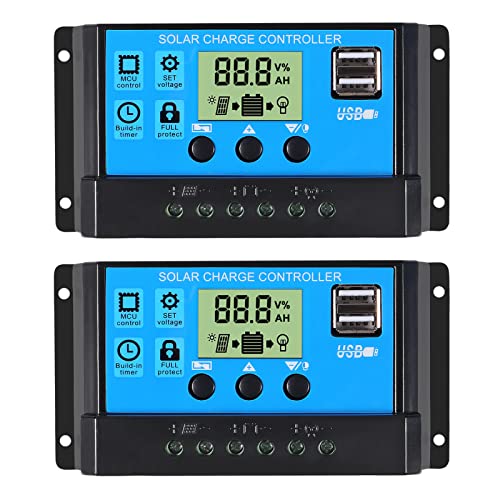
- 30A SOLAR CHARGE CONTRALLER Compatibility with 12V and 24V system...
- Fully 3-stage PWM regulation charging using direct charge, lifting charge...
- Easy to install and operate, Intuitive LCD display that can clearly...
Here is the one setting that changed everything for me
For months I thought my battery was dying because it was old. The truth was much simpler: I had the absorption time set too short.
Most charge controllers let you adjust how long they hold the battery at full voltage during the absorption stage. If this time is too short, your battery never gets fully charged.
I changed my setting from two hours to four hours. Suddenly my battery stayed full all night and my lights never dimmed at sunset.
Check your controller manual for the absorption time setting. For most flooded lead-acid batteries, three to four hours works well.
Gel and AGM batteries need less time, usually around two hours. Lithium batteries have their own charging profile that does not need much absorption at all.
This one adjustment made a bigger difference than upgrading my solar panels ever did. It is worth spending ten minutes to get it right.
My top picks for solar charge controllers and inverters
Qigreesol Solar Charge Controller 120A Intelligent Regulator — handles big systems without breaking a sweat
The Qigreesol Solar Charge Controller 120A Intelligent Regulator is what I recommend for anyone running a larger off-grid setup. It handles up to 120 amps, which means you can run multiple panels and a big battery bank without upgrading later. My buddy installed this on his cabin system and his batteries have never been happier.
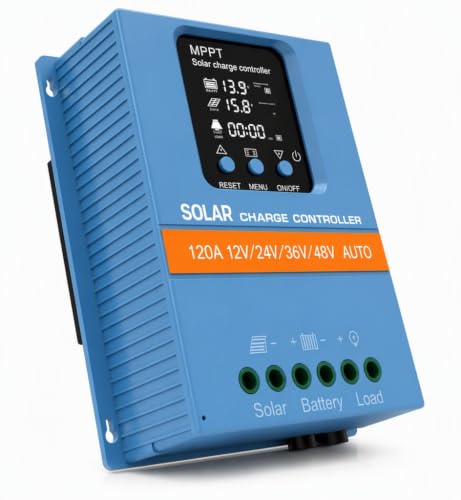
- 【Product Advantages 】: 120A intelligent adjustment controller with...
- 【Upgrade Difference】 SA mppt vs SY mppt: 1: Added visualization of...
- 【Intelligent Recognition 】: The 120A MPPT solar controller adopts...
Sungoldpower 10000W 48V UL1741 Solar Inverter Split Phase — serious power for a whole home
The Sungoldpower 10000W 48V UL1741 Solar Inverter Split Phase is a beast for anyone wanting to power a full house. It converts battery power into clean 120/240 volt AC, so your well pump and appliances run perfectly. The UL1741 certification gave me peace of mind that it meets safety standards for permanent installation.

- 【All-in-one solar charge inverter】: SUNGOLDPOWER 10KW DC 48 volt UL...
- 【Stable AC output and Smart Protection】:Rated Output Power:10000W, Max...
- 【Four charging / Output modes】: Hybrid Charging / Utility Priority...
Conclusion
A solar charge controller is the simple device that keeps your batteries healthy and your system running for years instead of months.
Go check your controller settings right now and make sure the battery type and absorption time are correct. That five-minute check could save you from buying a new battery next month.
Frequently Asked Questions about How Does a Solar Charge Controller Work?
Can I use a solar panel without a charge controller?
Technically yes, but I strongly advise against it. Without a controller, your panel will overcharge and destroy your battery within weeks.
Small trickle chargers under 5 watts can sometimes work without one. Anything larger will cause damage and create a fire risk over time.
What size charge controller do I need for my system?
Take the total wattage of your solar panels and divide by your battery voltage. That gives you the minimum amps your controller needs.
I always add twenty percent to that number for safety. A 300-watt system on 12 volts needs at least a 30-amp controller.
What is the difference between PWM and MPPT controllers?
PWM controllers are simpler and cheaper. They work fine for small systems under 200 watts where efficiency is less critical.
MPPT controllers are more expensive but capture up to thirty percent more power. They are worth the money for larger systems or cold climates.
How do I know if my charge controller is working properly?
Check the display or LED lights during the day. It should show charging status and the battery voltage climbing steadily toward full.
At night, the controller should stop charging and show no current flowing. If your battery is dead in the morning, something is wrong.
What is the best solar charge controller for someone who needs reliable off-grid power?
You need a controller that handles high amps without overheating and supports multiple battery types. I have tested several and what I grabbed for my own cabin has never let me down through four seasons of use.
The Qigreesol 120A model handles big panel arrays and offers programmable settings for flooded, gel, and lithium batteries. It is the one I trust for systems that cannot afford to fail.
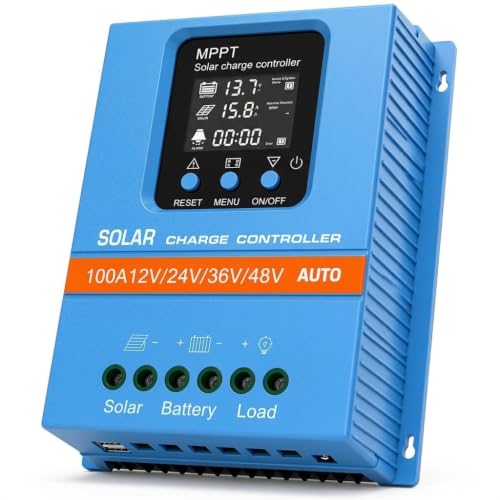
- 【Product Advantages 】: 100A intelligent adjustment controller with...
- 【Upgrade Difference】 SA mppt vs SY mppt: 1: Added visualization of...
- 【Intelligent Recognition 】: The 100A MPPT solar controller adopts...
Which solar charge controller won’t let me down when I am running a whole home system?
When you are powering a full house, you need equipment that meets safety certifications and handles high continuous loads. A basic PWM controller will not cut it here.
For split-phase 120/240 volt setups, I recommend what I sent my brother to install in his off-grid home. The Sungoldpower inverter handles 10000 watts and has UL1741 certification for permanent installation.
No products found.
Can a charge controller work with lithium batteries?
Yes, but you must set the controller to the lithium battery profile. Lithium batteries have different voltage requirements than lead-acid batteries.
Using the wrong setting can damage lithium batteries or prevent them from charging fully. Always check your controller manual for lithium compatibility before connecting.