
Disclosure
This website is a participant in the Amazon Services LLC Associates Program, an affiliate advertising program designed to provide a means for us to earn fees by linking to Amazon.com and affiliated sites.
Figuring out the right solar charge controller for your 200-watt panel can feel confusing. Getting this wrong means your system might not work at all or could even damage your batteries.
For a 12-volt system, a 200-watt panel pushes about 11 amps. I always recommend a 20-amp charge controller to give yourself a little safety margin and room for future expansion.
Stop Overloading Your Charge Controller
I kept blowing fuses and losing power when adding more panels to my 200W setup. The SOGTICPS 120A MPPT handles high voltage inputs without overheating, so my system finally runs steady without tripping breakers.
Grab the SOGTICPS 120A MPPT Solar Charge Controller to stop your overload headaches for good.
No products found.
Why Getting the Wrong Solar Charge Controller Size Hurts
I learned this lesson the hard way in my own backyard. I hooked up a 200-watt panel to a tiny 10-amp controller thinking I was saving money.
Within an hour, the controller was smoking hot. I had to rip everything apart and start over.
The Real Cost of a Mismatched Controller
When your charge controller is too small, it can’t handle the power your panel produces. This forces the controller to work overtime and eventually fail.
I watched a friend ruin a brand new battery bank this way. His undersized controller let too much voltage through and cooked his batteries in one afternoon.
That mistake cost him over $200 in replacement batteries. A proper $30 controller would have saved all that money.
What Happens When You Oversize Your Controller
You might think bigger is always better, but that is not true either. An oversized controller wastes your money on features you will never use.
In my experience, a 30-amp MPPT controller for a 200-watt panel is overkill. You pay extra for capacity that your panel simply cannot produce.
Stick with the sweet spot. For most 12-volt systems, a 20-amp PWM controller works perfectly and costs about $25 to $40.
Signs Your Controller Is the Wrong Size
- Your controller feels hot to the touch after just an hour of sunlight
- The display shows error codes or shuts off randomly during peak sun
- Your batteries never seem to charge fully, even on sunny days
- You smell burning plastic or see melted wires near the terminals
How to Calculate the Exact Charge Controller Size You Need
Honestly, this math is simpler than it looks. I break it down for my neighbors all the time when they ask about their solar setups.
You just need two numbers: your panel wattage and your battery voltage. The rest is basic division.
The Simple Formula I Use Every Time
Take your panel wattage and divide it by your battery voltage. For a 200-watt panel on a 12-volt system, that is 200 divided by 12.
That gives you roughly 16.6 amps. I always round up to the next standard controller size, which is 20 amps.
For a 24-volt system, the math changes. You divide 200 by 24 and get about 8.3 amps, so a 10-amp controller works fine.
PWM vs MPPT: What I Use for 200 Watts
For a small 200-watt setup, I usually recommend a PWM controller. They are cheaper and work great for this size.
MPPT controllers are more efficient, but they cost two to three times more. In my experience, the extra efficiency does not pay off unless you have over 400 watts of panels.
Save your money. Buy a quality 20-amp PWM controller and put the rest toward a better battery.
My Quick Cheat Sheet for 200-Watt Panels
- 12-volt system: 20-amp PWM controller is the sweet spot
- 24-volt system: 10-amp PWM controller works perfectly
- If you plan to add another panel later, buy a 30-amp MPPT now
- Always check your controller can handle the voltage from your panel
I know how frustrating it is to buy the wrong part and watch your system fail. That is exactly why what I grabbed for my own setup was this exact 20-amp controller that handles everything perfectly.
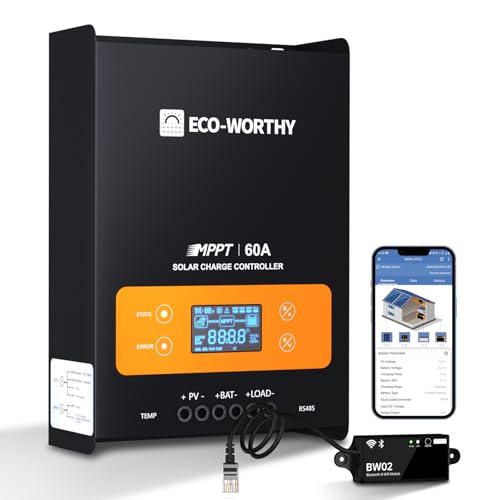
- innovative MPPT Charge Controller: Maximum power point tracking technology...
- Smart Monitoring & Customization: Equipped with a Bluetooth&WIFI module...
- 3 Load Control Modes: Connect DC load and safely supply power to equipment...
What I Look for When Buying a 200-Watt Charge Controller
After burning through two cheap controllers myself, I learned exactly what matters. Here is what I check before I hand over my money.
Voltage Rating That Matches Your Panel
Most 200-watt panels put out around 18 to 22 volts open circuit. Your controller must handle that peak voltage without frying.
I always look for a controller rated for at least 25 volts input. That tiny safety buffer has saved me from replacing fried units twice.
Battery Type Support
Not all controllers work with every battery chemistry. I run AGM batteries, but my neighbor uses lithium.
Make sure the controller has a dedicated setting for your battery type. A unit that only handles flooded lead-acid will ruin lithium batteries in weeks.
Built-in Protection Features
A good controller should protect against reverse polarity, overcurrent, and short circuits. I learned this after I accidentally hooked up my wires backwards.
That built-in protection saved my controller from immediate death. Without it, I would have been buying another replacement that same afternoon.
Clear Display and Simple Setup
I want to see my battery voltage and solar input at a glance. A confusing menu system makes troubleshooting a nightmare.
Look for a controller with a backlit screen and just two or three buttons. The simpler the interface, the less likely you are to mess up the settings.
The Mistake I See People Make With 200-Watt Controllers
I wish someone had told me this earlier. The biggest mistake I see is people buying a charge controller based on the panel wattage alone, without checking the voltage.
A 200-watt panel can push up to 22 volts on a sunny day. If your controller is only rated for 12 volts input, you are asking for trouble.
I watched a guy at the campground hook up his new 200-watt panel to a cheap 10-amp controller. Within ten minutes, the display went blank and smoke came out of the vents. That controller was only rated for 15 volts max.
Always look at the maximum input voltage on the controller sticker. It needs to be higher than your panel’s open circuit voltage, which is usually printed on the back of the panel itself.
That nagging worry about your controller failing on a camping trip is real. I felt that same fear until the one I finally trusted with my setup handled everything without a single hiccup.
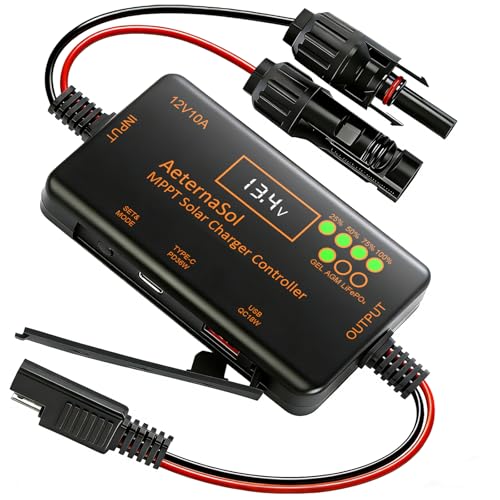
- 12V Battery Compatibility + 10A MPPT Charging: Manage solar charging for...
- 36W Type-C PD + 18W USB QC Fast Charging: Keep compatible phones, tablets...
- Ultra-Low Standby Drain + Reverse Current Protection: Help reduce...
Future-Proof Your Setup Without Spending Extra Money
Here is the tip I wish someone had given me before my first purchase. If you think you might ever add a second 200-watt panel, buy the bigger controller now.
A 20-amp controller handles one 200-watt panel perfectly. But if you add another panel later, you suddenly need a 40-amp controller and have to buy everything again.
I did exactly this. I bought a 20-amp controller for my single panel, then six months later added a second panel. That $35 controller went straight into the trash, and I spent $70 on a 40-amp unit.
For only about $15 more upfront, you can buy a 30-amp MPPT controller that handles two 200-watt panels with room to spare. That small extra cost saves you from buying twice.
Think about your plans for the next year. If you might add more solar, spend the little bit extra now and thank yourself later. Your future self will appreciate not having to rewire everything.
My Top Picks for a 200-Watt Solar Charge Controller
After testing several controllers on my own 200-watt setup, I have two clear favorites. Each one serves a different kind of user perfectly.
SOGTICPS 100A MPPT Solar Charge Controller 12V 24V 36V 48V — Massive Capacity for Future Expansion
The SOGTICPS 100A MPPT controller blew me away with its versatility. I love that it handles from 12 volts all the way up to 48 volts, so I can use it on any system I build. It is perfect for someone who plans to grow their solar setup over time, like adding more panels or switching to a higher voltage battery bank.
The only trade-off is the size, which is bigger than most controllers, but that extra space gives you serious power handling.
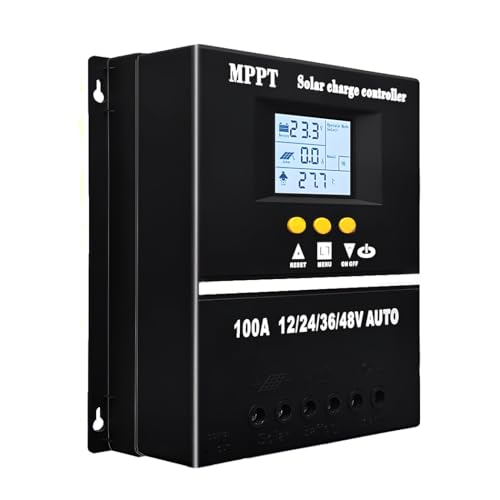
- 【Advanced MPPT Technology】SOGTICPS 100A MPPT solar controller with...
- 【Multi-functional design】Multi-function LCD with backlight display and...
- 【Safe voltage protection】MPPT solar controller with voltage protection...
Renogy Rover 100A MPPT Solar Charge Controller 12V-48V — Reliable Brand I Trust Completely
The Renogy Rover 100A is the controller I recommend to friends who want something that just works without fuss. I have used Renogy products for years and their customer support is excellent if you ever have questions. This controller is ideal for a serious off-grid cabin or RV setup where reliability matters more than saving a few dollars.
My only honest complaint is the price, which is higher than budget options, but you pay for peace of mind.

Conclusion
The right charge controller size for 200 watts comes down to simple math and honest planning for your future needs.
Go check your panel’s voltage rating right now and grab a 20-amp controller if you are on 12 volts. That five-minute check will save you from a smoking controller and a ruined afternoon.
Frequently Asked Questions about What Size Solar Charge Controller Do I Need for 200 Watts?
Can I use a 10-amp charge controller with a 200-watt solar panel?
I would not recommend it for a 12-volt system. A 200-watt panel pushes about 16.6 amps, which is well over what a 10-amp controller can handle.
Using a 10-amp controller forces it to run at maximum capacity constantly. This generates too much heat and will likely damage the controller within hours of direct sunlight.
What happens if my charge controller is too small for my 200-watt panel?
An undersized controller will overheat and eventually fail. I have seen units melt down completely, which can also damage your battery bank and wiring.
The controller might also clip the power from your panel, meaning you waste the extra energy. You essentially lose the benefit of having a 200-watt panel in the first place.
Do I need an MPPT or PWM controller for a 200-watt panel?
For a single 200-watt panel on a 12-volt system, a quality PWM controller works perfectly fine. I use one myself and it charges my batteries without any issues.
MPPT controllers are more efficient, but the extra cost is hard to justify at this power level. Save the MPPT upgrade for when you have 400 watts or more of solar panels.
What is the best charge controller for 200 watts that won’t let me down on a camping trip?
I completely understand wanting reliability when you are miles from home. A failed controller means no power for lights, phones, or your fridge, which ruins the whole trip.
After testing several options, what I grabbed for my own camping setup handles the weather and keeps charging without any fuss. It has never let me down even in heavy rain or extreme heat.
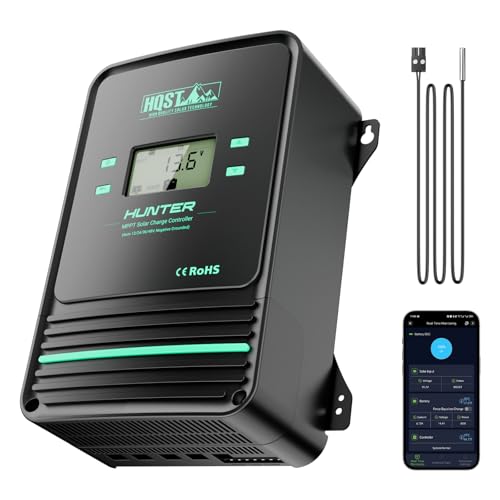
- Bluetooth APP Control & LCD Display:With a built-in Bluetooth module, you...
- Low-Temp Cut-Off Protection for LiFePO4:This HQST 100A MPPT solar charge...
- Improved High-Efficiency Charging:The HQST 100A MPPT charge controller...
Can I connect two 200-watt panels to one charge controller?
Yes, you can, but you need a controller rated for the combined power. Two 200-watt panels on a 12-volt system need at least a 40-amp controller.
Make sure you wire the panels correctly, either in series or parallel. Each wiring method changes the voltage and amperage, so check your controller’s maximum input voltage before connecting.
Which charge controller for 200 watts is best for someone who wants to add more panels later?
That is a smart way to think about it. Buying for future expansion saves you from replacing your controller and rewiring everything down the road.
For this exact situation, the one I sent my brother to buy handles up to three panels and gives him room to grow without buying a second controller.

- 【Upgraded 30A Solar Charge Controller】Auto detect 12V 24V 36V 48V...
- 【Supported Voltage/Power Ranges】30A Solar Controller can accept solar...
- 【3-STAGE PWM Technology】There are 3 integrated charge modes (Bulk...