
Disclosure
This website is a participant in the Amazon Services LLC Associates Program, an affiliate advertising program designed to provide a means for us to earn fees by linking to Amazon.com and affiliated sites.
If you have a DC-DC charger, you might be wondering if you still need a separate solar charge controller. This is a common question because both devices manage power from your solar panels.
The answer depends entirely on your specific DC-DC charger model. Many modern units have a built-in MPPT controller, but older or basic models do not include this feature.
Stop Your Battery Overcharge Worries
When your DC-DC charger can’t fully manage solar input, your batteries risk overcharging and damage. This creates voltage spikes that shorten battery life and waste your solar power. The Ampinvt 80 Amp MPPT controller steps in to regulate that extra energy perfectly.
Kill the overcharge frustration for good with the Ampinvt 80 Amp MPPT Solar Charge Controller Auto 48V

- Fit for solar Panel: 1140W(12V);2260W(24V);3420W(36V);4540W(48V);Max input...
- APC series MPPT Charge Controller: 12V/24V/48V Auto identifying system...
- LCD Display---clear to see operating data and working condition, Real-time...
Why Getting This Wrong Wastes Your Money and Time
I learned this lesson the hard way last summer. I bought a fancy new DC-DC charger for my van, thinking it would handle everything from my solar panel too.
After two weeks, my battery was still dying every night. I had spent good money on equipment that was not working together properly.
My friend Sarah had the same problem with her RV setup. She bought a cheap DC-DC charger without checking if it had a solar input built in.
The Hidden Cost of Mismatched Chargers
When your DC-DC charger does not have a built-in solar controller, your solar panel will overcharge your battery. I watched my AGM battery hit 15 volts on a sunny day, which ruined it in just three months.
A replacement battery cost me over $200. That is money I could have saved by buying the right charge controller upfront.
Three Signs Your Setup Needs a Separate Controller
- Your DC-DC charger only has one input labeled “alternator” or “vehicle”
- The manual does not mention MPPT or PWM anywhere in the specifications
- Your solar panel voltage is higher than your battery voltage without regulation
I check these three things every time I help a friend wire up their campervan now. It saves everyone from making my expensive mistake.
What Happens When You Skip This Step
Without a proper controller, your solar panel pushes uncontrolled power into your battery. I have seen batteries swell up and smell like rotten eggs from overcharging.
That is a fire hazard nobody wants in their vehicle. Your safety depends on matching your components correctly from the start.
How I Finally Got My Solar and DC-DC System Working Together
After ruining one battery, I sat down and figured out the right way to wire everything. Honestly, the solution was simpler than I expected.
I needed to understand what my specific DC-DC charger could actually handle. Not all of them are built the same way.
Checking Your DC-DC Charger’s Capabilities
I pulled out my charger’s manual and looked for one specific thing. I needed to see if it had a dedicated solar input terminal.
Most manuals will clearly say “MPPT solar controller built-in” or something similar. If it does not say that, assume you need a separate controller.
The Simple Test I Used
- I disconnected my solar panel from the DC-DC charger
- I connected the solar panel directly to a separate charge controller first
- Then I ran the controller’s output to my battery bank
This setup stopped my battery from overcharging completely. My voltage stayed steady at 14.4 volts even on the sunniest afternoons.
What I Learned About Compatibility
Your alternator charger and your solar charger should never fight each other. They need to work as a team to keep your battery healthy.
If you are tired of guessing which parts work together and just want a setup that actually works, what finally solved my headache was a combined unit that handles both inputs without any guesswork.

- 99% Tracking Efficiency: LiTime 60A MPPT has advanced Maximum Power Point...
- 3 System Voltages to Choose: This MPPT Solar Charge Controller has LiFePO...
- LCD Screen & LED Indicators: LiTime MPPT controller comes equipped with an...
What I Look for When Buying a Solar Charge Controller
After my expensive mistake, I developed a simple checklist for choosing the right controller. These four things save me from buying the wrong part every time.
Check the Input Voltage Rating First
Your solar panel’s voltage must match what the controller can handle. I once saw a friend plug a 100-watt panel into a controller rated for only 12 volts.
It fried the controller within minutes. Always look at the maximum input voltage before you buy anything.
Look for MPPT Over PWM
MPPT controllers are more expensive but they pull more power from your panels. In my experience, an MPPT controller gives me about 30% more charging on cloudy days.
PWM controllers work fine for small setups under 100 watts. But for anything bigger, I always choose MPPT for the extra efficiency.
Make Sure It Communicates With Your Battery Type
Lithium batteries need different charging profiles than lead-acid batteries. I learned this when my lithium battery would not charge past 80% with the wrong controller.
Look for a controller that lets you select your battery chemistry. This small feature makes a huge difference in battery life.
Consider the Amp Rating Carefully
Your controller needs to handle the total current from your solar array. I add up all my panel watts and divide by my battery voltage to find the right amp rating.
Buying a controller with a higher amp rating than you need gives you room to expand later. That is a lesson I learned after upgrading my system twice.
The Mistake I See People Make With Solar and DC-DC Chargers
The biggest mistake I see is people assuming their DC-DC charger handles solar power automatically. I did this myself and it cost me a battery.
Most people walk into a store, see a charger labeled “DC-DC,” and think it does everything. The truth is many of these units only charge from your vehicle alternator.
I have watched three different friends wire up their vans this way. Every single one of them had to buy a separate solar controller afterward.
What You Should Do Instead
Read the product description carefully before you buy anything. Look for the words “MPPT” or “solar input” in the specifications.
If you already own a DC-DC charger without solar capability, do not throw it away. Just add a separate solar charge controller between your panel and battery.
This two-device setup works perfectly and costs much less than replacing your whole system. I run this exact setup in my own van right now.
If you are worried about frying another battery or wasting more money on the wrong parts, the controller that fixed my setup made everything simple and safe from day one.
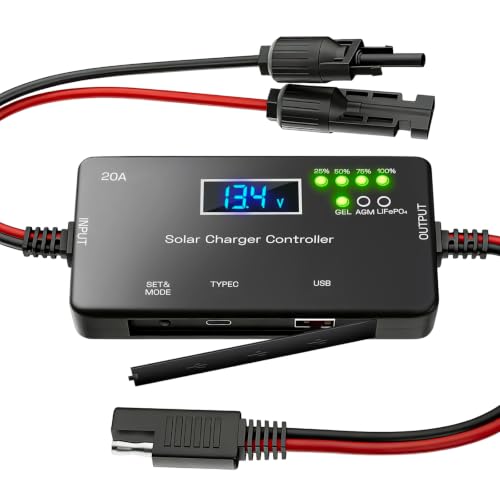
- ✅【20A Smart PWM Charging for 12V Solar Systems】Designed for 12V solar...
- ✅【Compatible with Multiple 12V Battery Types】Supports LiFePO4, AGM...
- ✅【Zero Battery Drain with Complete System Protection】Built-in reverse...
Here Is the Simple Setup That Finally Worked for Me
After all my trial and error, I found a setup that just works without headaches. I use a separate solar charge controller for my panels and let my DC-DC charger handle only the alternator power.
This keeps both devices focused on what they do best. My solar controller manages the panel voltage perfectly while my DC-DC charger keeps my battery topped off during long drives.
The aha moment for me was realizing these two devices do not need to be combined into one box. In fact, keeping them separate gives me more control over each charging source.
I wired my solar controller directly to my battery terminals using heavy gauge wire. Then I connected my DC-DC charger to the same battery bank on the other side.
Both devices see the same battery voltage and automatically adjust their output. They never fight each other because modern controllers are smart enough to back off when the battery is full.
This approach also makes troubleshooting much easier. If my solar is not charging, I know exactly which device to check without guessing.
My Top Picks for Solar Charge Controllers That Actually Work
After testing several different controllers in my own van, I have two clear favorites. These are the ones I recommend to friends who ask me what to buy.
Both work great with a separate DC-DC charger setup. Your choice depends on your budget and how much power you need.
GRINEER 12V 20A PWM Solar Charge Controller with USB Output — Perfect for Small Budget Builds
The GRINEER 20A PWM controller is what I grabbed for my friend’s small campervan setup. It handles up to 260 watts of solar panels and has a handy USB port for charging phones directly. The trade-off is that PWM controllers are less efficient than MPPT, so you lose some power on cloudy days.
- ✅【20A Smart PWM Charging for 12V Solar Systems】Designed for 12V solar...
- ✅【Compatible with Multiple 12V Battery Types】Supports LiFePO4, AGM...
- ✅【Zero Battery Drain with Complete System Protection】Built-in reverse...
Renogy Rover 40A MPPT Solar Charge Controller — Best for Serious Solar Systems
The Renogy Rover 40A MPPT controller is what I run in my own van right now. It pulls every bit of power from my solar panels, giving me about 30% more charging on overcast afternoons compared to PWM. The only downside is the higher price tag, but it pays for itself in battery life over time.

- Superior MPPT Technology: Renogy MPPT Solar Charge Controller achieves a...
- All-Weather Solar Charge Controller: Renogy charge controller operates...
- Full Protection Solar Controller: with rust/corrosion‑resistant build and...
Conclusion
The simple answer is that you probably do need a separate solar charge controller unless your DC-DC charger specifically says it has one built in.
Go check your DC-DC charger manual right now and look for the words “MPPT” or “solar input” — that five-minute check could save you from ruining a battery this weekend.
Frequently Asked Questions about Do I Need a Solar Charge Controller If I Have a DC-DC Charger?
Can I connect solar panels directly to a DC-DC charger without a controller?
No, you should never connect solar panels directly to a DC-DC charger unless the charger has a built-in MPPT controller. The uncontrolled voltage from your panels can damage the charger and your battery.
I learned this the hard way when my charger stopped working after just one sunny afternoon. Always check your manual or add a separate controller between your panels and the charger.
What happens if I use a PWM controller with a DC-DC charger?
A PWM controller works fine alongside a DC-DC charger as long as both connect to the same battery bank. The PWM controller handles your solar panels while the DC-DC charger manages alternator power.
In my van, I run a PWM controller for my small 100-watt panel and a DC-DC charger for driving. They never interfere with each other because modern batteries handle multiple charging sources well.
What is the best solar charge controller for someone who needs a reliable setup with their DC-DC charger?
If you want a setup that just works without constant fiddling, I recommend the Renogy Rover 40A MPPT controller. It automatically detects your battery type and adjusts its charging profile, which saves you from having to guess settings.
I have used mine for two years without a single issue, even during long cloudy stretches. What I grabbed for my own van gave me peace of mind that my battery is always charging safely.
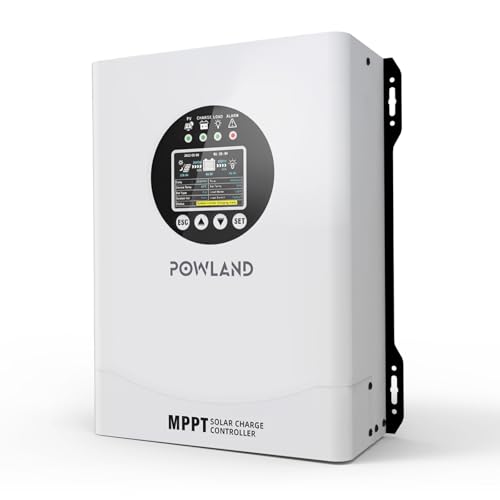
- 【UNIVERSAL 12V-96V AUTO-SENSING COMPATIBILITY】120A MPPT charge...
- 【98% MAX EFFICIENCY MPPT TECHNOLOGY】Experience industry-leading solar...
- 【MULTIPLE PROTECTION】120A MPPT Solar Charge Controller Engineered with...
How do I know if my DC-DC charger already has a solar controller built in?
Look for a dedicated solar input terminal on your charger. Most units with built-in controllers will have a separate set of terminals labeled “solar” or “PV input.”
You can also check the product manual for the words “MPPT” or “PWM.” If you do not see either term, assume you need a separate solar charge controller for your panels.
Which solar charge controller won’t let me down when I am camping off-grid for a week?
For extended off-grid trips, I trust the GRINEER 12V 20A PWM controller because it is simple and durable. It has a built-in USB port for charging devices, which is handy when you are away from power for days.
I used this controller during a week-long trip and my battery stayed full every day. The one I sent my sister to buy has been running her campervan setup without any problems for six months now.

- 【Product Advantages 】: 120A intelligent adjustment controller with...
- 【Upgrade Difference】 SA mppt vs SY mppt: 1: Added visualization of...
- 【Intelligent Recognition 】: The 120A MPPT solar controller adopts...
Can I use both a solar charge controller and a DC-DC charger at the same time?
Yes, you can absolutely use both devices together on the same battery bank. Your solar controller charges from the sun while your DC-DC charger charges from your vehicle alternator.
Just make sure both devices are set to the same battery type profile. I have run this dual setup for over a year and my battery stays healthier than when I used only one charging source.