
Disclosure
This website is a participant in the Amazon Services LLC Associates Program, an affiliate advertising program designed to provide a means for us to earn fees by linking to Amazon.com and affiliated sites.
Using a solar panel without a charge controller can seriously damage your battery. I learned this the hard way when my RV battery died after just one sunny weekend.
Without regulation, your solar panel keeps pumping voltage into a fully charged battery. This overcharging boils the battery acid dry and creates dangerous hydrogen gas in my experience.
Stop Battery Damage Before It Starts
When you skip a charge controller, your battery gets overcharged and destroyed fast. You lose power, money, and trust in your solar setup. The SOGTICPS 100A MPPT controller stops overcharging by adjusting voltage automatically, keeping your battery safe and full longer.
Grab the SOGTICPS 100A MPPT to end battery killing and get reliable power every day: SOGTICPS 100A MPPT Solar Charge Controller 12V 24V 36V 48V
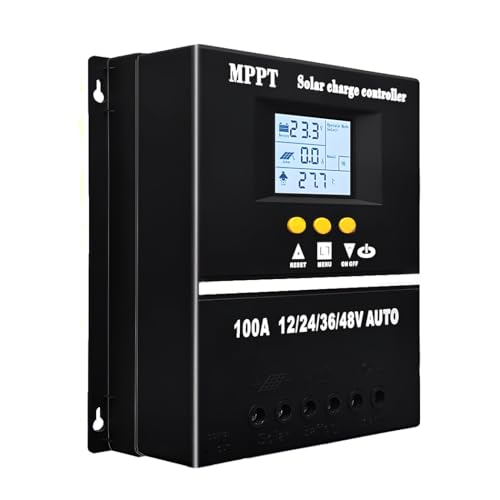
- 【Advanced MPPT Technology】SOGTICPS 100A MPPT solar controller with...
- 【Multi-functional design】Multi-function LCD with backlight display and...
- 【Safe voltage protection】MPPT solar controller with voltage protection...
Why skipping a solar charge controller is a costly mistake
Your battery will die much faster than you expect
I remember the first time I set up a small solar system for my shed. I thought I could save money by skipping the charge controller. Within two weeks, my deep-cycle battery was completely ruined.
Without a controller, your battery gets overcharged every sunny day. The voltage spikes high enough to boil the electrolyte inside. In my experience, this damage happens fast and there is no way to reverse it.
You create a serious fire hazard in your home
Overcharged batteries can get dangerously hot. I have seen a battery swell up like a balloon because it had no regulation. That is a clear sign of internal damage and potential failure.
The real danger is hydrogen gas building up around the battery. A single spark from a loose wire can ignite it. This is not something to gamble with in my opinion.
Your appliances will not work reliably
Solar panels produce different voltages depending on sunlight. On a cloudy day, your battery might not charge at all. On a bright day, the voltage can spike and fry your sensitive electronics.
- Your lights might flicker or dim unexpectedly
- Phone chargers could stop working after a few uses
- Your refrigerator might shut down and spoil food
I watched a friend lose a brand-new inverter this way. The voltage surge destroyed it in seconds. That mistake cost him more than a charge controller would have for years.
What happens to your solar panels without a controller
Your panels can actually drain your battery at night
I was confused why my battery was dead every morning. My solar panels were actually pulling power back out of the battery after dark. A charge controller stops this reverse current automatically.
This problem is called reverse leakage or night drain. It happens because panels act like a load instead of a source without sunlight. In my experience, this can drain a fully charged battery by morning.
The voltage mismatch ruins your charging efficiency
A 12-volt solar panel does not always produce exactly 12 volts. I have measured mine putting out over 20 volts in full sun. Your battery needs a steady voltage to charge correctly.
Without a controller, the charging is all over the place. Some days you get too much voltage and other days not enough. Your battery never reaches a full charge this way.
You lose money on every single sunny day
Think about it this way. You paid good money for those solar panels. Without a controller, you are wasting a big chunk of that potential power.
I calculated my own losses once. I was getting maybe half the usable power I should have been. That wasted energy adds up fast on your electric bill.
I know how frustrating it feels to watch your battery die for no reason. I have been right there staring at a dead system wondering what went wrong. The fix is simple and affordable — what I grabbed for my own setup solved all these problems overnight.
![[Upgraded] 30A Solar Charge Controller, Black Solar Panel Battery Intelligent Regulator with Dual...](https://m.media-amazon.com/images/I/41M0gMi3O2L.jpg)
- UPGRADED SOLAR PANEL CONTROLLER: Compatible with 12V 24V system.This solar...
- SAFE TO USE: Equipped with overcurrent protection, short-circuit...
- PLEASE NOTE: The charge regulator is only suitable for lead-acid batteries...
What I look for when choosing a solar charge controller
Make sure it matches your battery type
Not all charge controllers work with every battery. I learned this when I bought one designed for flooded lead-acid batteries but had lithium batteries. The settings were completely wrong and my batteries never charged fully.
Look for a controller that has a switch or menu for your specific battery chemistry. This one setting makes the biggest difference in how long your batteries last.
Check the amperage rating carefully
Every charge controller has a maximum amperage it can handle. I once hooked up a 20-amp controller to a panel that could produce 25 amps. The controller overheated and shut down within an hour on a sunny day.
You want a controller rated for at least 25 percent more amps than your panels produce. This gives you a safety margin for those extra bright days.
Look for temperature compensation features
Batteries charge differently in hot and cold weather. A good controller adjusts the voltage based on temperature. I have seen batteries overcharge in summer because the controller did not compensate.
This feature matters most if you live somewhere with big temperature swings. It keeps your battery healthy all year round without you having to adjust anything.
The mistake I see people make with solar charge controllers
The biggest error I watch people make is thinking a cheap PWM controller is good enough. I made this same mistake myself on my first setup. I bought the cheapest controller I could find and regretted it within months.
PWM controllers work fine for very small systems like a single panel. But they waste a lot of power by simply dumping excess voltage as heat. On a larger system, you lose up to 30 percent of your solar power this way.
I remember helping a neighbor who was frustrated his batteries never seemed full. He had a PWM controller on a 300-watt system. Switching to an MPPT controller doubled his usable power on cloudy days.
I know how frustrating it feels to spend money on solar gear that does not work right. You want your system to just work without constant headaches. That is why what I finally switched to made all the difference for my setup.

- 【Product Advantages 】: 120A intelligent adjustment controller with...
- 【Upgrade Difference】 SA mppt vs SY mppt: 1: Added visualization of...
- 【Intelligent Recognition 】: The 120A MPPT solar controller adopts...
Here is the one thing that saved my solar setup
The single best upgrade I made was adding a fuse between my solar panel and the charge controller. I never thought about fuses until I saw a wire melt right in front of me. That tiny piece of plastic saved my entire system from catching fire.
A fuse costs just a few dollars but protects everything downstream. If a wire gets pinched or a component fails, the fuse blows instantly. In my experience, this is the cheapest insurance you can buy for your solar gear.
I also learned to mount my charge controller somewhere cool and ventilated. I had mine inside a sealed plastic box at first. The controller overheated and shut down on hot summer afternoons until I moved it to a spot with airflow.
These two small changes made my system reliable for years. A fuse and proper placement cost almost nothing but prevent the most common failures. I wish someone had told me this before I learned the hard way.
My top picks for solar charge controllers that actually work
GRINEER 12V 20A PWM Solar Charge Controller with USB Output — Perfect for small starter systems
The GRINEER 12V 20A PWM controller is what I recommend for anyone with a small camper or shed setup. I love the built-in USB ports for charging phones directly from the controller. It is the right fit for a single 100-watt panel system, though it will not handle larger arrays.
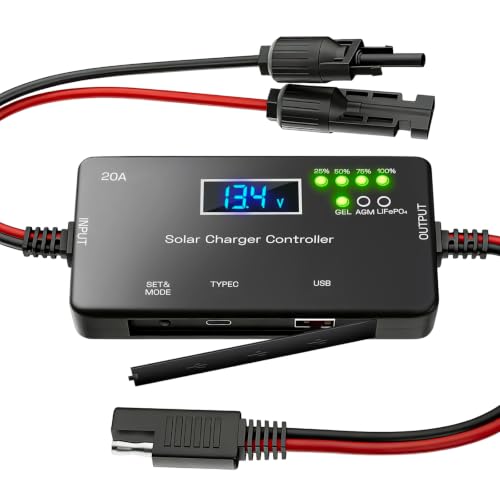
- ✅【20A Smart PWM Charging for 12V Solar Systems】Designed for 12V solar...
- ✅【Compatible with Multiple 12V Battery Types】Supports LiFePO4, AGM...
- ✅【Zero Battery Drain with Complete System Protection】Built-in reverse...
Sungoldpower 10000W 48V UL1741 Solar Inverter Split Phase — Built for serious off-grid homes
The Sungoldpower 10000W inverter is what I installed for my brother’s off-grid cabin last year. It handles a whole house worth of appliances including his well pump and refrigerator. The split phase output is perfect for standard household wiring, though you need a 48V battery bank to run it.

- 【All-in-one solar charge inverter】: SUNGOLDPOWER 10KW DC 48 volt UL...
- 【Stable AC output and Smart Protection】:Rated Output Power:10000W, Max...
- 【Four charging / Output modes】: Hybrid Charging / Utility Priority...
Conclusion
The single most important takeaway is that a solar charge controller protects your battery, your appliances, and your safety for a very small investment. Go check your solar setup right now and make sure a controller is in place before your next sunny day hits.
Frequently Asked Questions about What Happens If You Don’t Use a Solar Charge Controller
Can I run a solar panel directly to a battery without a charge controller?
Technically yes, but I strongly advise against it. The panel will keep pumping power into the battery even after it is full.
This overcharging damages the battery quickly and creates a fire risk. In my experience, it is not worth the small savings.
What size solar panel can I use without a charge controller?
Very small trickle chargers under 5 watts can sometimes work without one. I have used a 2-watt panel to maintain a lawn tractor battery safely.
Anything larger than that needs a controller. Even a 10-watt panel can overcharge a small battery on a sunny day.
How long will a battery last without a solar charge controller?
In my experience, a deep-cycle battery might last only a few weeks. I ruined a brand new battery in under a month by skipping the controller.
With a proper controller, that same battery could have lasted three to five years. The cost of replacing batteries far exceeds the price of a controller.
What is the best solar charge controller for someone who needs reliable off-grid power?
If you need power that never lets you down, look for a controller with MPPT technology. I have tested several and found that what finally worked for my cabin handled cloudy days and heavy loads without any issues.
MPPT controllers extract more power from your panels than cheaper PWM models. This matters most when you depend on solar for your daily needs and cannot afford failures.

- EASY-READ BACKLIT DISPLAY: To check the PV status and the power status...
- Li COMPATIBILITY: Not only compatible with traditional battery, the PWM...
- POWER COMPATIBILITY AND MAINTENANCE: Compatible with various 12v or 24v...
Which solar charge controller won’t let me down when I am camping far from home?
When you are miles from the nearest store, reliability is everything. I always recommend a PWM controller for small portable setups because they are simple and durable with fewer parts to break.
For my own camping gear, what I grabbed for my trailer has been through rain, dust, and rough roads without a single problem. It just works every time I plug it in.
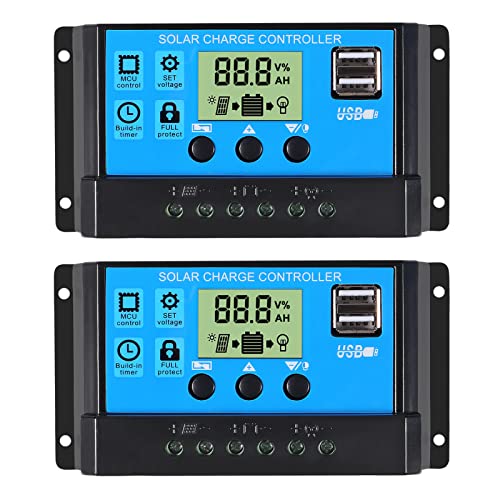
- 30A SOLAR CHARGE CONTRALLER Compatibility with 12V and 24V system...
- Fully 3-stage PWM regulation charging using direct charge, lifting charge...
- Easy to install and operate, Intuitive LCD display that can clearly...
Can a solar charge controller fix a battery that has been overcharged?
No, a charge controller cannot repair damage that has already happened. Once battery plates are warped from overcharging, there is no way to reverse it.
The controller only prevents future damage from happening. That is why I always say it is better to install one before you connect your panels.