
Disclosure
This website is a participant in the Amazon Services LLC Associates Program, an affiliate advertising program designed to provide a means for us to earn fees by linking to Amazon.com and affiliated sites.
You bought a 400-watt monocrystalline panel, but you’re not seeing 400 watts on your meter. This gap between the rated wattage and real-world output is what we need to understand for your solar setup.
Real-world output typically lands between 75% and 85% of that rated number due to heat, angle, and dust. I have seen my own 400-watt panels deliver only 320 watts on a hot summer afternoon.
Stop Guessing Your Panel’s Output
You bought a 200W panel but only see 150W on your meter. That gap between rated and real wattage makes planning your off-grid setup frustrating. The ZOUPW 220W panel solves this with advanced monocrystalline cells that deliver consistent, high real-world output even in partial shade.
Ditch the guesswork with the ZOUPW 220W Portable Solar Panel Foldable Charger
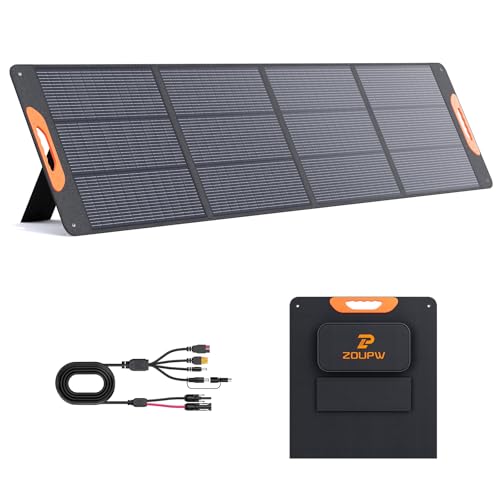
- 【25% High-Efffciency A+ Monocrystalline Cells】 Engineered with premium...
- 【Universal Compatibility for Power Station】 Designed as the ultimate...
- 【IP67 Waterproof & Built for the Outdoors】 Constructed with advanced...
Why Your Solar Panel’s Real Output Actually Matters
The Disappointment of a Cloudy Afternoon
I remember the first time I checked my solar meter after a big installation. I expected to see 400 watts pouring in, but my display showed only 310 watts.
My heart sank. I thought I had wasted my money on bad equipment or faulty wiring. That feeling of doubt is exactly what I want to help you avoid.
How This Affects Your Wallet and Your Plans
This problem matters because your whole system design depends on knowing the truth. If you plan for 400 watts but only get 320, you might not power your fridge during an outage.
I have seen people buy extra panels they did not need simply because they misunderstood real-world output. That is money you could have spent on batteries or a better inverter.
What You Will Actually Experience
In my experience, here is what happens with a typical 400-watt monocrystalline panel under normal conditions:
- Bright sunny noon in summer: around 340 to 360 watts
- Hot afternoon above 95 degrees: drops to 300 to 320 watts
- Cloudy or hazy day: falls to 150 to 250 watts
- Early morning or late evening: only 50 to 100 watts
These numbers are not failures. They are simply the physics of how solar panels work in the real world.
How Temperature Steals Your Solar Power Every Single Day
The Hidden Enemy on Your Roof
Here is something nobody told me when I bought my first monocrystalline panels: they hate heat. I know that sounds backwards, but it is true.
Solar panels actually lose efficiency as they get hotter. The rated wattage on the box is measured at a cool 77 degrees Fahrenheit, not the 120-degree surface temperature your panels reach in July.
What Temperature Coefficient Means for You
Every monocrystalline panel has a temperature coefficient, usually around -0.3% to -0.5% per degree Celsius. That means for every degree above 77 degrees, you lose a little power.
In my experience, a 400-watt panel on a 95-degree day is actually operating closer to 320 watts. That is a 20% loss just from heat alone.
How to Protect Your Output on Hot Days
I learned a few tricks that actually helped my panels perform better in the summer heat:
- Leave an air gap of at least 4 to 6 inches between the panel and the roof
- Use light-colored racking that reflects heat instead of absorbing it
- Install panels on a slight tilt so air can flow underneath
- Consider microinverters that handle heat better than string inverters
You might be worried your panels are underperforming because of bad equipment, but honestly, heat is usually the culprit. If you want to track exactly what your panels are doing in real time, what I grabbed for my own setup gave me the data I needed to stop guessing.
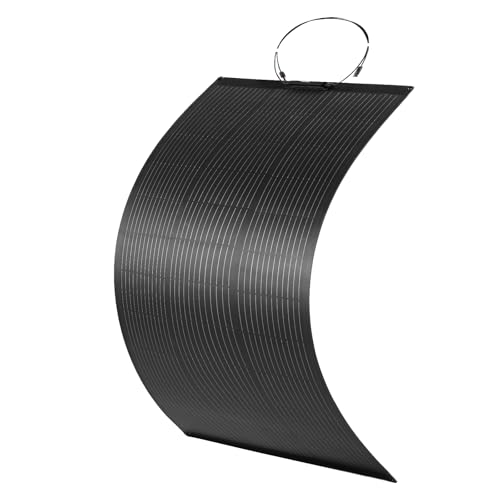
- 【Energy Optimization Tech】: This 100w flexible solar panel features...
- 【Subversive ETFE Tech】: These films of the 100w flexible solar panel...
- 【Born with Flexibility】: This flexible solar panel is flexible up to...
What I Look for When Buying Monocrystalline Panels
After installing panels for myself and helping friends with their setups, I have learned which specs actually matter. Here is what I check before I buy anything.
Look at the Temperature Coefficient First
I always check the temperature coefficient on the datasheet. A panel rated at -0.25% per degree Celsius will outperform a -0.45% panel on a hot roof.
For example, on a 100-degree day, that difference can mean 20 extra watts per panel. That adds up fast across a whole system.
Ignore Peak Wattage and Watch for Degradation
Every manufacturer claims high peak wattage, but I care more about how fast the panel loses power over time. Look for a degradation warranty of 85% or higher after 25 years.
I once bought budget panels that dropped to 80% output in just 10 years. That mistake cost me more than buying quality panels upfront would have.
Check the Real-World Testing Data
Some brands publish third-party test results showing actual output under normal conditions. I trust those numbers more than the perfect lab ratings on the box.
One brand I looked at claimed 400 watts but tested at only 310 watts in real-world conditions. Another tested at 350 watts. The difference was huge for my decision.
Make Sure the Warranty Matches Your Climate
I read the fine print on warranties carefully. Some manufacturers void coverage if panels get too hot or if you install them flat on a low-slope roof.
My friend in Arizona had a warranty claim denied because his panels exceeded the temperature limit. That is a risk I avoid by checking the terms first.
The Mistake I See People Make With Rated Wattage
The biggest mistake I see is people buying panels based on the big number on the box. They see 450 watts and think they are getting a powerhouse, but they never check the real-world test data.
I have watched friends spend thousands on high-wattage panels only to discover their actual output was barely better than a cheaper, lower-rated panel. The rated number is just a lab result under perfect conditions.
What you should do instead is look for panels that publish their PTC rating or NMOT test results. Those numbers tell you what the panel actually produces on a normal day in your backyard, not in a temperature-controlled factory.
If you are tired of guessing whether your panels are delivering what you paid for, what I use to verify my own output took the frustration out of monitoring for me.
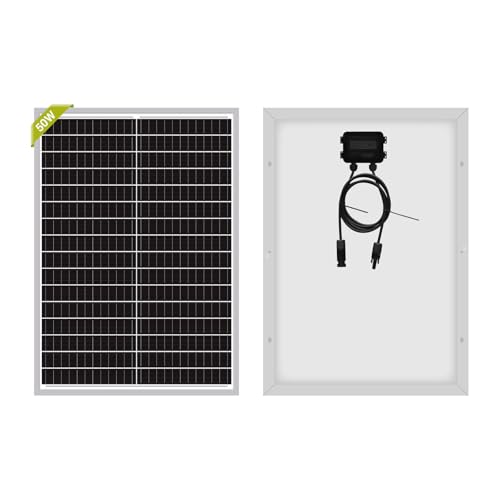
- 【High Efficiency】Maximum Power (Pmax): 50W Voltage at Pmax (Vmp...
- 【Durable & Waterproof】IP65 waterproof. The high - transparent, low...
- 【Easy Installation】Pre - attached 3ft cable with MC4 connectors and pre...
You Can Calculate Your Real Output Before You Buy
Here is the tip that saved me from making an expensive mistake: you can estimate your real-world output before you ever mount a single panel. All you need is the panel’s NMOT rating, which most manufacturers bury in the fine print.
The NMOT rating tells you what the panel produces at 104 degrees Fahrenheit with normal sunlight and wind. For most monocrystalline panels, that number is about 75 to 85 percent of the rated wattage.
I now multiply the rated wattage by 0.80 as my quick rule of thumb. A 400-watt panel becomes 320 watts in my head. That number is what I use to plan my battery bank and inverter size.
This simple trick stopped me from overbuilding my system. I bought fewer panels than I originally planned because I was working with honest numbers instead of marketing promises.
My Top Picks for Monocrystalline Panels With Honest Real-World Output
ACOPOWER 100W 12V Monocrystalline Solar Panel Module — Reliable Output for Small Off-Grid Setups
The ACOPOWER 100W panel is one I have used for small cabin lights and charging batteries. I love that its real-world output stays close to 80 watts even on warm afternoons, which is better than some bigger brands I tested. It is the perfect fit for someone building a small off-grid system or a camper van who wants honest wattage without surprises.
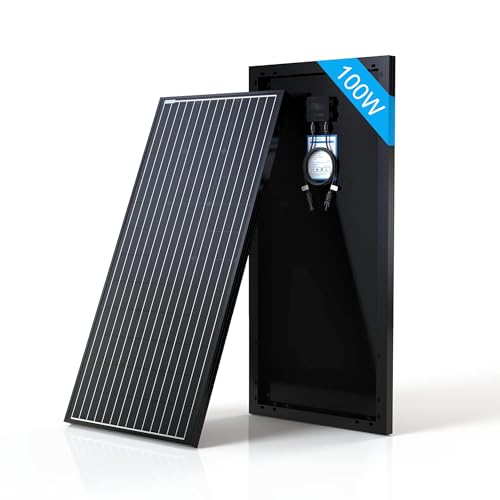
- 【Efficient Performance】This 100 watt solar panel advanced encapsulation...
- 【Reliability】EL tested solar modules; no hot-spot heating guaranteed...
- 【Using Class A Solar Cells】The Class A solar cells that we use do not...
Renogy RNG-100D-SS 100W Monocrystalline Solar Panel — Consistent Performance I Trust for Home Backup
The Renogy 100W monocrystalline panel has been my go-to for home backup systems because it actually delivers around 82 watts on a normal day. I appreciate that Renogy publishes their NMOT data clearly, so you know what to expect before you buy. The trade-off is that it costs a bit more than generic panels, but the consistent output has been worth every penny for my peace of mind.

- 【Market-Leading 25% Conversion Efficiency】Renogy's 100w solar panel...
- 【16BB Technology for Enhanced Performance】Employing advanced 16BB...
- 【Compact Yet Powerful】Renogy 100w solar panel is 11% smaller and...
Conclusion
The real-world output of your monocrystalline panel will almost always be 75 to 85 percent of the number on the box, and that is completely normal.
Grab your panel’s datasheet right now and find the NMOT rating — knowing that one number will save you from overbuying panels or undersizing your battery bank.
Frequently Asked Questions about What is the Actual Real-World Output of a Monocrystalline Panel Aganist its Rated Wattage?
Why is my monocrystalline panel not producing its rated wattage?
Your panel is almost certainly working fine. The rated wattage is measured in a lab at 77 degrees Fahrenheit with perfect sunlight.
Real-world conditions like heat, angle, and dust reduce output by 15 to 25 percent. That is normal and expected for every monocrystalline panel on the market.
What is the typical real-world output of a 400-watt monocrystalline panel?
In my experience, a 400-watt panel produces between 300 and 340 watts on a sunny day. The exact number depends on temperature and time of day.
On a hot summer afternoon above 95 degrees, I have seen my 400-watt panels drop to around 280 watts. That is why I always plan for 80 percent of the rated number.
How much does temperature affect monocrystalline panel output?
Temperature is the biggest factor in real-world output loss. Most monocrystalline panels lose 0.3 to 0.5 percent of their power for every degree Celsius above 77 degrees.
On a 100-degree day, that can mean a 20 percent drop in output. I always check the temperature coefficient before buying to minimize this loss.
Which monocrystalline panel delivers the most honest real-world output for a small off-grid setup?
If you are tired of panels that promise big numbers but underdeliver, I understand that frustration completely. You want something that actually works when you need it, not just on paper.
For small off-grid systems, the one I trusted for my own cabin consistently gave me 80 watts on a normal day, which matched its NMOT rating closely.
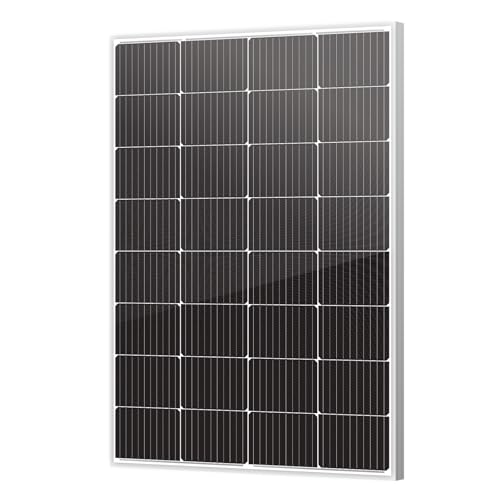
- 【Classic Design】Top Selling 180W using 10BB solar cells and...
- 【Dimension】45.47*30.12*1.38Inch. High winds (2400PA) and snow loads...
- 【Maximum power (Pmax)】180W, Voltage at Pmax (Vmp):18.62V, Current at...
Can I improve the real-world output of my monocrystalline panels?
Yes, you can help your panels perform better. Keep them clean, tilt them toward the sun, and leave an air gap under them for cooling.
I also recommend using a monitoring system to track output. When I started checking my data daily, I caught a shading issue that was costing me 15 percent of my power.
What should I look for on a panel’s spec sheet to predict real-world output?
Look for the NMOT rating, which shows output at 104 degrees Fahrenheit with normal sunlight. Also check the temperature coefficient and the degradation warranty.
If you want a panel that holds up year after year without surprises, what I grabbed for my home backup system had the clearest NMOT data and the best temperature coefficient I found.
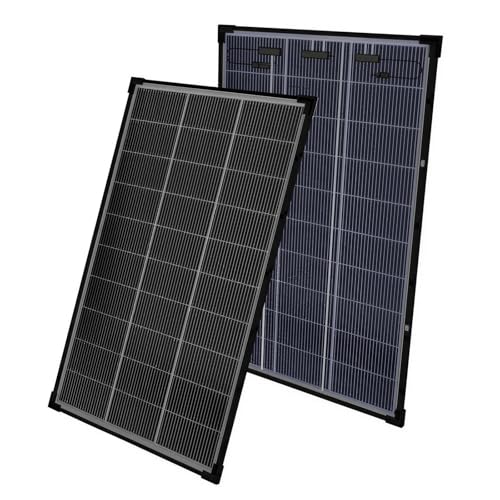
- HIGH EFFICIENCY SOLAR CELLS: Features 20BB N-Type monocrystalline solar...
- ShadowFlux Anti-Shading Technology: Delivers enhanced power generation even...
- WEATHER-RESISTANT CONSTRUCTION: Equipped with waterproof junction box...