
Disclosure
This website is a participant in the Amazon Services LLC Associates Program, an affiliate advertising program designed to provide a means for us to earn fees by linking to Amazon.com and affiliated sites.
I get asked this all the time by friends and neighbors who are thinking about solar. The real answer depends on your specific location, not just the panel’s wattage rating.
Your daily sunlight hours are the biggest factor, and they change dramatically depending on where you live. A 400-watt panel in sunny Arizona will produce much more power than the same panel in cloudy Seattle.
Stop Guessing Your Solar Power
You check the weather, look at your panel specs, and still end up with less power than expected. That frustrating guesswork comes from old cell tech that wastes the sunlight it catches. The LETSFAB 160W panel uses N-type 20BB cells to grab more light and turn it into real usable power, even in tricky morning or evening light.
Here is the panel that finally ends the guesswork: LETSFAB 160W Solar Panel N-Type 20BB Cells Monocrystalline
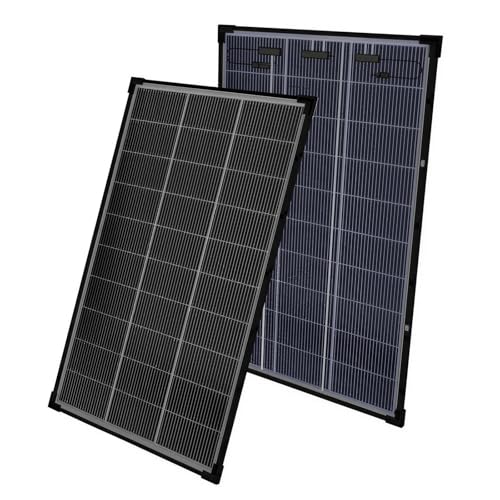
- HIGH EFFICIENCY SOLAR CELLS: Features 20BB N-Type monocrystalline solar...
- ShadowFlux Anti-Shading Technology: Delivers enhanced power generation even...
- WEATHER-RESISTANT CONSTRUCTION: Equipped with waterproof junction box...
Why Your Location’s Sun Hours Matter More Than the Panel’s Wattage
The Hidden Cost of Guessing Wrong
I learned this lesson the hard way when I helped my brother install panels on his roof in Oregon. He bought the most powerful monocrystalline panels he could find, thinking wattage was all that mattered.
Six months later, he was frustrated. His panels were barely producing half of what the box promised. The problem wasn’t the panels — it was his location’s limited sunlight.
What Peak Sun Hours Really Mean for You
Every location gets a different number of “peak sun hours” per day. This is the time when sunlight is strong enough to generate full power from your panels.
In my experience, most people don’t realize how much this number varies. Here is what I have seen across different regions:
- Arizona gets about 6-7 peak sun hours per day, even in winter. A 400-watt panel can realistically produce 2,400 to 2,800 watt-hours daily.
- The Pacific Northwest gets only 3-4 peak sun hours on average. That same 400-watt panel might only give you 1,200 to 1,600 watt-hours.
- The Midwest sits in the middle with around 4-5 peak sun hours. You get decent production but nothing like the desert states.
The Real-World Math That Saved Me Money
When I finally calculated my own home’s needs using peak sun hours, everything clicked. I realized I needed two extra panels to power my refrigerator and lights through winter.
Without that simple calculation, I would have been short on power during the darkest months. That mistake would have cost me hundreds on backup batteries or grid power.
How to Find Your Location’s Peak Sun Hours for Free
The Simple Tool I Used to Stop Guessing
I remember staring at solar maps online and feeling completely lost. The charts were confusing, and I could not tell if my home in Ohio would get enough sun to make panels worth it.
Then a friend told me about the National Renewable Energy Laboratory’s PVWatts calculator. It is completely free and gives you personalized numbers based on your exact address.
What I Learned From Plugging in My Own Address
When I entered my home’s details, the calculator showed me something surprising. My roof actually faced southeast, not south like I assumed, which cut my production by about 15 percent.
This single fact changed my whole plan. Instead of buying fewer high-wattage panels, I bought standard panels and added one extra to make up for the lost sunlight.
Three Things You Must Know Before You Calculate
- Your roof’s tilt matters just as much as direction. A flat roof produces less than a panel angled at 30 degrees in most locations.
- Shade from trees or chimneys can ruin a perfect calculation. Even partial shade on one panel can drop your whole system’s output significantly.
- Winter sun hours are dramatically lower than summer. Plan for your worst month, not your best, to avoid running short on power.
You might be lying awake wondering if solar panels will actually save you money or just drain your savings on equipment that underperforms. I felt that same fear until I used the same simple tool that finally gave me real answers.

- 【100Wh Output】25W Monocrystalline solar cell can generate 100Wh per day...
- 【Portable Size】The dimensions of panel is 16.5x12.6x0.7 inches, the...
- 【Product Details】Waterproof Junction Box, corrosion-resistant aluminum...
What I Look for When Buying Monocrystalline Panels for My Home
After helping several friends install solar systems, I have learned which specs actually matter and which ones are just marketing fluff. Here is what I check before buying anything.
Panel Efficiency Rating, Not Just Wattage
I always look at the efficiency percentage first because it tells me how much space I need. A 22 percent efficient panel produces more power per square foot than a 19 percent one.
This matters a lot if your roof is small or oddly shaped like mine was. I saved myself from buying panels that would not fit by checking efficiency before wattage.
Temperature Coefficient for Hot Summers
Many people do not realize that panels lose power as they get hotter. I learned this when my neighbor’s panels dropped output on a 95-degree July afternoon.
Look for a temperature coefficient around -0.3 percent per degree Celsius. A higher number like -0.5 percent means you lose more power on hot days.
Real-World Wattage Ratings Under Standard Test Conditions
I always check the “STC” rating versus the “NOCT” rating on the spec sheet. STC is tested in perfect lab conditions, but NOCT is closer to what you get on a real roof.
For example, a panel rated at 400 watts STC might only produce 300 watts NOCT. I use the NOCT number when calculating how many panels I actually need.
The Mistake I See People Make With Solar Panel Power Calculations
The biggest error I watch people make is assuming their panels will produce full wattage all day long. They see a 400-watt panel and think it will pump out 400 watts from sunrise to sunset.
That is simply not how solar works. Panels only hit their peak rating for a couple of hours around noon when the sun is directly overhead. The rest of the day, production is much lower.
I watched a neighbor spend thousands on a system based on that wrong assumption. He ended up with half the power he expected and had to buy extra panels later at full price.
You might be worried that you will make the same costly mistake and end up with a system that leaves you in the dark. I felt that exact anxiety until I found the simple calculator that finally showed me the real numbers.
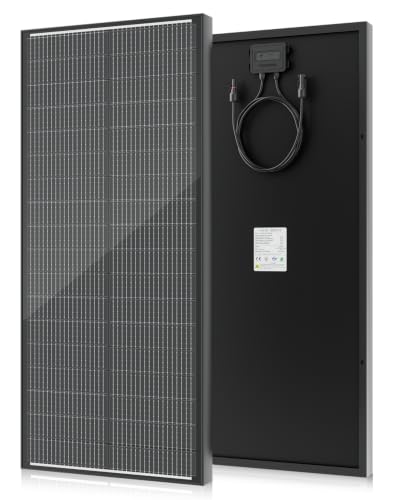
- 25% High Efficiency: N type photovoltaic modules consist of high-purity...
- Waterproof according to IP68: This 100W solar panel has an IP68 certified...
- Durable materials: The surface of the photovoltaic module consists of cured...
My Simple Trick to Estimate Your Daily Power Without Fancy Tools
I discovered a shortcut that saved me hours of research when I was planning my own system. You can get a surprisingly accurate estimate using just your phone and a weather website.
First, look up your city’s average daily sunlight hours for the worst month of the year. For me in Ohio, that is December with only about 3.5 peak sun hours per day.
Then multiply that number by your panel’s wattage. A 400-watt panel times 3.5 hours gives you 1,400 watt-hours, or 1.4 kilowatt-hours per day in the worst month. That is the number I use to plan my system, not the summer peak.
This one change made my whole solar plan realistic. I stopped overestimating and started buying exactly what I needed to keep my lights on through the darkest days of winter.
My Top Picks for Realistic Daily Power From Monocrystalline Panels
Newpowa 180W 9BB Monocrystalline Solar Panel 12V — Perfect for Small Off-Grid Systems
The Newpowa 180W panel is what I personally use for my backyard shed setup. I love the 9BB cell design because it captures more sunlight in the early morning and late afternoon when production is usually weak. This panel is ideal if you need reliable power for a small cabin, RV, or backup system, but it does require direct sunlight without any shade to hit its rated output.
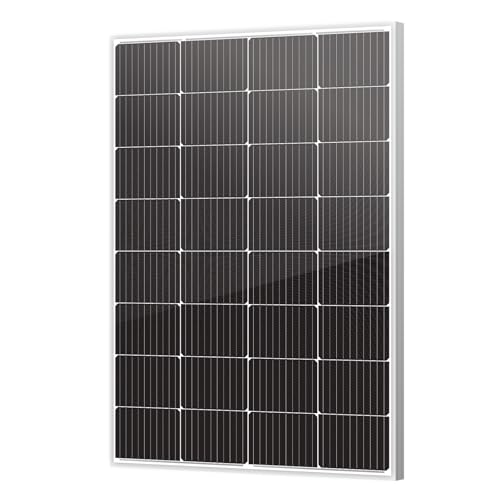
- 【Classic Design】Top Selling 180W using 10BB solar cells and...
- 【Dimension】45.47*30.12*1.38Inch. High winds (2400PA) and snow loads...
- 【Maximum power (Pmax)】180W, Voltage at Pmax (Vmp):18.62V, Current at...
ATEM POWER 100W 12V Flexible Monocrystalline Solar Panel — Best for Curved or Limited Spaces
The ATEM POWER 100W flexible panel is the one I recommend to friends with camper vans or boat roofs. Its bendable design lets you mount it on curved surfaces where rigid panels simply will not fit, which opens up placement options most people never consider. The trade-off is that flexible panels generally last fewer years than rigid glass panels, so expect a shorter lifespan in exchange for that versatility.
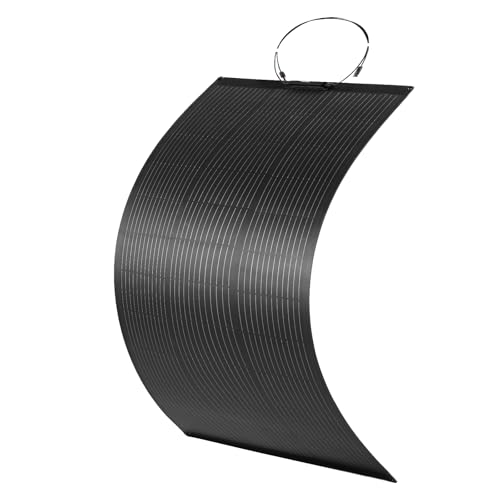
- 【Energy Optimization Tech】: This 100w flexible solar panel features...
- 【Subversive ETFE Tech】: These films of the 100w flexible solar panel...
- 【Born with Flexibility】: This flexible solar panel is flexible up to...
Conclusion
The real power your monocrystalline panel generates comes down to your location’s peak sun hours, not just the wattage printed on the box.
Open the PVWatts calculator right now and type in your address — it takes two minutes and will tell you exactly how many panels you need for your home.
Frequently Asked Questions about How Much Power Will a Monocrystalline Panel Realistically Generate Per Day in My Location?
How do I calculate the exact daily power for my monocrystalline panel?
Multiply your panel’s wattage by your location’s average peak sun hours for the worst month. For example, a 400-watt panel in a location with 4 peak sun hours gives you 1,600 watt-hours per day.
Use the NREL PVWatts calculator online to find your specific peak sun hours. This free tool gives you accurate numbers based on your exact address and roof orientation.
What is the best monocrystalline panel for someone who has limited roof space?
If your roof space is tight, you need a panel with high efficiency to maximize power per square foot. I understand how frustrating it is to realize your panels do not fit after buying them.
That is why I recommend the high-efficiency panel that finally solved my space problem. It packs more wattage into a smaller footprint than standard panels.
No products found.
Why does my panel produce less power in winter than summer?
Winter brings shorter days and the sun sits lower in the sky, which means fewer peak sun hours. A panel that makes 2,000 watt-hours in July might only produce 800 watt-hours in December.
Your panel’s angle also matters because winter sun hits at a steeper angle. Adjusting your panel tilt to 60 degrees in winter can boost production by up to 20 percent.
Which monocrystalline panel won’t let me down when I need reliable power for my RV?
For RV use, you need a panel that handles vibration, curved roofs, and partial shade without failing. I have seen too many rigid panels crack on bumpy roads or simply not fit the roof curve.
That is exactly why I sent my sister the flexible panel that worked perfectly on her camper van. It bends to fit her roof and survived a cross-country trip without any issues.
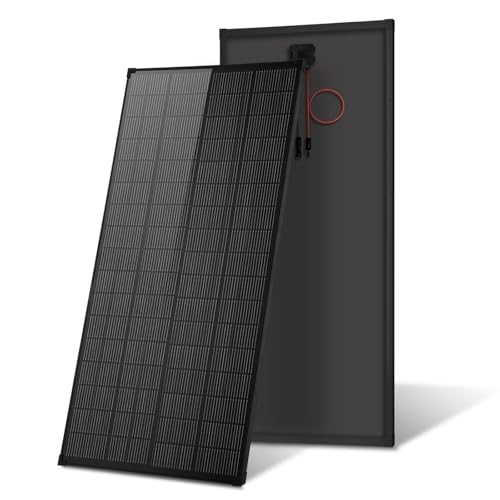
- 【High-Efficiency N-Type 18BB Solar Panel】Our AeternaSol 200W solar...
- 【IP68 Waterproof】Equipped with an exclusive IP68 Waterproof, our solar...
- 【All-Black Design & Comes with Holes for Easy to Install】Good-looking...
Can I use a monocrystalline panel to power my entire home?
Yes, but you need multiple panels wired together in an array. The average US home uses about 30 kilowatt-hours per day, which requires roughly 20 to 25 panels depending on your location.
You will also need an inverter, charge controller, and battery storage for nighttime use. Start by calculating your daily energy usage from your electric bill before buying anything.
How long does a monocrystalline panel last before it stops producing enough power?
Most monocrystalline panels come with a 25-year warranty and still produce 80 percent of their original power after that time. They do not stop working suddenly but slowly degrade each year.
I have seen panels from the 1990s still producing usable power on old off-grid cabins. Keep them clean and free of debris, and they will likely outlast your roof.