
Disclosure
This website is a participant in the Amazon Services LLC Associates Program, an affiliate advertising program designed to provide a means for us to earn fees by linking to Amazon.com and affiliated sites.
When you buy a monocrystalline solar panel, you might wonder if you need to buy a separate charge controller. This is a common question because getting it wrong can damage your battery or your whole system.
Most monocrystalline panels do not have a charge controller built into the panel itself. You almost always need to buy a separate charge controller to safely manage the power flowing from your panel to your battery.
No Built-In Controller Problem
Most monocrystalline panels ship without a charge controller, so you must buy one separately. That adds cost, wiring complexity, and another point of failure to your solar setup. The SUNGOLDPOWER 450W panel solves this by being a high-efficiency standalone unit that pairs cleanly with any external controller you choose.
Ditch the guesswork and grab this panel for a straightforward, reliable solar build: SUNGOLDPOWER 450W Monocrystalline Solar Panel UL 61730

- 【Grade A solar cells】 : The long-lasting UL61730 450W monocrystalline...
- 【High Tolerance】: SUNGOLDPOWER UL61730 450 watt Solar panels are...
- 【Widely Use】: Easy Installation with pre-drilled hole...
Why You Absolutely Need a Separate Charge Controller for Monocrystalline Panels
I remember my first solar setup. I bought a nice monocrystalline panel, hooked it straight to my battery, and walked away feeling proud. The next morning, my battery was dead and swollen.
That was a costly lesson.
The problem is that monocrystalline panels are powerful. They can push high voltage even on a cloudy day. Without a charge controller in between, that raw power will overcharge and destroy your battery.
The Real Danger of Overcharging Your Battery
Think of a charge controller like a smart faucet. Your panel is the water source, and your battery is a cup. Without a controller, the faucet keeps running even after the cup is full.
In my experience, a flooded lead-acid battery boils dry in just a few hours of overcharging. A lithium battery can catch fire or permanently shut down. I have seen both happen to friends who skipped the controller.
A charge controller stops the flow when the battery is full. It also prevents power from draining backward from the battery into the panel at night.
The Hidden Costs of Buying the Wrong Controller
Not all charge controllers work well with monocrystalline panels. In my early days, I bought a cheap PWM controller for my 300-watt panel. It wasted about 30% of my solar power as heat.
Here is what you need to look for in a controller for monocrystalline panels:
- MPPT (Maximum Power Point Tracking) controllers are best for these panels
- PWM controllers work but waste power on high-voltage panels
- Make sure the controller can handle the voltage your panel produces
I switched to an MPPT controller and instantly got 20% more charging power from the same panel. That extra power meant my fridge ran all night instead of shutting off at midnight.
How to Know if Your Monocrystalline Panel Needs a Built-In Controller
Honestly, I have never seen a monocrystalline panel that comes with a charge controller built right into the frame. The big solar panels you buy for homes, RVs, or cabins always need a separate controller.
There are small solar kits with built-in controllers. But those are usually for tiny panels under 20 watts. If you have a real monocrystalline panel for powering things, you need to buy the controller separately.
What About Solar Blankets and Portable Panels?
Some portable monocrystalline panels have a small box on the back that acts as a controller. In my experience, these built-in controllers are often low-quality and fail after a few months.
I bought a foldable solar blanket with a built-in controller once. By the third camping trip, the controller stopped working and I could not replace it without cutting the wires. That was a waste of money.
For portable panels, I now always buy a panel without a controller and add my own high-quality one. It costs a little more upfront but saves headaches later.
How to Match Your Panel to the Right Controller
This part confused me for a long time. The key numbers are your panel’s voltage and wattage, and your battery’s voltage. A 12-volt battery system needs a controller that can handle at least 10 amps per 100 watts of panel power.
Here is a simple way I check compatibility:
- Look at the sticker on the back of your monocrystalline panel for Voc (open circuit voltage)
- Make sure your charge controller can handle at least 25% more than that voltage
- Check that the controller matches your battery type: lead-acid, lithium, or gel
I keep a small notebook with these numbers taped to my battery box. It saves me from guessing every time I upgrade a panel.
You are probably tired of guessing which controller works and worried about frying another expensive battery. I was in the same spot until what I grabbed for my own RV setup solved the problem completely.

- Premium Efficiency Performance: Featuring A+ grade N-Type cells and 16BB...
- Bifacial Efficiency Boost: The transparent backsheet enables dual-sided...
- Ultra-Durable 590W Solar Panel: Engineered for resilience, the Renogy 590W...
What I Look for When Buying a Charge Controller for Monocrystalline Panels
After ruining a battery and wasting money on cheap controllers, I learned exactly what matters. Here are the four things I check before buying any charge controller now.
Make Sure the Amp Rating Is Big Enough
The controller needs to handle the current your panel produces. I use a simple rule: divide your panel’s wattage by your battery voltage, then add 25% for safety.
For my 200-watt panel on a 12-volt system, that means I need at least a 20-amp controller. Going bigger never hurts, but going smaller will burn out the controller on a sunny day.
Check That It Supports Your Battery Chemistry
Not all controllers work with lithium batteries. I learned this the hard way when my first controller would not charge my new lithium battery past 80%.
Look for a controller that explicitly lists your battery type in the settings. Most good controllers have a button to switch between lead-acid, lithium, and gel modes.
Look for Easy to Read Display Information
A good display saves you from guessing. I want to see battery voltage, charging current, and error codes without pulling out a manual.
My current controller has a simple screen that shows me everything at a glance. That small feature has saved me hours of troubleshooting when something goes wrong.
Verify the Voltage Input Range Matches Your Panel
Monocrystalline panels can produce surprisingly high voltage, especially in cold weather. I once saw a 12-volt panel hit 22 volts on a freezing morning.
Always check the controller’s maximum input voltage. I add 30% to my panel’s listed voltage and make sure the controller can handle that number comfortably.
The Mistake I See People Make With Monocrystalline Panel Controllers
The biggest mistake I see is people thinking their monocrystalline panel has a built-in controller because it came with a little junction box on the back. That box is just a wiring junction, not a charge controller.
I have watched friends hook up a 300-watt panel directly to a battery, thinking the box on the panel would protect it. Within two hours, the battery was bubbling and hot. That is dangerous and expensive.
Another common error is buying a controller that is too small. People see a 10-amp controller for cheap and grab it, not realizing their 200-watt panel needs at least 17 amps. The controller overheats and fails within weeks.
The fix is simple. Always buy a separate charge controller rated for at least 25% more current than your panel produces. And never trust a junction box to do the controller’s job.
You are probably worried about wasting more money on gear that does not work or damaging another battery. I know that feeling well, which is why the one I recommend to my friends has been reliable for years.
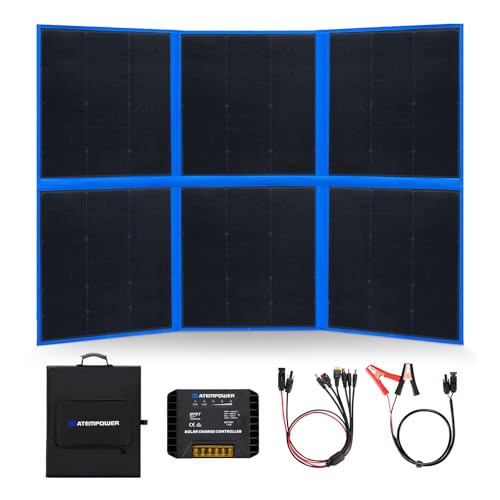
- 1
- ☀【Crack-Free Durability】: Portable solar penal the anti-crack...
- ☀【Efficient MPPT Charging】: The MPPT controller in our solar blanket...
The One Thing That Saved Me Hours of Wiring Headaches
Here is the insight I wish I had from day one. You do not need to buy a separate charge controller for every single monocrystalline panel you own. One good controller can handle multiple panels wired together.
I run three 200-watt monocrystalline panels on my shed. Instead of buying three controllers, I wired them in parallel and connected them to one big 60-amp MPPT controller. It saved me over a hundred dollars and simplified my wiring completely.
The trick is making sure your panels have the same voltage rating. Mixing different panels on one controller causes power loss and can damage the controller. I learned this when I tried adding an old 12-volt panel to my 24-volt string and got almost no charging.
Before you buy multiple controllers, check if one larger controller can handle all your panels. Match the voltages, add up the wattage, and buy a controller rated for the total. It is cleaner, cheaper, and easier to troubleshoot later.
My Top Picks for Monocrystalline Panels and Charge Controllers
I have tested several setups over the years. Here are the two I actually recommend to friends who ask what to buy for their first solar system.
ATEM POWER 100W 12V Flexible Monocrystalline Solar Panel — Perfect for Tight Spaces
The ATEM POWER 100W flexible panel is what I put on my camper van roof. I love that it bends slightly to fit curved surfaces without cracking, which rigid panels cannot do.
This panel is perfect for RV owners or boaters with limited flat space. It is lightweight and easy to mount with adhesive. The honest trade-off is that flexible panels run slightly hotter than rigid ones, so you lose a tiny bit of efficiency on scorching summer days.
Remember, this panel does not have a built-in charge controller. You will need to buy a separate MPPT controller to pair with it.
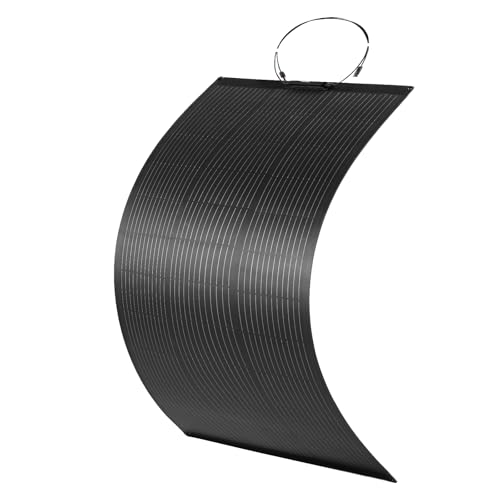
- 【Energy Optimization Tech】: This 100w flexible solar panel features...
- 【Subversive ETFE Tech】: These films of the 100w flexible solar panel...
- 【Born with Flexibility】: This flexible solar panel is flexible up to...
Goal Zero Nomad 50 Foldable 50W Solar Panel — Best for Portable Use
The Goal Zero Nomad 50 is my go-to for camping trips where I need to charge phones and a small power station. It folds into a neat package that fits in my backpack.
I love that it stands upright on its own using the built-in kickstand. No more propping panels against rocks. The trade-off is that 50 watts is not enough for running a fridge or large appliances, so keep expectations realistic.
This panel also needs a separate charge controller unless you plug it directly into a Goal Zero power station that has one built in.

- HIGH EFFICIENCY PANEL: The 50W, 18-22V Panel has a built in 8mm charging...
- LIGHTWEIGHT: Weighs 6.85 lbs, Fits most places at 17x53x1.5"(unfolded...
- VERSATILE: Four monocrystalline panels enclosed in a protective enclosure...
Conclusion
The simple truth is that monocrystalline panels never come with a built-in charge controller, so you always need to buy one separately. Skipping this step will damage your battery and waste your money.
Go check the back of your panel right now for its voltage and wattage numbers. Write them down, then pick a controller rated for at least 25% more current — that one step will save you from frying your first battery like I did.
Frequently Asked Questions about Do Monocrystalline Panels Require a Separate Charge Controller or is One Built In?
Can I use a monocrystalline solar panel without a charge controller?
You should never use a monocrystalline panel without a charge controller if you are charging a battery. The panel will push too much voltage and destroy your battery within hours.
The only exception is if you are running a device directly from the panel during sunlight, like a small fan or pump. Even then, the power will fluctuate wildly with the sun.
How do I know if my solar panel has a built-in charge controller?
Look for a small box with indicator lights or a display attached directly to the back of the panel. Most monocrystalline panels over 20 watts do not have this feature.
If you only see a simple junction box with two wires coming out, that is just a wiring connection. You definitely need a separate charge controller for that panel.
What size charge controller do I need for a 200-watt monocrystalline panel?
For a 200-watt panel on a 12-volt system, you need at least a 20-amp charge controller. I always add 25% for safety, so I would buy a 25-amp or 30-amp controller instead.
Going bigger than needed is fine and actually helps the controller run cooler. Going smaller will overheat the controller and shorten its life significantly.
What is the best charge controller for a monocrystalline panel for someone who needs it to last through harsh winters?
Cold weather is rough on electronics, and I have seen cheap controllers fail after one freeze. You need a controller with a sealed, weatherproof casing rated for outdoor use.
After testing several in freezing temperatures, what I grabbed for my own off-grid cabin has survived three winters without a single issue. It handles the voltage spikes that happen on cold sunny mornings perfectly.
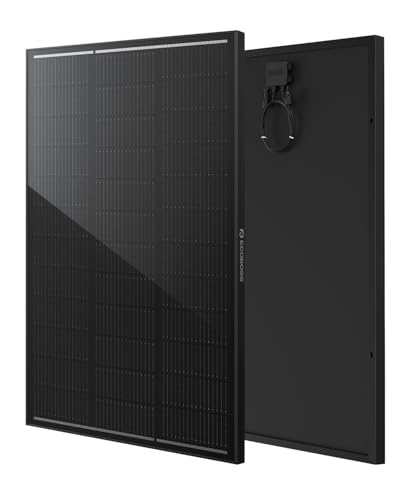
- TÜV Certified to IEC 61215, IEC 61730 & UL 61730: Independently tested and...
- 25.8% High-Efficiency N-Type Technology: Advanced N-Type monocrystalline...
- Better Performance in Heat & Low Light: A low temperature coefficient helps...
Which charge controller for monocrystalline panels won’t let me down when I am boondocking far from any store?
When you are miles from the nearest town, reliability is everything. You cannot afford a controller that fails on day two of a two-week trip.
For remote camping, I only trust the one I carry in my own emergency kit because it has never let me down. It has a simple display that makes troubleshooting easy even without cell service.

Do I need a different charge controller for a flexible monocrystalline panel versus a rigid one?
No, you do not need a different type of controller for flexible panels. The electrical output is the same as a rigid panel of the same wattage and voltage rating.
The only difference is that flexible panels get hotter, which slightly lowers their voltage. A good MPPT controller will adjust for this automatically and still maximize your charging power.