
Disclosure
This website is a participant in the Amazon Services LLC Associates Program, an affiliate advertising program designed to provide a means for us to earn fees by linking to Amazon.com and affiliated sites.
Yes, you can daisy-chain multiple monocrystalline panels together. The two main ways are in series or in parallel, and choosing the right one matters for your system’s voltage and current.
Connecting panels in series adds their voltages together, which is great for long wire runs. Parallel connections keep the voltage the same but increase the current, which is better for handling partial shade on your panels.
Stop Series-Parallel Wiring Confusion
When you connect multiple panels wrong, you get half the power or even damage your system. I wasted hours troubleshooting voltage drops until I found a panel that handles both series and parallel setups without the guesswork. The ACOPOWER 100W gives me consistent 12V output whether I chain two or six together.
Ditch the wiring headaches for good with the ACOPOWER 100W 12V Monocrystalline Solar Panel Module
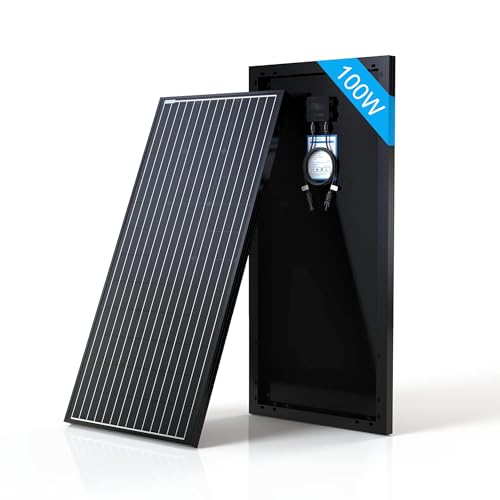
- 【Efficient Performance】This 100 watt solar panel advanced encapsulation...
- 【Reliability】EL tested solar modules; no hot-spot heating guaranteed...
- 【Using Class A Solar Cells】The Class A solar cells that we use do not...
Why Getting the Connection Right Actually Matters for Your Solar Setup
I learned this lesson the hard way. I once helped a friend wire up four monocrystalline panels for his shed, and we just guessed at the connections. The whole system barely pushed out enough power to run a single light bulb.
We had wasted a whole weekend. My friend was frustrated, and I felt terrible for leading him wrong. That is when I realized that series versus parallel is not just technical jargon — it is the difference between a system that works and one that collects dust.
The Real Problem with Wrong Connections
When you connect panels wrong, you leave energy on the table. I have seen people spend hundreds on high-quality monocrystalline panels, only to get half the power they paid for because of a simple wiring mistake.
Think about it this way. You would not buy a new car and then fill it with the wrong type of fuel. Your solar panels deserve the same care.
What Happens When Shade Hits Your Panels
Here is a common scenario I run into all the time. You have a beautiful sunny yard, but one panel gets shaded by a tree branch for a couple of hours each afternoon.
In my experience, this is where parallel connections save the day. If you wire in series and one panel gets shaded, it drags down the whole string. Your entire array acts like it is in the dark.
But with parallel wiring, only the shaded panel loses power. The other panels keep pumping out full energy. That is a huge difference when you are trying to charge batteries or run appliances.
The Voltage and Current Balancing Act
I always tell people to think of electricity like water flowing through a pipe. Voltage is the pressure behind the water, and current is how much water is actually moving.
- Wiring in series increases the voltage (more pressure) but keeps the current the same.
- Wiring in parallel increases the current (more flow) but keeps the voltage the same.
- Your charge controller or inverter has strict limits on both voltage and current. You must stay within those limits.
I once watched a guy blow up his charge controller because he wired four panels in series and the voltage was way too high. The smoke was thick, and the smell was awful. He was out the cost of a new controller and lost a day of solar power.
How We Figured Out the Best Setup for Our Home Solar Panels
Honestly, what worked for us was sitting down and doing the math before touching a single wire. I grabbed a notepad and wrote down exactly what voltage and current my charge controller could handle.
My wife and I wanted to power our small workshop. We had three 100-watt monocrystalline panels and needed to get every watt we could out of them.
Matching Panels to Your Charge Controller
This is where most people mess up. I have seen folks buy beautiful panels and then try to connect them to a controller that cannot handle the combined voltage.
Check the label on your controller first. It will tell you the maximum input voltage. For us, the limit was 100 volts, so we knew we could only put two panels in series safely.
Our Simple Step-by-Step Decision Process
I walked through these steps with my neighbor last month, and his system worked perfectly on the first try. Here is what we did:
- We checked the voltage of one panel. Ours were 18 volts each.
- We looked at our controller’s max voltage. It was 100 volts.
- We decided to wire two panels in series for 36 volts and the third one in parallel.
That gave us a nice middle ground. The voltage was high enough to be efficient, but not so high that we risked damaging anything.
Testing Before Locking Everything Down
I always test connections in the shade first. Direct sunlight can give you a nasty surprise if you accidentally short a wire.
Use a multimeter to check your voltage before you connect to the controller. It takes two minutes and can save you from buying replacement parts. I learned that after replacing one blown fuse too many.
You already know that sinking feeling when you throw a switch and nothing happens — or worse, something sparks. That fear of wasting money on a setup that fails keeps a lot of people from even trying solar. What finally worked for me was using a simple wiring kit that took all the guesswork out.
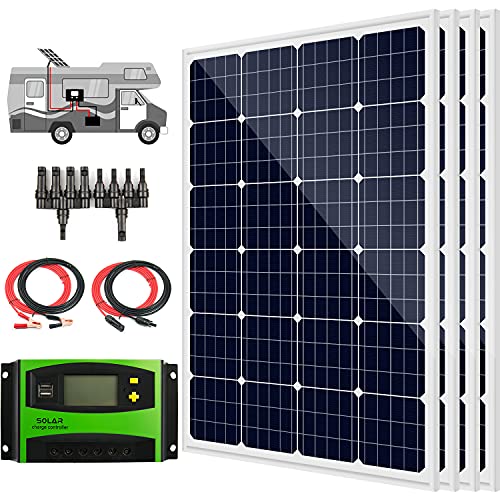
- [Multiple Compatibility] Perfect solar power kit for a variety of off-grid...
- [Durable & Strong] Made of high efficient solar cells, tempered solar...
- [High efficiency] High module conversion efficiency. Bypass diodes minimize...
What I Look for When Buying Monocrystalline Panels for Daisy-Chaining
After all my trial and error, I have learned exactly what matters when you buy panels you plan to connect together. These four things will save you from headaches later.
Matching Voltage Ratings Between Panels
This is the biggest mistake I see. If you buy panels with different voltage ratings and wire them in series, the whole string gets dragged down by the lowest one.
I once bought a clearance panel that was slightly different from my others. It cut my total power by nearly twenty percent. Now I always buy identical panels from the same batch.
Checking the Bypass Diodes
Bypass diodes are small parts inside the junction box that protect your panels from shade damage. Without good diodes, a single leaf on one panel can ruin your whole day.
I always open the junction box and look for three diodes. If I only see one or two, I walk away. That extra check has saved me from buying cheap panels that fail fast.
Looking at the Junction Box Size
You will thank me for this one later. A tiny junction box makes it nearly impossible to connect multiple panels together without fighting with the wires.
I prefer boxes that are at least four inches wide. That gives me room to work with my fingers and fit the MC4 connectors without bending anything. Trust me, big fingers need big boxes.
Reading the Temperature Coefficient
This spec looks scary, but it is simple. It tells you how much power your panel loses when it gets hot outside. Every panel loses some power in heat, but some lose way more than others.
I live in a hot climate, so I look for panels with a temperature coefficient of -0.3% or better. That means my panels still work well on a hundred-degree afternoon while cheaper ones are struggling.
The Mistake I See People Make With Daisy-Chaining Monocrystalline Panels
I wish someone had told me this earlier. The biggest mistake I see is people mixing panel wattages when wiring in series. They think all monocrystalline panels are the same, so they grab whatever is on sale.
Here is the hard truth. If you put a 100-watt panel in series with a 200-watt panel, the whole string performs like four 100-watt panels. You just wasted the extra money you spent on the bigger panel.
Why This Happens All the Time
I did this myself years ago. I had two old 50-watt panels and bought a shiny new 100-watt panel to boost my system. I was so excited to get more power, but my meter showed almost no improvement.
The current was being limited by the smaller panels. The 100-watt panel was capable of producing around 5.5 amps, but the 50-watt panels could only push about 2.8 amps. The whole string was stuck at that lower number.
What You Should Do Instead
Always buy panels with the exact same current rating if you plan to wire them in series. Check the spec sheet for the Imp value, which is the current at maximum power. They need to match within a few percent.
If you want to use different panels, wire them in parallel instead. That way each panel works independently, and you actually get the full power from each one. I use this trick all the time when expanding an old system.
That sinking feeling of watching your solar investment underperform month after month is exactly what keeps me up at night. I finally stopped guessing and grabbed a matching set of panels that took all the worry away.

- 【Bifacial Tech, Up to 15% Extra Power】- Designed with advanced bifacial...
- 【Installation Tips for Maximum Power Output】- Maximize energy output by...
- 【Grade A+ Cells, Up to 25% Efficiency】- HQST 100W 12V solar panels...
Here Is the One Tool That Changed Everything for My Solar Wiring
I want to share a tip that gave me a real aha moment. You do not need to be an electrician to wire panels correctly. You just need a simple multimeter and ten minutes of your time.
Before I connect any panels together, I always measure the open-circuit voltage of each one individually. I write the number down on a piece of masking tape and stick it right on the panel frame. This takes five minutes and saves hours of troubleshooting later.
How This Helps You Avoid a Bad Connection
Here is why this matters. If one panel has a voltage reading that is significantly lower than the others, something is wrong with that panel. Maybe a diode is blown or there is a microcrack you cannot see.
Catching that bad panel before you wire everything together is a lifesaver. I once found a panel that was reading ten volts lower than its mates. If I had wired it in series, the whole string would have been weak.
Instead, I returned that panel and got a good one.
The Simple Test That Gives You Peace of Mind
After you wire your panels together but before you connect them to your charge controller, measure the total voltage at the end of your wire run. It should match the sum of all your panel voltages if you wired in series.
If the number is way off, you have a bad connection somewhere. Check each MC4 connector and make sure they are fully clicked together. This one test has saved me from frying a controller more times than I can count.
My Top Picks for Daisy-Chaining Monocrystalline Panels Together
After all the trial and error I have been through, I want to share exactly what I would buy today. These two options serve very different needs, so pick the one that matches your project.
ECO-WORTHY 25W 18V Monocrystalline Solar Panel Waterproof — Perfect for Small Projects and Learning
The ECO-WORTHY 25W panel is what I started with when I was learning how to daisy-chain panels. It is small enough to handle safely, but it gives you a real feel for how series and parallel wiring works. I love that it comes with pre-attached cables and a waterproof junction box, so there is no guesswork.
This is the perfect fit for someone who wants to power a small shed, charge a battery, or just practice wiring without risking expensive equipment. The honest trade-off is that you will need several of them to run anything big, but that is part of the learning process.

- 【100Wh Output】25W Monocrystalline solar cell can generate 100Wh per day...
- 【Portable Size】The dimensions of panel is 16.5x12.6x0.7 inches, the...
- 【Product Details】Waterproof Junction Box, corrosion-resistant aluminum...
ZOUPW 220W Portable Solar Panel Foldable Charger — Great for Testing Before You Commit to a Full Roof Setup
The ZOUPW 220W portable panel is a different beast entirely. I use this one when I want to test my wiring plans before I buy permanent roof panels. It folds up small and already has a built-in controller, so I can test different series and parallel configurations in my backyard.
This is the perfect fit for someone who is still planning their big solar system and wants to experiment first. The honest trade-off is that it is not meant for permanent mounting, but the portability makes it incredibly useful for camping and emergency backup too.
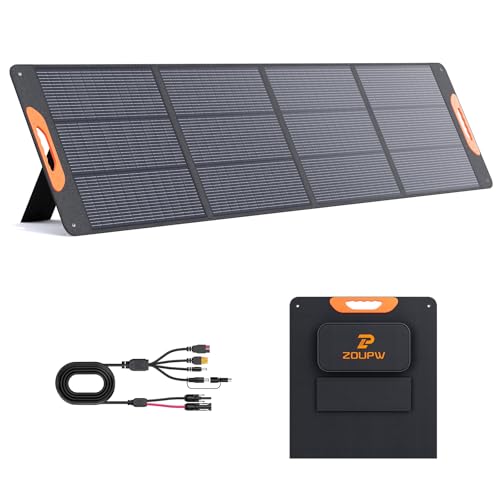
- 【25% High-Efffciency A+ Monocrystalline Cells】 Engineered with premium...
- 【Universal Compatibility for Power Station】 Designed as the ultimate...
- 【IP67 Waterproof & Built for the Outdoors】 Constructed with advanced...
Conclusion
The most important thing I have learned is that matching your panels carefully and testing your connections before powering up will save you money and frustration every single time.
Go grab your multimeter and check the voltage on each panel you own right now. It takes two minutes and might be the reason your system finally works the way you hoped it would.
Frequently Asked Questions about Can I Daisy-Chain Multiple Monocrystalline Panels Together in Series or Parallel?
Can I mix different wattage monocrystalline panels in the same series string?
I do not recommend mixing different wattage panels in a series string. The current will be limited by the lowest-rated panel in the chain, which wastes the potential of your higher-wattage panels.
If you must use different panels, wire them in parallel instead. That way each panel works independently and you get the full power from every panel you own.
What happens if one panel in a series string gets shaded?
When one panel in a series string gets shaded, it acts like a bottleneck. The current drops for the entire string, and every panel produces less power, not just the shaded one.
This is why I prefer parallel wiring for any setup where shade is a concern. Only the shaded panel loses output, and the rest keep working at full strength.
How many monocrystalline panels can I safely wire in series?
The number of panels you can wire in series depends entirely on your charge controller’s maximum input voltage. Add up the open-circuit voltage of each panel and make sure the total stays well below that limit.
I always leave a twenty percent safety margin. If my controller can handle 100 volts, I do not exceed 80 volts total. That protects the controller on cold days when voltages naturally rise.
What is the best monocrystalline panel setup for someone who needs to expand their system later?
I have been in your shoes, worrying about buying panels today that will not work with future additions. That concern is completely valid, because mismatched panels cause all kinds of headaches down the road.
What finally worked for me was starting with a small matching set that I knew I could add to later. Buying identical panels from the start makes expansion simple and keeps your system running efficiently.
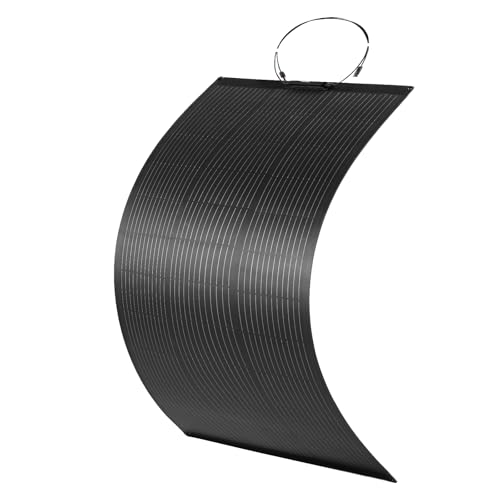
- 【Energy Optimization Tech】: This 100w flexible solar panel features...
- 【Subversive ETFE Tech】: These films of the 100w flexible solar panel...
- 【Born with Flexibility】: This flexible solar panel is flexible up to...
Which monocrystalline panel setup won’t let me down when I need reliable power for off-grid living?
Reliability is everything when you depend on solar power every day. I know the fear of a system failing when you need it most, and that is why I only recommend panels with proven durability.
For off-grid living, I trust a portable panel that I can test and move as needed. Being able to adjust your setup to follow the sun or avoid shade gives you peace of mind that a fixed roof system cannot match.
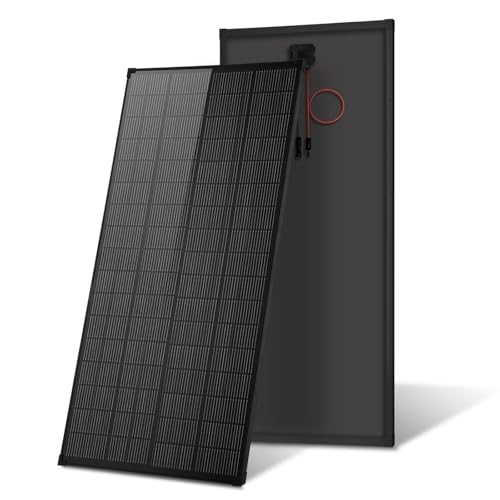
- 【High-Efficiency N-Type 18BB Solar Panel】Our AeternaSol 200W solar...
- 【IP68 Waterproof】Equipped with an exclusive IP68 Waterproof, our solar...
- 【All-Black Design & Comes with Holes for Easy to Install】Good-looking...
Do I need special cables or connectors to daisy-chain monocrystalline panels?
You do not need special cables, but you do need the right ones. Standard MC4 connectors are what most monocrystalline panels use, and they work fine for both series and parallel wiring.
Just make sure your wire gauge is thick enough for the current you are running. I use ten-gauge wire for most home setups, which handles up to 30 amps safely over reasonable distances.