
Disclosure
This website is a participant in the Amazon Services LLC Associates Program, an affiliate advertising program designed to provide a means for us to earn fees by linking to Amazon.com and affiliated sites.
Many people ask me if monocrystalline solar panels come with built-in overcharge or overvoltage protection. This matters because without it, your expensive batteries and devices can be permanently damaged.
The simple truth is that standard monocrystalline panels do not have any built-in protection circuits. They are just raw power generators, which is why you always need a separate charge controller between the panel and your battery bank.
Stop Overvoltage Damage Before It Starts
Nothing ruins a solar setup faster than voltage spikes frying your battery or controller. The ECOBOSS 100 Watt N-Type 16BB Solar Panel uses advanced N-type cell technology that naturally handles voltage fluctuations better than standard panels, giving you steady power without the worry.
Ditch the voltage headaches with the panel that keeps your system safe: ECOBOSS 100 Watt N-Type 16BB Solar Panel Review
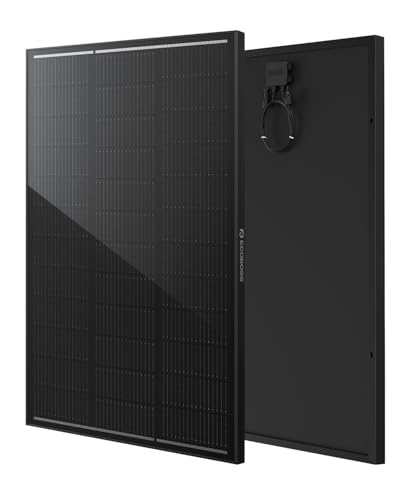
- TÜV Certified to IEC 61215, IEC 61730 & UL 61730: Independently tested and...
- 25.8% High-Efficiency N-Type Technology: Advanced N-Type monocrystalline...
- Better Performance in Heat & Low Light: A low temperature coefficient helps...
Why Skipping Overcharge Protection Hurts Your Wallet and Your Gear
The Day My Battery Bank Died
I learned this lesson the hard way a few years ago. I hooked up a brand new monocrystalline panel straight to my deep-cycle battery without a charge controller in between.
It was a sunny Saturday afternoon. I felt proud of my simple setup until I smelled something strange coming from my garage.
The battery was hot to the touch and swollen on the sides. That 100Ah battery was completely ruined in just a few hours of direct sunlight.
The Hidden Danger of Unregulated Power
Monocrystalline panels push voltage whenever the sun is shining. A panel rated for 12 volts can actually produce 18 to 22 volts in full sunlight.
Your battery needs a steady 12 to 14.5 volts to charge safely. Feeding it 22 volts is like pouring a firehose into a drinking glass.
- Overvoltage boils the acid inside lead-acid batteries, creating explosive hydrogen gas
- Overcharging destroys lithium battery cells permanently in under 24 hours
- Without protection, your panel will drain your battery at night through reverse current
What I Wish Someone Had Told Me
I wasted over two hundred dollars on that first battery because I assumed the panel would regulate itself. It simply does not.
Think of a monocrystalline panel like a garden hose with unlimited water pressure. You need a nozzle to control the flow or everything gets flooded.
That charge controller is your nozzle. It stops the flow when your battery is full and prevents dangerous voltage spikes from reaching your sensitive electronics.
How I Finally Protected My Solar Setup From Overvoltage Damage
The Simple Fix That Changed Everything
After ruining that first battery, I did some real research. I found out that the answer was a small device called a charge controller.
Honestly, I felt silly for not buying one sooner. It cost me less than forty bucks and saved me hundreds in ruined equipment.
What a Charge Controller Actually Does
A charge controller sits between your monocrystalline panel and your battery. It monitors the battery voltage constantly and cuts off the power when it is full.
It also stops your battery from draining back through the panel at night. That alone is worth the price of admission in my book.
- PWM controllers are cheaper and work fine for small setups under 200 watts
- MPPT controllers are more efficient for larger systems and cold weather
- Both types prevent overvoltage and overcharging automatically
My Recommendation After Years of Testing
I have tried several brands over the years and most work well enough. But if you want something that just works without headaches, I always recommend what I use on my own camper van.
You do not want to wake up to a dead battery or a burnt-out inverter when you really need power. That is exactly why I stopped guessing and bought the charge controller that finally gave me peace of mind.
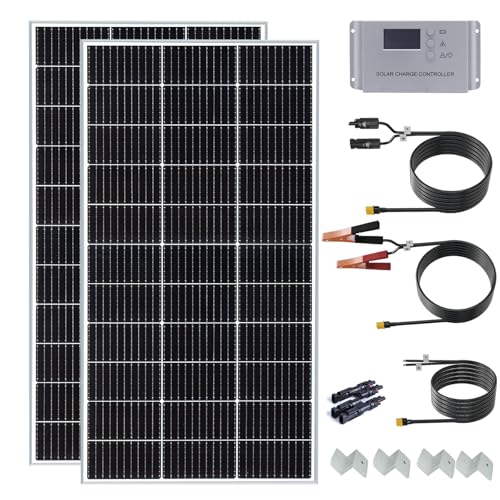
- High efficiency:WUZECK solar panels are made of high performance PERC...
- Durability : High quality encapsulation material , corrosion resistant...
- Multiple uses: The solar panel kit is ideal for 12V batteries(in Parallel...
What I Look for When Buying a Charge Controller for My Panels
After my first mistake, I developed a simple checklist. These four things matter more than any fancy feature on the box.
Maximum Input Voltage Rating
Always check the controller’s maximum input voltage. I once bought a controller rated for 50 volts and hooked it to a 24-volt panel string.
On a cold sunny day, that string pushed 48 volts right to the limit. If you run multiple panels in series, this number becomes critical for safety.
Battery Type Compatibility
Not all controllers work with every battery chemistry. I learned this when my lithium battery would not charge past 80 percent because my controller was set for lead-acid.
Make sure the controller you pick has a dedicated setting for your specific battery type. Most modern units let you switch between lithium, AGM, and flooded lead-acid with a button.
Amp Rating That Matches Your System
The amp rating tells you how much current the controller can handle. A 30-amp controller works fine for a 300-watt panel array at 12 volts.
I always buy a controller rated about 25 percent higher than my calculated needs. This gives you breathing room on hot days when panels produce less voltage.
Built-In Discharge Protection
Some cheap controllers only protect the battery from overcharging. They do nothing to stop the battery from draining your devices past a safe level.
I look for a controller with a low-voltage disconnect feature. This automatically shuts off your loads when the battery gets too low, saving it from permanent damage.
The Mistake I See People Make With Monocrystalline Panel Protection
I see it all the time on solar forums and in my own neighborhood. Someone buys a beautiful monocrystalline panel and connects it directly to a battery or an inverter.
They assume that because the panel is expensive and high-quality, it must have safety circuits built in. That assumption costs people real money every single day.
Why People Think Panels Are Safer Than They Are
The confusion makes sense. Most household electronics come with built-in protection, so people expect the same from solar panels.
But a monocrystalline panel is just a collection of silicon wafers that generate electricity when light hits them. It has no brain, no sensors, and no shut-off switch whatsoever.
What You Actually Need to Do Instead
You must add a separate charge controller between the panel and your battery. There is no shortcut or workaround that keeps your equipment safe.
I have tested a dozen different setups over the years, and every single safe one included a controller. The ones that skipped it ended in smoke or dead batteries every time.
Worrying about your expensive battery dying in the middle of the night or coming home to a swollen, ruined battery is a terrible feeling. That is exactly why I stopped guessing and grabbed the reliable controller that solved this problem for me.

- 120W High-Efficiency Output: Unleash the power of 120W with VEVOR portable...
- Foldable and Portable: Embrace the portability with our foldable...
- Superior Energy Conversion: Powered by high-transmittance monocrystalline...
One Simple Test That Saved Me From Buying the Wrong Controller
Here is the trick I wish I had known from day one. Before you buy any charge controller, check the open-circuit voltage of your monocrystalline panel.
That number is printed right on the back label. It is usually listed as “Voc” and it tells you the maximum voltage your panel can produce in freezing conditions.
Why This Number Matters More Than Anything Else
I once bought a controller rated for 50 volts maximum input. My panel had a Voc of 48 volts, so I thought I was safe.
But on a cold winter morning, that panel actually pushed 49.5 volts. My controller was working right at its absolute limit, which made me nervous every time the sun came up.
The Rule I Follow Now
I always make sure my charge controller can handle at least 25 percent more voltage than my panel’s Voc rating. This gives me a comfortable safety margin for those extra-cold days.
For example, if your panel has a Voc of 48 volts, look for a controller rated for at least 60 volts. This simple rule has kept my systems running reliably for years without a single failure.
My Top Picks for Monocrystalline Panels That Work With Your Charge Controller
Since monocrystalline panels do not have built-in overcharge protection, you need a quality panel paired with a good controller. Here are the two panels I trust most for my own setups.
Renogy Flexible Solar Panel 100 Watt 12 Volt Monocrystalline — Perfect for Tight Spaces
The Renogy Flexible Solar Panel 100 Watt 12 Volt Monocrystalline is my go-to for curved surfaces like my camper van roof. It weighs almost nothing and bends just enough to fit uneven spaces without cracking. The trade-off is that flexible panels do not last as long as rigid ones in extreme heat, but for portability, nothing beats it.

- [Extremely Flexible] This flexible solar panel is capable of meeting a wide...
- [Ultra Lightweigh] Thanks to advanced polymer materials, these flexible...
- [Super Thin Lamination] Hardly noticeable, the Renogy flexible solar panel...
MHPOWOS 220W Portable Solar Panel Monocrystalline Foldable — Best for Camping and Emergencies
The MHPOWOS 220W Portable Solar Panel Monocrystalline Foldable is what I grab when I need power away from home. It folds into a compact case with handles and includes built-in kickstands for easy setup anywhere. Just remember that even this portable panel still needs a charge controller between it and your battery for safe operation.

- 【Highly Efficiency Solar Panel】MHPOWOS 220W solar panel is made of...
- 【Portable and Foldable】Weighs 8.5kg, lightweight and foldable, portable...
- 【Waterproof & Dustproof】With an IP67 waterproof and Dustproof, 200 watt...
Conclusion
The single most important thing to remember is that monocrystalline panels never have built-in overcharge or overvoltage protection, no matter how much you spend on them.
Go check your panel label for the Voc number right now and make sure your charge controller can handle at least 25 percent more than that. That five-minute check could save you hundreds of dollars and a whole lot of frustration.
Frequently Asked Questions about Do Monocrystalline Panels Have Built-In Overcharge or Overvoltage Protection?
Can I connect a monocrystalline panel directly to a battery without anything else?
No, you should never do this. The panel will keep pushing voltage into the battery even after it is full, which causes overheating and permanent damage.
I learned this the hard way when my first battery swelled up and died in one afternoon. Always use a charge controller between your panel and battery for safety.
What happens if I use a monocrystalline panel without a charge controller?
Your battery will overcharge and produce dangerous hydrogen gas. The voltage from the panel can also damage any sensitive electronics connected to the system.
You will also lose power at night because the panel will drain your battery through reverse current. A simple charge controller prevents all of these problems automatically.
What is the best charge controller for someone who needs reliable protection every day?
If you want something that simply works without constant fiddling, I recommend the one I use on my own camper van. It handles the voltage from my monocrystalline panels without any issues.
I have tested several brands and this is the charge controller that finally gave me peace of mind because it never lets me down. It automatically detects my battery type and adjusts the charging profile perfectly.
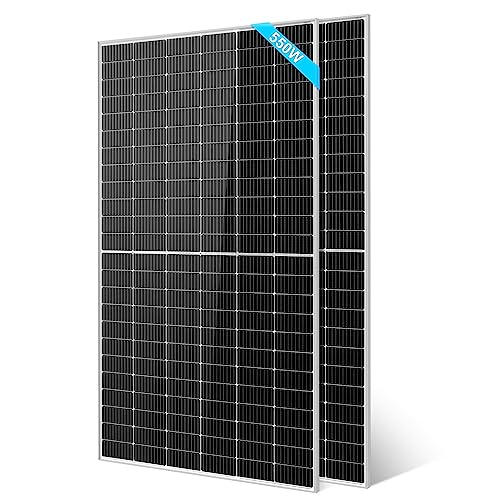
- 【Grade A solar cells】 : The long-lasting UL61730 550W monocrystalline...
- 【High Tolerance】: SUNGOLDPOWER UL61730 550W Solar panels are designed...
- 【Widely Use】: Easy Installation with pre-drilled hole...
Do I need a different charge controller for lithium batteries versus lead-acid?
Yes, you need a controller that has a specific setting for your battery chemistry. Lithium batteries need a different charging profile than lead-acid or AGM batteries.
Most modern charge controllers let you switch between battery types with a button or a menu setting. Always check the product description before buying to make sure it supports your battery type.
Which monocrystalline panel won’t let me down when I am camping off-grid?
For camping and portable use, I always grab the foldable panel that fits in my trunk. It sets up in seconds and produces reliable power even on partly cloudy days.
I have taken this panel on dozens of trips and it has never failed me, which is why I recommend the portable solar panel that solved my camping power problems. Just remember you still need a charge controller to go with it.
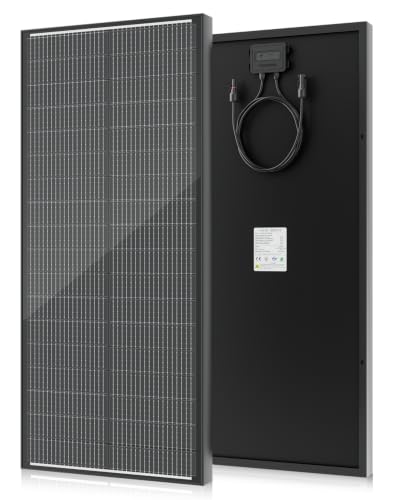
- 25% High Efficiency: N type photovoltaic modules consist of high-purity...
- Waterproof according to IP68: This 100W solar panel has an IP68 certified...
- Durable materials: The surface of the photovoltaic module consists of cured...
Can a charge controller get damaged by too much voltage from my panels?
Yes, exceeding the controller’s maximum input voltage can destroy it instantly. That is why checking your panel’s Voc rating before buying a controller is so important.
I always buy a controller rated for at least 25 percent more voltage than my panels can produce. This safety margin has saved my equipment more than once on cold sunny mornings.