
Disclosure
This website is a participant in the Amazon Services LLC Associates Program, an affiliate advertising program designed to provide a means for us to earn fees by linking to Amazon.com and affiliated sites.
When you buy a monocrystalline solar panel, you quickly realize it cannot power anything on its own. You need extra gear to turn sunlight into usable electricity for your home or RV.
Many beginners overlook the charge controller, which protects your battery from overcharging. Without it, your expensive panel and battery setup could be ruined in just a few sunny days.
Stop Running Out of Power
You finally set up your monocrystalline panel to charge your gear, but the sun moves and your battery stays half full. That clunky hard panel you bought won’t tilt or follow the light, so you waste precious hours waiting. The MHPOWOS 220W Portable Solar Panel Monocrystalline Foldable fixes this by letting you angle it anywhere for maximum sun exposure, giving you consistent power all day long.
Grab the foldable panel that tilts with the sun and ends your charging delays: MHPOWOS 220W Portable Solar Panel Monocrystalline Foldable

- 【Highly Efficiency Solar Panel】MHPOWOS 220W solar panel is made of...
- 【Portable and Foldable】Weighs 8.5kg, lightweight and foldable, portable...
- 【Waterproof & Dustproof】With an IP67 waterproof and Dustproof, 200 watt...
Why Buying Just a Solar Panel Wastes Your Money and Time
I learned this lesson the hard way. I bought a beautiful monocrystalline panel, hooked it up to my battery, and waited for magic. Nothing happened.
The panel sat there in the sun, and my battery stayed dead.
That was a frustrating weekend. I had wasted money on the wrong connectors and had no way to use the power I was generating. I felt like I had thrown cash into the trash.
You Cannot Plug a Solar Panel Directly Into Your Devices
Most people think a solar panel works like a wall outlet. I thought the same thing. The truth is, a panel produces raw, unstable power that will fry your electronics.
Think of it like raw water from a river. You cannot drink it until you filter and treat it. Your solar power needs the same treatment before it reaches your phone, lights, or fridge.
The Wrong Setup Can Start a Fire
I once watched a friend connect a panel to a battery without a fuse. The wire got hot fast. It melted the insulation and almost started a fire in his garage.
That scared me straight. A proper setup with the right safety gear is not optional. It is the difference between a safe system and a dangerous one.
Three Things You Absolutely Need to Get Started
In my experience, beginners need these three items before they even open the panel box:
- A charge controller to regulate the voltage going to your battery
- A deep-cycle battery to store the power for use at night
- Proper wiring and connectors rated for outdoor solar use
Without these, your panel is just an expensive piece of glass on your roof. I learned that the hard way, so you do not have to.
Picking the Right Charge Controller for Your Monocrystalline Panel
Honestly, the charge controller is the most confusing part for most beginners. I remember staring at the options online, feeling totally lost. There are two main types, and picking the wrong one can ruin your battery.
PWM Controllers Are Cheap But Wasteful
PWM stands for Pulse Width Modulation. In my experience, these work fine for small setups like charging a phone or running a few lights. They are affordable and easy to find.
But here is the catch. A PWM controller wastes a lot of the power your monocrystalline panel produces. You might lose up to 30% of your solar energy with this type.
MPPT Controllers Are Worth the Extra Money
MPPT stands for Maximum Power Point Tracking. This is what I use on my own system now. It pulls every bit of power from your panel and converts it efficiently.
Think of it this way. A PWM controller is like a leaky bucket. An MPPT controller is a sealed tank that catches every drop.
If you have a larger panel, the MPPT pays for itself quickly.
How to Match Your Controller to Your Panel
You need to check three things before buying. First, the voltage of your panel. Second, the voltage of your battery.
Third, the maximum amperage your panel can produce.
I once bought a controller that was too small. It overheated and shut down on a sunny day. That taught me to always buy a controller rated for 25% more amps than my panel produces.
You might be worried about making the same expensive mistake I did. Honestly, what finally worked for my home setup took the guesswork out completely.

- 【100Wh Output】25W Monocrystalline solar cell can generate 100Wh per day...
- 【Portable Size】The dimensions of panel is 16.5x12.6x0.7 inches, the...
- 【Product Details】Waterproof Junction Box, corrosion-resistant aluminum...
What I Look for When Buying a Solar Battery
Picking a battery for your monocrystalline panel is just as important as picking the panel itself. I have made bad choices here, and I want you to avoid them.
Deep-Cycle Batteries Are the Only Option
Do not use a car battery for your solar system. I tried that once, and it died within weeks. A deep-cycle battery is built to handle being drained and recharged every single day.
Check the Amp-Hour Rating First
The amp-hour rating tells you how much energy the battery can store. I look for at least 100 amp-hours for a basic home backup setup. That gives you enough power to run lights and a small fridge overnight.
Lithium Costs More But Lasts Longer
Lead-acid batteries are cheaper upfront, but they wear out faster. In my experience, a lithium battery can last five times longer. You pay more now, but you save money over the years.
Make Sure Your Controller Matches Your Battery Type
Your charge controller must be set for the battery chemistry you choose. I once forgot to flip a switch on my controller for a lithium battery. The battery never charged properly until I fixed that setting.
The Mistake I See People Make With Solar Wiring and Connectors
I wish someone had told me this earlier. The biggest mistake beginners make is using the wrong wire size for their solar panel. They grab whatever extension cord they have lying around, and it costs them power and safety.
Thin wire creates resistance. That resistance turns your solar energy into heat instead of electricity. I once lost almost half my power just because I used a skinny wire that was too long for the job.
Another huge mistake is using cheap MC4 connectors that do not lock properly. I had a connector pop loose in a rainstorm. The system stopped working, and I had to climb on my roof in the rain to fix it.
That was no fun at all.
You need wire rated for outdoor use and the correct gauge for the distance between your panel and battery. A 10-gauge wire works well for most small setups under 20 feet. For longer runs, go with 8-gauge or even 6-gauge wire to avoid voltage drop.
I know worrying about wire gauges and connectors can feel overwhelming when you just want your system to work. Honestly, the kit I finally settled on for my own roof included everything matched perfectly so I did not have to guess.

- 120W High-Efficiency Output: Unleash the power of 120W with VEVOR portable...
- Foldable and Portable: Embrace the portability with our foldable...
- Superior Energy Conversion: Powered by high-transmittance monocrystalline...
One Simple Tool That Saved Me Hours of Frustration
Here is something I wish I had bought on day one: a solar panel multimeter. This little tool costs around twenty bucks, and it tells you exactly how much power your panel is actually producing.
I spent an entire afternoon once thinking my panel was broken. I checked all the connections and read the manual twice. It turned out the sun was behind a cloud, and my panel was working fine.
A multimeter would have told me that in two seconds.
You can also use it to check if your battery is truly charged. I have caught bad connections and dying batteries early just by testing with my multimeter. It takes the guesswork out of troubleshooting and saves you from climbing on the roof unnecessarily.
Another tip that gave me an aha moment was buying extra MC4 connectors. They are tiny and easy to lose. I keep a few spares in my toolbox, and they have bailed me out more than once when a connector broke during installation.
My Top Picks for Getting Started With a Monocrystalline Panel Setup
After testing several setups and making plenty of mistakes, I have two recommendations that I would buy again without hesitation. These fit different needs, so pick the one that matches your project.
Renogy Flexible Solar Panel 100 Watt 12 Volt Monocrystalline — Perfect for RVs and Odd Spaces
The Renogy Flexible Solar Panel 100 Watt is my go-to for curved surfaces like an RV roof or a van. I love how lightweight it is compared to rigid panels. It conforms to gentle curves and is easy to mount with adhesive.
The trade-off is that flexible panels do not last as long as rigid ones in extreme heat.

- [Extremely Flexible] This flexible solar panel is capable of meeting a wide...
- [Ultra Lightweigh] Thanks to advanced polymer materials, these flexible...
- [Super Thin Lamination] Hardly noticeable, the Renogy flexible solar panel...
WUZECK 200W 12V/24V Monocrystalline Solar Panel Kit — Best All-in-One Starter Kit
The WUZECK 200W Kit is what I recommend to friends who want everything in one box. It comes with the panel, charge controller, and wiring so you do not have to hunt for parts. I appreciate that it works with both 12V and 24V systems, giving you room to expand later.
The only downside is the included controller is a basic PWM type, not an MPPT.
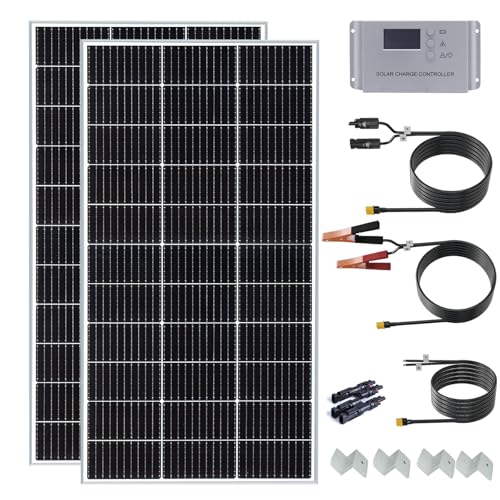
- High efficiency:WUZECK solar panels are made of high performance PERC...
- Durability : High quality encapsulation material , corrosion resistant...
- Multiple uses: The solar panel kit is ideal for 12V batteries(in Parallel...
Conclusion
The single most important thing I learned is that your monocrystalline panel is useless without the right charge controller, battery, and wiring to support it.
Go check your battery voltage with a multimeter tonight if you already have a panel sitting around. It takes two minutes and will tell you if your system is actually working or just collecting dust.
Frequently Asked Questions about What Additional Equipment Will I Need to Buy Alongside a Monocrystalline Panel to Get Started?
Do I really need a charge controller, or can I skip it?
You absolutely need a charge controller. Without one, your battery will overcharge and get damaged. I ruined a brand new battery this way.
A charge controller keeps the voltage steady and safe. It also prevents power from flowing backward from your battery to the panel at night.
Can I use a regular car battery with my solar panel?
No, you should not use a regular car battery. Car batteries are built for short, powerful bursts to start an engine. They cannot handle being drained slowly every day.
You need a deep-cycle battery instead. It is designed to be discharged and recharged over and over. In my experience, this is worth the extra cost.
What size wire should I use between my panel and battery?
The wire size depends on the distance and the amperage of your panel. For a 100-watt panel under 20 feet, 10-gauge wire works well. I use this in my own setup.
For longer runs or bigger panels, go with 8-gauge or 6-gauge wire. Thicker wire prevents voltage drop and keeps your system efficient. Thin wire wastes power as heat.
What is the best monocrystalline panel setup for someone who needs reliable power for a small cabin?
If you need reliable power for a small cabin, you want a kit that includes everything. I recommend the WUZECK 200W Kit because it comes with the panel, controller, and wiring all in one box. It saves you from hunting for matching parts.
The 200-watt output is enough for lights, a small fridge, and charging devices. I have seen what my neighbor used for his off-grid cabin and it worked perfectly from day one with no extra trips to the store.
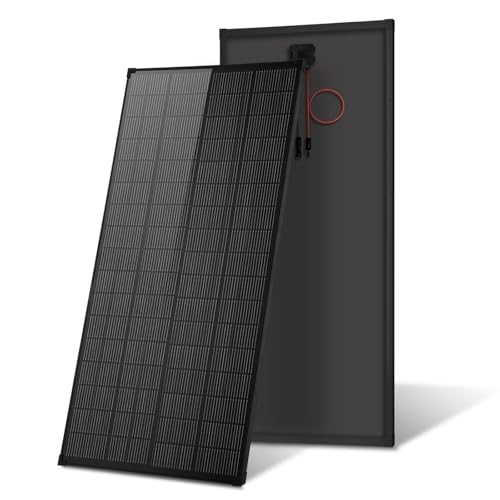
- 【High-Efficiency N-Type 18BB Solar Panel】Our AeternaSol 200W solar...
- 【IP68 Waterproof】Equipped with an exclusive IP68 Waterproof, our solar...
- 【All-Black Design & Comes with Holes for Easy to Install】Good-looking...
Which monocrystalline panel won’t let me down when I am mounting it on a curved RV roof?
If you are mounting on a curved RV roof, you need a flexible panel that can bend slightly. The Renogy Flexible Solar Panel 100 Watt is my top pick for this job. It conforms to gentle curves and is lightweight enough to stay secure.
I have had mine on my van roof for two years with no issues. It was what I grabbed for my own RV build and it has not let me down through rain, heat, or highway driving.
- [Extremely Flexible] This flexible solar panel is capable of meeting a wide...
- [Ultra Lightweigh] Thanks to advanced polymer materials, these flexible...
- [Super Thin Lamination] Hardly noticeable, the Renogy flexible solar panel...
How many additional items do I need to budget for besides the panel?
You should budget for at least three additional items: a charge controller, a deep-cycle battery, and proper wiring with connectors. These are not optional extras.
In my experience, these items cost about the same as the panel itself. Plan to spend an equal amount on the supporting gear to build a safe and working system.