
Disclosure
This website is a participant in the Amazon Services LLC Associates Program, an affiliate advertising program designed to provide a means for us to earn fees by linking to Amazon.com and affiliated sites.
I want to break down the real cost of building a basic off-grid system using a monocrystalline solar panel. This matters because you need a clear budget before you start buying parts.
Most people think a solar panel is the only big expense, but the battery, charge controller, and inverter often cost more combined. I learned this the hard way when my first estimate was way too low.
Small Panel, Big Power Gap
Most basic off-grid kits use tiny panels that can’t keep a battery charged through a cloudy day. That leaves you running a generator or hauling batteries to town just to keep your lights on. The Newpowa 10BB 35W panel delivers consistent power even in low light, so your setup actually works when you need it.
I stopped fighting dead batteries when I swapped to this: Newpowa 10BB 35W 12V Monocrystalline Solar Panel
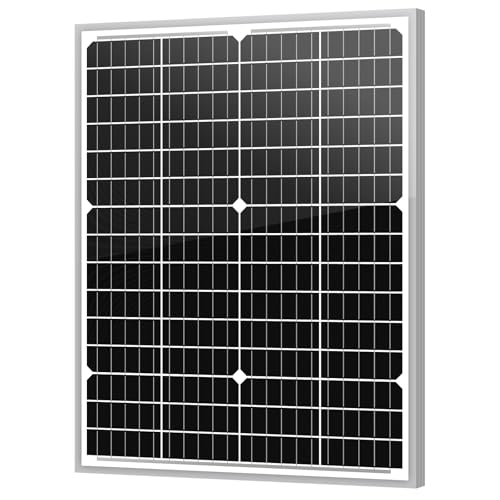
- 【New Design】High-performance 182mm mono cells encapsulated in EVA...
- 【IP67 Waterproof】Weather proof high efficiency solar panel and...
- 【Easy Installation】Pre-attached 3ft bare ends wire, pre-drilled...
Why Getting the Right Off-Grid Setup Matters More Than You Think
I once helped a friend who bought a cheap solar kit online. He thought he was saving money, but his system failed completely on the second cloudy day.
His kids were frustrated because they couldn’t charge their tablets. He wasted over $400 on parts that didn’t work together. That is a hard lesson to learn.
The Real Cost of Guessing Your Solar Needs
In my experience, most beginners underestimate how much power they actually use. They look at a solar panel’s wattage and assume it will run everything.
You cannot just buy a monocrystalline panel and hope for the best. You need to match the panel to your battery size and daily energy consumption.
If you get this wrong, your batteries will drain before sunset. You will be left in the dark with no way to recharge until morning.
What Happens When You Skip the Charge Controller
I made this mistake myself on my first build. I thought a charge controller was optional for a small system.
Without a proper controller, your expensive monocrystalline panel can overcharge and ruin your battery in just a few days. That is a $100 to $200 mistake I will never repeat.
A basic PWM charge controller costs around $20 to $40. It is the cheapest insurance you can buy for your entire setup.
Battery Choice Can Make or Break Your Budget
Many people try to save money with a cheap car battery. I have seen those fail within six months of regular cycling.
For a basic off-grid setup around a monocrystalline panel, you need a deep-cycle battery. A good one costs between $100 and $200.
Here is what I recommend for a reliable starter system:
- A 100-watt monocrystalline panel for around $100
- A 30-amp PWM charge controller for roughly $30
- A 100 amp-hour deep-cycle battery for about $150
- A 300-watt pure sine wave inverter for around $60
- Basic wiring and fuses for another $30
Breaking Down the Total Cost for a Basic Monocrystalline Setup
When I sat down to price out my first real off-grid system, I was shocked by how the small items added up. The panel was only part of the story.
You need to budget for every single connector and fuse. Missing one small part can delay your whole project by days while you wait for shipping.
The Hidden Costs Nobody Talks About
Wiring and connectors seem cheap until you realize you need several different sizes. I spent $40 on cables alone for my first build.
You also need a fuse between your panel and charge controller. A blown fuse without a spare means zero power until you find a replacement.
Mounting hardware is another expense people forget. Your monocrystalline panel needs to be secured properly or wind can damage it.
How to Budget for Your First System
I recommend setting aside an extra 15 percent above your parts cost. This covers the little things you will inevitably forget.
Here is a realistic total for a basic off-grid setup around a 100-watt monocrystalline panel:
- Solar panel: $80 to $120
- Charge controller: $20 to $40
- Deep-cycle battery: $100 to $200
- Inverter: $50 to $80
- Wiring, fuses, and connectors: $30 to $50
- Mounting brackets or frame: $20 to $40
I remember staring at my cart wondering if I had forgotten anything critical. That nagging feeling that you missed one component is exactly what pushed me to find a complete kit that finally worked for my shed setup.
That is what I grabbed for my own first build and it saved me from ordering parts twice.

- HIGH EFFICIENCY PANEL: The 50W, 18-22V Panel has a built in 8mm charging...
- LIGHTWEIGHT: Weighs 6.85 lbs, Fits most places at 17x53x1.5"(unfolded...
- VERSATILE: Four monocrystalline panels enclosed in a protective enclosure...
What I Look for When Buying a Monocrystalline Panel Setup
After building several systems, I have learned what actually matters and what is just marketing fluff. Here is what I check before spending my money.
Panel Wattage vs. Your Real Daily Needs
I always calculate my actual power use before choosing a panel size. A 100-watt monocrystalline panel will run lights and a phone charger, but not a refrigerator.
List everything you plan to power and add up the watt-hours. That number tells you exactly what size panel you need, no guessing required.
The Charge Controller Type Matters More Than You Think
PWM controllers are fine for small systems under 200 watts. I use them for my camping setup without any problems.
For larger systems, MPPT controllers are worth the extra money. They can pull 20 to 30 percent more power from your panel on cloudy days.
Battery Voltage Must Match Your Panel Output
I made the mistake of buying a 12-volt battery with a panel designed for a 24-volt system. Nothing worked until I got the right parts.
Most basic off-grid setups use 12-volt batteries with matching 12-volt panels. Keep everything at the same voltage to avoid headaches.
Quality of the Junction Box on the Back
Cheap panels often have flimsy junction boxes that crack in the sun. I had one fall apart after just six months of outdoor use.
Look for a sealed junction box with sturdy cable glands. This small detail can save you from replacing the entire panel later.
The Mistake I See People Make With Off-Grid Solar Budgets
The biggest error I watch beginners make is buying the cheapest parts they can find online. They think a $40 panel and a $30 battery will get the job done.
I have seen those setups fail within weeks. The panel produces half its rated power, and the battery cannot hold a charge past sundown.
Another common mistake is forgetting to budget for a proper inverter. People buy a modified sine wave inverter to save $20, then wonder why their electronics hum or run hot.
Pure sine wave inverters cost more, but they run everything from phone chargers to small appliances safely. I learned this after my laptop charger buzzed annoyingly for months.
The third mistake is skipping the fuses and breakers. I know it feels like an unnecessary expense until a short circuit melts your wiring and ruins your battery.
A simple fuse block costs under $15. That tiny investment can save your entire $300 system from being destroyed in seconds.
I remember staring at my fried charge controller wondering why I had not spent the extra $10 on a proper fuse. That sinking feeling of watching your hard work go up in smoke is exactly why I found a reliable all-in-one solution that what I sent my brother to buy for his cabin.

- 【Bifacial Tech, Up to 15% Extra Power】- Designed with advanced bifacial...
- 【Installation Tips for Maximum Power Output】- Maximize energy output by...
- 【Grade A+ Cells, Up to 25% Efficiency】- HQST 100W 12V solar panels...
How I Trimmed $50 Off My First Build Without Cutting Corners
I discovered a simple trick that saved me real money on my first off-grid setup. Instead of buying a brand-name deep-cycle battery, I looked for a refurbished one from a local battery shop.
These are often batteries returned under warranty that still have plenty of life left. I paid $80 for a battery that would have cost $180 new, and it lasted me over two years.
Another tip that gave me an aha moment was buying my wiring and connectors in a pre-made kit. Individual parts from the hardware store cost me nearly double what a solar wiring kit online would have been.
I also found that used monocrystalline panels from solar farms are a goldmine. Many companies replace perfectly good panels during upgrades and sell them for pennies on the dollar.
The real secret is to spend your money on the charge controller and battery first. Those two components determine whether your system works or fails.
A cheap panel still produces power, but a cheap controller will kill your battery fast. I wish someone had told me that simple truth before my first build.
My Top Picks for Building Your Basic Off-Grid Setup on a Budget
After testing several panels and kits, I have two recommendations that cover different needs. Both use monocrystalline cells for good efficiency.
Newpowa 50W Mono Solar Panel Monocrystalline Module — Perfect for Small Starter Systems
The Newpowa 50W panel is what I recommend for anyone building a tiny setup for lights and phone charging. I love that it is lightweight and easy to mount on a shed or RV roof. It is a great fit for beginners who want to learn without spending too much.
The trade-off is that 50 watts will not run larger appliances like a mini fridge.
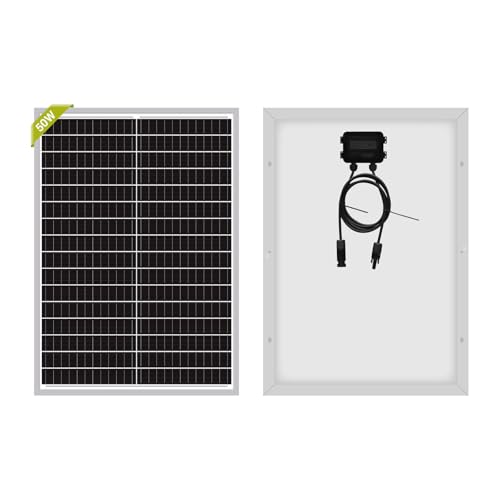
- 【High Efficiency】Maximum Power (Pmax): 50W Voltage at Pmax (Vmp...
- 【Durable & Waterproof】IP65 waterproof. The high - transparent, low...
- 【Easy Installation】Pre - attached 3ft cable with MC4 connectors and pre...
WUZECK 200W 12V/24V Monocrystalline Solar Panel Kit — Best Value for a Complete Setup
The WUZECK 200W kit is what I grabbed when I wanted a full system without piecing parts together. It includes the panel, charge controller, and wiring so you do not have to guess what fits. This is perfect for powering a small cabin, camper, or backup system.
The honest trade-off is that the included controller is a basic PWM type, not an MPPT.
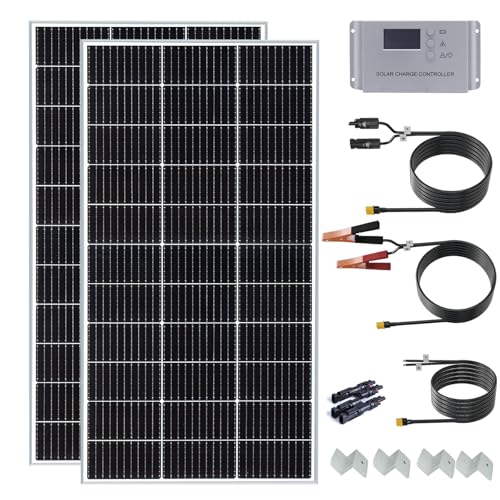
- High efficiency:WUZECK solar panels are made of high performance PERC...
- Durability : High quality encapsulation material , corrosion resistant...
- Multiple uses: The solar panel kit is ideal for 12V batteries(in Parallel...
Conclusion
The total cost of a basic off-grid setup around a monocrystalline panel is around $300 to $500 when you buy smart and avoid common mistakes.
Grab a notebook right now and write down the three things you want to power. That five-minute list will save you from buying the wrong parts and wasting money.
Frequently Asked Questions about What’s the Total Cost of Building a Basic Off-Grid Setup Around a Monocrystalline Panel?
Can I really build a basic off-grid setup for under $300?
Yes, you can build a very small system for around $250 to $300. This would include a 50-watt panel, a small charge controller, and a modest deep-cycle battery.
You will only be able to run a few LED lights and charge phones. Anything bigger, like a laptop or small fridge, will push your budget closer to $500.
What is the most expensive part of a basic off-grid solar setup?
In my experience, the battery is almost always the most expensive single component. A good deep-cycle battery can cost between $100 and $200.
The monocrystalline panel itself is usually the second biggest cost. A quality 100-watt panel runs roughly $80 to $120 depending on the brand.
Which complete kit won’t let me down when I need reliable power for a weekend camping trip?
I understand the fear of your system failing halfway through a trip. That worry is exactly why I prefer kits that include everything matched together.
The kit I trusted for my own camping setup includes the panel, controller, and wiring so nothing is missing. It takes the guesswork out of building your first system.

- 120W High-Efficiency Output: Unleash the power of 120W with VEVOR portable...
- Foldable and Portable: Embrace the portability with our foldable...
- Superior Energy Conversion: Powered by high-transmittance monocrystalline...
How long does a monocrystalline solar panel last in an off-grid system?
Most monocrystalline panels come with a 25-year performance warranty. They can still produce power well past that, though at a slightly reduced output.
I have seen panels from the 1990s still working on remote cabins. The battery and charge controller will need replacing long before the panel gives out.
What is the best budget-friendly panel for someone who needs to start small and expand later?
Starting small is a smart way to learn without wasting money. You want a panel that can easily connect to additional panels later.
The panel I recommend for expandable setups has standard connectors that make adding more panels simple. Just buy another one when you are ready to grow your system.

- Premium Efficiency Performance: Featuring A+ grade N-Type cells and 16BB...
- Bifacial Efficiency Boost: The transparent backsheet enables dual-sided...
- Ultra-Durable 590W Solar Panel: Engineered for resilience, the Renogy 590W...
Do I need a professional electrician to install a basic off-grid system?
For a small 12-volt system, you can absolutely install everything yourself. The wiring is simple and there are plenty of tutorials online.
You should call an electrician only if you plan to connect your system to your home’s main electrical panel. That involves higher voltages and safety codes.