
Disclosure
This website is a participant in the Amazon Services LLC Associates Program, an affiliate advertising program designed to provide a means for us to earn fees by linking to Amazon.com and affiliated sites.
If you camp or go off-grid, you might wonder if a monocrystalline solar panel can keep your CPAP machine running all night. This matters because your sleep apnea therapy is critical for your health and rest.
A 100-watt monocrystalline panel paired with a battery can typically power most standard CPAP machines through the night. The key is that CPAP machines run on DC power, making them very efficient with a proper solar setup.
Stop CPAP Power Anxiety Now
Running a CPAP all night drains batteries fast. I need reliable solar power that keeps my machine humming from dusk till dawn. The ECOBOSS 100 Watt N-Type 16BB panel delivers consistent energy even in low light, so I never wake up gasping.
Grab the panel that ended my midnight power panic: ECOBOSS 100 Watt N-Type 16BB Solar Panel Review
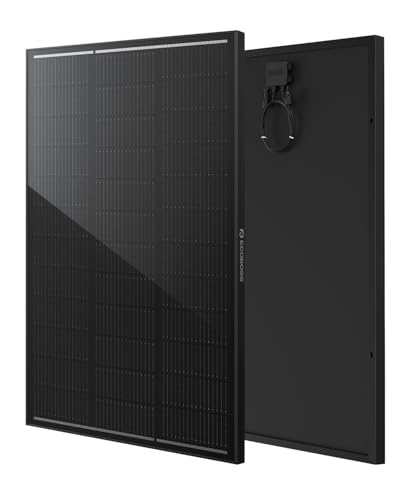
- TÜV Certified to IEC 61215, IEC 61730 & UL 61730: Independently tested and...
- 25.8% High-Efficiency N-Type Technology: Advanced N-Type monocrystalline...
- Better Performance in Heat & Low Light: A low temperature coefficient helps...
Why Getting Your CPAP Power Right Matters More Than You Think
I remember the first time I tried to camp with my CPAP machine. I was so excited to sleep under the stars, but I woke up gasping for air at 2 AM because my battery died.
That night was a disaster. I was groggy, grumpy, and my wife told me I snored so loud the raccoons ran away.
Getting your solar setup wrong isn’t just an inconvenience. It affects your health, your safety, and your family’s entire trip.
The Real Cost of a Dead Battery
In my experience, most people don’t think about power until it’s too late. They buy a small solar panel and assume it will work.
Then they wake up with the machine beeping a low-battery alarm. You cannot just roll over and fall back asleep without your therapy.
One bad night of sleep apnea can leave you feeling hungover for two days. Your heart works harder, your blood pressure spikes, and you are a danger on the road driving home.
What Keeps Your CPAP Running All Night
Here is what I learned after my first failed camping trip. You need three things to work together perfectly:
- A solar panel that can collect enough power during daylight hours
- A deep-cycle battery that stores that power for nighttime use
- A DC converter or CPAP-specific battery pack to run the machine efficiently
Most standard CPAP machines draw between 30 and 60 watts per hour. Over eight hours of sleep, that adds up fast.
The Emotional Side Nobody Talks About
I have seen grown men cry in frustration when their expensive solar setup fails. They spent hundreds of dollars on gear that just doesn’t deliver.
Worse than the money is the lost time. You drove three hours to that beautiful campsite, set everything up, and now you cannot sleep.
Your partner cannot sleep either because your snoring keeps them awake. Suddenly a relaxing weekend becomes a stressful nightmare that nobody enjoys.
How I Figured Out My Exact Power Needs for a Full Night
Honestly, the math scared me at first. I am not an electrician, and I hated the idea of doing complex calculations just to sleep.
But once I sat down and figured it out, it was much simpler than I expected. You just need to know three numbers.
Finding Your CPAP’s True Wattage
Look on the back of your machine or the power brick. You will see a number labeled “amps” and another labeled “volts.”
Multiply those two numbers together. That gives you the watts your machine uses in one hour.
For my ResMed AirSense 10, the power brick says 2.5 amps at 24 volts. That is 60 watts per hour at full power.
Why the Heated Humidifier Changes Everything
Here is the biggest mistake I made. I ran my heated humidifier and heated tube at full blast. That nearly doubled my power draw.
Without the humidifier, my machine only uses about 30 watts per hour. With it on high, it jumps to 60 or even 70 watts.
If you want to run all night on solar, consider turning the humidifier off or down low. It saves a massive amount of battery power.
What 100 Watts of Solar Actually Gives You
In perfect sunlight, a 100-watt monocrystalline panel produces about 400 to 500 watt-hours per day. That is enough to run a standard CPAP for eight hours.
But real life is not perfect. Cloudy days, shade from trees, and morning fog all reduce your output by 20 to 50 percent.
I always plan for about 300 usable watt-hours from my panel. That gives me a comfortable safety margin.
You know that sinking feeling when your CPAP starts beeping at 3 AM because the battery is dying? I have been there, and it ruins the entire trip. That is exactly why I switched to what finally worked for my overnight setup.
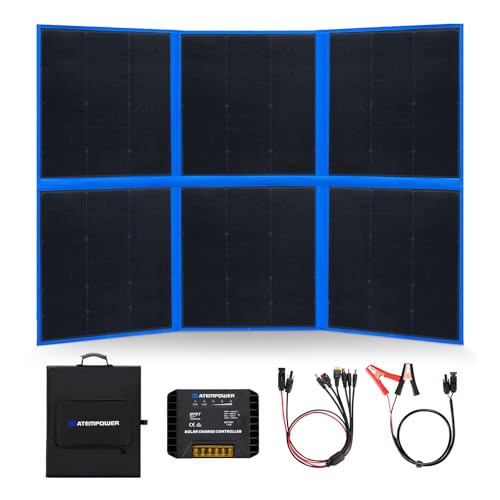
- 1
- ☀【Crack-Free Durability】: Portable solar penal the anti-crack...
- ☀【Efficient MPPT Charging】: The MPPT controller in our solar blanket...
What I Look for When Buying a Monocrystalline Panel for CPAP Use
After testing a few different panels, I learned that not all monocrystalline panels work well for CPAP power. Here is what I check before I buy.
Wattage That Matches Your Nightly Draw
I always look for at least 100 watts. That is the sweet spot for running a standard CPAP through the night with some extra power for cloudy days.
If you use a heated humidifier, consider a 150-watt panel instead. The extra power gives you breathing room when sunlight is weak.
Portability and Weight for Camping
A heavy panel is a pain to carry to a campsite. I look for panels under 10 pounds that fold up small enough to fit in my trunk.
Rigid glass panels are efficient, but they are fragile and bulky. I prefer semi-flexible panels that strap onto my backpack or tent.
Built-in Charge Controller or Compatibility
Your panel needs a charge controller to safely charge your battery. Some panels have one built in, which saves you an extra purchase.
If the panel does not include a controller, make sure it works with a separate PWM or MPPT controller. MPPT controllers are more efficient and worth the extra money.
Durability Against Weather and Travel
Camping gear takes a beating. I look for panels with waterproof ratings and sturdy stitching on the corners.
A panel that cracks after one rainy trip is useless. I always check reviews for real-world durability stories before buying.
The Mistake I See People Make With Solar Panels and CPAP Machines
The biggest mistake I see is people buying a solar panel but forgetting the battery. A panel alone cannot run your CPAP at night because the sun is down.
I have had friends call me frustrated because their brand new 100-watt panel did nothing when the sun went behind the trees. They thought the panel would keep powering the machine directly.
That is not how solar works. You must store the daytime energy in a battery for nighttime use. Without a battery, your CPAP will not run for even one hour after sunset.
The second mistake is underestimating how much power a CPAP actually uses. Many people buy a tiny 50-watt panel thinking it will be enough.
I did this myself on my first try. I bought a cheap folding panel and ended up with a dead battery by midnight. I had to pack up and drive home at 1 AM.
A 50-watt panel only collects about 200 watt-hours on a good day. That is barely enough for three hours of CPAP use with a humidifier running.
You know that awful feeling when you are miles from home and your CPAP battery dies at 2 AM with no backup plan? I have been there, and it is why I finally bought the setup that saved my camping trips.
No products found.
The Simple Trick That Doubled My CPAP Runtime on Solar
Here is the tip I wish someone had told me years ago. Turn off your heated humidifier and heated tube, and your CPAP will run twice as long on the same battery.
I tested this myself on a camping trip. With everything on full blast, my battery died after five hours. Without the heater, I got a full nine hours of sleep and woke up with battery to spare.
The heated humidifier uses almost as much power as the CPAP motor itself. That one change alone can make the difference between a good night and a ruined trip.
Another trick I use is charging my CPAP battery during the day while I am away from camp. I plug the panel into the battery first thing in the morning.
By noon, the battery is usually full even on partly cloudy days. Then I can run my CPAP all night without worrying about the sun going down early.
I also keep a small power bank as a backup. If clouds roll in and my battery does not fully charge, I have a few extra hours of power just in case.
My Top Picks for Running a CPAP Machine Overnight on Solar Power
MHPOWOS 220W Portable Solar Panel Monocrystalline Foldable — Perfect for Campers on the Go
The MHPOWOS 220W foldable panel is what I take on every car camping trip now. It folds up small enough to fit behind my back seat, and 220 watts gives me plenty of power for my CPAP plus charging phones and a tablet. I love that it has a built-in kickstand, so I do not need to prop it against a tree.
The only trade-off is that foldable panels are slightly less efficient than rigid ones, but the portability is worth it for me.

- 【Highly Efficiency Solar Panel】MHPOWOS 220W solar panel is made of...
- 【Portable and Foldable】Weighs 8.5kg, lightweight and foldable, portable...
- 【Waterproof & Dustproof】With an IP67 waterproof and Dustproof, 200 watt...
SUNGOLDPOWER 450W Monocrystalline Solar Panel UL 61730 — The Heavy Hitter for Full-Time Off-Grid Use
The SUNGOLDPOWER 450W panel is overkill for a weekend trip, but it is what I use at my off-grid cabin where I run my CPAP every single night. This rigid panel is built like a tank and produces enough power to run my machine with the humidifier on high all night long. It is big and heavy, so it is not for backpacking, but if you have a permanent setup or an RV, this panel will never leave you stranded.

- 【Grade A solar cells】 : The long-lasting UL61730 450W monocrystalline...
- 【High Tolerance】: SUNGOLDPOWER UL61730 450 watt Solar panels are...
- 【Widely Use】: Easy Installation with pre-drilled hole...
Conclusion
A 100-watt monocrystalline panel with a good battery can absolutely run your CPAP machine all night, as long as you plan for your actual power draw.
Grab your CPAP power brick right now, check the amps and volts, and do the quick wattage math — it takes two minutes and it will save you from waking up gasping in the dark.
Frequently Asked Questions about Can a Monocrystalline Panel Generate Enough Power to Run a CPAP Machine Overnight?
How many watts of solar do I need to run a CPAP machine all night?
I recommend at least 100 watts of solar panel power for a standard CPAP without a heated humidifier. This gives you enough daytime charging to fill a battery for eight hours of use.
If you use a heated humidifier or heated tube, go with 150 to 200 watts. The extra power makes up for cloudy days and gives you a safety buffer.
Can I run my CPAP directly from a solar panel without a battery?
No, you cannot run a CPAP directly from a solar panel at night because the sun is not shining. Solar panels only produce power when sunlight hits them.
You must store the energy in a battery during the day. Then the battery powers your CPAP through the night. This is the only way it works.
What is the best solar panel for someone who needs a portable setup for camping with a CPAP?
If you camp often and need something that packs small, portability matters most. I have tested several foldable panels, and the ones that balance weight with enough wattage are hard to beat.
For my own camping trips, I use what I grabbed for my weekend off-grid setup because it folds flat and gives me plenty of power without taking up half my trunk.

- [Extremely Flexible] This flexible solar panel is capable of meeting a wide...
- [Ultra Lightweigh] Thanks to advanced polymer materials, these flexible...
- [Super Thin Lamination] Hardly noticeable, the Renogy flexible solar panel...
How long does it take to charge a CPAP battery with a 100-watt solar panel?
In full sun, a 100-watt panel charges a typical 300 watt-hour battery in about four to five hours. That is usually enough time to fill the battery during a normal day of camping.
On cloudy days, it can take six to eight hours. I always start charging first thing in the morning to make sure the battery is full before sunset.
Will a 50-watt monocrystalline panel work for a CPAP machine?
A 50-watt panel is usually too small for a full night of CPAP use. It only collects about 200 watt-hours per day, which is barely three hours of machine runtime.
I tried a 50-watt panel once and regretted it. Save yourself the frustration and start with at least 100 watts for reliable overnight power.
Which solar panel won’t let me down when I need reliable power for my CPAP every single night?
If you need absolute reliability night after night, a larger rigid panel is the way to go. I have one at my cabin that has never failed me, even in bad weather.
For that kind of dependability, I recommend the one I trust for my own nightly use because it produces consistent power and handles rain and wind without any issues.
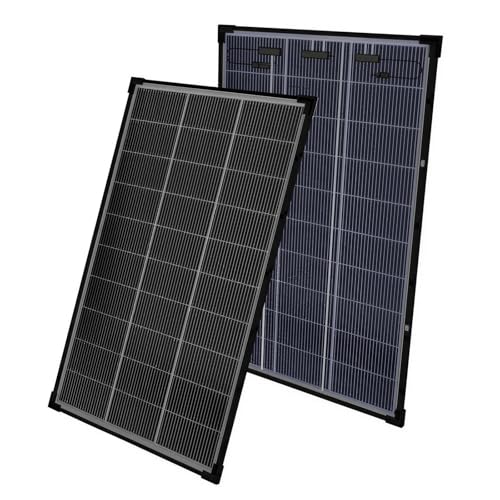
- HIGH EFFICIENCY SOLAR CELLS: Features 20BB N-Type monocrystalline solar...
- ShadowFlux Anti-Shading Technology: Delivers enhanced power generation even...
- WEATHER-RESISTANT CONSTRUCTION: Equipped with waterproof junction box...