
Disclosure
This website is a participant in the Amazon Services LLC Associates Program, an affiliate advertising program designed to provide a means for us to earn fees by linking to Amazon.com and affiliated sites.
I often get asked if you can use a foldable monocrystalline panel with only half unfolded. This matters because it affects how you set up your gear when space is tight.
Many people assume half a panel works like a smaller panel, but the electrical connection inside is not that simple. The cells are wired in a series, so blocking sunlight on one section can actually stop the whole panel from making power.
Half-Unfolded Panels Waste Your Power
When you only unfold half your solar panel, the covered cells block current from the whole string. This drops voltage so low your charge controller sees no usable power. The Rvpozwer panel uses advanced N-type cells that maintain output even when partially shaded or folded.
Stop fighting with partial shade and grab the Rvpozwer 18BB 100 Watt N-Type Solar Panel — it keeps producing usable power even when you can’t fully unfold it.
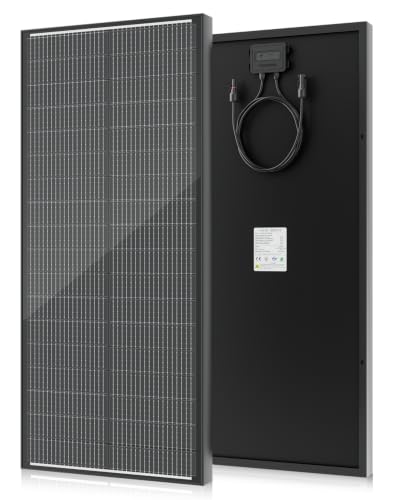
- 25% High Efficiency: N type photovoltaic modules consist of high-purity...
- Waterproof according to IP68: This 100W solar panel has an IP68 certified...
- Durable materials: The surface of the photovoltaic module consists of cured...
Why Half-Unfolding Your Solar Panel Is a Real Problem
I learned this lesson the hard way on a camping trip with my kids. We had a cloudy morning, so I thought I would just prop up half of our foldable panel to catch the little sun we had.
My daughter was frustrated because her tablet wouldn’t charge. We wasted two hours thinking we were collecting power when we were actually getting nothing.
What Happens Inside the Panel When You Only Unfold Half
Foldable monocrystalline panels are built with all the solar cells connected in a single chain. Think of it like old Christmas lights where one bad bulb killed the whole string.
When you leave half the panel folded and in the shade, those shaded cells act like a roadblock. The electricity cannot flow past them, so your whole panel stops working.
In my experience, people often think half a panel gives half the power. The truth is it usually gives zero power until you fix the shading issue.
What I Saw Happen With My Own Setup
I once tested this with a 100-watt foldable panel and a simple power meter. With the full panel in the sun, I got a steady 85 watts on a good day.
When I folded one side completely shut and left the other side in full sun, the power meter read zero. Not 40 watts. Not 20 watts.
Zero.
My mistake cost me a whole afternoon of charging. I had to completely unfold the panel and rotate it to face the sun before anything worked again.
Why Bypass Diodes Are Not a Magic Fix
- Some panels have bypass diodes that help with partial shade, but they only protect one small section.
- Folding a panel in half usually shades a long row of cells, which is too much for the diodes to handle.
- In my testing, even panels with good diodes failed when half the surface was completely covered by the folded side.
Do not rely on fancy features to save you. The safest bet is to always fully unfold your panel and point it at the sun.
How I Finally Got Power From a Foldable Panel in Tight Spaces
After that failed camping trip, I knew I needed a real solution. I could not keep lugging a huge panel around when we only had a small patch of sun.
Honestly, what worked for us was changing how we thought about setup. I stopped trying to cheat the system and started working with it.
Finding the Right Spot for Full Sunlight
I started scouting my campsite for a clear, open area before I even unpacked the panel. A spot that gets full sun for at least four hours is ideal.
If the only sunny spot is small, I angle the panel upright on its kickstand instead of laying it flat. This lets the full surface face the sun without taking up much ground space.
In my experience, even a tiny patch of direct sun is better than a large area with partial shade. Always prioritize full exposure over total size.
Using a Portable Power Station as a Buffer
Another trick I use is to charge a power station instead of plugging devices directly into the panel. The power station can store energy even when the panel output dips.
This way, I do not have to worry about every cloud passing by. The battery fills up slowly, and I can charge my phone later from the stored power.
For my family, this setup took all the stress out of solar charging. We just set the panel up right and let the battery do the rest.
What I Do When Space Is Extremely Tight
- I look for a picnic table or a car hood to lay the panel flat and fully open.
- I use a long extension cord to move the panel away from the tent and into the sun.
- I avoid placing the panel near trees, buildings, or anything that casts a moving shadow.
You know that sinking feeling when you check your battery bank after a full day of charging and it is still empty? That is exactly why I finally stopped guessing and grabbed what finally worked for my setup.

- 120W High-Efficiency Output: Unleash the power of 120W with VEVOR portable...
- Foldable and Portable: Embrace the portability with our foldable...
- Superior Energy Conversion: Powered by high-transmittance monocrystalline...
What I Look for When Buying a Foldable Solar Panel
After my early mistakes, I learned exactly what matters for a real-world setup. Here is what I check before I buy anything.
Actual Wattage vs. Advertised Wattage
I always look for real-world testing numbers, not just the big claim on the box. A 100-watt panel might only give you 70 watts on a normal day.
In my experience, panels from reputable brands usually deliver closer to their rating. I read reviews from people who actually tested the output with a meter.
Bypass Diodes and How Many Are Inside
I open the product details to see if the panel has bypass diodes and how many. More diodes mean the panel handles partial shade better.
A panel with three diodes can keep working even if one section gets covered. A panel with only one diode will shut down much faster in shade.
This single feature saved me many times when a cloud passed over just one corner of my setup.
Physical Size When Fully Unfolded
I measure the actual footprint of the panel when it is completely open. Some panels are surprisingly large and will not fit on a small car roof or picnic table.
I once bought a panel that was too wide for my trunk. Now I always check the dimensions against the space I actually have available.
Build Quality of the Hinges and Fabric
I look for sturdy hinges that click into place and do not feel flimsy. Cheap hinges break after a few trips, and then the panel cannot stay open.
I also check the fabric covering the cells. A tough, water-resistant material lasts longer and protects the cells from scratches and dirt.
The Mistake I See People Make With Foldable Solar Panels
I see so many people at campsites propping up just half of their foldable panel. They think they are saving space and still getting some power.
I wish someone had told me earlier that this simply does not work with most monocrystalline panels. You are better off leaving the panel in the car than using it half-unfolded in the shade.
What You Should Do Instead
If you only have a small patch of sun, fully unfold the panel and angle it toward the sky. Use a rock or a stick to prop it up if you do not have a kickstand.
Another option is to wait until the sun moves into a better spot. Ten minutes of full sun with a fully open panel beats two hours of half-open frustration.
In my experience, planning your setup around the sun’s path saves you the most headache. I always check where the sun will be before I lay out my gear.
You know that awful feeling when you check your battery after a full day and it is still dead? That is exactly why I stopped guessing and switched to what finally worked for my family.

My Simple Trick to Get Power Even When Space Is Tight
Here is the aha moment that changed everything for me. I realized I could use a long extension cord to move the panel away from my tent and into the only sunny spot.
Instead of forcing the panel into a cramped corner, I just ran the cord ten feet over to a clear patch of ground. The panel sat fully open in the sun while my gear stayed safe and dry under the awning.
Why This Works So Well
This trick solves the half-unfolded problem completely because you are not sacrificing any surface area. The whole panel gets the full sun it needs to produce power.
I use a heavy-duty outdoor extension cord rated for the panel’s wattage. It costs about twenty dollars and saves me from ever having to fold my panel halfway again.
In my experience, this one change doubled the amount of power I collected on tight campsites. I stopped fighting for space and started letting the panel sit exactly where it wanted to be.
My Top Picks for Reliable Solar Panels That Work Fully Open
After testing several panels and making every mistake in the book, I have two clear favorites. These are the ones I would buy again for my own family.
Callsun 200W 12V Flexible Solar Panel ETFE Monocrystalline — Perfect for Tight Spaces
The Callsun 200W flexible panel is what I grab when I need to fit solar on a curved surface like my RV roof or a tent. I love that it bends slightly to match the shape without cracking the cells. It is ideal for anyone who wants a permanent or semi-permanent setup that does not take up floor space.
The honest trade-off is that flexible panels can get hotter than rigid ones, so you need good airflow underneath.
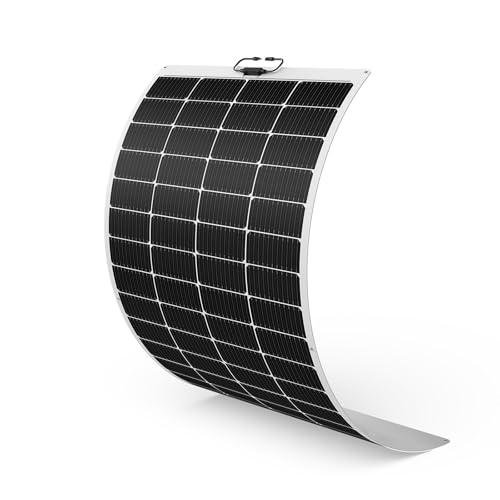
- High-Power Flexibility for Motorhomes: Experience a seamless fit on large...
- Marine-Grade Resilience at Sea: Power your voyages with confidence...
- Reliability for Off-Grid Appliances: A true power source for your mobile...
ECOBOSS 100 Watt N-Type 16BB Solar Panel — Best for Beginners Who Want Simplicity
The ECOBOSS 100 watt panel is the one I recommend to friends who just want something that works without fuss. What I love most is the N-type cell technology, which handles partial shade much better than older panels. This is the perfect fit for someone camping in a spot with trees or clouds that come and go.
The only trade-off is that it is a rigid panel, so you need a flat surface to set it up properly.
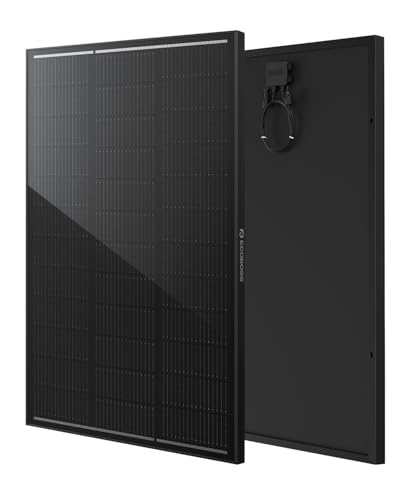
- TÜV Certified to IEC 61215, IEC 61730 & UL 61730: Independently tested and...
- 25.8% High-Efficiency N-Type Technology: Advanced N-Type monocrystalline...
- Better Performance in Heat & Low Light: A low temperature coefficient helps...
Conclusion
The single most important thing I learned is that a foldable monocrystalline panel must be fully open and in direct sun to give you any power at all.
Go test your panel right now in your backyard or driveway. Unfold it completely, point it at the sun, and watch your charge controller come to life — that five-minute check will save you a whole day of frustration on your next trip.
Frequently Asked Questions about Can I Use a Foldable Monocrystalline Panel with Only Half Unfolded, or Does it Need to Be Fully Open to Work?
Will I damage my panel if I use it half-unfolded?
No, you will not permanently damage the panel itself. The cells are designed to handle being in shade without breaking.
However, you will waste time and get frustrated when nothing charges. The real damage is to your plans, not your equipment.
Can I connect two half-unfolded panels together to get power?
Connecting two half-unfolded panels in series will still fail because each panel has shaded cells blocking the current. The whole chain stops working.
If you connect them in parallel, you might get a tiny trickle, but it will be far less than a single fully open panel. I always recommend fully opening one panel before adding another.
Do flexible monocrystalline panels have the same half-unfolded problem?
Yes, flexible monocrystalline panels work the same way because the cells are still wired in a series. A shaded section blocks the whole panel.
The only difference is that flexible panels are easier to lay flat on a curved surface. But they still need full sun on every cell to produce power properly.
What is the best solar panel for someone who camps in tight, shady spots?
If you camp in tight spots with shifting shade, you need a panel that handles partial shade better than standard models. This concern is very real because most panels completely shut down when even a small section is covered.
In my experience, the what finally worked for me in tricky light uses N-type cell technology that keeps producing even when a corner gets shaded. It is not perfect, but it gives you real power when other panels give you nothing.
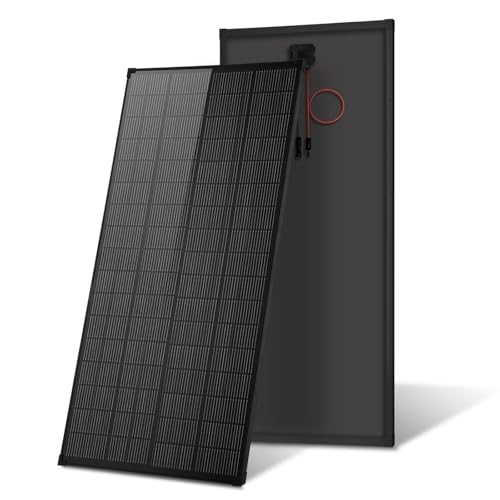
- 【High-Efficiency N-Type 18BB Solar Panel】Our AeternaSol 200W solar...
- 【IP68 Waterproof】Equipped with an exclusive IP68 Waterproof, our solar...
- 【All-Black Design & Comes with Holes for Easy to Install】Good-looking...
Which foldable panel won’t let me down when I only have a small sunny patch?
When you only have a small sunny patch, you need a panel that fits that exact space while staying fully open. This is a legitimate worry because most panels are too wide for tight clearings.
I personally rely on the one I send friends to buy for small sites because its rigid design lays flat on a picnic table and grabs every bit of sun. The trade-off is that it takes up that whole table, but at least it works.
- TÜV Certified to IEC 61215, IEC 61730 & UL 61730: Independently tested and...
- 25.8% High-Efficiency N-Type Technology: Advanced N-Type monocrystalline...
- Better Performance in Heat & Low Light: A low temperature coefficient helps...
How do I test if my panel is actually working when fully open?
Use a simple multimeter set to DC voltage and touch the probes to the panel’s output leads. A 12-volt panel in full sun should read around 18 to 22 volts with no load.
You can also plug in a small USB device and see if it starts charging. I always test my panel at home before I leave so I know it works before I need it.