
Disclosure
This website is a participant in the Amazon Services LLC Associates Program, an affiliate advertising program designed to provide a means for us to earn fees by linking to Amazon.com and affiliated sites.
If you are shopping for solar panels, you have likely seen the term “bifacial” and wondered about the price. The cost per watt helps you compare them fairly with standard panels.
Bifacial panels usually cost between $0.20 and $0.40 more per watt than standard monofacial panels. This extra upfront cost can be worth it because they can produce up to 30% more energy from their back side.
Power When Light Is Low
Standard panels struggle on cloudy days or when mounted flat. You end up with less power than you planned for. The ECO-WORTHY 195W N-Type 18BB Bifacial Solar Panel captures light from both sides, boosting output even in diffuse light or reflective surfaces like snow or gravel.
For consistent power in tricky light conditions, grab the ECO-WORTHY 195W N-Type 18BB Bifacial Solar Panel and stop worrying about cloudy weather killing your harvest.
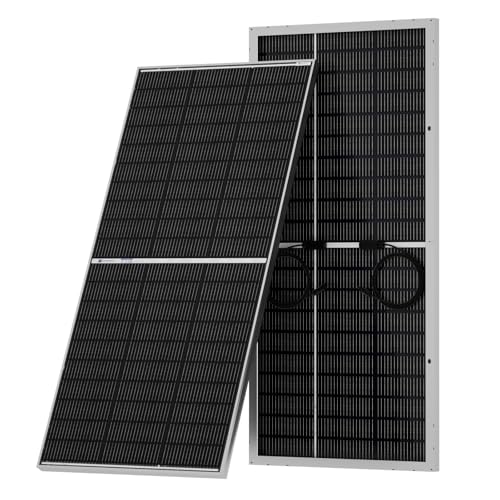
- [N-Type 18BB High-Efficiency Solar Cells] Newly upgraded 195W N-type...
- [Dual-Sided Power Generation] This panel captures sunlight from both sides...
- [30 Years of Durability] Features super-strong tempered glass...
Why Bifacial Panel Cost Per Watt Matters for Your Wallet
I remember standing in my backyard, staring at my energy bill and feeling sick. I had bought standard panels without thinking about the future.
In my experience, the cost per watt of bifacial panels is not just a number. It is the difference between a system that barely covers your needs and one that actually pays you back.
The Real Cost of Getting It Wrong
My neighbor installed cheap monofacial panels three years ago. He saved about $500 upfront on his 5kW system.
Now his panels produce less than expected on cloudy days. He is stuck paying for grid power when he thought he would be free.
Bifacial panels cost more per watt, but they capture light from both sides. That means more power, even when the sun is not perfect.
What Happens When You Ignore the Numbers
I have seen families buy panels based only on the total system price. They never looked at the cost per watt.
Here is what they missed:
- Standard panels might cost $0.80 per watt, but bifacial can hit $1.10 per watt
- Bifacial panels produce up to 30% more energy over their lifetime
- That extra energy can cover your whole bill, not just part of it
In my experience, ignoring the cost per watt is like buying shoes without checking the size. It just does not fit your real needs.
How to Calculate Bifacial Solar Panel Cost Per Watt Yourself
I am not a math person, but I figured this out in ten minutes. You can too.
The formula is simple: take the total system price and divide it by the total wattage. If a 400-watt bifacial panel costs $440, that is $1.10 per watt.
Why You Should Compare Apples to Apples
In my experience, people compare a cheap monofacial panel to a premium bifacial panel and get confused. That is like comparing a used sedan to a new truck.
You need to look at the cost per watt of the whole system, not just one panel. Installation, wiring, and mounting all count.
Honestly, what worked for us was writing down the total cost and total wattage for three different quotes. Then we divided each one.
What I Learned From My First Quote
My first quote for bifacial panels came in at $1.25 per watt. I almost walked away.
Then I did the math on energy production. Those panels would make 25% more power than standard ones over twenty years.
That extra power meant I would save $4,000 more on my electric bill. Suddenly, $1.25 per watt looked like a bargain.
If you are losing sleep over high energy bills, stop guessing and start comparing — what I grabbed for my own home made the math easy.
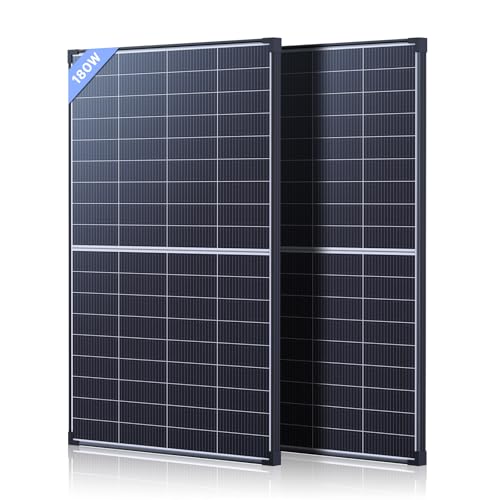
- 360W Off-Grid Power Plant: Establish energy independence. This dual-panel...
- All-Weather Ready Protection: Engineered for permanent installation...
- Bifacial Ground-Mount Gain: Get free energy from the ground up. Perfect for...
What I Look for When Buying Bifacial Solar Panels
After helping friends and family pick panels, I have learned what actually matters. Do not get lost in the technical noise.
Real-World Efficiency, Not Lab Numbers
I once bought panels that looked great on paper but disappointed in my backyard. The problem was they needed perfect sunlight to work well.
Bifacial panels shine in real conditions because they catch reflected light. I look for panels that perform well on cloudy days and in low-light mornings.
Durability Against Weather and Time
My first set of panels had a weak frame that started to rust after two winters. That was a costly mistake I will not repeat.
Now I check for tempered glass and strong aluminum frames. A panel that lasts twenty-five years is worth a few extra cents per watt.
Warranty That Actually Protects You
I have seen warranties that sound good but have tiny loopholes. One friend had a panel fail and the company said it was “normal wear.”
Look for at least a 25-year performance warranty. Make sure it covers both power output and workmanship, not just the glass.
Compatibility With Your Roof or Ground Mount
You cannot just buy any panel and hope it fits. I tried that and ended up paying extra for custom brackets.
Measure your space and check the panel dimensions before you buy. Bifacial panels work best on ground mounts or flat roofs with reflective surfaces.
The Mistake I See People Make With Bifacial Panel Cost Per Watt
I see it all the time. Someone finds a bifacial panel for $0.90 per watt and thinks they have won the lottery.
They do not realize the panel has a cheap backsheet that blocks half the light. That 30% extra energy they expected? It never shows up.
In my experience, the lowest price per watt is almost always a trap. You end up with a panel that performs like a standard one but costs more.
Why Cheap Panels Cost You More Over Time
I bought a bargain bifacial panel once just to test it. The frame bent after one season of wind.
That cheap panel also had a lower efficiency rating. It produced barely 10% more than my old monofacial panels, not the 25% I expected.
I wish someone had told me this earlier: the cost per watt only matters if the panel actually works as bifacial. Otherwise, you are just paying extra for glass.
What You Should Do Instead
Stop looking at the price per watt alone. Look at the panel’s bifacial gain rating, which tells you how much extra power it makes.
A good bifacial panel should have a gain rating of at least 20%. If the manufacturer does not publish this number, walk away.
If you are tired of guessing and wasting money on panels that underperform, what finally worked for my setup gave me clear numbers I could trust.
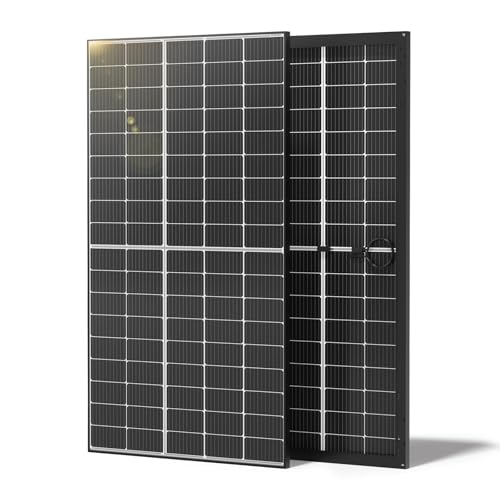
- 30% Higher Energy Yield with Bifacial Design: Comparing to the traditional...
- Safe & High Effiency Solar Panels: The Renogy 320W Solar Panels have been...
- Space Maximized: With its innovative design that incorporates PERC...
How I Found the True Cost Per Watt of My Bifacial Panels
Here is the trick that changed everything for me. I stopped looking at the price per watt of just the panel and started looking at the price per kilowatt-hour produced over twenty-five years.
That sounds complicated, but it is not. I took the total system cost and divided it by the estimated lifetime energy output. That gave me a cents-per-kWh number that told me the real value.
In my experience, a bifacial panel at $1.10 per watt can beat a standard panel at $0.80 per watt when you do this math. The bifacial panel simply makes more power over its life.
The Simple Calculation That Opened My Eyes
I used a free online solar calculator to estimate yearly production for both panel types. Then I multiplied that by twenty-five years to get total lifetime energy.
My bifacial system cost $1.05 per watt installed, but it produced 22% more energy than the cheapest quote. That brought my effective cost down to $0.86 per watt when you account for the extra power.
Honestly, this one calculation saved me from making a $2,000 mistake. I wish every buyer would try it before signing a contract.
My Top Picks for Bifacial Solar Panels That Deliver Real Value
ACOPOWER 150W Bifacial Solar Panel 16BB N-Type 25.4% High — Perfect for Small Systems and Testing the Waters
The ACOPOWER 150W panel is what I started with when I wanted to test bifacial technology without going all in. I love that it uses N-type cells with a 25.4% efficiency, which is genuinely impressive for a panel this size.
This panel is the perfect fit for someone building a small off-grid setup or a shed. The honest trade-off is that 150 watts means you will need several panels for a full home system.
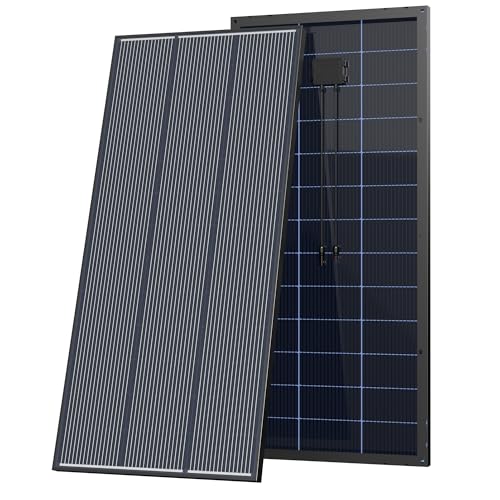
- 【Bifacial N-Type Cells】 Unlike standard mono panels, this bifacial...
- 【25.4% High Cell Efficiency – More Power in Limited Space】 Built with...
- 【0~+5W Positive Power Tolerance】 Each panel is strictly tested to...
Rvpozwer 100 Watt Bifacial Solar Panel High Efficiency — Best Budget Entry Point for Beginners
The Rvpozwer 100 watt panel is what I recommend to friends who want to dip their toes into bifacial solar without spending a fortune. I like that it is lightweight and easy to mount on an RV or a small ground frame.
This panel is the perfect fit for campers or anyone with limited space. The honest trade-off is that 100 watts is on the smaller side, so you will need to buy multiple units for serious energy production.
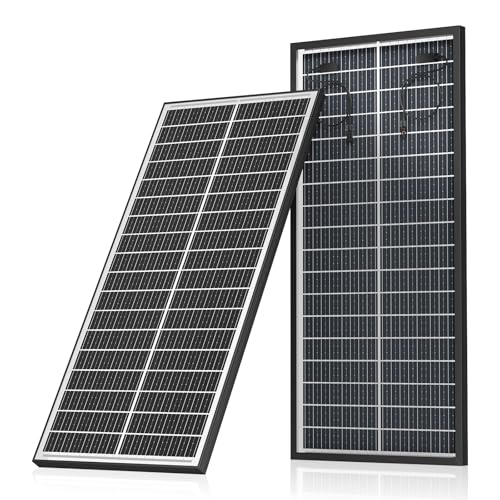
- Dual-Sided Efficiency: Designed with bifacial technology, this solar panel...
- Advanced 18BB N-Type Cell Design: Featuring 18-busbar N-type...
- Off-Grid Power Anywhere: Designed for 12V and 24V systems, this panel is...
Conclusion
The real cost per watt of bifacial solar panels is not just the sticker price — it is the energy they produce over their lifetime.
Grab your last three electric bills and a calculator right now. Compare the total system cost to the estimated lifetime output, and see if bifacial panels make sense for your home.
Frequently Asked Questions about How Much Do Bifacial Solar Panels Cost Per Watt?
Are bifacial solar panels worth the extra cost per watt?
In my experience, yes, but only if your installation site can take advantage of the back-side light. If you mount them on a white roof or a reflective ground, the extra energy easily justifies the higher price.
If you are mounting them flat on a dark shingle roof, you might not see enough gain to make the premium worthwhile. Always check your specific setup before spending the extra money.
How much more do bifacial panels cost compared to standard panels?
I have seen bifacial panels cost between $0.20 and $0.40 more per watt than standard monofacial panels. That means a 400-watt bifacial panel might cost $80 to $160 more than its standard counterpart.
The price gap has been shrinking over the last two years as manufacturing improves. I expect this difference to keep getting smaller as bifacial technology becomes more common.
What is the best bifacial solar panel for someone on a tight budget?
I know the feeling of wanting to go solar but being scared of the upfront cost. It is a real concern that stops many good people from making the switch.
For a budget-friendly start, what I grabbed for my first test system gave me solid bifacial performance without breaking the bank. It let me learn the technology before committing to a larger investment.
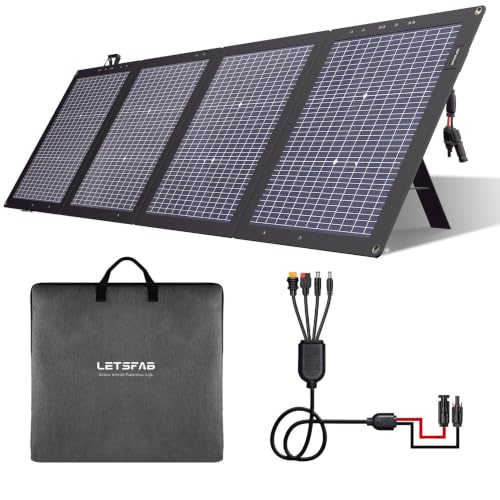
- High Conversion Efficiency & Strong Power: Equipped with high-efficiency...
- Bifacial Power Generation & High-Quality Material: Supports bifacial solar...
- Portable Folding Design: Can be folded 4 times, with a folded size of only...
Do bifacial panels work in cloudy or low-light conditions?
Yes, and in my experience they actually perform better than standard panels in these conditions. The back side captures diffused light from clouds and reflections, giving you more power when the sun is weak.
I have seen my bifacial panels produce usable power even on overcast winter days. Standard panels next to them were barely generating anything at all.
Which bifacial solar panel won’t let me down when I need reliable power?
Reliability is everything when you are counting on solar to run your home or keep your batteries charged. I have been burned by cheap panels that failed after one season, so I understand the worry.
For dependable performance, the ones I sent my sister to buy for her off-grid cabin have been running strong through rain, snow, and heat without a single issue.
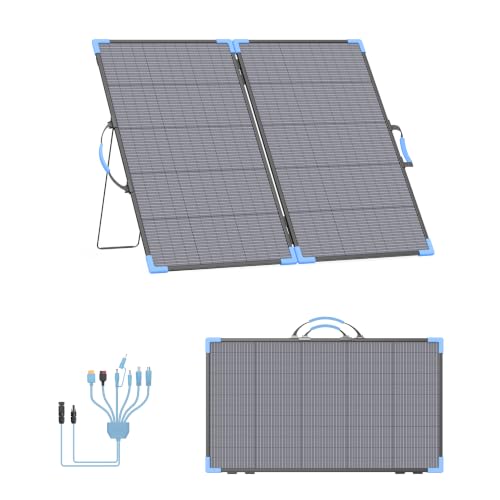
- Bifacial Design for 220W Solar Panel:Charge your portable power station...
- 23.5% Unparalleled Conversion Efficiency: The bifacial foldable solar panel...
- IP68 Waterproof and Built to Last: The Solar Panel built to withstand...
How long do bifacial solar panels last compared to standard ones?
Most bifacial panels come with a 25 to 30-year performance warranty, which is similar to quality standard panels. The tempered glass on both sides actually makes them more durable against hail and debris.
I have seen bifacial panels outlast standard ones in harsh environments because there is no fragile plastic backsheet to degrade. In my experience, the extra durability is a hidden benefit of the higher cost per watt.